Tag: 50+

  • Best Skincare Products at Walmart for 50+: Affordable Picks for Men and Women

    Best Skincare Products at Walmart for 50+: Affordable Picks for Men and Women

    You don’t need a bathroom cabinet full of expensive skincare products to take good care of your skin after 50.

    And you certainly don’t need to spend $100 on a jar of cream just because the label says “anti-aging.”

    As we get older, skin tends to become drier, thinner and less able to hold moisture. Years of sun exposure can also show up as wrinkles, uneven pigmentation and changes in texture.

    The good news? Some of the ingredients dermatologists recommend most often are available at Walmart for relatively reasonable prices.

    So I went looking beyond the hype.

    I compared products based on their ingredients, scientific evidence, clinical testing when available, reputation, customer experience and current Walmart prices.

    The result is not a list from one brand. It’s a short list of products that make sense for both men and women 50+ who want effective skincare without spending a fortune.

    What Really Matters in Skincare After 50?

    Before buying anything, there’s something important to understand: a more expensive product isn’t automatically a better product.

    The American Academy of Dermatology says sunscreen and moisturizer are two of the most effective anti-aging products you can buy. It also recommends choosing products based on your skin type and focusing on one major aging concern at a time rather than piling several treatments onto your face.

    That is good news for anyone trying to stay on a budget.

    You don’t need 12 products. You need the right few products.

    1. Best Hydrating Cleanser: CeraVe Hydrating Facial Cleanser

    If your skin feels tight or dry after washing your face, this is the type of cleanser I’d look for.

    CeraVe Hydrating Facial Cleanser is currently about $13.68 for 12 ounces at Walmart. The formula contains hyaluronic acid, ceramides and glycerin and is designed for normal-to-dry skin.

    CeraVe Hydrating Facial Cleanser Moisturizing Face Wash for Normal to Dry Skin 8 fl oz - Walmart.comCeraVe Hydrating Facial Cleanser https://mavely.app.link/c0UTiYhc66b

    Because after 50, cleansing isn’t supposed to leave your face feeling “squeaky clean.” That tight feeling can be a sign that you’ve removed too much of the skin’s protective oils.

    Ceramides are particularly interesting because they are part of the skin barrier. Clinical research on ceramide-containing cleanser-and-moisturizer routines has found improvements in hydration and skin-barrier measurements, although those studies don’t prove that every ceramide product will produce the same results.

    Bottom line: This isn’t an anti-wrinkle cleanser—and it doesn’t need to be. Its job is simpler: clean your skin without unnecessarily stripping it.

    2. Best Everyday Moisturizer: Olay Regenerist Micro-Sculpting Cream

    Here’s where we move away from CeraVe.

    Olay Regenerist Micro-Sculpting Cream is currently about $24.94 at Walmart for 1.7 ounces. The formula combines moisturizing ingredients with niacinamide and peptides, and Olay has a long history of research into anti-aging skincare.

    Olay Regenerist Micro-Sculpting Cream, Face Moisturizer | Wegmans Unlock the secret to timeless beauty with Olay Regenerist Micro-Sculpting Face Cream, Fragrance-Free, a dermatologist-recommended brand trusted by millions. Known as “The Red Jar,” this face moisturizer is your gateway to visibly smoother, firmer https://mavely.app.link/TOvEalsc66b

    But there’s a reason I like this category for people 50+.

    The American Academy of Dermatology notes that as skin ages, it holds less moisture and recommends cream-based moisturizers for people 50 and older. It also recommends looking for ingredients such as ceramides and hyaluronic acid and avoiding fragrance if dry skin is a problem.

    So what are we really buying here? Hydration first. The anti-aging benefit comes partly from making dry skin look smoother and plumper, while ingredients such as niacinamide may provide additional benefits.

    That’s much more realistic than expecting a cream to erase wrinkles.

    3. Best Proven Anti-Aging Ingredient: Neutrogena Rapid Wrinkle Repair Retinol Serum

    If you want one product specifically aimed at wrinkles, this is where the science gets much more interesting.

    Retinol.

    Retinoids are derivatives of vitamin A, and unlike many trendy skincare ingredients, they have a substantial history in dermatology.

    The American Academy of Dermatology explains that retinoids can increase skin-cell turnover and boost collagen, improving the appearance of fine lines, wrinkles, uneven pigmentation and texture.

    Walmart currently lists Neutrogena Rapid Wrinkle Repair Retinol Serum around $20 for 1 ounce, although Walmart’s price can vary by seller and product version. The product contains retinol and hyaluronic acid, and Neutrogena describes it as clinically tested.

    There’s an important catch: more retinol isn’t necessarily better.

    If you’ve never used a retinol product, don’t start by applying it every night. Dermatologists recommend starting slowly because irritation can make your skin look worse rather than better. The AAD also recommends nighttime use and daily sun protection because retinoids can increase sensitivity to the sun.

    You aren’t going to wake up looking 15 years younger. But retinol is one of the more evidence-backed ingredients available without a prescription.

    Amazon.com: Neutrogena Rapid Wrinkle Repair Retinol Renewal Serum, 1 fl oz | Lightweight Anti-Aging Facial Serum, Dullness & Dark Spots : Beauty & Personal Care Neutrogena Rapid Wrinkle Repair Retinol Serum https://mavely.app.link/AZSgADKc66b

    4. Best Vitamin C Pick: L’Oréal Revitalift 12% Pure Vitamin C Serum

    Vitamin C gets thrown into practically every skincare conversation these days. But does it actually have evidence behind it?

    Yes—with some qualifications.

    A systematic review of randomized controlled trials found that topical vitamin C improved the appearance of uneven and wrinkled skin and had depigmenting effects, although the researchers noted that more research is needed and that noticeable changes may require longer-term use.

    Another double-blind randomized study found that daily topical vitamin C improved clinical signs of photoaged skin compared with placebo over six months.

    A Walmart option worth considering is L’Oréal Revitalift Derm Intensives 12% Pure Vitamin C Serum. It is currently about $27.87 for 1 ounce. The formula combines 12% pure vitamin C with vitamin E and salicylic acid.

    That’s a considerably more interesting proposition than buying a random cheap “brightening serum” simply because it says vitamin C on the bottle.

    One warning, though: if your skin is very sensitive or dry, the combination of vitamin C and salicylic acid may not be the first thing I’d reach for.

    An Affordable Vitamin C Serum : The L'Oreal Revitalift Clinical 12% Pure Vitamin C Serum Review. - Laura Louise Makeup + Beauty L’Oréal Paris Revitalift Vitamin C Serum https://mavely.app.link/yh2g8W2c66b

    Here’s the product category I would take most seriously.

    Sunscreen isn’t just about avoiding sunburn. It is one of the most important things you can do to slow additional photoaging.

    The American Academy of Dermatology recommends broad-spectrum SPF 30 or higher and emphasizes sun protection as a cornerstone of an anti-aging routine.

    At Walmart, Neutrogena Clear Face SPF 50 is currently about $12.48 for 3 ounces. It is broad-spectrum SPF 50, non-comedogenic and water-resistant for up to 80 minutes.

    This particular sunscreen is marketed toward oily and acne-prone skin, so it won’t necessarily be the perfect choice for someone with very dry skin.

    But that’s actually an important lesson: the best sunscreen is one you’ll actually use.

    If you hate the feel of a sunscreen, you won’t apply enough of it or use it consistently. Consistent sun protection matters much more than buying the fanciest bottle on the shelf.

    Amazon.com: Neutrogena Clear Face Sunscreen Lotion SPF 50, 3 fl. oz | For Acne-Prone Skin, Broad Spectrum UVA/UVB Protection, Fragrance-Free, Oxybenzone-Free, Water-Resistant Neutrogena Clear Face Sunscreen SPF 50 https://mavely.app.link/JumU7qrd66b

    What About Eye Creams?

    Here’s where I’m going to save you some money.

    You don’t necessarily need a separate expensive eye cream. Many basic moisturizers can be used around the eye area if the product directions allow it and it doesn’t cause irritation.

    Instead of forcing an “eye cream winner” into this list, I’d rather tell you to spend that money on sunscreen and a good moisturizer.

    The Surprisingly Simple 50+ Skincare Routine

    Morning

    1. Gentle hydrating cleanser
    2. Moisturizer
    3. Broad-spectrum SPF 30 or higher

    If you want to add vitamin C, this is where it would generally fit.

    Night

    1. Gentle cleanser
    2. Retinol — if appropriate for your skin
    3. Moisturizer

    You don’t need to use every product on this list. In fact, the American Academy of Dermatology recommends focusing on one aging concern at a time because using several anti-aging products too quickly can irritate your skin.

    What Could This Routine Cost?

    Using the current Walmart prices I found, the basic cleanser + moisturizer + retinol + sunscreen routine comes to roughly $71, before tax.

    • CeraVe Hydrating Facial Cleanser: about $13.68
    • Olay Regenerist Micro-Sculpting Cream: about $24.94
    • Neutrogena Rapid Wrinkle Repair Retinol Serum: about $20
    • Neutrogena Clear Face SPF 50: about $12.48

    You don’t have to buy everything at once. And you certainly don’t have to use all four products immediately.

    If you’re starting from scratch, I’d begin with cleanser, moisturizer and sunscreen. Then, if your skin tolerates that routine well and wrinkles are your main concern, consider adding retinol gradually.

    Men Don’t Need Different Anti-Aging Ingredients

    One thing I especially like about these products for Well After 50 is that this isn’t a “women’s skincare” list.

    Men and women have the same basic skincare needs when it comes to hydration, sun protection and photoaging.

    A man doesn’t need a separate bottle simply because the label shows a man. And women don’t need a different retinol because they’re women.

    Skin type, sensitivity and the particular problem you’re trying to address matter much more than gender.

    What I Would NOT Spend Money On

    I’d be skeptical of products promising things like:

    • Erasing wrinkles overnight
    • Making you look 10 years younger
    • Rebuilding your face in a few days
    • Permanently tightening loose skin
    • Replacing sunscreen
    • Reversing every sign of aging

    The AAD warns that exaggerated anti-aging promises are unrealistic and says skincare products produce modest results, not facelift-level results.

    That’s actually good news. You don’t need a miracle. You need products that do their particular jobs reasonably well—and you need to use them consistently.

    One More Important Point: Don’t Start Everything at Once

    This might be the best money-saving advice in the entire article.

    If you buy five new products and put them all on your face Monday morning, then develop redness or burning by Wednesday, you won’t know which product caused it.

    Instead, introduce products gradually.

    And if you’re using retinol, start slowly. The AAD recommends beginning with a less-intense retinoid and using it every other night initially, gradually increasing as your skin adjusts.

    If your skin becomes very irritated, stop and reassess.

    The Bottom Line

    Taking care of your skin after 50 doesn’t have to mean spending hundreds of dollars.

    The better strategy is to understand what you’re actually trying to accomplish.

    Want to keep dry skin comfortable? Hydrate and protect the skin barrier.

    Want to address wrinkles? Retinol has considerably more evidence behind it than many trendy ingredients.

    Want to brighten uneven skin? Vitamin C has some legitimate evidence, although results take time.

    Want to prevent more sun-related aging? Wear sunscreen.

    And perhaps most importantly:

    Don’t confuse expensive with effective.

    A simple routine that you actually use every day can make far more sense than a shelf full of expensive products you eventually stop using.

    Common Questions

    Do men and women need different anti-aging skincare products?
    Not usually. The important factors are your skin type, sensitivity and what you’re trying to improve. The same evidence-backed ingredients can be useful for both men and women.

    Is CeraVe really better than every other Walmart cleanser?
    No. It is our pick for this particular category because its hydrating formula contains ceramides, hyaluronic acid and glycerin and is designed for normal-to-dry skin. That doesn’t mean it’s universally better than every cleanser.

    What is the most important anti-aging skincare product?
    Sunscreen is arguably the most important. The AAD recommends broad-spectrum SPF 30 or higher.

    Is retinol worth using after 50?
    For many people, yes. Retinoids have substantial evidence for improving fine lines, wrinkles, uneven pigmentation and skin texture. But they can irritate the skin, so they should be introduced gradually.

    Do expensive skincare products work better?
    Not necessarily. Effective anti-aging products come in all price ranges.

    How many skincare products do I really need?
    Probably fewer than you think. A basic routine can be cleanser, moisturizer and sunscreen, with a targeted treatment such as retinol added if appropriate.

    Keep Reading

    The Beauty of a Simpler Life After 50: Choosing Peace Over Pleasing

    About Tom Green

    Tom Green is the writer behind Well After 50, where he shares practical skincare, fitness, nutrition, wellness and healthy-aging ideas for life after 50.

    Sources

    Medical note: This article is for general informational purposes and isn’t a substitute for medical advice. If you have persistent redness, burning, a rash, significant skin changes or another skin concern, talk with a dermatologist or other qualified healthcare professional.

    This post may contain affiliate links. If you purchase something through one of these links, Well After 50 may receive a small commission at no additional cost to you. These links help support the site and allow me to continue creating helpful content.

  • What Causes White Hair at an Early Age? 7 Things You Should Know

    What Causes White Hair at an Early Age? 7 Things You Should Know

    You look in the mirror one morning and notice another white hair.

    Then another.

    And maybe you start wondering: Why is my hair turning white already?

    For some people, gray or white hair starts showing up surprisingly early. For others, their natural hair color lasts well into middle age before the silver begins to appear.

    So what’s really going on?

    The short answer is that your hair is losing the pigment that gives it its color. But why that happens—and how early it happens—is more complicated.

    Genetics plays a major role, but research has also found connections with smoking, nutritional deficiencies, certain health conditions and possibly significant stress.

    And here’s something many people don’t realize: gray hair isn’t necessarily a sign that something is wrong with you.

    First, What’s Actually Happening to Your Hair?

    Your hair gets its natural color from a pigment called melanin.

    Specialized cells in the hair follicle produce that pigment. As those pigment-producing cells become less active or are lost, new hair grows in with less pigment.

    Eventually, it can appear gray, silver or white.

    The American Academy of Dermatology says hair commonly begins turning gray during the 30s and 40s, although the timing varies considerably from person to person.

    That’s why two people the same age can have completely different-looking hair. One might still have mostly dark hair while another might be almost completely silver. Neither is necessarily healthier than the other.

    1. Your Genes May Be the Biggest Reason

    If your parents or grandparents went gray early, there’s a good chance you may have inherited that tendency.

    Research has found a strong association between premature graying and a family history of early graying.

    So if you started noticing white hairs at 25 or 30 and your father did the same thing, genetics may provide a much better explanation than anything you did wrong.

    In other words, you may simply have inherited your hair’s timetable.

    2. Stress May Play a Bigger Role Than We Once Thought

    For generations, people have said that stress can turn someone’s hair gray.

    It sounded like an old wives’ tale.

    But scientists have found evidence that there may actually be something behind it.

    Research published in Nature found that acute stress can affect melanocyte stem cells—the cells involved in maintaining pigment in hair follicles. The study found that stress-related activation of the sympathetic nervous system could contribute to depletion of these cells and lead to hair graying in mice.

    That doesn’t mean one bad day is going to turn your hair white overnight. And much of the detailed mechanistic evidence comes from animal research.

    Still, it gives scientists a plausible biological explanation for why significant stress may contribute to premature graying.

    So the next time someone says, “Stress made me go gray,” there’s more science behind that statement than there used to be.

    3. Smoking May Speed Up the Process

    Here’s one that’s more concerning for your overall health anyway.

    Several studies have found an association between smoking and premature hair graying. Researchers believe oxidative stress and other effects of tobacco exposure may damage hair follicles and the cells involved in pigmentation.

    If you’re looking for another reason to quit smoking, protecting your hair color isn’t the most important one—but it certainly doesn’t hurt.

    4. Your Diet Can Matter—But Don’t Blame Every Gray Hair on a Vitamin Deficiency

    This is where things can get confusing.

    Some studies have found associations between premature graying and nutritional deficiencies, including vitamin B12 and folate and certain minerals.

    That doesn’t mean taking a handful of supplements will bring your natural hair color back.

    If genetics is responsible for your gray hair, taking extra vitamins isn’t likely to magically restore the pigment.

    But if premature graying occurs alongside an actual nutritional deficiency, correcting that deficiency may be important for your overall health and, in some cases, hair pigmentation.

    That’s why it’s better to find out whether a deficiency actually exists rather than randomly taking supplements marketed for gray hair.

    5. Certain Health Conditions Can Be Associated With Early Graying

    Premature graying has also been associated in research with certain medical conditions, including thyroid disorders and some autoimmune conditions.

    This doesn’t mean gray hair automatically indicates a thyroid problem or another disease. Most people with gray hair don’t have some hidden medical condition causing it.

    But if your hair begins changing unusually quickly, particularly if you also have other unexplained symptoms, it’s reasonable to mention it to your doctor.

    A dermatologist or primary-care clinician can decide whether there’s a reason to investigate further.

    6. Gray Hair and White Hair Are Not Exactly the Same Thing

    Here’s a fun little hair fact.

    Hair doesn’t necessarily contain a special “gray” pigment.

    Instead, individual hairs can contain different amounts of melanin. Hair with less pigment can appear gray or silver, while hair with essentially no pigment can appear white.

    That’s why someone’s head can gradually shift from dark brown or black to a mixture of brown, gray, silver and white rather than changing colors all at once.

    7. Can You Actually Reverse White or Gray Hair?

    This is probably the question most people want answered.

    Usually, no.

    The American Academy of Dermatology says there currently aren’t effective medical treatments that reliably restore color to normal age- or genetics-related gray hair.

    There are occasional reports of hair repigmenting when an underlying health problem is treated or when certain stress-related factors change, but researchers are still trying to understand when and why this happens.

    So be skeptical of products promising to “reverse gray hair naturally” or restore your original color with a supplement.

    If someone tells you a bottle of pills can reliably turn gray hair back to its original color, the science isn’t there yet.

    What Can You Do If You’re Starting to Go Gray?

    You can’t control your genes, but you can take care of the things that are within your control.

    A healthy lifestyle, balanced diet, adequate sleep, not smoking and managing stress are all sensible habits for your overall health—and may help support healthy hair as you age.

    Gentle hair care and protecting your hair and scalp from excessive sun exposure are also reasonable steps.

    But perhaps the biggest lesson is this:

    You don’t necessarily need to fight the gray.

    For many people, silver or white hair becomes part of their appearance—and there’s nothing unhealthy about that.

    When Should You Talk to a Doctor?

    If you’re young and suddenly developing extensive gray or white hair, or if the change occurs along with other unexplained symptoms, bring it up with your doctor or dermatologist.

    They may consider whether nutritional deficiencies, thyroid problems, medications or another underlying condition could be contributing.

    You don’t need to panic over a few gray hairs. But if something seems unusual or happens very quickly, it’s worth asking about rather than assuming it’s simply aging.

    The Bottom Line

    Early white or gray hair isn’t caused by one single thing.

    Genetics is a major piece of the puzzle, while smoking, nutritional deficiencies, certain health conditions and possibly significant stress can also be involved.

    And if you’re 50+, there’s another way to look at those silver strands.

    They aren’t necessarily something that needs fixing.

    Sometimes they’re simply evidence that you’ve been around long enough to collect a little wisdom—and your hair decided to show it.

    Common Questions

    Does stress really cause gray hair?

    Research suggests that significant stress can affect the cells involved in hair pigmentation, although much of the strongest mechanistic evidence comes from animal studies.

    Can vitamin B12 deficiency cause premature graying?

    Vitamin B12 deficiency has been associated with premature graying in research. If you suspect a deficiency, it’s better to discuss testing with a healthcare professional rather than taking large doses of supplements on your own.

    Can gray hair turn back to its original color?

    Occasional repigmentation has been reported, particularly when an underlying factor is addressed, but there is currently no reliable treatment that reverses ordinary age- or genetically related graying.

    Does plucking a gray hair cause more gray hairs?

    No. Plucking one gray hair doesn’t make neighboring hairs turn gray. However, repeatedly plucking hairs can damage the follicle and contribute to thinning, so cutting the hair or leaving it alone is a better choice.

    Is white hair a sign that you’re unhealthy?

    Not usually. Graying is a normal biological process. However, unusually early or rapid graying can sometimes be associated with nutritional deficiencies or certain medical conditions, so unusual changes are worth mentioning to a healthcare professional.

    Can you prevent gray hair?

    There is no guaranteed way to prevent genetically programmed graying. However, avoiding smoking, eating a balanced diet, managing stress, getting adequate sleep and maintaining a healthy lifestyle are sensible ways to support overall hair health.

    Keep Reading

    The Beauty of a Simpler Life After 50: Choosing Peace Over Pleasing

    About Tom Green

    Tom Green is the writer behind Well After 50, where he shares practical skincare, fitness, nutrition, wellness and healthy-aging ideas for life after 50.

    Sources

    Medical note: This article is for general informational purposes and isn’t a substitute for medical advice. If you have sudden or unusually early hair changes, significant hair loss, or other unexplained symptoms, talk with your doctor or a qualified dermatologist.

  • Budget-Friendly Skincare After 50: TJ Maxx, Ross & Marshalls

    Budget-Friendly Skincare After 50: TJ Maxx, Ross & Marshalls

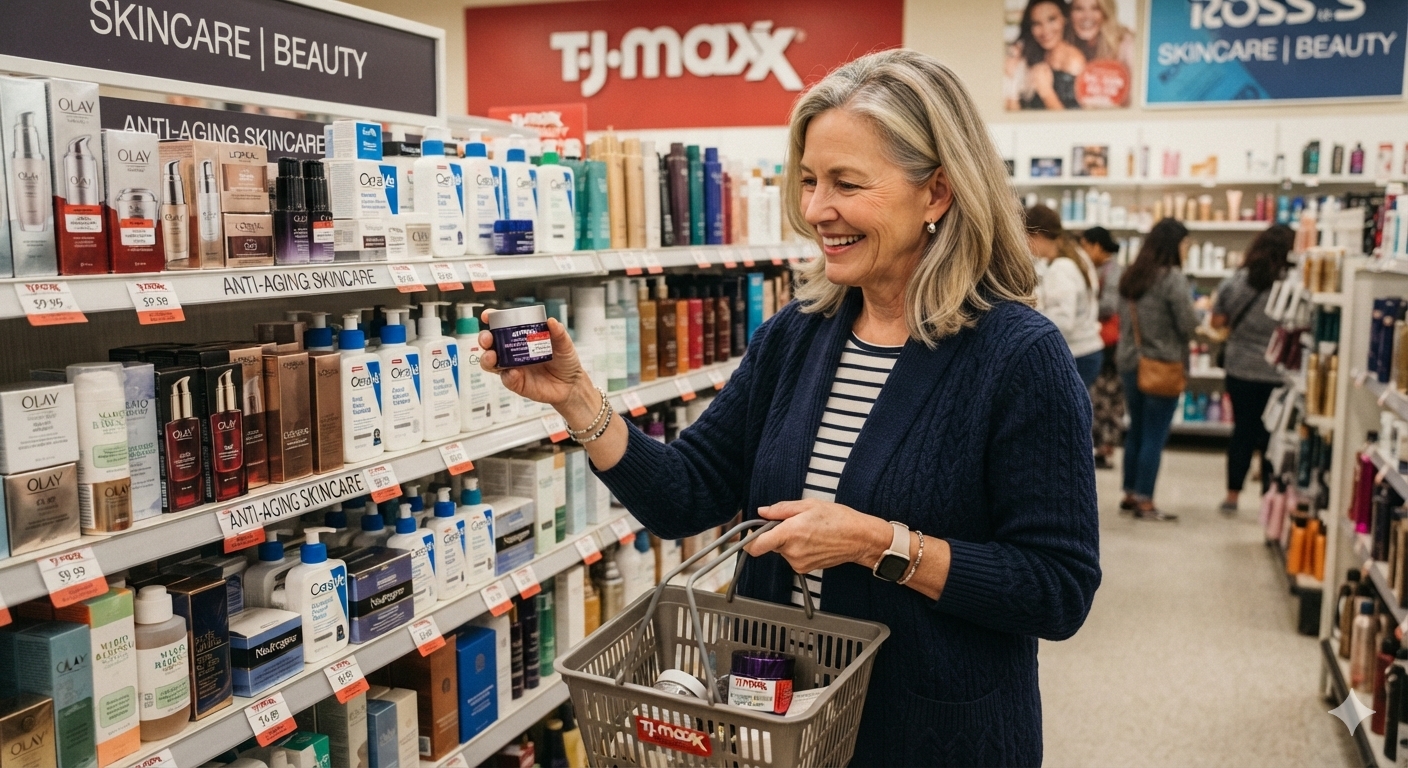
    If you like finding good skincare without paying full beauty-store prices, there are three stores worth checking: TJ Maxx, Ross and Marshalls.

    I was at TJ Maxx recently and was surprised by how much skincare was on the shelves for fall. There were plenty of products I hadn’t seen before, including a lot of Korean skincare. That made me wonder: Can you actually find good skincare for less at these stores?

    Yes—but bargain shopping for skincare takes a little more attention than simply grabbing the prettiest bottle.

    Why TJ Maxx, Ross and Marshalls Are Worth Checking

    Inventory changes constantly at discount retailers, which is part of what makes shopping there interesting. You may find cleansers, moisturizers, serums, masks, eye products and other skincare at prices well below the comparison prices shown by the retailer.

    TJ Maxx currently lists a large selection of skincare, including products made in Korea. Its online selection has included rice serums, ginseng cleansers, ceramide cleansers, hydrogel masks, vitamin C products and other skincare at relatively low prices. Marshalls also currently lists Korean skincare such as hyaluronic acid essence, toner pads, peptide eye patches and snail mucin serum.

    That doesn’t mean every bargain is a great bargain. The product still matters more than the price.

    Korean Skincare Is One of the Interesting Finds

    One of the things that caught my attention was the amount of Korean skincare showing up on these shelves.

    Korean skincare often puts a big emphasis on hydration, gentle cleansing, skin-barrier support and lightweight layers. You may see ingredients such as hyaluronic acid, ceramides, niacinamide, centella asiatica, rice extracts, peptides and snail mucin.

    For many people 50+, that focus on hydration can be appealing because skin often becomes drier and more easily irritated with age.

    But don’t buy a product just because the words Korean skincare are printed on the package. Read the ingredient list and decide whether you actually need it.

    What I Would Look For After 50

    1. A gentle hydrating cleanser

    If your skin feels tight after washing, a gentler cleanser may make more sense than a harsh, squeaky-clean formula. Look for moisturizing ingredients such as glycerin and consider a cleanser designed for dry or sensitive skin if that describes you.

    2. A good moisturizer

    A moisturizer is one of the places where you don’t necessarily need to spend a fortune. Ingredients such as glycerin, ceramides, hyaluronic acid and squalane are worth recognizing when you read labels.

    3. A simple hydrating serum

    You don’t need five serums sitting on your bathroom counter. A simple hydrating serum can be enough if dryness is your main concern.

    4. Niacinamide

    Niacinamide is another ingredient worth knowing. It is used in many skincare formulas and can be found in affordable products. As with any active ingredient, more isn’t automatically better.

    5. Sunscreen—but check the date

    This is where I would be especially careful with bargain shopping. Sunscreen is regulated as a drug in the United States, unlike ordinary cosmetics, and sunscreen products are required to carry expiration dating. Don’t buy expired sunscreen just because the price looks good.

    The Expiration-Date Warning You Shouldn’t Ignore

    Here’s something many shoppers don’t realize: ordinary cosmetics are not required by U.S. law to have an expiration date printed on the package. The FDA explains that cosmetic shelf life depends on the product, how it is used and how it is stored.

    That makes it especially important to inspect bargain-store skincare before you buy it.

    • Look for an expiration date when one is provided.
    • Check that the seal is intact.
    • Don’t buy a leaking or damaged package.
    • Look for unusual changes in color or texture.
    • Smell the product only if it can be safely checked without opening a sealed package.
    • Be especially careful with products that have been exposed to heat or moisture.

    The FDA notes that cosmetics can change in color, texture and smell as they deteriorate, and heat and moisture can make problems worse.

    Be Extra Careful With Eye Products

    I’m more cautious when bargain shopping for anything that goes around the eyes.

    Eye-area cosmetics can have shorter useful lives because applicators can repeatedly introduce microorganisms. The FDA specifically warns that older eye cosmetics can pose infection risks.

    If an eye product looks old, damaged or questionable, I would leave it on the shelf.

    Don’t Let a $7 Price Tag Talk You Into Buying Everything

    This is probably the easiest mistake to make in a discount beauty aisle.

    You see a $7 serum. Then an $8 mask. Then a $6 toner. Suddenly you’ve spent $30 on products you never planned to buy.

    Instead, ask yourself one question:

    What does my skin actually need?

    If your skin is dry, start with a gentle cleanser and moisturizer. If your basic routine is already working, maybe add one serum. You don’t need a 10-step routine because the products are inexpensive.

    Read the Back Before You Fall in Love With the Front

    Beautiful packaging can be tempting, especially when the price is low. But the front of the bottle doesn’t tell you everything you need to know.

    Check the ingredient list, directions, warnings, skin-type information and size of the container. And don’t assume words such as “natural” or “hypoallergenic” automatically mean a product is safer or better for you. The FDA recommends reading the complete label.

    TJ Maxx, Ross or Marshalls?

    I wouldn’t declare one store the winner.

    The inventory changes, so one visit may be completely different from the next. You might find the best moisturizer at Marshalls one week and a great Korean cleanser at TJ Maxx the next. Ross can surprise you, too.

    Shop the product—not the store.

    My 50+ Bargain-Skincare Strategy

    1. Start with what your skin actually needs.
    2. Look at ingredients instead of just the packaging.
    3. Check seals and packaging for damage.
    4. Check expiration dates when applicable.
    5. For sunscreen, always check the expiration date.
    6. Don’t assume a “compare at” price means the product is automatically a bargain.
    7. Buy one or two products and see how your skin responds before building a whole new routine.

    The Bottom Line

    TJ Maxx, Ross and Marshalls can be worth exploring if you’re looking for budget-friendly skincare after 50.

    The growing selection of Korean skincare makes these stores even more interesting. But bargain shopping still requires a little homework.

    Don’t assume expensive means better. Don’t assume cheap means bad. And don’t assume a beautiful package means the product is right for your skin.

    Read the ingredients. Check the packaging. Watch the dates. And buy for your skin—not simply because the price tag is tempting.

    Common Questions

    Is TJ Maxx a good place to buy skincare?

    It can be. TJ Maxx currently carries a wide range of skincare, including Korean products. Inventory changes frequently, so inspect each product before buying.

    Is Korean skincare good for people 50+?

    It can be. Many Korean skincare products emphasize hydration and gentle routines, but the best choice depends on your skin and the ingredients in the individual product.

    Do skincare products at TJ Maxx expire?

    Some products have expiration dates and ordinary cosmetics are not required by U.S. law to display one. That is why it is important to inspect packaging, condition and dates when available.

    Should I buy sunscreen at a discount store?

    You can, but check the expiration date carefully. Sunscreen is regulated differently from ordinary cosmetics and should not be used after its expiration date.

    What’s the best skincare bargain after 50?

    There isn’t one product that is best for everyone. A gentle cleanser, moisturizer and daily sunscreen are a sensible starting point for many people, with other products added according to individual needs.

    Keep Reading

    About Tom Green

    Tom Green is the creator of Well After 50, where he writes about practical skincare, fitness, wellness and healthy-aging ideas for life after 50. His goal is simple: share useful information that can help make getting older feel a little easier—and a lot more manageable.

    Sources

    This article is for general information and isn’t a substitute for professional medical or dermatological advice. If a skincare product causes persistent irritation, burning, swelling or another concerning reaction, stop using it and seek appropriate medical advice.