Tag: staying active over 50

  • Why Fall Might Be the Best Season to Get Serious About Fitness After 50

    Why Fall Might Be the Best Season to Get Serious About Fitness After 50

    Is fall a good time to start getting fit?

    Short answer: Fall is a great time to start, because the weather’s easier and you won’t be starting with the January crowd. Keep it simple this week: take a 10-minute walk on a nice day, and do one short strength session, standing up from a sturdy chair 5 to 10 times and doing a few wall push-ups.

    Fall has a way of making a fresh start feel possible. The sweltering days ease, the leaves change, and walking outside can become enjoyable again. If you’ve been telling yourself you need to get moving, why wait for January?

    After 50, getting fit isn’t about proving you can exercise like you’re 25. It’s about walking without getting winded, carrying groceries, climbing stairs, staying steady and having energy left for the people and activities you love.

    If you only do three things this week

    • Take a 10-minute walk on a day when the weather is nice. That’s it. Don’t make it a big production.
    • Do one short strength session: stand up from a sturdy chair 5 to 10 times, then do a few wall push-ups.
    • Put your next two walks on the calendar. A plan you’ve written down is much harder to skip.

    If that’s all you do, you’re already ahead of where you were last week.

    Why I’d start now instead of waiting for January

    Here’s the way I look at it. January is when everybody starts at once, the weather is cold and gray, and most of us are coming off the holidays feeling a little heavier and a lot less motivated. Fall gives you a head start. The weather is on your side, the days are still reasonably long, and you have a couple of months to build a habit before the holiday season gets busy.

    I’m in my 60s, and I work out to feel like a healthier me as I age. What I care about is being able to keep doing the everyday things without thinking twice. That’s the goal of everything in this post: simple, safe and repeatable.

    Cooler weather can remove one big excuse

    If you’ve ever tried walking through a Southern summer, you know heat and humidity can sap your enthusiasm quickly. Autumn often makes outdoor exercise more comfortable. The season itself isn’t a fitness shortcut: the benefit comes when pleasant conditions help you move consistently. Getting started now also gives you time to establish a habit before the busy holiday season.

    Stop thinking only about the scale

    Weight isn’t the only measurement that matters. Strength helps you rise from a chair and carry bags. Cardio builds endurance. Balance helps you move with confidence. The CDC’s older-adult activity guidance recommends that people 65 and older work toward at least 150 minutes of moderate aerobic activity weekly, muscle strengthening at least twice, and balance activities. Adults in their 50s and early 60s also benefit from cardio and strength work. Build gradually if you are returning after a break.

    If you want a simple way to check where your strength stands right now, try the floor test I wrote about in Can You Get Up From the Floor? What a Simple Test Reveals About Strength After 50. It’s a good “before” picture you can compare against in a couple of months.

    Make your next walk more interesting

    Walking doesn’t need an expensive app or a complicated plan. Matthew Solan offers practical ideas in Harvard Health’s “Step up your walking routine.” Rather than walking at the same pace every time, try three or four minutes at your comfortable pace followed by 30 seconds a little faster. You can also mark the faster stretches using mailboxes or telephone poles.

    Keep it safe: aim for an effort where you breathe more noticeably but can still speak. If you’re unsteady or have painful joints, stay on level ground and keep a comfortable pace. Progress isn’t a contest.

    Don’t let walking become your entire fitness plan

    Walking can strengthen your endurance, but it doesn’t cover every physical need. Erica Sweeney explains why in AARP’s “4 Types of Exercise You Need as You Age.” Strength, cardio, balance and flexibility serve different purposes. Relying exclusively on one can leave important gaps.

    Consider two short strength sessions a week, choosing movements suitable for your abilities: supported chair sit-to-stands, calf raises, resistance-band rows, wall push-ups or controlled exercises on gym machines. Start with manageable resistance and avoid exercises that aggravate an injury. The point is to become more capable, not to leave yourself too sore to move the next day.

    For more on which strength habits are worth your time, see 7 Strength Habits That Matter More After 60.

    Enjoy autumn scenery, but watch your footing

    Those beautiful fallen leaves can hide roots, potholes and slick pavement. Earlier sunsets can leave your favorite walking route poorly lit. In Harvard Health’s “Protect yourself from falls outside the home,” Heidi Godman shares physical therapist Barbara Ranucci’s advice about supportive, nonslip shoes, uneven terrain, weather and building leg and core strength for balance.

    Choose a familiar route with firm, even ground. Wear shoes with good grip, carry your phone, and walk in daylight when possible. If you have balance problems, seek guidance rather than testing yourself alone on a slippery path.

    A first week that won’t wear you out

    You don’t need to overhaul your entire life on Monday. Here’s a flexible starting point if you’re returning to activity:

    • Monday: Walk 10–15 minutes at a comfortable pace.
    • Tuesday: Do a short, gentle strength session.
    • Wednesday: Walk again; try brief faster intervals only if comfortable.
    • Thursday: Rest or stretch gently.
    • Friday: Complete a second strength session.
    • Saturday: Enjoy a park or another active outing.
    • Sunday: Recover and plan your next week.

    These are examples, not requirements. Five minutes may be the right starting point for some people. Increase gradually and speak with a qualified clinician about exercise restrictions if you have significant health conditions or injuries.

    What to do on the days you don’t feel like it

    There will be days when it’s chilly, it’s getting dark early, and the couch looks a lot better than a walk. That’s normal. On those days, don’t skip it completely. Just shrink it. Walk to the end of the street and back. Do five chair stands while the coffee brews. A small win keeps the habit alive, and the habit is what matters.

    Make movement the easy choice

    Motivation comes and goes, so don’t count on it. Put your walking shoes where you’ll see them, keep comfortable workout clothes ready, and leave any home equipment where you’ll actually use it. Then treat your walks and strength sessions like appointments: pick the day and time ahead of time.

    It also helps to make it enjoyable. Walk somewhere with changing leaves, listen to music or a podcast, take the dog, or meet a friend for a walk instead of another meal. If an activity feels good, you’re far more likely to keep doing it.

    And if you spend a lot of the day sitting, break it up. Stand up, walk around the house, or step outside for a few minutes. Small movement breaks add up.

    Consistency beats punishment

    One of the easiest ways to give up is to exercise so hard on day one that you dread day two. You don’t need to prove anything with painful soreness. A repeatable routine is more valuable than one heroic workout. Stop for sharp pain, dizziness, chest discomfort or unusual shortness of breath and seek appropriate care.

    Here’s the best thing about beginning in fall: when January finally rolls around, you might already have a habit rather than another resolution. Start with a walk. Add some strength. Practice safe balance work. Make it something you actually enjoy. That’s real progress after 50.

    Common Questions

    Is fall a good time to start exercising after 50?
    Yes. Cooler weather often makes walking and outdoor activity more comfortable, and starting in fall gives you a couple of months to build a habit before the holidays and winter.

    How much exercise do I need after 50?
    The CDC suggests older adults work toward about 150 minutes of moderate activity a week, plus muscle strengthening at least two days a week and balance activities. If you’re starting from scratch, begin with much less and build up gradually.

    Is walking enough exercise after 50?
    Walking is a great foundation, but it doesn’t do everything. Adding simple strength work, like chair stands and wall push-ups, helps you keep the muscle you need for everyday tasks.

    What’s the easiest way to start if I haven’t exercised in years?
    Start small: a 10-minute walk and a few chair stands. Do that consistently for two weeks before adding more. If you have health conditions or injuries, check with your healthcare professional first.

    How do I stay safe walking outside in the fall?
    Wear shoes with good grip, stick to familiar routes with even ground, walk in daylight when you can, and watch for wet leaves, roots and potholes. Carry your phone.

    How do I stay motivated when the days get shorter?
    Schedule your walks like appointments, walk earlier in the day, and on low-energy days do a shorter version instead of skipping. Small, regular wins keep the habit going.

    Keep Reading

    About the author

    Tom Green writes Well After 50. He was born in Pell City, Alabama, in 1962, and he’s a country boy and a true Southerner through and through. He’s just a regular, laid-back 64-year-old who keeps things simple. He shares what he learns about skincare, fitness and getting older, and what’s working for him. He’s also the author of A Practical Guide to Getting Older Without Giving Up on Yourself. Tom isn’t a doctor. He reads up on the research and passes along what’s useful, plain and simple.

    I’m not a doctor—I’m a man in my 60s sharing research and practical experience. This article is for general education, not individual medical advice.

    I’ve also mapped out some great tools on my new Tech for Independent Living After 50 page.
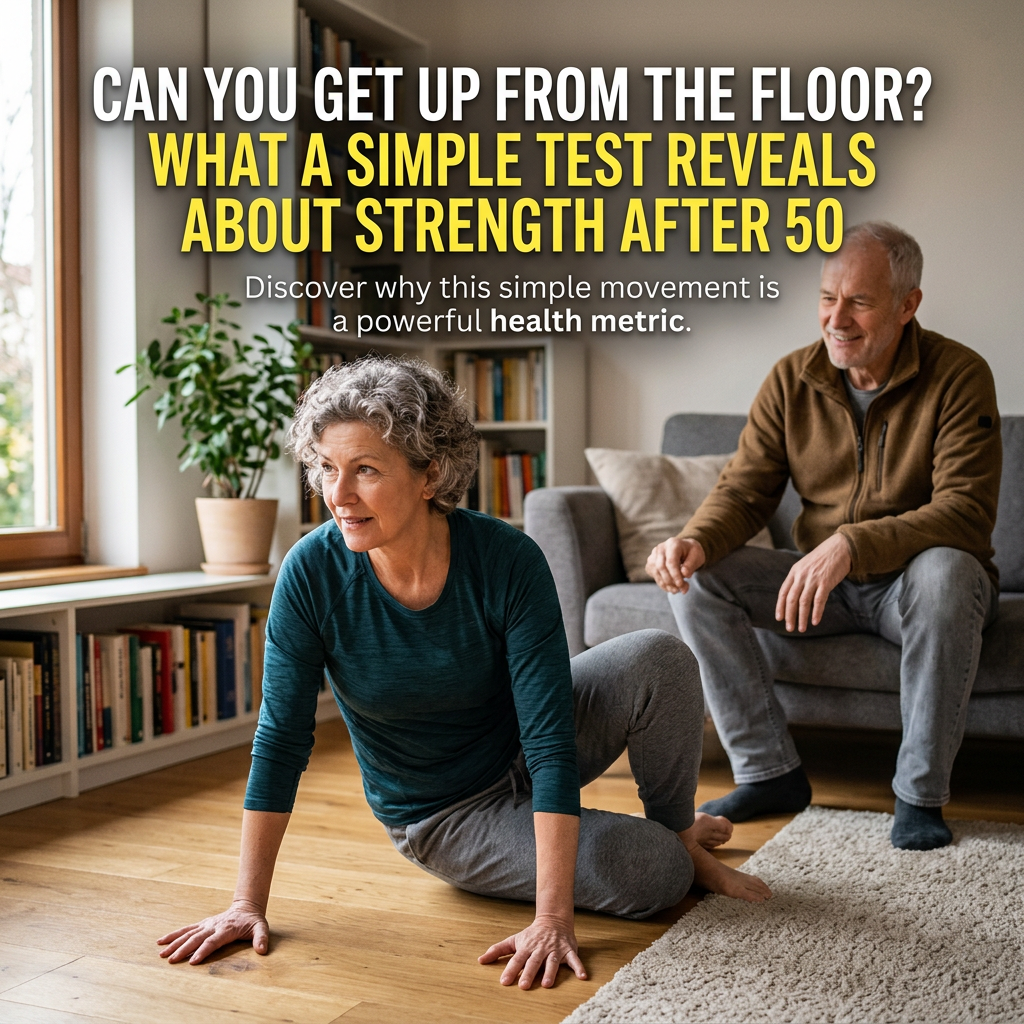
  • Can You Get Up From the Floor? What a Simple Test Reveals About Strength After 50

    Can You Get Up From the Floor? What a Simple Test Reveals About Strength After 50

    What is the sitting-rising test, and how is it scored?

    Short answer: The sitting-rising test checks whether you can sit down on the floor and get back up. It’s scored out of 10: up to 5 points for sitting and 5 for rising, and you lose a point each time you use a hand, knee or other support. A lower score is a reason to work on strength and balance, not a verdict on your health.

    I think about independence a lot when it comes to life after 50. It is not just about how we look or how many birthdays we have had. It is about being able to do the everyday things we count on—getting out of a chair, climbing steps, carrying the groceries, and moving around without feeling that our own bodies are holding us back. Those movements may seem ordinary until one of them becomes difficult. Then we realize how much strength, balance, and confidence are woven into daily life.

    And I want to be honest about something personal: I am 64, and I have fallen myself. It can happen, even when we think we are doing all right. Experiences like that make the subject of balance, strength, and staying independent feel real to me—not just something researchers write about. I am not sharing that to frighten anybody or to suggest that one fall tells us what the future holds. I share it because it is easy to take steady movement for granted, and a fall can remind us that looking after ourselves includes paying attention to how we move. A fall does not define you, and one movement test cannot tell your whole story, but it is a reminder to take our safety and strength seriously.

    That is why the sitting-rising test (SRT) caught my attention. This is a real assessment studied by exercise-medicine researchers—not a social-media trick. Brazilian physician and researcher Dr. Claudio Gil Soares de Araújo, the lead author of the major follow-up study, and his colleagues have investigated what our ability to sit on the floor and stand back up can reveal about physical fitness and long-term health. The movement brings together strength, balance, flexibility, and coordination. It is worth knowing about, but it is not a diagnosis, a guarantee of longevity, or a challenge everyone should try at home. For anyone worried about falling, the safer first step is to talk with a healthcare professional or physical therapist.

    What is the sitting-rising test?

    The idea is straightforward: a person lowers themselves to sit on the floor, then gets back to standing. The commonly used scoring system gives up to five points for sitting and five for rising, for a total of 10. Points are deducted for using a hand, knee, or other support, or for losing steadiness during the movement.

    Want the full scoring rules, the 10-second one-leg stand, and gentle ways to improve your results? See my newer article, The Floor Test That May Predict Longevity: How to Score It and Improve It.

    It sounds simple when you read it. In practice, it calls on several things at once: leg and core strength, balance, flexibility, coordination, and the ability to control your body as you move. You need to lower yourself with control, manage your weight as you change positions, and stand without losing your balance. That is one reason the test has attracted researchers’ interest: it combines several everyday physical abilities into one movement. But it is not a pure measure of strength. Mobility, joint comfort, body proportions, and familiarity with getting down to the floor can also affect performance.

    But a score is not a measure of your value, and it does not tell your whole health story. Pain, arthritis, past injuries, disability, body shape, and other conditions can affect how a person moves. Someone who avoids the floor for a good medical reason should not feel pressured to try this test.

    Watch the test demonstrated by the team that created it

    Dr. Claudio Gil Araújo, the physician who developed the sitting-rising test, kindly shared his team’s updated 2025 demonstration video for Well After 50 readers. It shows how the test is done and how it is scored.

    CLINIMEX: Sitting-rising test (SRT), an updated 2025 video

    He also pointed readers to the full research article, which you can read for free: the sitting-rising test study in the European Journal of Preventive Cardiology (free full-text PDF).

    What did the study actually find?

    Here’s what the study reported. The peer-reviewed study included 4,282 adults ages 46–75 (68% were men) who volunteered for a medical evaluation between 1998 and 2023. Researchers followed them for a median of 12.3 years. During follow-up, 665 participants died from natural causes. The natural-death rate was 3.7% among people who scored 10 and 42.1% among those scoring 0–4. After statistical adjustment for age, sex, body mass index, and clinical factors, the lowest-scoring group had a 6.05-times higher relative risk of cardiovascular death than the perfect-score group (95% confidence interval 2.29–20.94). The adjusted relative risk of death from natural causes was 3.84 times higher (95% confidence interval 2.25–6.97). These are the study’s reported figures—not a prediction of what will happen to any individual.

    Those numbers are striking, but here is the important detail: the study found an association; it did not prove that a low score causes heart disease or that getting a higher score will prevent it. A relative-risk figure can sound alarming, but it compares groups; it is not a personal countdown or a statement that a particular reader faces the same risk. The study group also consisted of people who had volunteered for a fitness evaluation and did not have relevant limitations that would prevent them from completing the test. That matters when applying the findings to people with pain, disability, previous injuries, or different health circumstances. The sensible takeaway is to pay attention to physical function and overall health—not to diagnose yourself from a score or assume the test predicts your future.

    You can check the evidence yourself: read the original peer-reviewed study in the European Journal of Preventive Cardiology, or look up its abstract in the U.S. National Library of Medicine’s PubMed database. For a reader-friendly explanation, see Harvard Health Publishing’s coverage. These sources support the reported association, but they do not establish that the test diagnoses disease or that improving a score changes a person’s lifespan.

    Should you try it yourself?

    My advice is simple: do not turn a research finding into a risky challenge. If you have balance problems, dizziness, significant knee or hip pain, arthritis that limits movement, a recent injury or surgery, or any reason to worry you could fall or get stuck, skip the test. If you are unsure, ask your healthcare professional or a physical therapist before attempting it. If you can safely try the test, have another person nearby and use a flat, nonslip carpet or exercise mat. Use support whenever you need it; getting a perfect score is not worth a fall.

    There is no prize for proving you can get down on the floor. Your safety matters more than a number. You can work on strength and mobility in safer ways without doing this particular test at all.

    Practical ways to support strength after 50

    You do not need an extreme workout or a complicated program to get started. Think of this as building useful ability a little at a time, not proving how tough you are. Choose activities that match your current health and mobility, and ask a clinician or physical therapist for guidance if you have a condition, pain, or a history of falls. These are sensible starting points to discuss with a professional:

    • Practice chair stands if they are safe for you. Use a sturdy chair that will not slide. Keep a stable counter or support within reach, and stop if you feel pain, dizziness, or unsteadiness.
    • Build strength gradually. Appropriate resistance exercises can help maintain the muscles used in daily life. Start at a level you can manage with good control rather than pushing through pain.
    • Include balance work carefully. If you are at risk of falling, get professional advice and use appropriate support rather than practicing alone.
    • Keep up regular movement. Walking and other activities you enjoy can be part of a healthy routine, adjusted to your circumstances.
    • Ask for help when a movement gets harder. A physical therapist can assess what is limiting you and suggest a plan that fits your needs.

    The U.S. Centers for Disease Control and Prevention recommends that adults 65 and older include aerobic activity, muscle-strengthening activity, and balance activity in their weekly routine, adapted to their abilities and health. You can read its practical guidance here: CDC: Older Adult Activity. You do not have to start all at once. The important thing is to choose movement that is appropriate for you and build gradually.

    It is about staying capable—not chasing a perfect score

    For me, the useful takeaway is not that everyone 50+ needs to take a floor test. It is that strength, balance, and flexibility deserve attention alongside walking and cardio. These abilities can make a difference in the ordinary moments that help us feel independent: rising from a chair, stepping off a curb, turning to reach for something, or recovering our balance when we stumble. You do not have to be an athlete. The goal is to keep the movements you rely on as safe and manageable as possible.

    If getting up from a low chair has become harder, or you feel less steady than you used to, do not panic and do not judge yourself. Treat it as useful information to discuss with a healthcare professional. Ask what might be contributing and what kind of activity is appropriate for you; a physical therapist may be able to assess your movement and tailor exercises to your needs. Make changes gradually, use support when needed, and do not practice risky movements alone just to test yourself. There may be practical steps that can help you move more comfortably and confidently.

    Common questions

    Does the sitting-rising test diagnose heart disease?

    No. It is not a diagnostic test and cannot tell you whether you have heart disease. The research describes a relationship between test scores and health outcomes across a group of people; it cannot determine an individual’s personal risk.

    What does a score of 10 mean?

    In this scoring system, 10 means completing the sitting and rising movements without support deductions or loss of points for unsteadiness. It does not guarantee perfect health, and a lower score does not mean a person is destined to become ill.

    What if I cannot safely sit on the floor?

    Do not attempt the test. Ask your healthcare professional or a physical therapist about safer ways to assess and work on strength, balance, and mobility.

    Can exercise help me get stronger after 50?

    Appropriate exercise can help support strength and everyday function, but the best plan depends on your health, mobility, and starting point. Begin gradually, and get professional guidance if you have pain, a medical condition, or a fall risk.

    Keep reading

    For more practical guidance, read the CDC’s advice on adding physical activity as we get older. For another perspective on balance and fall prevention, see physical therapist Margaret Martin’s Fall Prevention Guide at MelioGuide. For everyday strength and mobility, physical therapist Kelly Sturm’s guide to functional-strength exercises at Verywell Health offers additional reading.

    Medical disclaimer: This article is for general educational purposes only. It is not medical advice, a diagnosis, or a substitute for care from a qualified healthcare professional. Do not attempt the sitting-rising test if it may be unsafe for you. Speak with your healthcare professional before changing your exercise routine, especially if you have a medical condition, pain, balance problems, or a recent injury or surgery.

    About the author: Tom Green writes Well After 50. He was born in Pell City, Alabama, in 1962, and he’s a country boy and a true Southerner through and through. He’s just a regular, laid-back 64-year-old who keeps things simple. He shares what he learns about skincare, fitness and getting older, and what’s working for him. He’s also the author of A Practical Guide to Getting Older Without Giving Up on Yourself. Tom isn’t a doctor. He reads up on the research and passes along what’s useful, plain and simple.

    I’ve also mapped out some great tools on my new Tech for Independent Living After 50 page.

  • 7 Strength Habits That Matter More After 60

    7 Strength Habits That Matter More After 60

    What strength habits matter most after 60?

    Short answer: Most strength after 60 is built or lost outside the gym. Practice getting up from a chair without your hands, carry things on purpose, walk every day and take the stairs, eat some protein at every meal, practice balance, keep your grip strong, and protect your sleep.

    Getting stronger after 60 is absolutely possible. But here is something I wish more people talked about: most of your strength is not built or lost in the gym. It is built or lost in the other 23 hours of the day.

    I’m in my 60s, and I work out to feel like a healthier me as I age. Workouts matter, and I wrote a whole guide on how to build muscle after 60 without getting hurt. This post is about the everyday habits that make those workouts pay off and keep you capable in real life: getting out of a chair, carrying groceries, climbing stairs, traveling, working around the house.

    The 7 habits at a glance

    1. Get up from a chair without using your hands
    2. Carry things on purpose
    3. Walk every day, and take the stairs when you can
    4. Eat some protein at every meal
    5. Practice your balance while you do something else
    6. Keep your grip strong
    7. Protect your sleep and your recovery

    1. Get up from a chair without using your hands

    Standing up from a chair is one of the most important strength moves you will ever do, and you do it all day. Next time you get up, cross your arms or keep your hands off the armrests and stand using your legs. Sit back down slowly instead of dropping.

    Want to make it a habit? Do five slow sit-to-stands every time a commercial comes on, or before each meal. If it is hard right now, use a higher chair or a cushion and work your way down.

    2. Carry things on purpose

    Carrying works your grip, shoulders, core and legs all at once, and it is exactly what life asks of you. Carry the grocery bags in instead of using the cart all the way to the door. Carry the laundry basket up the stairs. Split heavy loads evenly in both hands, stand tall and walk steadily.

    Keep it to a weight you can carry without hunching or holding your breath. The goal is to make everyday carrying feel easier, not to strain.

    3. Walk every day, and take the stairs when you can

    Walking keeps your legs used to working, and stairs add a little strength training without calling it a workout. Park farther away, take one flight instead of the elevator, walk after dinner. The CDC recommends older adults get at least 150 minutes of moderate activity a week, and brisk walking counts. If you want to know how much is enough at your age, I break it down in how many steps or minutes of exercise you need in your 50s, 60s and 70s.

    4. Eat some protein at every meal

    Muscle needs raw material. A lot of us eat a light breakfast, a light lunch and most of our protein at dinner. Spreading it out gives your body a steadier supply through the day.

    Simple ways to do it: eggs or Greek yogurt at breakfast, chicken, tuna, beans or cottage cheese at lunch, and fish, meat, tofu or lentils at dinner. Protein needs vary from person to person, so if you have kidney problems or another health condition, ask your doctor what is right for you.

    5. Practice your balance while you do something else

    Strong legs help you balance, and good balance helps you use that strength safely. The CDC includes balance activities in its guidelines for older adults for a reason.

    The easiest habit I know: stand on one foot while you brush your teeth, then switch at the halfway point. Stay next to the counter so you can grab it if you need to. Once that feels easy, try it while you wait for the coffee to brew.

    6. Keep your grip strong

    Your grip is what opens jars, carries bags and catches a railing when you slip. Researchers often use grip strength as a simple measure of overall strength as we age. You do not need special equipment. Carrying (habit 2) helps a lot, and so does squeezing a tennis ball for a few seconds at a time while you watch TV.

    7. Protect your sleep and your recovery

    Your workout and your daily habits are the stimulus. Sleep is when your body does the repair work. Try to keep a regular bedtime and wake time, and do not stack hard days on top of each other. If you are constantly worn out, more effort is not automatically the answer. Sometimes better rest is. I wrote more about that in sleep and longevity after 50.

    A simple daily strength checklist

    Print this or keep it on your phone. You do not need all of it every day. Checking off four or five is a good day.

    • ☐ 10 hands-free sit-to-stands
    • ☐ Carried something heavy-ish (groceries, laundry, a bag)
    • ☐ A walk, or at least one flight of stairs
    • ☐ Protein at breakfast, lunch and dinner
    • ☐ One-foot balance while brushing teeth
    • ☐ In bed at a regular time
    • ☐ Strength workout (2 days a week)

    For another perspective on strength and movement after 50, Journey to Fifty Plus shares fitness, wellness, and personal experiences focused on staying strong and active.

    Common Questions

    Can you get stronger after 60 without a gym?
    Yes. Everyday habits like sit-to-stands, carrying, stairs and balance practice all build useful strength at home. Adding two short strength workouts a week makes them work even better.

    What is the most important strength habit after 60?
    If I had to pick one, it is getting up from a chair without your hands. It trains the legs you rely on for almost everything else.

    How much exercise do older adults need?
    The CDC recommends at least 150 minutes of moderate activity a week, at least 2 days of muscle-strengthening activities, and activities that improve balance.

    Does protein really matter for strength after 60?
    Your muscles need protein to repair and grow. Spreading it across your meals is an easy way to make sure you are getting enough. Talk to your doctor if you have kidney disease or a condition that affects your diet.

    How do I make these habits stick?
    Tie each one to something you already do: balance while brushing teeth, sit-to-stands before meals, a walk after dinner. Habits attached to routines last.

    A gentle health note: Start at a level appropriate for your fitness and experience. If you have significant pain, balance problems, or a medical condition that affects exercise, consider talking with a healthcare professional before starting a new routine.

    My take after 60

    I still want my workouts to challenge me. But I have come to believe the small things, how you get out of a chair, whether you carry the bags, what you eat at breakfast, add up to more than any single workout. Strength after 60 is a long game, and these habits are how you play it every day.

    Getting older changes some of the rules. It does not mean you stop getting stronger.

    Your turn: Which of these seven do you already do, and which one are you going to start this week? Tell me in the comments.

    This article is general fitness information, not medical advice. If you have an injury, medical condition, or significant pain, talk with a qualified healthcare professional about exercise that is appropriate for you.

    Strong After Sixty book cover

    Strong After Sixty: The Complete Strength and Fitness Guide for Men Over 60

    by Dr Robert Dalton (Author)

    Check here: https://amzn.to/47yDK8t

    Affiliate Disclosure: Some links in this post may be affiliate links. If you purchase something through one of these links, Well After 50 may earn a small commission at no extra cost to you. This helps support the site and allows us to continue creating helpful content.

    Written by Tom Green, creator of Well After 50

    Tom Green writes Well After 50. He was born in Pell City, Alabama, in 1962, and he’s a country boy and a true Southerner through and through. He’s just a regular, laid-back 64-year-old who keeps things simple. He shares what he learns about skincare, fitness and getting older, and what’s working for him. He’s also the author of A Practical Guide to Getting Older Without Giving Up on Yourself. Tom isn’t a doctor. He reads up on the research and passes along what’s useful, plain and simple.

    I’ve also mapped out some great tools on my new Tech for Independent Living After 50 page.

  • Life After 50 With a Dog: The Joys, the Benefits—and the Reality

    Life After 50 With a Dog: The Joys, the Benefits—and the Reality

    Is getting a dog good for you after 50?

    Short answer: A dog can make life after 50 better. Dogs get you moving every day, make ordinary days more interesting, help you meet people, and don’t care how old you look. Just be honest about the time, money and energy a dog needs before you bring one home.

    Life after 50 can bring more freedom, but it can also bring quieter days, new routines, and a body that does not always want to move the way it once did. A dog has a way of pulling your attention back to the present: the leash waiting by the door, the happy greeting, the ridiculous thing they just did, and the simple fact that someone is counting on you. A dog is not a miracle cure for loneliness or a substitute for human connection. But for the right person, a dog can add movement, affection, structure, and a little everyday comedy to life. Those small things deserve more credit than they often get. Dogs do not care about your birthday. They care about whether you are ready for a walk, whether there is something interesting happening in the kitchen, and whether you have time for them.

    Dogs Keep You Moving

    One of the simplest benefits of having a dog is that they give you a reason to get up and move. A walk around the neighborhood may not feel like a workout, but regular movement adds up. There are also all the little movements that come with caring for a dog—feeding them, letting them outside, playing, cleaning up and getting down on the floor when they decide that is where they want you.

    They Make Ordinary Days More Interesting

    After 50, routines can become comfortable. That is not necessarily a bad thing, but a dog can interrupt the routine in ways that are usually good for you. A funny expression, an unexpected burst of energy or the simple excitement of seeing you walk through the door can make an ordinary day feel different.

    Dogs Can Keep You Connected

    Walking a dog can also create opportunities for casual conversations with neighbors and other dog owners. Sometimes a simple hello is enough to make a day feel a little less isolated.

    They Do Not Care How Old You Look

    This may be one of my favorite things. Your dog is not looking at your wrinkles, gray hair or whether you look tired today. You are simply their person.

    Getting Older Does Not Mean Stopping

    Having a dog does not magically make every day easy. Older dogs may need more care, and your own abilities may change over time. But there is something valuable about continuing to have reasons to move, laugh and get outside. For me, a dog is a good reminder that getting older is not the same thing as checking out of life.

    What Research Says About Dogs and Healthy Aging

    There is research behind some of these everyday benefits, although it is important not to promise more than the evidence can show. The Centers for Disease Control and Prevention (CDC) notes that pets can create opportunities to exercise, get outside, and socialize, and that companionship may help some people manage loneliness. The CDC also points out that pets can carry germs, so good hygiene and appropriate veterinary care matter. A 2022 systematic review published in Social Psychiatry and Psychiatric Epidemiology examined 24 studies on pet ownership, loneliness, and social isolation. The findings were mixed: some studies found associations with less isolation or loneliness, while others did not. The honest takeaway is that a pet may be a meaningful source of companionship, but it will not make everyone feel less lonely. You can read the full review on PubMed Central. There is also a measurable connection between dog walking and activity. In a 2017 study published in Innovation in Aging, researchers followed 86 adults ages 65 to 81 and used activity monitors. The dog owners averaged about 31 minutes a day walking at a moderate pace, compared with 11 minutes among the adults without dogs; they also took more steps on average. The study was relatively small, so it does not prove that a dog will make every owner more active. But it is a useful reminder that a daily walk can become a habit when another living creature is counting on you. Read the study summary at PubMed Central.

    Small Ways to Make Dog Ownership Work Better After 50

    • Make the walk fit your body. Two short, comfortable walks may work better than one long outing. If balance, joint pain, breathing, or stamina is a concern, ask a healthcare professional what level of activity is appropriate.
    • Let the dog sniff. A walk does not have to be a race or a step-count competition. Safe sniffing time gives your dog enrichment and gives you a reason to slow down and notice the neighborhood.
    • Build a rainy-day routine. A few minutes of gentle indoor play, simple training, or hide-and-seek with a toy can keep you connected when weather or mobility makes a walk difficult.
    • Make the home safer for both of you. Keep leashes and toys out of walkways, use good lighting, and consider whether a dog that pulls hard on the leash could throw you off balance. Training and a well-fitted harness may help.
    • Plan for care before you need it. Identify a backup walker, pet sitter, or trusted person who can help if you are sick, traveling, or recovering from an injury.
    • Protect your budget. Food, routine veterinary visits, dental care, medications, grooming, and unexpected emergencies can add up. A realistic pet budget is part of responsible ownership, not a lack of love.

    The Part People Do Not Always Mention: Dogs Need Care, Too

    It is easy to talk about what a dog brings into our lives and forget the work involved. Some dogs need more exercise than their owners can comfortably provide. Older dogs may need medication, help with stairs, or more frequent veterinary visits. Puppies can be exhausting, and a strong dog that pulls on a leash can be a genuine fall risk. If you are thinking about adopting a dog after 50, choose for temperament, size, energy level, and care needs—not just a cute face. An adult dog with a known personality may be a better fit than a high-energy puppy for some households. A shelter or rescue can help you ask the right questions. And if a dog is not a realistic fit right now, helping a neighbor walk their dog, pet-sitting occasionally, or volunteering with an animal organization may offer some of the connection without the full-time responsibility.

    A Simple Reminder: You Do Not Need a Perfect Day

    Some days the walk will be short. Some days you will be tired. Some days your dog will stop to investigate one patch of grass as if it contains the secrets of the universe. That is part of the charm. Healthy aging is not about turning every moment into a performance. It is about finding manageable reasons to move, connect, laugh, and take part in the day. If a dog gives you one more reason to step outside, speak to a neighbor, keep a routine, or smile at something silly, that is worthwhile—even if it never shows up on a fitness tracker.

    Sources and Further Reading

    Before You Bring a Dog Home, Ask These Five Questions

    There is something wonderful about being greeted at the door by a dog who thinks you’re the best thing in the world. But I wouldn’t want anyone to adopt on a lonely afternoon without thinking about the next ten years.

    1. Can I comfortably handle this dog’s size and energy? A calm adult dog may be a better fit than a large, excitable puppy.
    2. Can I afford routine and unexpected vet care? Include food, medication, preventive care, and emergencies—not just the adoption fee.
    3. Who helps if I get sick? Have a backup person or local boarding plan before you need one.
    4. What does this individual dog actually need? Temperament, training, grooming, and exercise differ more than advertisements suggest.
    5. Am I ready for the commitment? If not, fostering, volunteering, or visiting a friend’s dog can still add joy.

    The American Veterinary Medical Association’s pet-selection advice makes the responsibility clear: choose thoughtfully and plan for a dog’s social, physical, and veterinary needs. You aren’t just choosing a companion; you’re agreeing to care for a living animal.

    What the Research Actually Says About Loneliness

    It’s easy to see why pet stories are popular. But a dog isn’t a guaranteed treatment for loneliness. A systematic review of 24 studies found mixed results: some studies linked pet ownership with less isolation, while evidence on loneliness was inconsistent. I think that’s a more useful message than telling someone a pet will fix everything.

    The National Institute on Aging stresses the importance of human connection, too. A dog can be a wonderful part of a life that also includes friends, neighbors, family, or community.

    Make the First Month Easier

    Keep the dog’s routine simple: regular meals, short walks or play suited to its needs, quiet rest, and a vet appointment. Put a leash by the door, keep fresh water available, and resist the urge to expect perfect behavior in a week. Like the rest of us, a new companion needs time to settle in.

    Common Questions

    Can having a dog help you stay active after 50? A dog can encourage regular walking and everyday movement, although the amount of activity depends on the dog and your own abilities. Can dogs help with loneliness after 50? Pets can provide companionship and routine, and walking a dog can create opportunities for social interaction. Do dogs care about your age? Not in the way people do. Dogs generally respond to the relationship, attention, routine, and care you provide. Is having a dog good for your mental well-being? Companionship, routine, physical activity, and the simple responsibility of caring for another living thing can be meaningful parts of daily life. What if you are not able to walk a dog very far? Dogs and people have different needs. Short walks, play, time outside, and other forms of interaction can still provide activity and companionship. Can a dog give you more purpose after 50? Caring for a pet can add structure and responsibility to the day, which some people find meaningful. What is one of the best things about having a dog after 50? A dog can give you a reason to get up, move around, laugh, and pay attention to the present moment. Practical takeaway: Getting older does not mean life has to become smaller. A dog can be one simple reason to keep moving, stay connected, and enjoy ordinary days. A gentle well-being note: Pets are a personal choice, and caring for one should fit your health, living situation, finances, and ability to provide appropriate care.

    Keep Reading

    Written by Tom Green, creator of Well After 50 Tom Green writes Well After 50. He was born in Pell City, Alabama, in 1962, and he’s a country boy and a true Southerner through and through. He’s just a regular, laid-back 64-year-old who keeps things simple. He shares what he learns about skincare, fitness and getting older, and what’s working for him. He’s also the author of A Practical Guide to Getting Older Without Giving Up on Yourself. Tom isn’t a doctor. He reads up on the research and passes along what’s useful, plain and simple.

    I’ve also mapped out some great tools on my new Tech for Independent Living After 50 page.