Is retinal better than retinol for mature skin?
Short answer: Retinal is one step closer than retinol to the form of vitamin A that actually works on your skin. In a 2021 study of 23 people with sun-damaged skin, both creams helped over 8 weeks, but the retinal side did better on crow’s feet, bounce and moisture. Don’t believe the “11 times faster” claim on labels, though. No study backs it up.
If you’ve walked down the skincare aisle lately, you’ve probably seen a new word sneaking onto the labels: retinal. Not retinol. Retinal. One letter different, and a whole lot more money.
Dermatologists and skincare folks keep bringing it up for mature skin, so I wanted to know if it’s a real step up or just a new name on an old bottle. Here’s what I found.
Same family, one less step
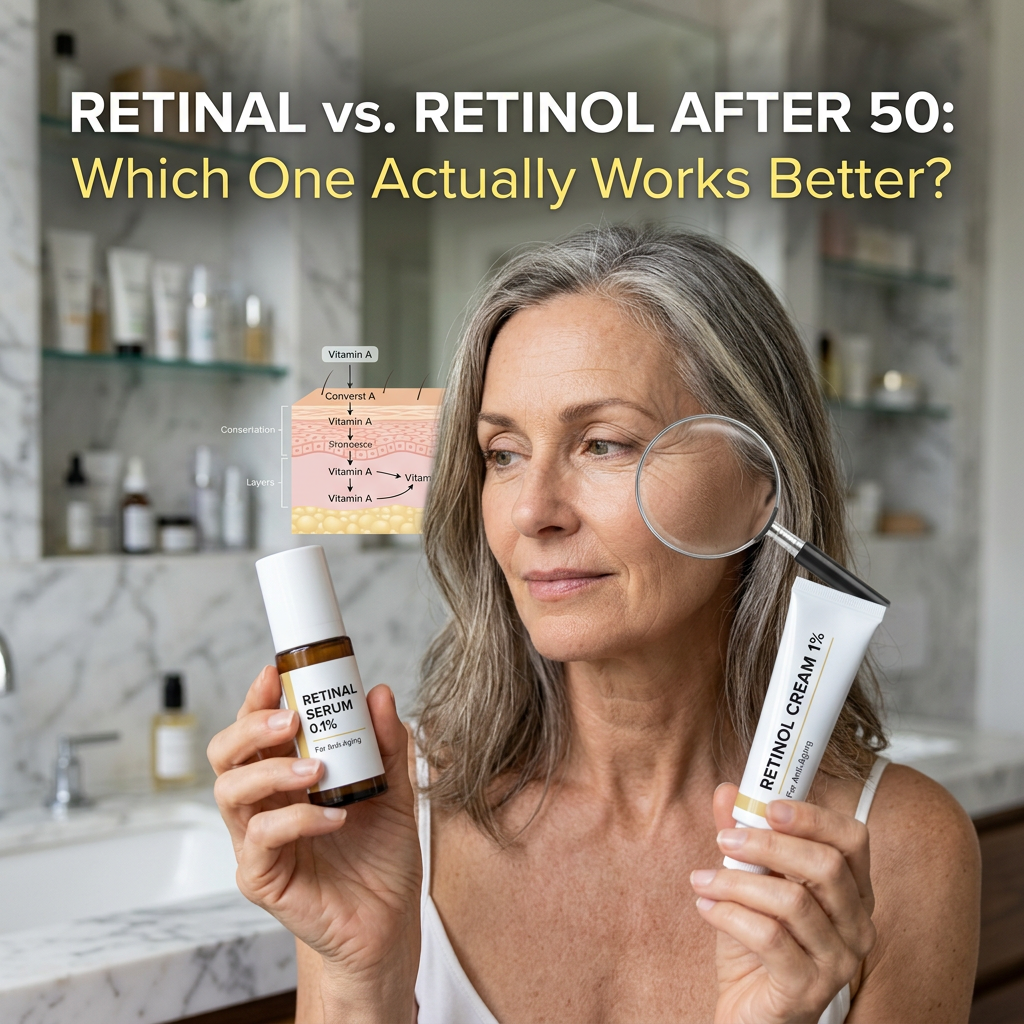
Retinol and retinal are both forms of vitamin A. Neither one does much on its own. Your skin has to turn them into retinoic acid, the form that actually speeds up skin cell turnover and helps with collagen. That’s what smooths out fine lines and rough texture over time.
The difference is how many steps it takes to get there:
- Retinol takes two steps. It turns into retinal first, then into retinoic acid.
- Retinal takes one step. It goes straight to retinoic acid.
Since retinal skips a step, less of it gets lost along the way, and it tends to show results sooner. That’s the whole reason people are excited about it.
About that “11 times faster” claim
You’ll see labels and ads saying retinal works “11 times faster” than retinol. I went looking for the study behind that number and couldn’t find one. The brands repeat it, but none of them point to the research it came from.
So I’d take that one with a grain of salt. Retinal does convert faster. Your wrinkles just aren’t going to disappear 11 times faster.
What the actual studies say
There isn’t a mountain of head-to-head research, but here’s the best of it.
In a 2021 study in the Journal of Cosmetic Dermatology, 23 people with sun-damaged skin put a retinal cream on one side of their face and a retinol cream on the other for 8 weeks. Both sides got better. The retinal side did better on crow’s feet, skin bounce and moisture.
That’s encouraging, but it’s one small study. Giorgia Guazzarotti, who writes the no-nonsense skincare blog Beautiful With Brains, dug through the research on this too. She calls it about the only real side-by-side trial out there. Her take: retinal wins on speed, but retinol’s no loser. Give it more time and it gets you to about the same place, for less money.
And retinol has the longer track record. Back in 2007, Dr. Reza Kafi and a team at the University of Michigan tested a 0.4% retinol lotion on folks whose average age was 87. After 24 weeks, the retinol arm had fewer fine wrinkles, and skin samples showed it was making more collagen. If it can help skin at 87, I reckon it’s got plenty left to offer the rest of us.
Is retinal gentler?
This is where the marketing gets ahead of itself. Retinal is often sold as the gentle option. But in a 1999 study in the journal Dermatology, retinol and retinal caused about the same low level of irritation, with retinal causing a little more flaking. Both were a lot easier on skin than prescription-strength retinoic acid.
So it’s not harsher than retinol, but it’s not automatically gentler either. Your skin will tell you.
Which one should you pick?
Here’s how I’d look at it:
- Pick retinol if you’re new to vitamin A, you’re on a budget, or you want the ingredient with the longest track record. It works. It just takes patience, usually a few months before you see much.
- Pick retinal if your skin already handles retinol fine and you’d like results a little sooner. It usually costs more, and it breaks down easier, so look for an opaque tube or pump, not a jar. If you want one to try, the MEDITHERAPY Retinal Skin Booster Serum is a Korean retinal serum that comes in a dark pump bottle, mixes in niacinamide, and is made with beginners and sensitive skin in mind. It’s a big bottle too, so it’ll last you a while. (That’s an affiliate link, so I may earn a small commission at no extra cost to you.)
- Fellas, this goes for you too. Vitamin A works the same on a man’s face, and it’s one of the few anti-aging ingredients with real research behind it.
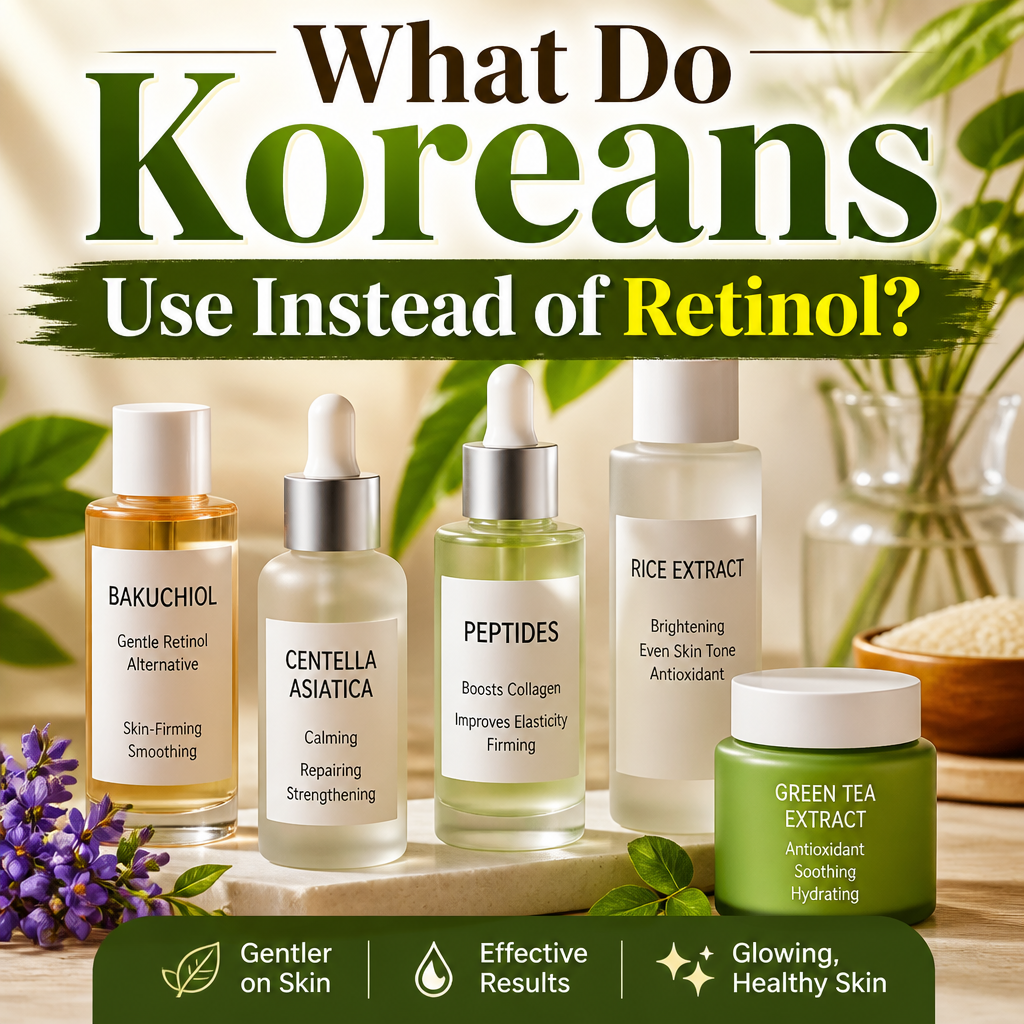
- If neither one agrees with you, there are gentler options. I covered those in what Koreans use instead of retinol.
How to use either one without wrecking your skin
- Start slow. A pea-sized amount, two nights a week. Add a night every week or two if your skin’s happy.
- Moisturize. If you get dry or flaky, put moisturizer on first or right after.
- Wear sunscreen every morning. Vitamin A makes your skin more sensitive to the sun, and sun damage undoes the work.
- Don’t stack it with strong acids. Not on the same night, anyway. I listed the combos to avoid in skincare serums you shouldn’t layer after 50.
- Back off if it burns. More isn’t better with vitamin A. Like the old saying goes, slow and steady wins the race.
Other voices worth following
A few folks worth reading if you want to learn more:
- Giorgia Guazzarotti of Beautiful With Brains cuts through skincare hype and breaks down what the studies really say.
- Angie of Hot & Flashy writes about style, beauty and health for women in their “hot-flash years,” and she tests a lot of skincare on her own 60-something skin.
- Dr. Michelle Wong of Lab Muffin Beauty Science is a chemist who explains how skincare ingredients actually work, in plain English.
Common Questions
What’s the difference between retinal and retinol?
Both are forms of vitamin A. Retinal takes one step to turn into retinoic acid, the active form. Retinol takes two steps, so it works more slowly.
Is retinal better than retinol for mature skin?
It can work faster. One small study found it did better than retinol over 8 weeks. But retinol has decades of research behind it and works well if you give it time.
Is retinal gentler than retinol?
Not really. Studies show they cause about the same amount of irritation, with retinal causing a bit more flaking.
Does retinal really work 11 times faster?
That claim shows up on a lot of labels, but I couldn’t find the study it comes from. Retinal does convert faster, but don’t expect results 11 times faster.
Can I use retinal or retinol after 60?
Yes. A study of people with an average age of 87 found retinol reduced fine wrinkles and boosted collagen. Start slow and wear sunscreen.
The bottom line: retinal isn’t a miracle, and retinol isn’t old news. The best one is the one your skin puts up with and you’ll actually keep using. Sticking with it beats strength every time.
If you missed it, last week I looked at skin longevity and whether you can really reverse cellular aging. Next week, we’re stepping away from the bathroom mirror to talk about somatic movement and how to calm a stressed-out nervous system.
Have y’all tried retinal yet, or are you sticking with good old retinol? Let me know in the comments.
— Tom
This is general information, not medical advice. If you have a skin condition or you’re thinking about a retinoid, check with your dermatologist first.