What’s the best serum after 50?
Short answer: The best serum is the one that fixes a specific problem you actually have. Hyaluronic acid helps with dryness, vitamin C and niacinamide help with uneven tone, and retinoids have the strongest track record for fine lines but can irritate. Start with one serum, not a collection, and you may not need one at all.
The best serum after 50 is the one that addresses a specific skin concern without making your routine harder or more irritating. Hydrating, brightening and retinoid products serve different purposes—and you may not need any serum at all.
A serum can be useful, but choosing one because the bottle looks expensive or the ingredient list sounds impressive is an easy way to spend money without knowing what you are buying. After 50, I look for a clear purpose first.
Start with the problem you actually want to address
Before buying anything, I ask what I want the product to do. Different ingredients and formulas are aimed at different concerns.
- Dryness or tightness: Look for hydrating and barrier-supporting ingredients.
- Uneven tone: Look for ingredients intended to improve the appearance of pigmentation, while staying serious about sun protection.
- Texture and fine lines: Certain proven actives may help, but tolerance matters.
- General maintenance: You may not need a serum at all if your basic routine is already working.
Ingredients I pay attention to
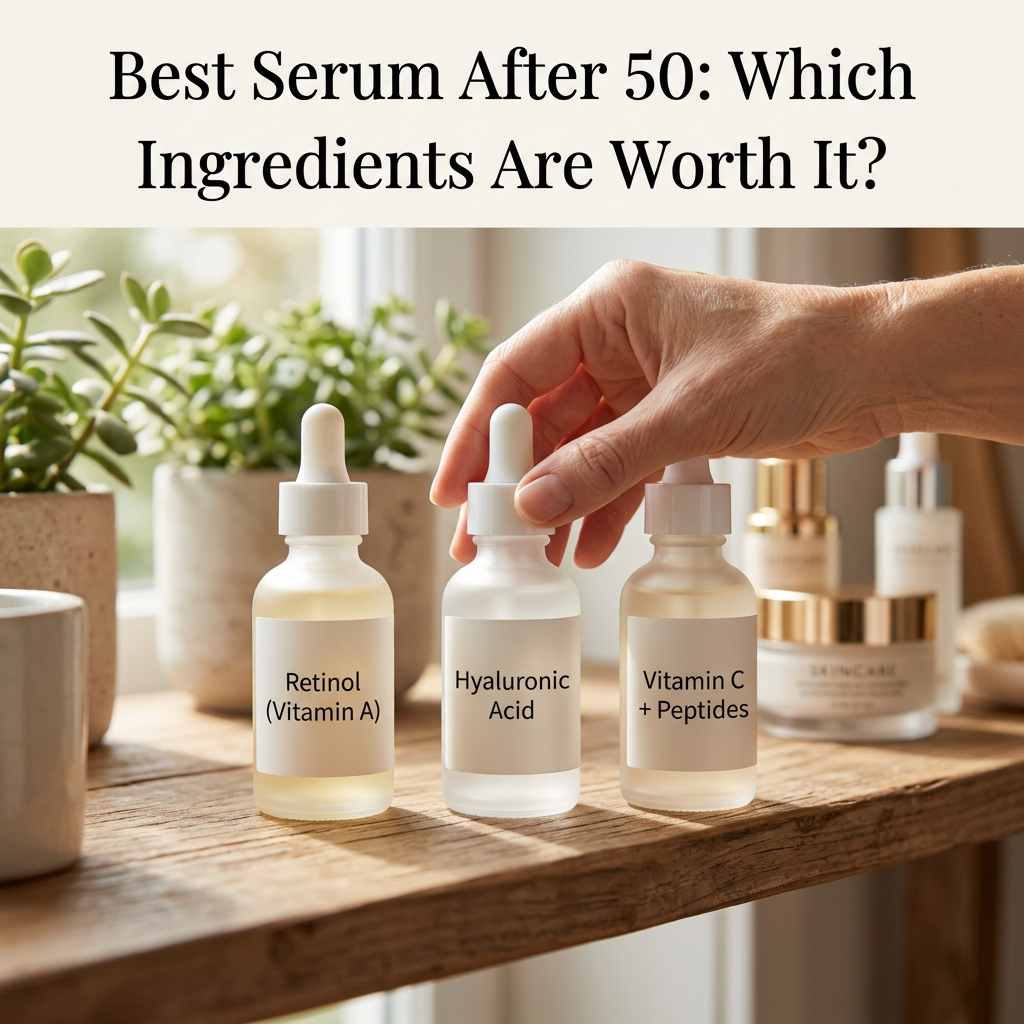
Hyaluronic acid and other humectants can help the skin hold water. Niacinamide is commonly used for several skin concerns and may be useful in a well-tolerated formula. Vitamin C products are popular for antioxidant support and uneven tone. Retinoids have a stronger history for addressing signs of photoaging, but they can also be irritating and need to be introduced thoughtfully.
The ingredient is only part of the story. The finished formula, concentration, packaging, your other products and how your skin reacts all matter.
Don’t build a routine from competing actives
This is where I think people get into trouble. One serum contains an acid, another contains a retinoid, another contains vitamin C, and suddenly the skin is being asked to tolerate everything at once.
A serum should fit into your routine, not take over your routine.
My shopping test
Before I buy, I ask four questions: What am I trying to change? Why did I choose this ingredient? Can I use the product consistently? And am I already using something that does essentially the same job?
If I cannot answer those questions, I keep shopping—or I save my money.
Give it time
Skincare is rarely a one-week project. A product may improve how hydrated your skin feels quickly, while changes in texture or tone can take much longer. Constantly switching products makes it difficult to know what is helping.
Three Experts Help Sort Useful Serums From Hype
Dermatologist Dr. Sean McGregor explains that adding too many toners and serums increases the chance of dryness and other side effects. His practical advice is to start with one serum rather than layering a whole collection.
Cosmetic chemist Dr. Michelle Wong looks at ingredient concentration and formulation when evaluating The Ordinary’s products. Her analysis is useful when a high-percentage label looks persuasive but tells only part of the story.
Dermatologist Dr. Tina Alster emphasizes gradual introduction of retinoids. That is a different—and usually more sensible—approach than treating a high-strength serum as the automatic next step.
Match the Serum to the Problem
Skin feels dehydrated: a hyaluronic acid or glycerin formula can help draw water into the outer skin layers, but moisturizer may already be sufficient. Uneven tone: a well-formulated vitamin C product or another suitable targeted treatment may help, always alongside sun protection. Oiliness or uneven appearance: niacinamide might be useful. Fine lines and sun damage: certain retinoids have stronger evidence, though they require more caution.
Peptides: an optional category with formula-specific and less consistent evidence, not a substitute for treatments with stronger research. You don’t need one of everything.
My Four-Question Serum Test
Before buying, ask: What problem am I targeting? What evidence supports this finished formula? Does it duplicate a product I already have? Can I tolerate and afford regular use? Introduce only one new active at a time. Track comfort and visible changes over several weeks rather than switching every few days.
Retinoids should be avoided in pregnancy; consult a clinician if you have a skin condition or troublesome irritation. A painful or changing skin lesion needs evaluation, not a beauty serum.
Related: The Ordinary Skincare After 50 and Skincare Layering After 50.
Common Questions
How do I pick the right serum after 50?
Start with your main skin concern—hydration, fine lines, uneven tone, or texture—then choose a serum with ingredients that address that specific concern.
What should you actually look for in a serum after 50?
Look at the ingredients, not just the marketing. Choose a formula that has a clear purpose and fits your skin type and concerns.
Which serum ingredients are worth looking for after 50?
Hyaluronic acid can help with hydration, vitamin C can support brighter-looking skin, niacinamide can support the skin barrier, and retinoids can target several signs of aging.
Do you really need a serum after 50?
No. A serum is an optional step. A gentle cleanser, moisturizer, and daily sunscreen are the foundation of a simple routine.
Should you choose a serum for hydration or anti-aging after 50?
Choose based on what your skin actually needs. If dryness is your biggest issue, prioritize hydration. If fine lines or uneven texture are the concern, a targeted active may make more sense.
Is a more expensive serum better after 50?
Not necessarily. Price alone doesn’t tell you whether a serum is a good match for your skin.
How many serums should you use after 50?
Usually, you don’t need several. Starting with one targeted serum makes it easier to see how your skin responds.
How should you add a new serum to your routine after 50?
Introduce one new product at a time, start slowly, and follow with moisturizer. Use sunscreen during the day.
What is the biggest mistake when choosing a serum after 50?
Buying based on impressive claims instead of choosing an ingredient that addresses your actual skin concern.
What is the simplest serum strategy after 50?
Identify your main concern → choose one useful ingredient → start slowly → moisturize → use sunscreen every morning.
A gentle health note: Active skincare ingredients can irritate mature or sensitive skin. Introduce new products gradually and stop using them if you develop significant or persistent irritation.
My bottom line
The “best” serum is not necessarily the newest or most expensive one. It is the one that addresses a real concern, fits with the rest of your routine and is comfortable enough that you will actually keep using it.
General skincare information and personal experience, not medical advice.
About Tom Green
Tom Green writes Well After 50. He was born in Pell City, Alabama, in 1962, and he’s a country boy and a true Southerner through and through. He’s just a regular, laid-back 64-year-old who keeps things simple. He shares what he learns about skincare, fitness and getting older, and what’s working for him. He’s also the author of A Practical Guide to Getting Older Without Giving Up on Yourself. Tom isn’t a doctor. He reads up on the research and passes along what’s useful, plain and simple.
I’ve also mapped out some great tools on my new Tech for Independent Living After 50 page.