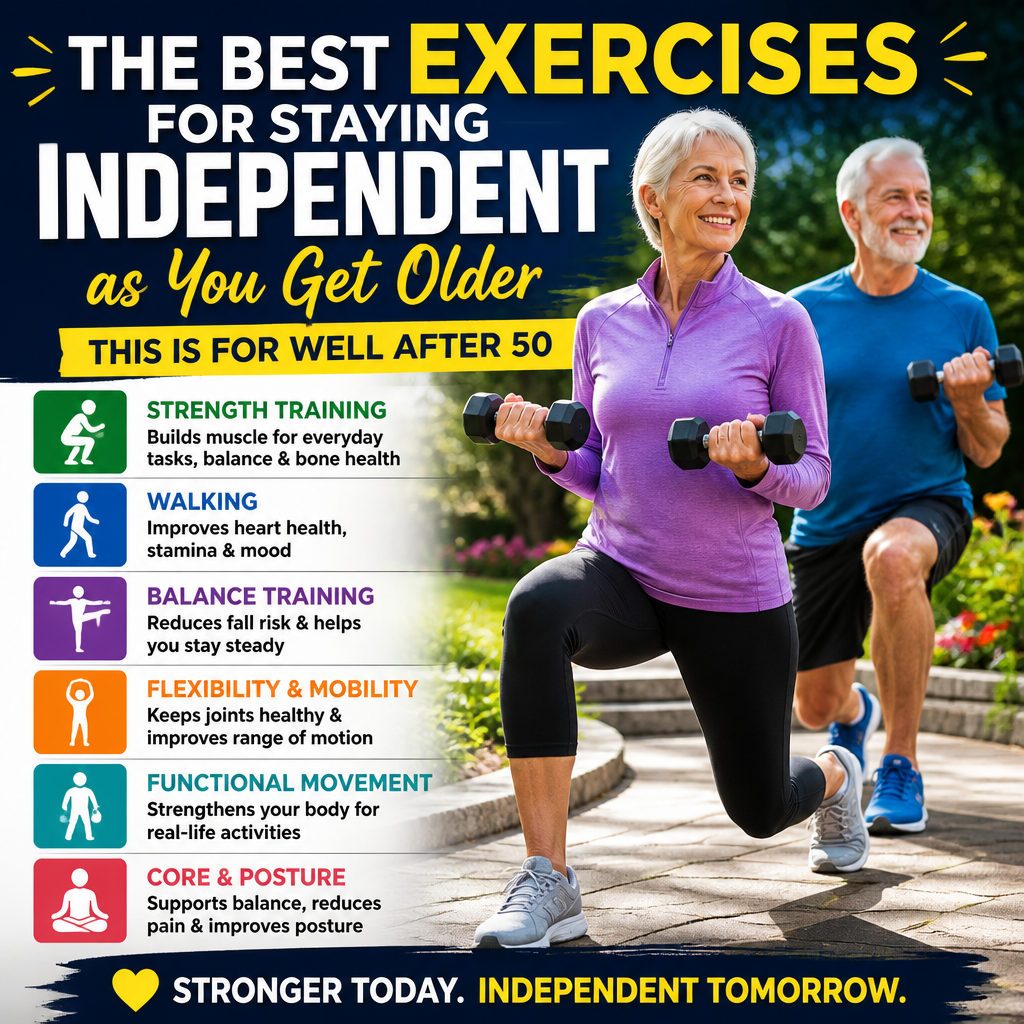
Fall has a way of making a fresh start feel possible. The sweltering days ease, the leaves change, and walking outside can become enjoyable again. If you’ve been telling yourself you need to get moving, why wait for January?
After 50, getting fit isn’t about proving you can exercise like you’re 25. It’s about walking without getting winded, carrying groceries, climbing stairs, staying steady and having energy left for the people and activities you love.
If you only do three things this week
- Take a 10-minute walk on a day when the weather is nice. That’s it. Don’t make it a big production.
- Do one short strength session: stand up from a sturdy chair 5 to 10 times, then do a few wall push-ups.
- Put your next two walks on the calendar. A plan you’ve written down is much harder to skip.
If that’s all you do, you’re already ahead of where you were last week.
Why I’d start now instead of waiting for January
Here’s the way I look at it. January is when everybody starts at once, the weather is cold and gray, and most of us are coming off the holidays feeling a little heavier and a lot less motivated. Fall gives you a head start. The weather is on your side, the days are still reasonably long, and you have a couple of months to build a habit before the holiday season gets busy.
I’m in my 60s, and I work out to feel like a healthier me as I age. What I care about is being able to keep doing the everyday things without thinking twice. That’s the goal of everything in this post: simple, safe and repeatable.
Cooler weather can remove one big excuse
If you’ve ever tried walking through a Southern summer, you know heat and humidity can sap your enthusiasm quickly. Autumn often makes outdoor exercise more comfortable. The season itself isn’t a fitness shortcut: the benefit comes when pleasant conditions help you move consistently. Getting started now also gives you time to establish a habit before the busy holiday season.
Stop thinking only about the scale
Weight isn’t the only measurement that matters. Strength helps you rise from a chair and carry bags. Cardio builds endurance. Balance helps you move with confidence. The CDC’s older-adult activity guidance recommends that people 65 and older work toward at least 150 minutes of moderate aerobic activity weekly, muscle strengthening at least twice, and balance activities. Adults in their 50s and early 60s also benefit from cardio and strength work. Build gradually if you are returning after a break.
If you want a simple way to check where your strength stands right now, try the floor test I wrote about in Can You Get Up From the Floor? What a Simple Test Reveals About Strength After 50. It’s a good “before” picture you can compare against in a couple of months.
Make your next walk more interesting
Walking doesn’t need an expensive app or a complicated plan. Matthew Solan offers practical ideas in Harvard Health’s “Step up your walking routine.” Rather than walking at the same pace every time, try three or four minutes at your comfortable pace followed by 30 seconds a little faster. You can also mark the faster stretches using mailboxes or telephone poles.
Keep it safe: aim for an effort where you breathe more noticeably but can still speak. If you’re unsteady or have painful joints, stay on level ground and keep a comfortable pace. Progress isn’t a contest.
Don’t let walking become your entire fitness plan
Walking can strengthen your endurance, but it doesn’t cover every physical need. Erica Sweeney explains why in AARP’s “4 Types of Exercise You Need as You Age.” Strength, cardio, balance and flexibility serve different purposes. Relying exclusively on one can leave important gaps.
Consider two short strength sessions a week, choosing movements suitable for your abilities: supported chair sit-to-stands, calf raises, resistance-band rows, wall push-ups or controlled exercises on gym machines. Start with manageable resistance and avoid exercises that aggravate an injury. The point is to become more capable, not to leave yourself too sore to move the next day.
For more on which strength habits are worth your time, see 7 Strength Habits That Matter More After 60.
Enjoy autumn scenery, but watch your footing
Those beautiful fallen leaves can hide roots, potholes and slick pavement. Earlier sunsets can leave your favorite walking route poorly lit. In Harvard Health’s “Protect yourself from falls outside the home,” Heidi Godman shares physical therapist Barbara Ranucci’s advice about supportive, nonslip shoes, uneven terrain, weather and building leg and core strength for balance.
Choose a familiar route with firm, even ground. Wear shoes with good grip, carry your phone, and walk in daylight when possible. If you have balance problems, seek guidance rather than testing yourself alone on a slippery path.
A first week that won’t wear you out
You don’t need to overhaul your entire life on Monday. Here’s a flexible starting point if you’re returning to activity:
- Monday: Walk 10–15 minutes at a comfortable pace.
- Tuesday: Do a short, gentle strength session.
- Wednesday: Walk again; try brief faster intervals only if comfortable.
- Thursday: Rest or stretch gently.
- Friday: Complete a second strength session.
- Saturday: Enjoy a park or another active outing.
- Sunday: Recover and plan your next week.
These are examples, not requirements. Five minutes may be the right starting point for some people. Increase gradually and speak with a qualified clinician about exercise restrictions if you have significant health conditions or injuries.
What to do on the days you don’t feel like it
There will be days when it’s chilly, it’s getting dark early, and the couch looks a lot better than a walk. That’s normal. On those days, don’t skip it completely. Just shrink it. Walk to the end of the street and back. Do five chair stands while the coffee brews. A small win keeps the habit alive, and the habit is what matters.
Make movement the easy choice
Motivation comes and goes, so don’t count on it. Put your walking shoes where you’ll see them, keep comfortable workout clothes ready, and leave any home equipment where you’ll actually use it. Then treat your walks and strength sessions like appointments: pick the day and time ahead of time.
It also helps to make it enjoyable. Walk somewhere with changing leaves, listen to music or a podcast, take the dog, or meet a friend for a walk instead of another meal. If an activity feels good, you’re far more likely to keep doing it.
And if you spend a lot of the day sitting, break it up. Stand up, walk around the house, or step outside for a few minutes. Small movement breaks add up.
Consistency beats punishment
One of the easiest ways to give up is to exercise so hard on day one that you dread day two. You don’t need to prove anything with painful soreness. A repeatable routine is more valuable than one heroic workout. Stop for sharp pain, dizziness, chest discomfort or unusual shortness of breath and seek appropriate care.
Here’s the best thing about beginning in fall: when January finally rolls around, you might already have a habit rather than another resolution. Start with a walk. Add some strength. Practice safe balance work. Make it something you actually enjoy. That’s real progress after 50.
Common Questions
Is fall a good time to start exercising after 50?
Yes. Cooler weather often makes walking and outdoor activity more comfortable, and starting in fall gives you a couple of months to build a habit before the holidays and winter.
How much exercise do I need after 50?
The CDC suggests older adults work toward about 150 minutes of moderate activity a week, plus muscle strengthening at least two days a week and balance activities. If you’re starting from scratch, begin with much less and build up gradually.
Is walking enough exercise after 50?
Walking is a great foundation, but it doesn’t do everything. Adding simple strength work, like chair stands and wall push-ups, helps you keep the muscle you need for everyday tasks.
What’s the easiest way to start if I haven’t exercised in years?
Start small: a 10-minute walk and a few chair stands. Do that consistently for two weeks before adding more. If you have health conditions or injuries, check with your healthcare professional first.
How do I stay safe walking outside in the fall?
Wear shoes with good grip, stick to familiar routes with even ground, walk in daylight when you can, and watch for wet leaves, roots and potholes. Carry your phone.
How do I stay motivated when the days get shorter?
Schedule your walks like appointments, walk earlier in the day, and on low-energy days do a shorter version instead of skipping. Small, regular wins keep the habit going.
Keep Reading
- How Many Steps or Minutes of Exercise Do You Need in Your 50s, 60s and 70s?
- How to Build Muscle After 60 Without Getting Hurt
- Can You Get Up From the Floor? What a Simple Test Reveals About Strength After 50
Listen to Well After 50
I also talk about practical health and aging topics on the Well After 50 with Thomas Green podcast. If you prefer to listen while walking, driving, or relaxing at home, find Well After 50 on Spotify and check the show for available episodes.
About the author
Tom Green created Well After 50 to share practical ideas about fitness, skincare, wellness and aging without giving up on yourself.
I’m not a doctor—I’m a man in my 60s sharing research and practical experience. This article is for general education, not individual medical advice.