Tag: healthspan

  • How to Enjoy Life After 50: 4 Simple Habits That Make the Years Better

    How to Enjoy Life After 50: 4 Simple Habits That Make the Years Better

    Most of us have spent years thinking about how long we’ll live. Then the doctors started talking about how many of those years we’ll stay healthy. Fair enough.

    But here’s a question nobody asks you at your checkup: Are you still enjoying it?

    Turns out there’s a word for that. It’s called joyspan, and I reckon it might be the number that matters most.

    Where the word came from

    Dr. Kerry Burnight came up with it. She’s a gerontologist, which is a doctor who studies aging, and she teaches at the UC Irvine School of Medicine. She spent 16 years working with older folks who’d been neglected and mistreated. After seeing the worst side of growing old, she went looking for the other side: what makes people thrive later in life.

    That search turned into her 2025 book, Joyspan: The Art and Science of Thriving in Life’s Second Half. It became a New York Times bestseller. (If you buy it through my link, I may earn a small commission at no extra cost to you.)

    Joyspan: The Art and Science of Thriving in Life's Second Half book cover by Dr. Kerry Burnight

    Her idea is simple. Joyspan is how much you actually enjoy your life as you get older. Not how many pills you take or how many steps your watch counts. Just whether you still wake up glad to be here.

    Here’s the part I like best. You don’t have to be in perfect shape to have a long joyspan. Bad knees, stiff back and all, you can still have a good one.

    The four things that build it

    Dr. Burnight boils it down to four habits: grow, connect, give, and adapt. Harvard Health wrote about them too. Here’s how I look at each one.

    1. Grow

    Keep learning something. Doesn’t have to be big. A new recipe. A trail you’ve never walked. Finally figuring out what all those buttons on the TV remote do.

    For me, it’s been this website. Some days I’ve wanted to toss the computer out in the yard. But every time I finally figure something out, I feel about ten years younger. That’s what growing does for you.

    2. Connect

    Stay close to people. This one has a lot of science behind it.

    Yvette Francino is a retired coach who writes a blog called Living Life to the Fullest. After she read the book, she wrote about what keeps her own joy going. One of the biggest? She calls her mom every single night.

    Now, you might think that’s her doing her mom a favor. But Yvette says she gets just as much out of those calls as her mom does. A few minutes on the phone, a few laughs, and they both go to bed a little happier.

    That’s what connection looks like. It doesn’t have to be a big family reunion. It just has to happen.

    And the experts back her up. In the 2026 U.S. News Healthy Aging Survey, 59% of the 63 health experts they asked named loneliness and isolation as the most overlooked thing that speeds up aging.

    Easy start: call one person this week you haven’t talked to in a while. Just to see how they’re doing.

    3. Give

    Help somebody. Drive a neighbor to an appointment. Teach a grandkid to fish. Share what you’ve learned the hard way. Helping somebody you know does more for you than you’d think, and we’ve all got something worth passing on.

    4. Adapt

    Things change. Our bodies change, people we love pass on, plans fall through. Dr. Burnight treats those hard times as a normal part of life, not a sign that the good part is over.

    Helen Williams writes about getting older on her Substack, and she shared a story about her grandparents that I can’t stop thinking about.

    Her grandfather walked everywhere. Swam every day. Kept up with his friends. He stayed in the game right up until illness finally made him stop.

    Her grandmother went the other way. One by one, she found reasons to quit the things she loved.

    Same family. Same generation. Two very different later years. And a lot of that difference came down to little choices, made one day at a time. Like the old saying goes, you can’t change the wind, but you can adjust your sails.

    Quick check: What’s your joyspan?

    Grab a pencil or just keep count in your head. Give yourself a score from 1 to 5 on each one. A 1 means “not me at all.” A 5 means “that’s me all day long.”

    1. Grow: I’ve learned or tried something new in the last month.
    2. Connect: I talk with somebody I care about most days.
    3. Give: I’ve helped somebody this week, even in a small way.
    4. Adapt: When things don’t go my way, I find a way to keep going.

    Now add them up:

    • 16 to 20: You’re doing great. Keep it up, and maybe share what’s working with a friend.
    • 10 to 15: Pretty good, with some room to grow. Look at your lowest score and start there.
    • 4 to 9: No shame in that. It just means you’ve got the most to gain. Pick one area and do one small thing this week.

    This is just for fun, not a medical test. It’s a way to see where you stand today.

    A few small ways to start this week

    Jane Woods is a blogger over in England. She’s closing in on 70, taking care of her husband, and still chasing her own goals. She gave Joyspan five stars on her blog Changing People, and she pointed out something I’d never really thought about.

    Joy and happiness aren’t the same thing.

    You can be going through a rough patch, not happy at all, and still catch a moment of joy. A grandbaby’s laugh. A good cup of coffee on a cool morning. Joy lives in the little moments, if you slow down long enough to notice them.

    So here are a few easy ways to catch more of them. None of them cost a dime.

    • Slow down for the good stuff. That first cup of coffee, a sunset, a song you love. Actually notice it.
    • Take a “joy snapshot” every day. Before bed, think of one moment that made you smile.
    • Volunteer. Church, food bank, library, wherever fits you.
    • Tend your friendships. They’re like a garden. They need a little water now and then.
    • Get moving outside. A walk in fresh air does more than you’d think.

    How it fits with everything else

    That same U.S. News survey found the experts put plain old exercise and good food at the top of the list, way ahead of trendy supplements and gadgets. (I looked at one of those trendy supplements in my post on NMN.)

    Joyspan is the other half of that. Exercise and good food help you get more years. Joy is the reason you want them.

    If you want to dig deeper, Dr. Burnight’s book Joyspan is a good place to start. It’s a good one to keep on the nightstand.

    Common Questions

    What is joyspan?
    Joyspan is a word coined by gerontologist Dr. Kerry Burnight. It means how much joy and satisfaction you get out of life as you get older, not just how many years you have.

    How is joyspan different from lifespan and healthspan?
    Lifespan is how long you live. Healthspan is how many of those years you’re healthy. Joyspan is how much you enjoy them.

    What are the four parts of joyspan?
    Grow, connect, give, and adapt. Keep learning, stay close to people, help others, and roll with the changes life brings.

    Can you raise your joyspan after 60?
    Yes. Dr. Burnight treats joyspan as a habit, not luck, and says the best time to start is now. Small steps, like calling a friend or trying something new, count.

    Do you have to be healthy to have a long joyspan?
    No. Plenty of folks with aches, health problems or hard seasons still find real joy. It’s more about how you live your days than how perfect your body is.

    One question to sit with

    What did you enjoy this week?

    If the answer comes quick, good for you. If it comes slow, pick one of the four, grow, connect, give, or adapt, and do one small thing with it before Sunday.

    Y’all let me know in the comments which one you’re working on. I’d like to hear it.

    — Tom

    About the Author

    Tom Green writes Well After 50. He’s just a regular, laid-back 64-year-old who keeps things simple. He shares what he learns about skincare, fitness and getting older, and what’s working for him. He’s also the author of A Practical Guide to Getting Older Without Giving Up on Yourself.

    Tom isn’t a doctor. He reads up on the research and passes along what’s useful, plain and simple.
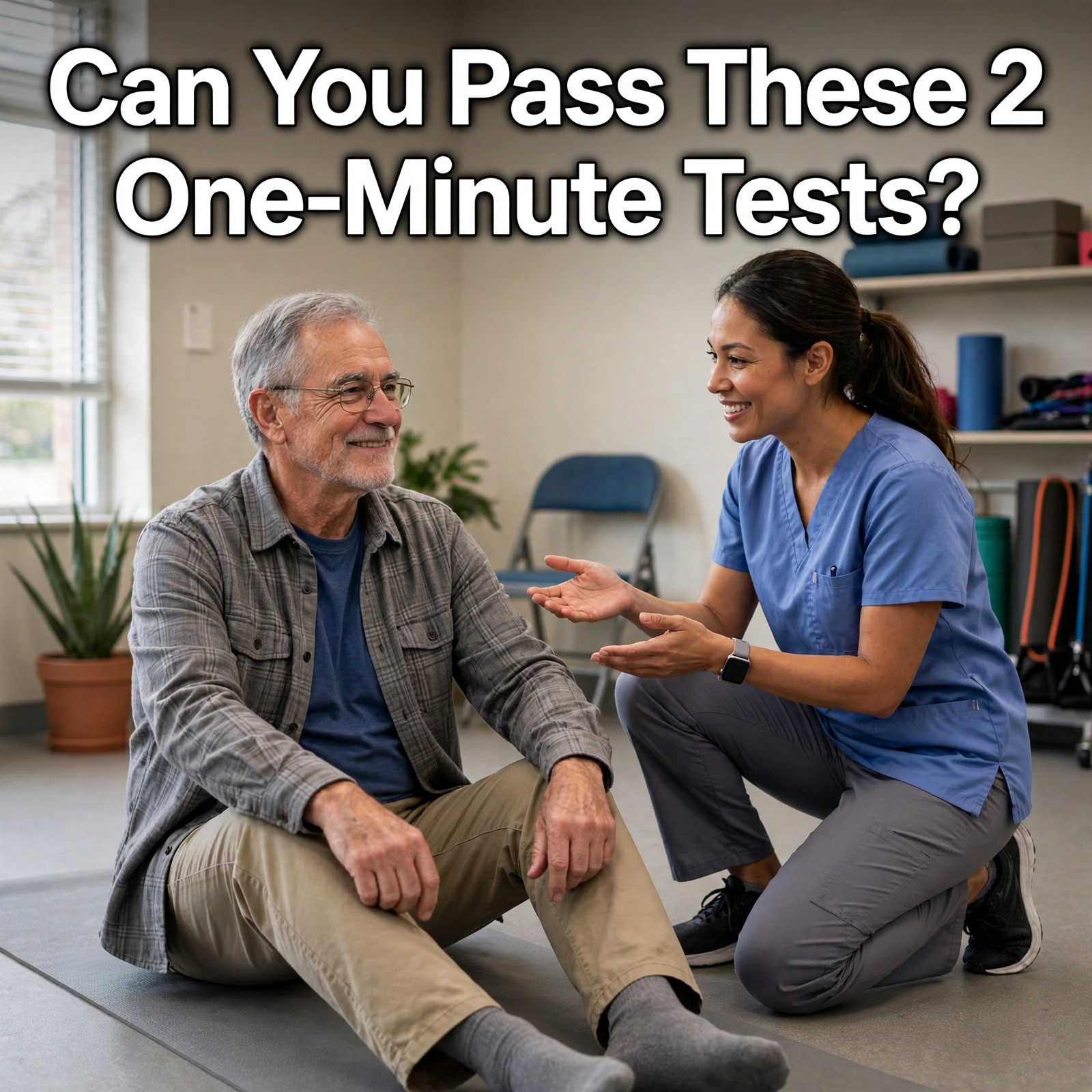
  • The Floor Test That May Predict Longevity: How to Score It and Improve It

    The Floor Test That May Predict Longevity: How to Score It and Improve It

    Tom Green, Well After 50

    We keep a close eye on blood pressure and cholesterol. But when was the last time you checked how well you balance, or whether you can get up off the floor without a struggle?

    I’m 64, and I’ve noticed I’m more prone to accidental falls than I used to be. It’s not one thing. It’s a few different things, and it means I have to think ahead in situations where a fall could happen. Balance isn’t something I used to think about. Now I do, and that’s why the research of Dr. Claudio Gil Araújo caught my attention.

    Here’s what you’ll get from this article: two simple tests you can try at home, what the research really found (and what it didn’t), what other real writers and bloggers have said about these tests, and a gentle plan for getting steadier. I won’t pretend any test can predict your future, because none can.

    Please read this first: safety comes before any score. Do both tests next to something sturdy to grab, and don’t try them alone if you might fall. If you have dizziness, balance problems, recent surgery, a hip or knee replacement, or a history of falls, check with your doctor before you try either one.

    Who Is Dr. Claudio Gil Araújo?

    Dr. Araújo is a physician in exercise medicine. In 1994 he founded a clinic called CLINIMEX in Copacabana, Rio de Janeiro, and it has done more than 15,000 fitness evaluations since. He created the Sitting-Rising Test and a flexibility test called the Flexitest, and he led the 2022 research on the 10-second one-legged stance. He has published more than 250 papers, and his patients range from Olympic athletes to people recovering from heart surgery, which he says gives a more realistic picture than studies of healthy volunteers only.

    He studies what he calls non-aerobic fitness: muscle strength and power, flexibility, balance, and body composition. We usually think of fitness as walking, cycling, and getting the heart rate up. But these other abilities are what you use to get out of a chair, climb steps, pick something up, or catch yourself when you stumble. They are what keeps you independent.

    One note: each study below used its own group of patients, not all 15,000, and they all came from one clinic in Rio. The findings may not apply equally to everyone.

    Test 1: The 10-Second One-Leg Stand

    How to do it

    Stand right beside a counter or sturdy support you can grab.

    Arms at your sides, eyes on a spot straight ahead.

    Lift one foot and rest it behind the opposite calf.

    Hold for 10 seconds without putting that foot down.

    In his clinic, Dr. Araújo uses a force platform that tracks body sway. The pass-or-fail home version exists because almost nobody has that equipment, so please don’t treat your home result as a diagnosis.

    What the research found

    The study followed 1,702 people aged 51 to 75 for a median of about 7 years.

    Roughly 1 in 5 couldn’t hold the position for 10 seconds.

    About 17.5% of that group died during follow-up, compared with 4.6% of those who passed.

    After adjusting for age, sex, body mass index, and health conditions, the risk of death was about 84% higher for those who failed.

    In plain English: People who couldn’t hold the position were more likely to have died during the study, even after researchers accounted for some differences between them. That’s a reason to pay attention to balance. It is not a prediction about you. The link is an association, not proof that failing the test causes anything, and the study didn’t account for things like recent falls or activity level. Dr. Araújo told an interviewer the same thing: the link is partial, not proven cause and effect. He also said about 60% of 70-year-olds can hold the position for 10 seconds, so if you can’t, you are far from alone. He mentioned a 97-year-old patient who can still do it after exercising at his clinic for 30 years.

    What other writers say about the one-leg stand

    Alex Brooks, who writes the newsletter Dueto for women over 45, admits she only just passed the one-leg test after years of hot yoga, and says it was strength training that really helped. It’s honest, funny, and very relatable.

    Wellness coach Gillian Bogden, in a guest column on Heather Martin’s Tumbleweed newsletter, tested herself the second she read about the study, then tried to beat her age group. She also shares easy daily habits, like standing on one foot while you brush your teeth or putting on your socks and shoes one leg at a time.

    Personal trainer Jennifer Rizzuto, who works with seniors, explains how a single-leg balance test can help you think about fall risk and how long you should be able to hold it as you age.

    If you couldn’t make 10 seconds, don’t panic. TODAY’s Brianna Steinhilber shares easy ways to build up: start with a few seconds per leg, lightly rest the toe of your lifted foot for help, or touch a wall and lean on it less over time.

    And for a smile, the blogger at WorkersCompensation.com had some fun with this study, joking that a thousand readers would push away from their desks to see if they could stand on one leg. I’d bet you’ve already thought about trying it too.

    Test 2: The Sitting-Rising Test (the “Floor Test”)

    How to do it

    Stand barefoot on a firm, non-slip surface with a clear area of about 6 by 6 feet. Put a mat down.

    Have another person beside you, clear any obstacles behind you, and keep something sturdy within reach.

    Without rushing, sit down on the floor, then stand back up, using as much support as you need to stay safe. The goal is not to force a high score.

    How it’s scored: You start with 5 points for sitting and 5 for rising. You lose a point each time you use a hand, forearm, knee, or the side of your leg for support (yes, a hand on your knee counts), and half a point for a wobble. Crossing your legs is allowed. A perfect score is 10.

    Watch it done by the team that created the test

    Dr. Araújo kindly shared his team’s updated 2025 demonstration video for Well After 50 readers. It shows how the test is done and how each point is scored.

    CLINIMEX: Sitting-rising test (SRT), an updated 2025 video

    He also pointed readers to the full research article, which you can read for free: the sitting-rising test study in the European Journal of Preventive Cardiology (free full-text PDF).

    What the research found

    A 2025 study followed 4,282 adults aged 46 to 75 for a median of about 12 years.

    Death rates ranged from 3.7% among people who scored 10 to 42.1% among those who scored 0 to 4.

    After adjustment, the lowest-scoring group had about 3.8 times the risk of death from natural causes and about 6 times the risk of cardiovascular death, compared with the highest-scoring group.

    An earlier 2014 study from the same research group had also linked these scores to the risk of dying.

    In plain English: The people who needed the most help getting down and back up tended to have worse outcomes over the following years. The test checks muscle power, strength, balance, flexibility, and body weight all in one movement, and it matches real life: picking up something you dropped, or getting down to play with your grandchildren. But scoring poorly doesn’t seal anyone’s fate.

    What other writers say about the floor test

    This is where I found the most honest takes, and they’re worth your time.

    Humorist Dave Barry tried the test in his bedroom, asked his neighbors to try it, and came away convinced a perfect score is unrealistic for most of us. It’s a funny reminder that science still has to make sense to real people.

    On her independent blog Fit Is a Feminist Issue, Catherine W. wrote about trying to get up off the floor and asked sharp questions. She pointed out that the lowest scorers were older on average than the highest scorers, that knee problems and arthritis will hurt your score at any age, and that sitting on the floor isn’t part of every culture. That’s a good attitude for all of us: take the science seriously, but ask what it really measures.

    Patrick Posten shows himself doing the test on his Substack, losing a point for every hand or shin he needs, and tells readers to try it and see how they score. It’s a good look at what a real, everyday attempt looks like.

    Certified trainer Ashley Blake Greenblatt walks through the test in the Philadelphia Inquirer and follows it with simple floor exercises, like glute bridges, to build the strength you need.

    Muscle Power May Matter More Than Strength

    Strength is how much force you can produce. Power is force plus speed. You use power when you rise from a chair, climb stairs, or move fast enough to catch your balance.

    A 2025 study of 3,889 adults aged 46 to 75, with about 11 years of follow-up, found roughly 5.9 times the risk of death in men and 6.9 times in women with the lowest relative muscle power compared with the highest. Handgrip strength alone did not show a statistically significant link in the same analysis. The numbers for women had wide margins of error, so take the exact figure with a grain of salt.

    In plain English: The ability to move with power seemed more closely tied to survival than grip strength alone. That doesn’t mean strength is unimportant, and it doesn’t mean training faster will extend your life. Dr. Araújo has observed that after about age 60 we tend to lose speed faster than we lose strength. His approach is to lift a weight fairly quickly and lower it under control, for about 6 to 8 repetitions. That isn’t for everyone, so if you’re new to resistance training or have injuries, work with a qualified trainer or physical therapist first.

    Flexibility: The Overlooked Piece

    The Flexitest checks 20 movements across seven joints for a score from 0 to 80. In a 2024 study of 3,139 adults aged 46 to 65, women scored about 35% higher than men, and lower flexibility was linked to higher mortality in both sexes.

    In plain English: More flexible people tended to have better survival odds in this group. That can’t tell us whether stretching more would itself help anyone live longer. In an interview, Dr. Araújo suggested flexibility may take as little as about 10 minutes a day to improve, far less than aerobic fitness takes. Think ankles, knees, hips, trunk, wrists, elbows, and shoulders, not just hamstrings, and never stretch into pain.

    What These Tests Do Not Mean

    The numbers can sound frightening without context. Here’s what I want you to remember:

    They show associations, not guarantees. A low score might reflect illness, frailty, or other factors.

    No study here proves that raising your score adds years to your life.

    The groups came from one clinic in Rio. Results may not apply equally to every community.

    Standing still isn’t the whole story of falling. Moving safely takes abilities these tests don’t fully measure.

    A low score is a reason to ask questions and work on what you safely can. It is not a verdict.

    How to Get Steadier Without a Gym

    Practice balance with support. If your doctor says it’s safe, try brief one-leg stands next to a counter with your hand on it, even while the microwave runs or you brush your teeth. Don’t add distractions if you’re unsteady.

    Practice getting up and down safely. If the floor test seems unsafe, start with supported chair movements, or ask a physical therapist for an adapted progression.

    Build controlled leg strength. With medical clearance, practice rising from a sturdy chair and sitting back down slowly.

    Move your joints gently. A few minutes of easy stretching goes a long way.

    A simple seven-day starter plan

    Day 1: Read the instructions and safety notes. Only attempt a test if it’s safe for you. Otherwise, pick one comfortable, supported movement to practice.

    Days 2 to 6: Supported balance practice if appropriate, plus about 10 minutes of gentle stretching.

    Days 3 and 5: Add a few slow, controlled chair stands if you can do them safely.

    Day 7: Notice what feels steadier. Retest only if it’s safe and you want to.

    One week won’t change your long-term health. A habit you can stick with will.

    If you lose points, work on the part that cost you

    • If you needed your hands or knees to get up, that usually points to leg strength. Slow chair stands are a good place to start: sit, stand up without using your hands, then sit back down slowly. Try 8 to 10 if it feels safe.
    • If you wobbled or lost your balance, practice the one-leg stand next to a counter with a hand on it. As you get steadier, use just a fingertip, then no hand.
    • If getting down or up felt stiff, spend a few minutes a day sitting cross-legged on a mat or firm cushion, with a sturdy chair or couch beside you, practicing the lowering and rising movement.

    None of this is a prescription. If you’re unsure what’s safe for you, a physical therapist can tailor it.

    Your Turn

    Can you stand on one leg for 10 seconds? If it’s safe for you to try, tell me how it went in the comments. And if you’ve ever struggled to get up off the floor, you are certainly not the only one. You might also enjoy my earlier article, Can You Get Up From the Floor? What a Simple Test Reveals About Strength After 50.

    Health note: I’m not a doctor. I’m a man in my 60s sharing personal experience and research that interests me. This article is general information, not medical advice. Please check with your clinician before trying these tests or starting an exercise program, especially if you have fallen, feel dizzy, have joint replacements or recent surgery, or have other health concerns. Do not risk a fall to earn a score.

    More Reading From Real People

    Alex Brooks (Dueto), “Why balance is brutal”

    Gillian Bogden, guest column on Tumbleweed with Heather Martin, “How Long Can You Stand on One Leg?”

    Dave Barry, “Aging Well”

    Catherine W., “The sit-rise test: trying to get up to save my life”

    Patrick Posten, “Scoring Well On This Test Could Extend Your Life”

    Jennifer Rizzuto, a personal trainer’s take on the single-leg balance test

    Ashley Blake Greenblatt, “What this one-minute fitness test can reveal about your health”

    Brianna Steinhilber on TODAY, the 10-second balance test and how to build up to it

    Credits: Dr. Claudio Gil Araújo and CLINIMEX (Clínica de Medicina do Exercício), Rio de Janeiro. Dr. Araújo’s interview comments come from a conversation with writer Eli Lichter for Medical Guardian (August 2026).

    About the Author

    Tom Green writes Well After 50. He’s just a regular, laid-back 64-year-old who keeps things simple. He shares what he learns about skincare, fitness and getting older, and what’s working for him. He’s also the author of A Practical Guide to Getting Older Without Giving Up on Yourself. Tom isn’t a doctor. He reads up on the research and passes along what’s useful, plain and simple.