Tag: hobbies after 50

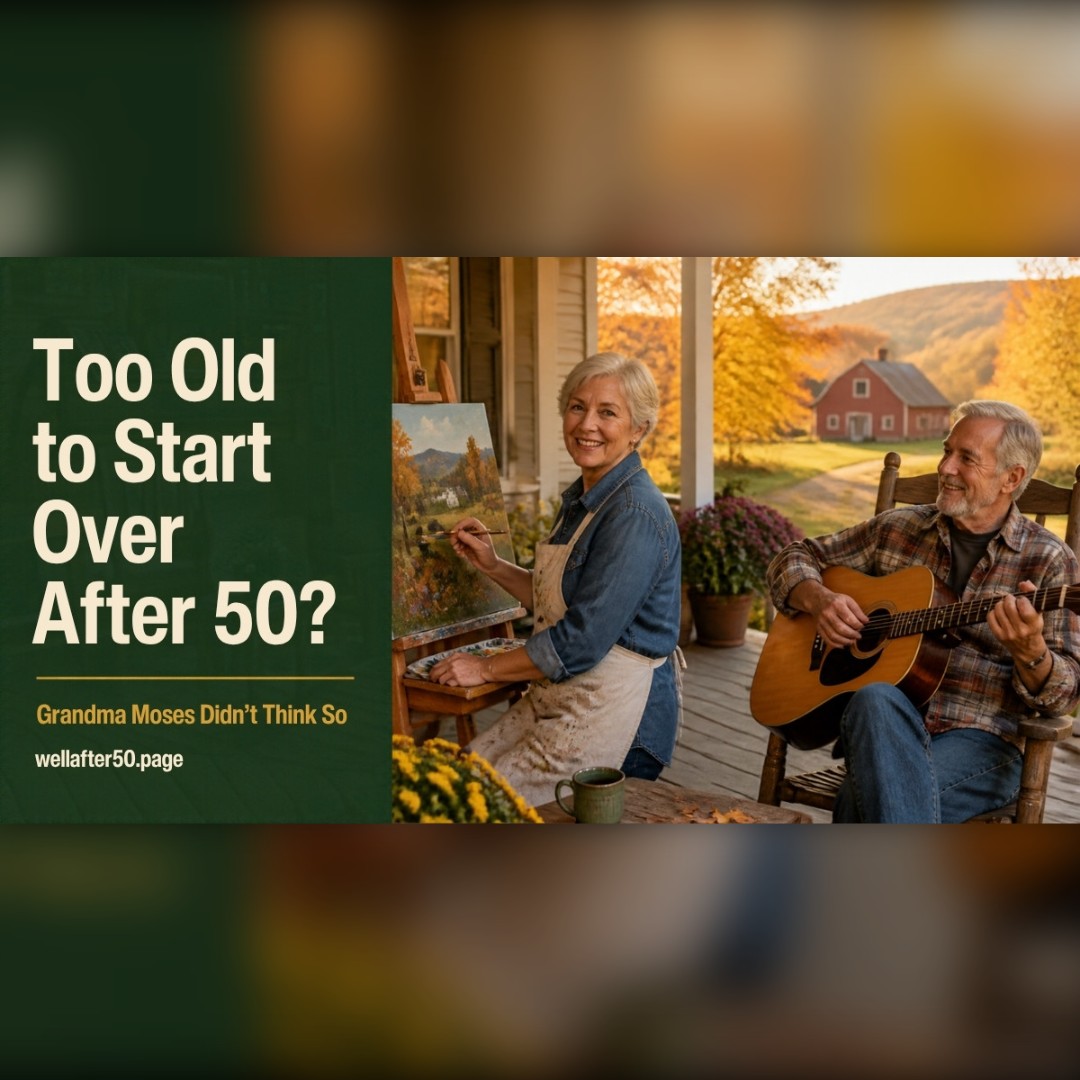
  • Too Old to Start Over After 50? Grandma Moses Didn’t Think So

    Too Old to Start Over After 50? Grandma Moses Didn’t Think So

    Are you too old to start over after 50?

    Short answer: No, you’re not too old to start over after 50. Grandma Moses didn’t take up painting seriously until her late 70s and kept painting into her 100s. Laura Ingalls Wilder was in her 60s when her first Little House book came out. Start small, like ten pages, ten minutes or one phone call.

    Ever catch yourself thinking, “I’m too old to start over”? Every so often somebody tells me, “I should’ve done this years ago.”

    Maybe it’s a trip they never took. A guitar sitting in the closet. A garden they keep meaning to plant. A book they’ve been “fixing to write” since the kids were little.

    And then right behind it comes the real question: At my age, what’s the point?

    I reckon the point is that you’re still here. The years you’ve already lived don’t disqualify you from the ones still coming.

    I Started This Site at 64

    I’ll tell you straight: I started Well After 50 at 64. I didn’t know much about websites. I made plenty of mistakes, and some of them I’m still cleaning up. But I’m glad I didn’t wait for the “right time,” because the right time wasn’t coming. It was just going to keep being later.

    I’m not telling you that to brag. I’m telling you so you know the fellow writing this is in the same boat as a lot of y’all.

    Some Folks Who Didn’t Get Going Until Later

    When I start thinking I’m too old for something, I think about these people:

    • Grandma Moses (Anna Mary Robertson Moses) didn’t take up painting seriously until she was in her late 70s, after arthritis made her embroidery too hard. She kept painting into her 100s, and her farm scenes ended up in museums. (Wikipedia)
    • Frank McCourt taught high school in New York for about 30 years. He published his first book, Angela’s Ashes, at 66, and it won the Pulitzer Prize. (NPR)
    • Laura Ingalls Wilder was in her 60s when her first Little House book came out. (United Methodist Communities)

    There’s a whole website full of stories like these called Later Bloomer, and it’s worth a look on a day you’re feeling behind. Larry Potter over at Last Best Bite wrote a good piece on this too, “After All, You’re Never Too Old for a First Time.”

    None of them knew how it would turn out when they started. They just started.

    You’re Not Starting From Scratch

    Starting something after 50 feels different because you know how fast time goes. But you also bring something you didn’t have at 20: experience.

    You know what matters and what doesn’t. You’ve made mistakes and lived through things you weren’t sure you would. That’s not baggage. That’s the stuff you get to carry into whatever comes next.

    Arthur Brooks, a Harvard professor, wrote a whole book about this called From Strength to Strength. His point is that some of our smarts fade as we get older, like quick thinking and raw speed, but another kind keeps growing: the know-how and judgment that come from years of living. That’s the kind that makes you good at teaching, advising and seeing the big picture. In other words, the second half isn’t just leftovers. It’s a different kind of strong.

    Being Bad at It Is Part of the Deal

    This is where a lot of us quit too soon.

    The first painting looks like a kid made it. The first exercise class leaves you sore and a little embarrassed. The first try at anything new feels like everybody else got the instructions but you.

    Well, they probably have been at it longer. You’re comparing your first page to their twentieth chapter. That’s not a fair fight, so don’t pick it.

    Your first job isn’t to be good. Your first job is to show up.

    Try the One-Hour Rule

    You don’t need to plan the rest of your life. That’s too much pressure for anybody.

    Just ask yourself: What would I enjoy trying for one hour this week?

    An hour can be a class at the library, a walk somewhere you’ve never been, a new recipe, a beginner video, or a phone call to somebody who already does the thing you’re curious about.

    If you like it, give it another hour. If you don’t, you’ve got your answer, and that’s not failure either. You’re allowed to say, “Tried it. Not for me. What’s next?”

    Make It Easy on Yourself

    1. Make the first step almost silly-small. Ten pages, ten minutes, one phone call.
    2. Put it on the calendar. If it doesn’t have a day and time, “someday” turns into never.
    3. Find the beginner version. The intro class, the easy trail, the “for dummies” book. No shame in it.
    4. Expect it to feel awkward. Awkward doesn’t mean wrong. It means new.
    5. Give it more than one try. The first time is usually the worst it’ll ever be.

    If you want to dig a little deeper, James Clear’s book Atomic Habits is a good one. His whole idea is that tiny changes, done over and over, add up to big results, and that you’ll stick with a new habit a lot longer if you make it easy to start. He calls it the two-minute rule: shrink the new thing down until it takes two minutes or less.

    You Don’t Have to Impress Anybody

    This may be the best part of getting older. You don’t have to turn your new thing into a business, win a ribbon or post it online. You can paint because you like colors, or walk because you like being outside. You can take a class just to get out of the house and meet somebody new.

    Not everything worth doing has to be an accomplishment.

    And if the people around you don’t understand why you want to do it? They don’t have to. Like the old saying goes, you can’t plow a field by turning it over in your mind.

    Common Questions

    Am I too old to start over at 50 or 60?

    No. People learn new skills, pick up hobbies and start new work well into their 60s, 70s and beyond. You don’t have to become an expert for it to be worth doing.

    Is 60 too old to start a new career?

    Not necessarily. Plenty of people switch to part-time work, consulting, teaching or a small business in their 60s. Start by using skills you already have, and test the idea small before you jump in with both feet.

    What if I don’t know what I want to try?

    Think about what you used to enjoy as a kid, what you catch yourself reading about, or what you’ve always said “I’d like to try that someday” about. Start there.

    What if I start and then quit?

    Then you learned something about yourself. That still counts.

    What if it’s something physical?

    Start at a beginner level, and if you’ve got a health concern, check with your doctor first. For a safe place to start on strength, see How to Build Muscle After 60 Without Getting Hurt.

    Try This This Week

    Grab a piece of paper and write down three things you’re curious about. Not things you should do, but things that make you think, “I’ve always wondered what that’d be like.”

    Circle one. Take the smallest first step this week.

    If you want more ideas, I put together 9 ways to start a new chapter after 50 and 10 hobbies that don’t cost much.

    What Would You Start?

    If you could begin one new thing this year, what would it be? Tell me in the comments. Somebody reading might need the nudge.

    You’re not behind. Starting at 50, 60, 70 or beyond still counts.

    — Tom

    I’ve also mapped out some great tools on my new Tech for Independent Living After 50 page.

    About Tom Green

    Tom Green writes Well After 50. He was born in Pell City, Alabama, in 1962, and he’s a country boy and a true Southerner through and through. He’s just a regular, laid-back 64-year-old who keeps things simple. He shares what he learns about skincare, fitness and getting older, and what’s working for him. He’s also the author of A Practical Guide to Getting Older Without Giving Up on Yourself. Tom isn’t a doctor. He reads up on the research and passes along what’s useful, plain and simple.
  • 10 Hobbies After 50 That Make Life More Interesting (Even on a Budget)

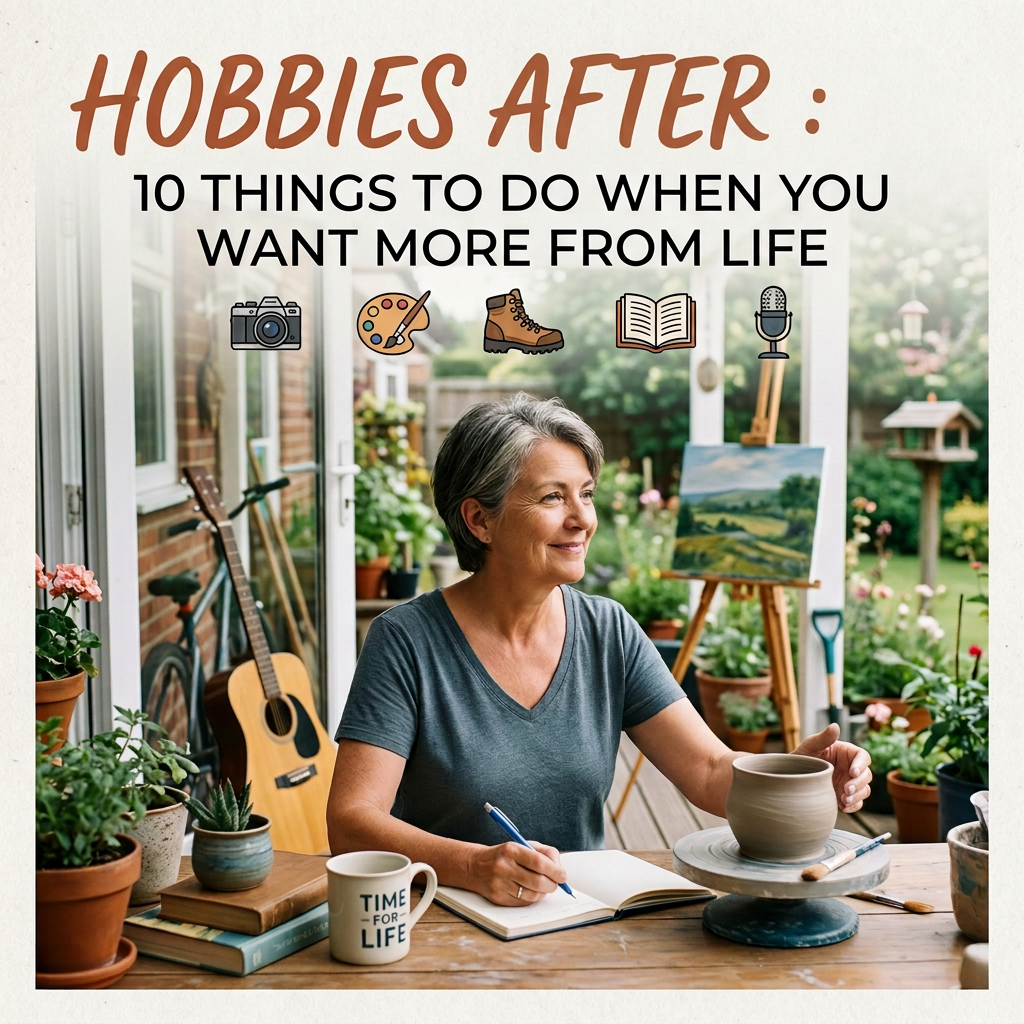
    10 Hobbies After 50 That Make Life More Interesting (Even on a Budget)

    What are good hobbies after 50 that don’t cost much?

    Short answer: Some of the best hobbies after 50 cost little or nothing: photography with the phone you already have, gardening, cooking something new, learning an instrument, writing, painting or drawing, tracing your family history, traveling close to home, volunteering, or finally learning something you’ve always put off.

    I’ve learned that getting older isn’t just about the things you start doing differently. It’s also about the things you finally have time to do. For years, life can be about work, raising a family, paying bills, taking care of other people, and simply getting through the week. You put off the things you’re curious about because there always seems to be something more important. Then you reach 50+ and something changes. Maybe you have more free time. Maybe the kids have moved on. Maybe you’re working less, retired, or simply realizing that you don’t want the rest of your life to be nothing but work and responsibilities. That’s when a hobby can become much more than something to pass the time. It can give you something to look forward to. Something to learn. Something to get excited about. And it doesn’t have to be complicated. You don’t have to become an expert. You don’t have to spend a lot of money. You don’t even have to be particularly good at whatever you choose. You just need to find something that makes you think, “I enjoy doing this.” Here are 10 hobbies for adults 50+ that can be fun, useful, and rewarding — and maybe one of them will give you an idea for something you’ve been putting off for years.

    1. Photography

    You don’t need an expensive camera to get started. Your phone can be all you need. Try photographing nature, interesting buildings, food, family gatherings, pets, or places you visit.

    Why it’s good and fun

    Photography gives you a reason to look at the world differently. Instead of simply walking through a park or visiting a new place, you start noticing colors, details, light, wildlife, and interesting little moments. It can also give you something to do when you’re traveling or taking a walk. And there’s a satisfying feeling when you take a picture and think, “I really like that.” You can keep your favorite photographs, share them with family, or gradually learn more advanced photography techniques.

    2. Gardening

    Gardening can be as simple as growing a few herbs in containers or as ambitious as creating an entire backyard garden. You can grow flowers, vegetables, herbs, or even indoor plants.

    Why it’s good and fun

    Gardening gives you something living to take care of and watch grow. There’s a special satisfaction in planting something, caring for it, and eventually seeing flowers bloom or vegetables appear. It also gets you outside and gives you a reason to spend time in your yard or on a patio. You don’t need a huge garden. A few pots can be enough to discover whether you enjoy it. And every season gives you something new to try.

    3. Cooking Something New

    If you already cook, turn cooking into a hobby instead of another chore. Choose one type of food you’ve always wanted to learn about. Try homemade bread, international dishes, soups, seafood, or healthier versions of old favorites.

    Why it’s good and fun

    Cooking becomes much more enjoyable when you’re experimenting instead of simply trying to get dinner on the table. You get to discover new flavors, learn new techniques, and occasionally surprise yourself with something that turns out really well. It’s also a hobby that produces something useful. You can enjoy what you make yourself or share it with family and friends. And you don’t have to become a gourmet cook. Sometimes finding one great new recipe is enough to make the hobby worthwhile. If cooking is the hobby that’s calling your name, a meal kit is an easy way to get your feet wet. Marley Spoon sends everything you need along with a recipe card, so you can try new dishes without a long grocery list. (affiliate link)

    4. Learning an Instrument

    It’s never too late to learn an instrument. A guitar, keyboard, harmonica, or ukulele can give you a completely new challenge.

    Why it’s good and fun

    Learning music gives your brain something completely different to work on. At first, even getting a few notes or chords right can feel like an accomplishment. Then something interesting happens: a song that once seemed impossible starts becoming familiar. You don’t have to perform for anyone. Learning a few songs you actually enjoy can give you a hobby you can return to for years. And there’s something satisfying about being able to sit down and make music yourself.

    5. Writing

    Writing can be surprisingly rewarding after 50. You could keep a personal journal, write short stories, record family memories, start a blog, or simply write about subjects that interest you.

    Why it’s good and fun

    Writing gives you a place to capture experiences, ideas, memories, and opinions. You have decades of experiences that younger people simply haven’t had yet. You might enjoy writing about your childhood, places you’ve lived, lessons you’ve learned, funny stories, or things you’ve discovered along the way. You don’t have to consider yourself a writer. You don’t even have to show anyone what you write. Sometimes the enjoyment comes simply from putting your thoughts into words.

    6. Painting, Drawing, or Other Creative Work

    You don’t need artistic talent to enjoy making art. Try watercolor, acrylic painting, sketching, coloring, woodworking, pottery, sewing, or another hands-on creative activity.

    Why it’s good and fun

    Creative hobbies let you make something instead of simply consuming something. That’s a nice change from spending another evening watching television or scrolling through your phone. There’s also no requirement that your work be perfect. You can experiment with colors, materials, shapes, and ideas without worrying about whether someone else thinks it’s good. And when you’re finished, you have something you actually made. That can be surprisingly satisfying.

    7. Exploring Your Family History

    Genealogy can turn into a fascinating long-term hobby. You can research old family records, organize photographs, interview relatives, and create a family tree.

    Why it’s good and fun

    Family history can turn ordinary names and old photographs into real stories. You may discover where relatives lived, what they did for a living, how your family moved from one place to another, or things you never knew about people you’ve heard about all your life. It can also give you a reason to talk with older relatives while you still can. And what you discover isn’t just for you. You can organize the information and photographs into something future generations of your family can enjoy.

    8. Travel — Even Close to Home

    You don’t need to fly across the country to make travel a hobby. Pick a town you’ve never explored. Visit a museum, historical site, small restaurant, local market, park, or interesting road nearby.

    Why it’s good and fun

    Exploring somewhere new can break up the routine. You don’t have to spend a lot of money or take a week off work. Sometimes an afternoon in a town you’ve never visited can feel like a mini vacation. Make a list of places within an hour or two of home and start working your way through it. You may discover restaurants, parks, shops, historic buildings, or interesting local attractions that you’ve driven past for years without noticing.

    9. Volunteering

    Volunteering can be a hobby with a purpose. You might help at an animal shelter, food pantry, library, community organization, school, church, or another local group.

    Why it’s good and fun

    Volunteering can give you something that many hobbies don’t: a feeling that what you’re doing matters to someone else. It can also introduce you to people you might never have met otherwise. If you’re retired or your social circle has become smaller, volunteering can add some structure to your week and give you somewhere to go. And you don’t have to commit to every day. Even helping occasionally can be worthwhile if you find something you genuinely care about.

    10. Learn Something You’ve Always Put Off

    This may be the most exciting hobby of all. Think about something you’ve said for years: “I’d love to learn how to do that someday.” Maybe it’s a language. Maybe it’s history, astronomy, computers, painting, cooking, music, woodworking, or something completely different.

    Why it’s good and fun

    Learning something new gives you the chance to be a beginner again. That can be both challenging and exciting. You don’t have to worry about being the best. You simply get to discover something you’ve never known before. And you may find that one new subject leads to another. A curiosity about history could lead to genealogy. Photography could lead to travel. Cooking could lead to learning about different cultures. You never know where a new interest will take you.

    You Don’t Need Ten Hobbies

    The point isn’t to fill your calendar with activities. You only need one thing that makes you want to do it again. A good hobby can give your week some structure. It can introduce you to new people, keep your mind engaged, give you a creative outlet, or simply make an ordinary Tuesday more interesting. And if your first choice doesn’t work, that’s perfectly fine. Try something else. There is no rule that says you have to be good at a hobby, stick with it forever, or explain to anyone why you enjoy it.

    Your Life After 50 Is Still Being Written

    Getting older doesn’t mean you’ve run out of things to discover. In many ways, 50+ can be a great time to experiment because you know yourself better than you did when you were younger. You may finally have the freedom to ask a simple question: What would I enjoy doing if I didn’t have to do it for anyone else? That’s a pretty good place to start.

    What Hobby Will You Try?

    You don’t need expensive equipment, a huge amount of free time, or a special talent. Choose something that interests you. Start small. Give it a little time. You might discover that the next chapter of your life has room for something you never expected. For more inspiration, the National Institute on Aging’s activity guide includes low-cost ways to learn, connect, volunteer, and have fun.

    How to Pick a Hobby You’ll Actually Enjoy

    Here’s something I’ve learned: a hobby shouldn’t feel like another job you have to be good at. You can enjoy photography without becoming a photographer. You can grow three plants without having a perfect garden. And you can love music without performing for anyone.

    Ask yourself three questions: Do I want to be around people or have quiet time? Do I want to make something, learn something, or move more? How much money and physical energy can I comfortably give it? Your answers will narrow a long list of possibilities to something that genuinely fits.

    Seven Days to Try Something New—Without Spending a Fortune

    1. Day one: Choose one hobby that sounds fun, not impressive.
    2. Day two: See what you already own or can borrow.
    3. Day three: Find a free guide, library event, community class, or club.
    4. Day four: Spend twenty minutes trying it. Ten minutes counts, too.
    5. Day five: Notice whether you felt curious or merely obligated.
    6. Day six: If it involves other people, look for a friendly local or online group.
    7. Day seven: Decide whether to try again. You’re allowed to change your mind.

    If money is tight, try your public library, free museum days, community gardening, birdwatching from a park bench, smartphone photography, or borrowing a book about something you’ve always wanted to learn.

    What Researchers and Writers Say About Having Interests Later in Life

    The National Institute on Aging recommends meaningful activities such as creative hobbies, volunteering, and social groups as part of healthy aging. The emphasis is on enjoyment and participation, not collecting accomplishments.

    In Harvard Health, Matthew Solan reports on research suggesting that combining different mental and physical activities may support thinking in older adults with mild cognitive impairment. That isn’t a promise that a hobby prevents dementia, but it’s a good reason to stay interested in life.

    The NIA also discusses loneliness and social isolation: a book club, class, or volunteer shift can be a natural way to meet people regularly, without the pressure of making instant best friends.

    What if a Hobby Doesn’t Stick?

    Then you learned something about yourself. Give it a fair try, but don’t turn leisure into guilt. Sometimes what you thought you’d enjoy isn’t your thing, and a different activity will fit better. That isn’t failure. It’s part of finding out what makes this chapter of life interesting.

    Common Questions

    Why are hobbies important after 50? Hobbies can add enjoyment, creativity, social connection, and a sense of purpose to everyday life. Is it too late to start a new hobby after 50? Not at all. Trying something new can be a great way to break up routines and discover interests you didn’t have time to explore earlier in life. What are some good hobbies for people 50+? Walking, gardening, photography, cooking, reading, woodworking, crafts, music, volunteering, and learning new skills are just a few possibilities. Can hobbies help with loneliness after 50? They can. Hobbies that involve clubs, classes, volunteer groups, or other people can create regular opportunities for social interaction. Do hobbies have to be expensive? No. Many enjoyable hobbies can be started with little or no money, including walking, reading, writing, gardening, birdwatching, and learning through free resources. How do I choose a hobby I’ll actually stick with? Start with something you’re genuinely curious about rather than something you think you should do. Give it a few tries before deciding whether it’s for you.

    Keep Reading

    Tom Green writes Well After 50. He was born in Pell City, Alabama, in 1962, and he’s a country boy and a true Southerner through and through. He’s just a regular, laid-back 64-year-old who keeps things simple. He shares what he learns about skincare, fitness and getting older, and what’s working for him. He’s also the author of A Practical Guide to Getting Older Without Giving Up on Yourself. Tom isn’t a doctor. He reads up on the research and passes along what’s useful, plain and simple.

    I’ve also mapped out some great tools on my new Tech for Independent Living After 50 page.