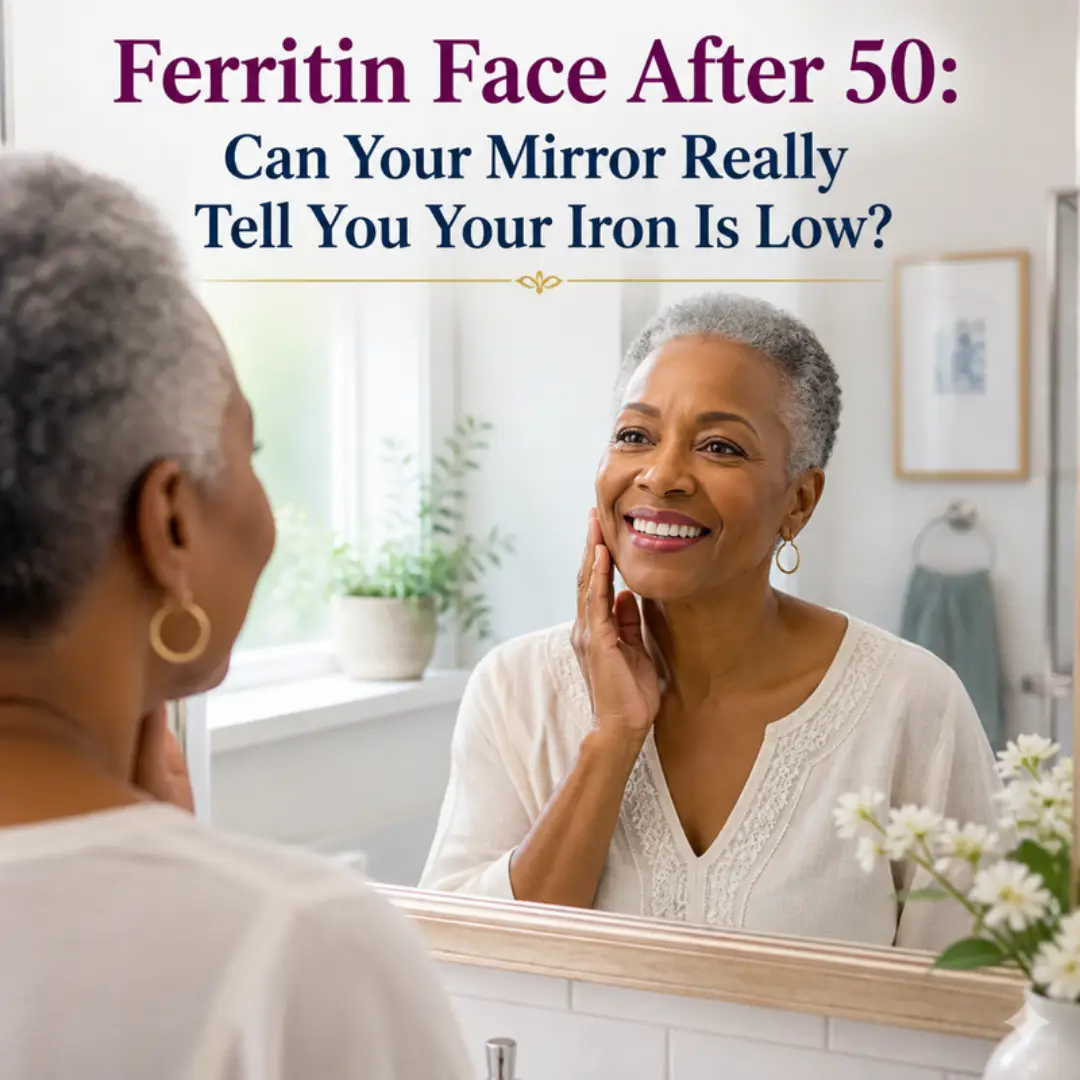
The TikTok trend everybody’s talking about, the real people behind it, and the simple test that gives you the actual answer
By Tom Green | Well After 50
Nutrition lecturer Chloe Casey put it about as good as anybody could when she wrote, “The latest skincare trend taking over TikTok is a blood test.” She’s talking about “ferritin face,” and if you’ve been on TikTok or Facebook this fall you’ve probably seen it, folks holding their phones up close to show off their dark circles and pale skin and the hair in their brush and saying it all comes down to low iron. Vogue reported the hashtag has passed 16 million views and searches for it over in the UK have jumped 5,000 percent since October.
I’d bet a lot of y’all took a long look in the mirror after hearing about it, I know I would have. So I spent some time reading what real people and real writers have been saying about it, and I came away feeling pretty good, because the real answer is a whole lot simpler and cheaper than anything you’ll see in those videos.
Think of ferritin like a savings account
Dr. Jen Gunter, who wrote The Menopause Manifesto and writes a newsletter called The Vajenda, explains it the best way I’ve heard. Ferritin is a protein that stores iron, and she says to think of it like a savings account for your iron. Your body makes withdrawals to build red blood cells and grow hair and keep your energy up, and when the account runs low you can start feeling it. She also points out that a regular blood count by itself isn’t enough to catch it, you need that ferritin number.
That’s the part of the trend that’s true. You can be dragging around tired and finding more hair in the shower than you used to, and your regular blood work can still come back looking just fine.
But you can’t read your iron in the mirror
Chloe Casey made the point that low ferritin doesn’t give you some special look you can spot, because sleep and stress and hormones and what you eat can all make a face look tired. Dermatologist Dr. Regine Mathieu told Vogue that ferritin face isn’t even a real diagnosis, it’s just a name social media came up with. And Dr. Rachel Ho, who runs a skin clinic and writes a blog about skin and aging, wrote that dark circles come from things like blood vessels showing through, pigment and shadows, and you can have low iron and dark circles at the same time without one causing the other.
After 50 the skin under our eyes gets thinner anyway, so most of us are going to see a little darkness there no matter what our iron is doing. I wrote a whole post about that one, why we get dark circles and puffy eyes after 50. Same thing goes for hair, low iron can cause shedding but so can stress and hormones and thyroid trouble, and I covered that side of it in my post on thinning hair after 50.
You know the old saying, you can’t judge a book by its cover, and it turns out you can’t judge your iron by your face either.
The stories that stuck with me
Dr. Jeff Donovan is a hair loss doctor who answers reader questions on his blog, and one letter came from a healthy, fit woman in her mid-50s whose hair started falling out right around the time menopause showed up. She said it felt like she’d lost half her hair. Her ferritin turned out to be 15, and he told her straight that some women her age run 50 and some run 150 but 15 is low, and that it was worth fixing as long as she and her doctor also found out why it got that low. There was an answer for her, and it was one blood test away.
Over in the comments on Dr. Gunter’s newsletter, one woman wrote that her doctor finally paid attention when she mentioned she’d been craving ice something fierce, and another said she went out and found a menopause specialist and asked for the test after reading about it. I love that, because that’s women speaking up for themselves and getting answers.
Fellas, this part is for you too. A retired man on the Early-Retirement.org forum wrote that his routine blood test showed his ferritin was high, around 400, and his doctor didn’t think much of it because it was still inside the lab’s normal range. He started giving blood, and once his number came down under 200 he said the trouble he’d been having was basically gone. He was careful to say that’s just one man’s experience, but I like that his fix was helping somebody else at the blood bank at the same time.
And a young blogger who goes by toska wrote about months of feeling worn out and losing hair before finally getting the low iron figured out and treated. The energy came back and so did the hair, and since running had to go on hold for a while, toska bought a bike, fell in love with cycling and now rides all over the city. Sometimes the detour turns out better than the road you were on.
Why this is a little different after 50
Most of those TikTok videos are young women, and young women who still have periods really do run low on iron a lot. After 50 the story changes. Once a woman is through menopause her body needs about the same small amount of iron a man does, and men don’t usually run low at all.
So if a test does show your iron is low after 50, look at it like your body raising its hand. Your doctor is going to want to find out why, and catching things early is good news, not bad news.
And please don’t go buy a bottle of iron pills because of a video. Chloe Casey warned that too much iron is toxic, and Mayo Clinic says iron pills usually aren’t recommended for women past menopause unless a test shows they need them. Older folks hang on to extra iron more easily since we’re not losing it like we used to, and some people carry a family trait that makes their body store too much, which usually doesn’t show itself until after 50. Iron pills are for when a blood test says you need them, not before.
What I’d do if I were wondering about my iron
Quit studying your face and just ask for the test. Next time you’re at the doctor, ask for a ferritin test along with your regular blood work. It’s one small tube of blood and you’ll know for sure instead of guessing off a video.
If you’ve been really tired for a while, or getting winded on the stairs, or finding a lot more hair in the drain than usual, go ahead and bring it up sooner instead of waiting on your next checkup.
In the meantime, eat like your iron matters, because it does. Lean beef, chicken, fish, beans, lentils and greens like spinach are all good sources, and if you eat them with something that has vitamin C like tomatoes or peppers or a glass of orange juice, your body soaks up more of the iron.
Here’s an old country trick that actually holds up, cooking in a cast iron skillet can add a little iron to your food, so if you’ve got one sitting in the cabinet go ahead and put it to work. And drink your coffee and tea between meals instead of with them, because they get in the way of your body taking in iron.
The bottom line
Ferritin face is a little bit of truth wrapped up in a whole lot of hype. Your iron really can affect how you feel and how your hair and skin look, but you’ll never find out by staring in the mirror. One simple blood test will tell you, your doctor can help you sort out what it means, and for most of us the fix is some good food and a little patience.
So don’t let a TikTok video make you feel bad about the face looking back at you. Those lines and shadows have earned their keep.
Have you had your ferritin checked, or did this trend get you wondering? Tell me about it in the comments, I’d love to hear from the ladies and the fellas both.
Keep Reading
About the Author
Tom Green writes Well After 50. He’s just a regular, laid-back 64-year-old who keeps things simple. He shares what he learns about skincare, fitness and getting older, and what’s working for him. He’s also the author of A Practical Guide to Getting Older Without Giving Up on Yourself.
Tom isn’t a doctor. He reads up on the research and passes along what’s useful, plain and simple.
Medical Disclaimer
This article is for educational purposes and is not a substitute for professional medical advice. Talk with your healthcare provider before taking iron or any new supplement, and ask your doctor about a ferritin test if you have symptoms you’re worried about.
Research and Further Reading
- Chloe Casey: ‘Ferritin Face’ is Trending, but Can Your Skin Really Reveal Low Iron?
- Dr. Jen Gunter, The Vajenda: Running on Empty
- Viral ‘ferritin face’ trend, reporting on Vogue
- Vogue Adria: Why is everyone talking about ferritin face?
- Dr. Rachel Ho: Can Your Face Tell You That Your Iron Is Low?
- Dr. Jeff Donovan: Why am I shedding?
- Early-Retirement.org forum: high ferritin and giving blood
- toska: a silver lining
- Mayo Clinic News Network: Iron supplements after menopause
I’ve also mapped out some great tools on my new Tech for Independent Living After 50 page.