Are skin serums worth the money?
Short answer: Serums can be worth it, but only if you use them right. Know what problem you’re buying one for, don’t pile on too many products, read past the fancy bottle, and give a new serum a fair chance before switching. Sunscreen and moisturizer still matter more than any serum, and expensive doesn’t mean better.
I like skincare, but I don’t like wasting money. And after 50, it can be especially easy to end up with a bathroom cabinet full of serums that sounded great when we bought them but never became part of a routine. Serums can be useful. The problem is that more serums do not automatically mean better skin. What matters is knowing what you are trying to improve, choosing an ingredient for a reason, and actually using the product consistently.Start With One Simple Question
Before buying another serum, ask yourself: What exactly am I trying to improve? Maybe your skin feels dry. Maybe you are concerned about the appearance of fine lines, uneven tone, dullness or loss of firmness. Those concerns can call for different approaches. If you cannot explain what you want the product to do, that is a pretty good reason to leave it on the shelf.Don’t Let Your Bathroom Become a Chemistry Experiment
One of the easiest skincare mistakes is adding product after product without knowing how they work together. You might have a vitamin C product, a retinoid, an exfoliating acid, a peptide serum and a hydrating serum all competing for a place in the same routine. Then your skin becomes irritated and you have no idea which product caused it. There is nothing wrong with having more than one targeted product. But I would rather know exactly why each one is there than use five different products simply because they are popular.Look Past the Bottle
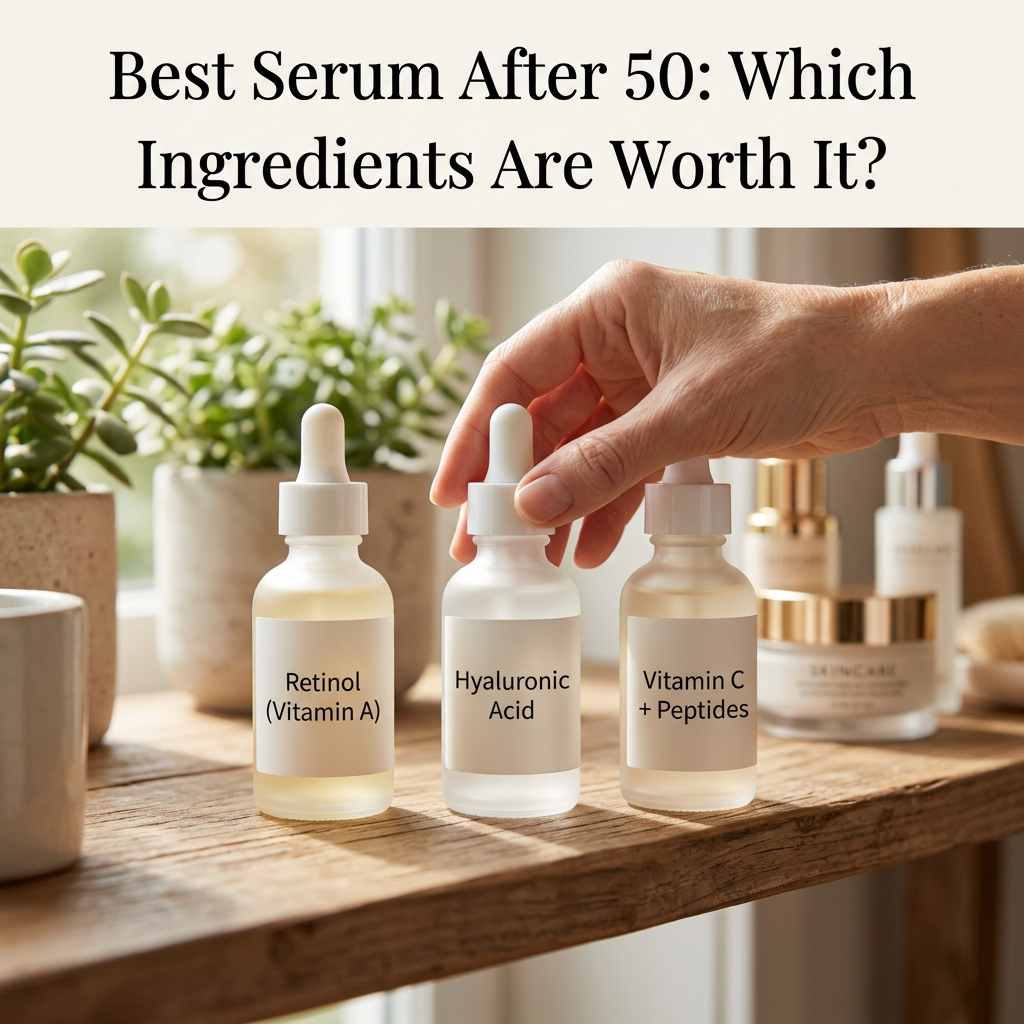
Serum marketing can make almost anything sound revolutionary. Words such as “advanced,” “renewing,” “firming” and “age-defying” can grab your attention, but the ingredient list tells you much more. For example, hydrating ingredients can be useful when skin feels dry or tight. Retinoids are commonly used for concerns involving fine lines and texture. Vitamin C is commonly used for antioxidant support and uneven-looking tone. Peptides are popular in products aimed at improving the appearance of firmness. The point isn’t that one ingredient is magically better than everything else. The point is that you should know what you are buying and why you are buying it.The Basics Still Matter More Than the Hype
This isn’t as exciting as buying a new serum, but a simple foundation matters. A gentle cleanser, a moisturizer that works for your skin and daytime sun protection can form the backbone of a sensible routine. If those basics are missing, I wouldn’t expect another expensive serum to rescue the whole routine. And if your skin is already dry, burning, peeling or irritated, adding another active product may be the wrong move. Sometimes the smartest skincare decision is to simplify for a while.Give New Products a Fair Chance
Another way we waste money is by changing products constantly. Skincare usually isn’t an overnight project. Some products take time to show noticeable results, and the improvement may be subtle rather than dramatic. At the same time, “give it time” does not mean you should ignore a bad reaction. If something consistently causes significant irritation, stop and reconsider rather than forcing yourself to keep using it because the bottle was expensive. I like the idea of making one meaningful change at a time. That way, you have a much better chance of figuring out what is actually helping.Five Questions Before You Buy Another Serum
- What problem am I trying to address?
- What ingredient am I buying for?
- Am I already using something with a similar purpose?
- Will this fit into the routine I already have?
- Will I realistically use it consistently?
Expensive Doesn’t Automatically Mean Better
A higher price does not guarantee that a serum will be a better match for your skin. A less expensive product isn’t automatically a bad product either. For me, the bigger questions are the formula, the ingredients, how my skin tolerates it and whether I can use it consistently. I would much rather have a straightforward routine that I actually follow than a shelf full of products that looked exciting when I bought them.When a Serum Really Can Make Sense
A serum can earn its place when it fills a specific need. If your basic routine is working and you have a particular concern you want to address, adding one targeted product can make sense. You don’t have to overhaul everything at once. That is especially important after 50, when skin can become less forgiving of routines that are overly aggressive or complicated. For another practical perspective on skincare products, Allison Cohen’s Never Say Die Beauty shares beauty reviews and advice about what may be worth trying—and what may not be worth the money. Remember that results vary and a higher price does not guarantee better results.Common Questions
Do you really need a serum after 50? No. A serum is optional. A good cleanser, moisturizer, and daily sunscreen can form the foundation of a simple skincare routine. Are expensive serums worth the money after 50? Not necessarily. Price doesn’t guarantee better results. Look at the ingredients, your specific skin concern, and how well your skin tolerates the product. How do you use a serum correctly after 50? Apply it after cleansing and before moisturizer. In the morning, finish with broad-spectrum sunscreen. How many serums should you use after 50? Usually, you don’t need several. One targeted serum that addresses a specific concern can be a better starting point than layering multiple products. Can using too many serums hurt your skin? It can. Layering too many active ingredients may cause dryness, redness, peeling, or irritation. Should you use a different serum for every skin concern? Not necessarily. Start with the concern that matters most to you and choose one useful product before adding anything else. What serum ingredients are worth considering after 50? Depending on your goal, ingredients such as hyaluronic acid, niacinamide, vitamin C, and retinoids may have a place in a mature-skin routine. How long should you use a serum before judging the results? Give a product consistent use over time rather than expecting an overnight transformation. Some effects, such as improved hydration, may be noticed sooner than changes in fine lines or texture. What is the biggest mistake people make with serums after 50? Buying products because they sound impressive without first deciding what problem they want the serum to address. What is the simplest way to use serums after 50? Identify one concern → choose one appropriate serum → introduce it gradually → moisturize → use sunscreen in the morning. Practical takeawayThe Bottom Line
Serums aren’t the enemy. Mindless serum shopping is. Figure out what you want to improve. Choose a product for a reason. Introduce it thoughtfully. Give it a fair chance. And don’t forget the basics while chasing the newest bottle. Good skincare isn’t about owning the most products. It’s about having products that make sense for you and actually using them. This is general skincare information based on research and personal experience, not medical advice. Everyone’s skin is different, so consider professional advice for persistent irritation or a specific skin condition. Written by Tom Green, creator of Well After 50 Tom Green writes Well After 50. He was born in Pell City, Alabama, in 1962, and he’s a country boy and a true Southerner through and through. He’s just a regular, laid-back 64-year-old who keeps things simple. He shares what he learns about skincare, fitness and getting older, and what’s working for him. He’s also the author of A Practical Guide to Getting Older Without Giving Up on Yourself. Tom isn’t a doctor. He reads up on the research and passes along what’s useful, plain and simple.Keep Reading
- How to Look and Feel Better as You Age After 50
- The Simple Morning Routine That Can Make You Look and Feel Better After 50
- How to Boost Metabolism After 50: 7 Things That Actually Help
I’ve also mapped out some great tools on my new Tech for Independent Living After 50 page.