Tag: skin firmness

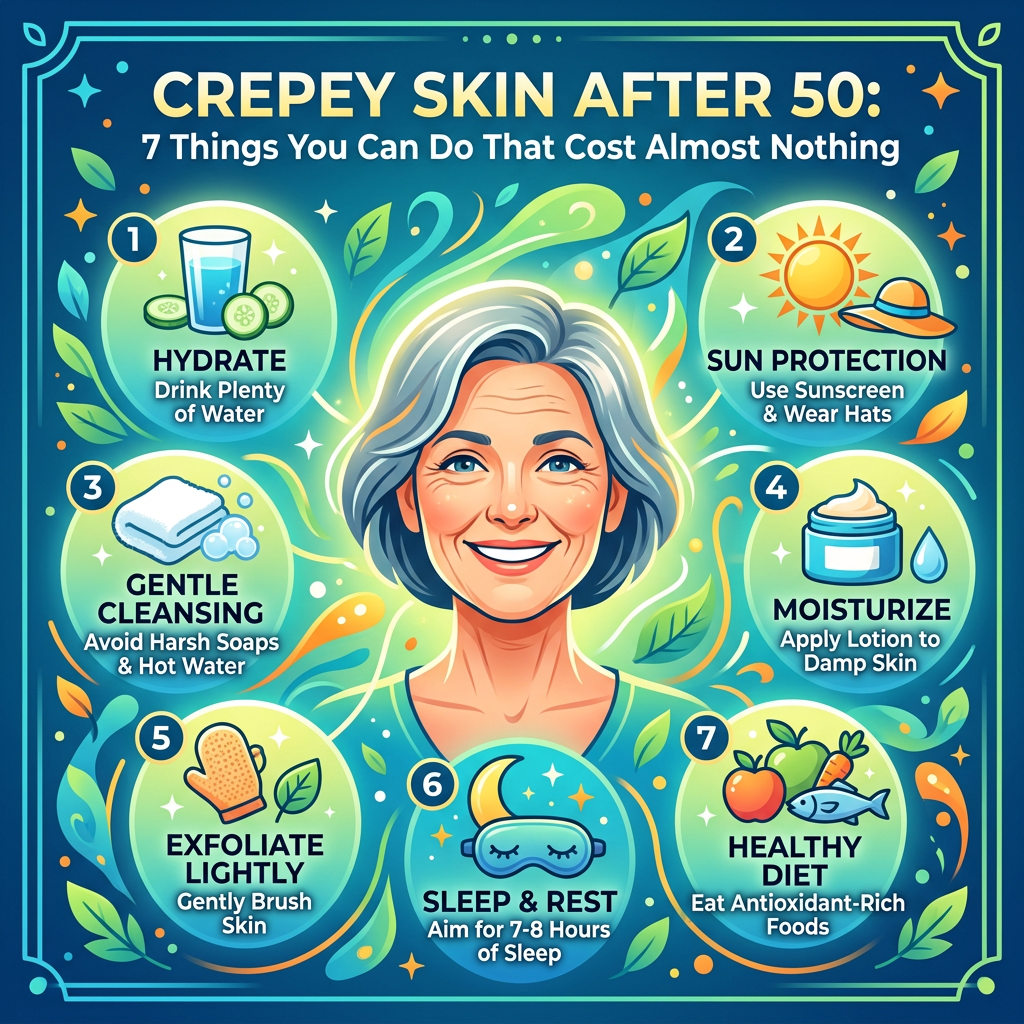
  • Crepey Skin After 50: 7 Things That Cost Almost Nothing

    Crepey Skin After 50: 7 Things That Cost Almost Nothing

    If you’ve noticed that your skin seems to have changed after 50 — thinner, looser, drier, or suddenly looking a little like crumpled paper — you’re definitely not imagining it.

    Crepey skin is one of those aging changes that can sneak up on you.

    And before you start buying every expensive “firming” cream you see, there’s some good news: you don’t necessarily need a bathroom cabinet full of expensive products to take better care of mature skin.

    Some of the most useful things you can do are surprisingly simple — and inexpensive.

    They won’t magically erase crepey skin. Nothing really does. But they can help your skin look and feel healthier, more hydrated and better protected.

    1. Stop Treating Your Skin Like It’s 25

    This may be one of the cheapest changes you can make.

    As we age, skin tends to become drier and more vulnerable to irritation. Scrubbing, harsh cleansers and constantly trying new products can work against you.

    Instead of trying to make your skin feel “squeaky clean,” try being gentler.

    Use a mild cleanser and lukewarm water. Skip aggressive scrubbing and be careful with products that leave your skin burning or irritated.

    In other words: your skin doesn’t need punishment to be clean.

    2. Moisturize While Your Skin Is Still Damp

    This costs almost nothing if you already have a moisturizer you like.

    After washing or bathing, don’t wait until your skin is completely dry before applying it. Put your moisturizer on while your skin still has a little moisture.

    Moisturizers help trap water in the skin, which can temporarily make fine lines look less noticeable and give dry, crepey-looking skin a smoother appearance.

    Want to try something that’s getting a lot of attention?

    Urea is an ingredient worth knowing about.

    Urea has been used in skincare for years, but it’s getting renewed attention because it can both help hydrate the skin and soften rough, dry areas. That makes it particularly interesting for areas such as crepey-looking arms, legs, elbows and feet.

    And you don’t necessarily need a luxury product. Look for a reasonably priced body lotion or cream containing urea, especially if your skin is very dry or rough.

    It’s one of those ingredients that sounds more complicated than it really is.

    3. Put Sunscreen on the Places You Usually Forget

    Most of us learned to put sunscreen on our face.

    But what about your neck? Your chest? Your hands?

    Those areas can tell the story of years of sun exposure too.

    Use broad-spectrum SPF 30 or higher on exposed skin. UV exposure is one of the major contributors to premature skin aging and can damage the collagen and elastin that help keep skin looking firm.

    So if you’re already buying sunscreen, use it beyond your face.

    Your hands may appreciate it later.

    4. Stop Chasing the “Tight” Feeling

    Here’s a strange one.

    Some people think a product is working because their skin feels tight afterward.

    But tight doesn’t necessarily mean better.

    If a cleanser or skincare product leaves your mature skin feeling dry, stretched or uncomfortable, that may simply mean it is stripping too much moisture.

    Comfortable skin is a better goal than that squeaky-tight feeling.

    5. Give Your Body Some Attention — and Know These Three Ingredients

    Crepey skin isn’t just a face problem. It commonly shows up on areas such as the upper arms, thighs, neck and hands.

    And one of the easiest mistakes is giving your face a skincare routine while giving your arms and legs absolutely nothing.

    You don’t have to buy a separate product for every body part. A basic body moisturizer can go a long way.

    But if you want to experiment, there are three ingredients worth knowing about:

    Urea: Helps hydrate and soften rough, dry skin.

    Lactic acid: An alpha-hydroxy acid that can help loosen dead surface skin and improve rough texture. It’s often found in body lotions.

    Peptides: These are popular in skincare because of their connection with skin-supporting proteins and are increasingly appearing in body-care products aimed at mature skin.

    You don’t need all three.

    Pick one and see how your skin responds.

    And remember: more ingredients don’t automatically mean better results.

    6. Keep Moving

    This one costs nothing if you’re already walking, exercising at home or going to the gym.

    Exercise isn’t a wrinkle eraser.

    But regular physical activity is good for overall health, and maintaining muscle can improve the way your body looks underneath the skin.

    It won’t magically tighten loose skin, but getting stronger can change the overall appearance of your arms, legs and body.

    Sometimes the answer isn’t another cream. Sometimes it’s getting stronger.

    7. Give Your Skin a Break From Constant Experimenting

    This might be the most underrated tip on the list.

    If you’re constantly adding another serum, exfoliant, acid, scrub or “miracle” treatment, your skin may never get a chance to settle down.

    And mature skin can be less forgiving when it’s irritated.

    That doesn’t mean you have to give up every active ingredient. It means you don’t need to use everything at once.

    A simple routine can be remarkably effective:

    Morning

    • Gentle cleansing if needed
    • Moisturizer
    • Broad-spectrum SPF 30+

    Evening

    • Gentle cleanser
    • Moisturizer
    • Any treatment product you know your skin tolerates

    For the body, a simple moisturizer can be enough. If you want to try urea, lactic acid or peptides, introduce just one new product at a time.

    You can always add something later. You don’t have to start with everything.

    What About Expensive Crepey-Skin Treatments?

    There are professional treatments that dermatologists and cosmetic specialists use for skin laxity, wrinkles and texture.

    Some can produce more noticeable changes than a moisturizer.

    But they’re also much more expensive and may involve procedures, downtime or potential side effects.

    And that’s not what this article is about.

    This is about the things you can do today without spending a fortune.

    For mild crepey-looking skin, basic skincare can improve its appearance, while more significant loose skin may require professional treatment.

    Freshly compounded Rx Tretinoin, Hydroquinone, Niacinamide, and more – formulated to treat sun damage, improve skin texture, and reduce fine lines and wrinkles on the neck and chest.

    The Bottom Line

    Crepey skin after 50 is normal.

    Your skin isn’t failing you.

    It’s changing.

    Age, sun exposure, dryness, weight changes and the gradual loss of collagen and elastin can all play a role.

    But that doesn’t mean you have to surrender to it either.

    You can protect your skin from more sun damage.

    You can keep it moisturized.

    You can try useful ingredients like urea or lactic acid without spending a fortune.

    You can keep moving and maintain muscle.

    And you can stop spending money on every product that promises to make you look 25 again.

    Maybe the better goal after 50 isn’t younger-looking skin.

    Maybe it’s healthy-looking skin that you take good care of.

    And honestly, that’s a pretty good goal.

    For another perspective on crepey skin, Angie of Hot & Flashy’s article “How To FIX Crepey Skin!” shares her personal experience and routine. Treat product reviews as one source of information—not a promise that a cream will reverse loose or crepey skin.

    Common Questions About Crepey Skin After 50

    Can moisturizer really help crepey skin?

    Yes. Moisturizer can hydrate the skin and temporarily make fine lines and dry, crepey-looking skin appear smoother. It won’t replace lost collagen or permanently tighten loose skin.

    What is urea used for in skincare?

    Urea is a moisturizing ingredient that can also help soften rough, dry skin. It can be particularly useful for dry body areas such as the arms, legs, elbows and feet.

    Is lactic acid good for crepey-looking body skin?

    Lactic acid can help exfoliate the surface of the skin while also providing some hydration. It may help improve rough texture, but sensitive skin should start slowly.

    Are peptides worth trying?

    Peptides are popular in skincare and are increasingly included in body-care products. They may be worth trying if you’re interested in an ingredient-focused routine, but don’t expect a peptide cream to completely eliminate loose or crepey skin.

    Is crepey skin always caused by dry skin?

    No. Dryness can make it look worse, but aging, sun exposure, changes in collagen and elastin, and weight changes can also contribute.

    Does sunscreen help with crepey skin?

    It can help prevent additional sun-related skin aging. Broad-spectrum SPF 30 or higher is recommended for exposed skin.

    Can exercise tighten crepey skin?

    Exercise isn’t a treatment that directly tightens loose skin. However, maintaining muscle can improve the overall appearance of the body, while regular physical activity supports overall health and healthy aging.

    When should I see a dermatologist?

    If a skin change is sudden, unusual, rapidly worsening, painful, itchy, bleeding or otherwise concerning, it’s worth having it evaluated rather than assuming it’s simply normal aging.

    Gold Bond Age Renew Crepe Corrector Body Lotion — 2022 Product of the Year In Skincare Category, replenishing & smoothing formula, Gold Bond crepe corrector body lotion   Save 10%: Coupon available when you select Subscribe & Save .

    Shop Gold Bond Age Renew Crepe Corrector on Amazon

    About the Author

    Tom Green writes Well After 50. He’s just a regular, laid-back 64-year-old who keeps things simple. He shares what he learns about skincare, fitness and getting older, and what’s working for him. He’s also the author of A Practical Guide to Getting Older Without Giving Up on Yourself. Tom isn’t a doctor. He reads up on the research and passes along what’s useful, plain and simple.

    He believes getting older doesn’t mean you stop caring about how you look, how you feel or what you can still accomplish.

    You’re 50+. You’re still becoming.

    Image: Well After 50 Media Library.

    I’ve also mapped out some great tools on my new Tech for Independent Living After 50 page.

  • How to Keep Your Neck Looking Better After 50

    How to Keep Your Neck Looking Better After 50

    The neck is easy to ignore because most of us build a skincare routine around the face. Then one day we look at a photograph and realize the neck has been getting just as much sun and time as the face.

    I don’t think the answer is a miracle neck cream. A few boring habits done consistently make more sense to me.

    Start With the Same Basics as Your Face

    Gentle cleansing, moisturizer when your skin needs it and daytime sun protection are reasonable foundations. If a facial product works well on your neck, you may be able to extend it downward, but don’t assume every active ingredient will be equally comfortable there.

    Sun Protection Is Easy to Forget

    Your neck gets exposed while driving, walking, gardening, sitting outside, and doing everyday errands. If sunscreen stops at your jawline, the neck is still getting the exposure.

    You don’t need to make this complicated. When the neck is exposed, include it in the same sun-protection habit you use for the rest of your exposed skin.

    Posture Can Change the Whole Look

    Skincare cannot correct every visual change. The way you carry your head and shoulders also affects how the neck and jaw area look.

    • Raise your phone instead of constantly looking down.
    • Change positions during long periods of sitting.
    • Work on upper-back and shoulder strength with exercises appropriate for you.
    • Think about standing comfortably tall rather than forcing your chin upward.

    Be Careful With “More Is Better.”

    The neck can be sensitive. Adding strong acids, retinoids, and exfoliants all at once is not a badge of honor. If something causes persistent burning, redness, peeling, or discomfort, back off and let your skin settle.

    What Realistic Improvement Looks Like

    Healthy-looking skin is a better target than trying to erase every crease. Consistent moisture can improve the look of dryness. Sun protection helps protect the skin you have. Better posture can improve how the whole area is carried.


    For more mature-skin routine ideas, Allison Cohen’s Never Say Die Beauty covers skincare, beauty products, and practical advice for people who want to look their best. For neck care, consistency and sun protection matter more than expecting a single product to do everything.

    Common Questions

    Why does your neck show signs of aging after 50?
    After 50, changes in collagen, elastin, moisture, and years of sun exposure can make neck skin look thinner, looser, and more wrinkled.

    What are the simplest ways to keep your neck looking better after 50?
    Extend your face routine to your neck: cleanse gently, moisturize, use sunscreen, and consider a targeted anti-aging ingredient if your skin tolerates it.

    Should you put your skincare products on your neck after 50?
    Yes. If a product is appropriate for your face and your neck tolerates it, there’s usually no reason to stop at your jawline.

    How important is sunscreen for your neck after 50?
    Very. Daily broad-spectrum sunscreen helps protect neck skin from the UV exposure that contributes to wrinkles, discoloration, and loss of firmness.

    Can moisturizer make an older neck look better?
    Yes. Keeping the skin hydrated can make dry, crepey skin look smoother and feel more comfortable, although moisturizer can’t tighten loose skin.

    Can retinol help your neck after 50?
    It may help improve the appearance of fine lines and skin texture. Because neck skin can be sensitive, introduce it slowly and use moisturizer.

    Do you need a special neck cream after 50?
    Not necessarily. A good facial moisturizer and sunscreen may be all you need unless you have a specific concern you want to target.

    Can you actually tighten loose neck skin with skincare?
    Skincare can improve hydration and the appearance of texture, but creams can’t completely reverse significant skin laxity.

    What is one neck-care mistake people 50+ often make?
    Focusing on the face while forgetting the neck and chest. These areas need the same basic protection from sun exposure and dryness.

    A gentle health note: These tips are for general skincare information, not personalized medical advice. If you notice a new or changing spot, growth, unusual discoloration, bleeding, or a sore that doesn’t heal, have it checked by a qualified healthcare professional.

    My Take

    I want my neck to look cared for, not artificially erased. A simple routine that I can actually follow beats a shelf full of products that I use for two weeks and abandon.

    If you notice a new, unusual, or concerning skin change, have it evaluated rather than assuming it is just aging.

    I share personal experience and researched healthy-aging information here, not medical advice.

    Written by Tom Green, creator of Well After 50

    Tom Green writes Well After 50. He’s just a regular, laid-back 64-year-old who keeps things simple. He shares what he learns about skincare, fitness and getting older, and what’s working for him. He’s also the author of A Practical Guide to Getting Older Without Giving Up on Yourself. Tom isn’t a doctor. He reads up on the research and passes along what’s useful, plain and simple.

    I’ve also mapped out some great tools on my new Tech for Independent Living After 50 page.

  • 50+ Skincare: Can This $12 Gold Bond Cream Really Help Your Neck Look Firmer?

    50+ Skincare: Can This $12 Gold Bond Cream Really Help Your Neck Look Firmer?

    Let’s be honest: most of us have spent years taking care of our faces while practically ignoring everything below the chin. Then one day you look in the mirror and think: “When did my neck start doing that?” Welcome to one of the less enjoyable surprises of getting older. The neck and upper chest can develop fine lines, crepey-looking skin, uneven texture and loss of firmness. And because the skin there doesn’t get nearly as much attention as the face, it’s easy to feel like it suddenly changed overnight. That’s why one inexpensive product caught my attention: Gold Bond Age Renew Neck & Chest Firming Cream. It’s designed specifically for the neck and chest, costs far less than many high-end anti-aging creams, and has attracted thousands of customer ratings. Gold Bond says its own user testing found that 97% of users had visibly firmer skin after two weeks.

    So Is This Little $12 Jar Actually Worth Trying?

    Let’s look at what it can realistically do.

    My quick verdict

    I think it’s worth trying if your neck and chest look dry, rough or finely lined and you want an inexpensive cream made just for that area. I wouldn’t buy it expecting it to lift loose or sagging skin. No cream can do that, no matter what the jar says.

    What I like:

    • A drugstore price, not a department-store price
    • Made specifically for the neck and chest
    • Hydrators like glycerin and urea, plus salicylic acid for smoother texture

    What I’d watch for:

    • “97% firmer” comes from the company’s own testing, not an independent study
    • Salicylic acid can sting thin or sensitive neck skin, so patch-test first
    • Expect smoother and softer, not tighter

    Why Does the Neck Age So Noticeably?

    Your neck is exposed to many of the same things your face is exposed to—sun, dryness, environmental stress and the natural changes that happen to skin with age. But the neck often gets an afterthought’s treatment. We moisturize our face. We put sunscreen on our face. We buy serums for our face. And then we stop right at the jawline. That doesn’t mean a cream can magically reverse aging. It can’t. But keeping the skin hydrated and improving its surface texture can make mature skin look smoother, softer and healthier. That’s where a product like this becomes interesting.

    What’s Actually In Gold Bond Age Renew Neck & Chest Cream?

    Gold Bond’s formula isn’t based on one magical ingredient. It combines several types of skin-care ingredients.

    Salicylic Acid

    Salicylic acid is a beta hydroxy acid, or BHA. In this formula, Gold Bond says it helps exfoliate the skin. Gentle exfoliation can help improve the appearance of rough or uneven texture.

    Hydrating Ingredients

    The formula contains ingredients including glycerin, hydroxyethyl urea and other moisturizing agents. It also includes an advanced hydration blend designed to draw moisture into the skin. And yes, hyaluronic acid is part of the product’s hydration story, although the full ingredient list is more complicated than simply calling this a “hyaluronic acid cream.”

    Moisturizers and Skin-Conditioning Ingredients

    The formula also contains jojoba-derived ingredients, petrolatum, dimethicone, aloe and other conditioning ingredients. That’s important because mature skin can often look more lined and crepey when it’s dry. Sometimes improving hydration alone can make skin look considerably better.

    What About the “Firming” Claim?

    This is where it’s important to keep our expectations realistic. Gold Bond says that 97% of users had visibly firmer skin after two weeks in its testing. The company also describes the product as clinically and dermatologist tested. That’s interesting. But “firmer-looking skin” isn’t the same thing as surgically tightening loose skin. A cream cannot physically lift significant sagging skin the way a procedure can. What a topical product may be able to do is improve hydration, texture, smoothness and the appearance of firmness. That’s a much more realistic goal. And honestly, that’s the goal I’d want from an inexpensive drugstore cream.

    The Neck Isn’t the Only Place People Forget

    Here’s another thing I like about this product category: skincare shouldn’t necessarily stop at the jawline. The upper chest can also show:
    • Fine lines
    • Dryness
    • Uneven texture
    • Sun-related changes
    • Crepey-looking skin
    Gold Bond specifically formulated this product for the neck and chest, rather than simply taking a regular body lotion and putting “anti-aging” on the label.

    How I Would Use It

    Follow the directions on the product rather than assuming that more is better. Morning: Cleanse → apply the neck/chest cream → sunscreen Evening: Cleanse → apply the cream again if directed and appropriate for your skin And don’t forget the most boring anti-aging product of all: Sunscreen. A $12 cream isn’t going to outsmart years of unprotected sun exposure.

    What “Before and After” Results Should You Really Expect?

    If you search for before-and-after photos of this cream, keep a few things in mind. Lighting, posture, camera angle and how hydrated the skin is that day can change a photo more than any cream. Here’s the realistic timeline I’d expect:
    • The first few days: skin may feel softer and look less dry. That’s hydration.
    • 2 to 6 weeks: texture may look a little smoother as the salicylic acid gently exfoliates.
    • What won’t change: deep neck bands, loose skin and sagging. Those need a dermatologist’s help, not a jar.
    Want to judge it fairly? Take a photo on day one, same spot, same light, same angle, and compare it at six weeks. That tells you more than any ad.

    Don’t Expect a Miracle in Two Days

    This is probably the most important part of the whole article. If you buy this expecting to wake up Monday morning with the neck you had at 35, you’re setting yourself up for disappointment. Skin doesn’t work that way. A moisturizer can temporarily plump the appearance of dry skin. Exfoliation can improve texture. Consistent skincare can make skin look healthier. But a cream isn’t going to erase every wrinkle or eliminate substantial loose skin. The goal should be: better-looking skin—not turning back the clock. That’s a much more achievable target.

    Why This Product Has Caught My Attention

    There are thousands of expensive anti-aging products out there. Some cost $50. Some cost $100. Some cost considerably more. Gold Bond is interesting because it takes a different approach: make a targeted product for a common aging concern without making it a luxury purchase. Current retail pricing is around $12, although prices vary by store and promotions. And there’s evidence that shoppers are paying attention. Walmart currently lists thousands of ratings with an average around 4.4 stars. That’s enough to make me curious.

    One Thing I Wouldn’t Do

    Don’t start piling five different strong skincare products onto your neck because you want faster results. More products don’t automatically mean better results. If you’re introducing a product containing an exfoliating ingredient such as salicylic acid, give your skin a chance to adjust and follow the product directions. If your skin is especially sensitive or you’re already using other active ingredients, it’s worth checking with a dermatologist or other qualified healthcare professional about what makes sense for you.

    The Bigger 50+ Skincare Lesson

    Here’s what I really like about this product. It isn’t about pretending we’re 25. That’s not the goal. The goal is to look like a well-cared-for version of ourselves. At 50+, 60+, 70+ and beyond, healthy-looking skin can make a difference in how we feel about our appearance. You don’t need a bathroom counter filled with 15 expensive bottles. You need a few things that make sense and that you’ll actually use consistently. A decent moisturizer. Sun protection. Gentle cleansing. Reasonable exfoliation when appropriate. And perhaps a targeted product for an area you’ve been ignoring. For some people, that forgotten area may be the neck.

    So, Is Gold Bond Neck & Chest Firming Cream Worth Trying?

    If you’re looking for a relatively inexpensive product specifically designed for the neck and chest, it’s certainly worth considering. The formula contains moisturizing and exfoliating ingredients, Gold Bond reports positive results from its user testing, and the product has accumulated thousands of customer ratings. But I’d keep the expectations realistic. It may help your skin look smoother, better hydrated and firmer. It isn’t going to perform a facelift in a jar. And that’s okay. Sometimes the best skincare purchase isn’t the one promising to make you look 20 years younger. It’s the one that helps your skin look a little healthier, smoother and more cared for—without costing a fortune.

    More on caring for this area: how to keep your neck looking better after 50 and why your neck can look older than your face.

    Common Questions

    Can Gold Bond cream really help make your neck look firmer? It may help the skin on your neck look smoother, softer, and more hydrated. The results are generally subtle rather than comparable to a professional skin-tightening treatment. Is Gold Bond neck cream good for 50+ skin? It can be a practical option for 50+ skin, especially when dryness, rough texture, or loss of moisture makes the neck look older. How long does it take to see results? Moisturizing effects can be noticeable fairly quickly, but improvements in the look and feel of the skin usually require consistent use over time. Can a cream actually tighten loose neck skin? A cream can improve hydration and the appearance of skin texture, but it cannot physically tighten significantly loose skin the way a medical or surgical procedure can. How often should I use it on my neck? Follow the product directions. Using it consistently is more important than applying a large amount at once. Is Gold Bond cream worth trying if I’m 50+? If you’re looking for an affordable way to improve the appearance and feel of dry or crepey neck skin, it may be worth trying, especially if you have realistic expectations about what a moisturizer can do.

    The Bottom Line

    If your face gets all the skincare attention while your neck and chest get ignored, this is an inexpensive product worth knowing about. And at around $12, it’s a considerably smaller gamble than spending $100 on another “miracle” anti-aging cream. Your neck has been waiting patiently. Maybe it’s time to give it some attention.

    Keep Reading

    Written by Tom Green, creator of Well After 50 Tom Green writes Well After 50. He’s just a regular, laid-back 64-year-old who keeps things simple. He shares what he learns about skincare, fitness and getting older, and what’s working for him. He’s also the author of A Practical Guide to Getting Older Without Giving Up on Yourself. Tom isn’t a doctor. He reads up on the research and passes along what’s useful, plain and simple.

    I’ve also mapped out some great tools on my new Tech for Independent Living After 50 page.

  • Why Does My Neck Look Older Than My Face in My 50s and 60s?

    Why Does My Neck Look Older Than My Face in My 50s and 60s?

    Have you ever looked in the mirror and thought, “My face doesn’t look that old—but why does my neck?”

    If you’re in your 50s or 60s, you may have noticed the change almost seems to happen overnight. Horizontal lines become more obvious. The skin may look thinner. The area under the chin may lose some firmness. And sometimes the neck simply looks older than the face above it.

    There is a reason for this. Your neck is aging too—but it has some disadvantages that your face doesn’t always have.

    1. Your Neck May Have Gotten More Sun Than You Realized

    Sun exposure is one of the biggest contributors to visible skin aging. And for decades, many people protected their face while barely thinking about their neck.

    The result can be a strange contrast: carefully moisturized facial skin above a jawline, and a neck that has received years of unprotected UV exposure below it.

    UV radiation damages collagen and elastin and contributes to wrinkles, uneven pigmentation and loss of firmness. The damage accumulates over many years, so what you see in your 50s or 60s may reflect decades of exposure.

    2. Neck Skin Is Thin and Delicate

    The skin of the neck is relatively thin and can show changes in texture and elasticity quite clearly. As collagen production declines with age, the neck can begin to look crepey or loose.

    This doesn’t mean something is wrong with you. It is one of the visible consequences of normal aging—but lifestyle and sun exposure can make it more noticeable.

    3. Collagen and Elastin Decline With Age

    Beginning in midlife, the skin gradually produces less collagen and loses some of the elastic support that helped it stay firm when you were younger.

    The face can sometimes hide these changes because of makeup, facial volume, hair, facial structure and the skincare attention people commonly give it. The neck has fewer ways to disguise the same loss of support.

    4. Your Neck Moves All Day Long

    Your neck bends, turns and stretches constantly. Looking down, turning your head, sleeping in different positions and simply moving through the day create repeated folding of the skin.

    Those movements aren’t “bad” and you shouldn’t try to keep your neck rigid. But over many years, repeated creasing can contribute to the lines that become more visible as skin loses elasticity.

    5. The Muscles Under the Skin Change Too

    There’s a thin sheet of muscle called the platysma that extends across the front of the neck. As skin becomes less elastic and underlying tissues change, vertical bands or cords can become easier to see.

    This is one reason a neck can look different even when your overall weight hasn’t changed much.

    6. Weight and Facial Volume Can Change the Look of Your Neck

    Weight changes can affect the face and neck in different ways. Losing weight may reduce fullness under the chin, while changes in facial volume can make loose skin or folds more noticeable.

    That doesn’t mean losing weight is bad. It means the appearance of your skin is influenced by more than the number on the scale.

    7. Your Neck May Simply Be Getting Less Skincare Than Your Face

    This may be the easiest problem to fix.

    Many people wash their face, apply moisturizer, use a serum and put on sunscreen—then stop at the jawline. If that happens for 20 or 30 years, the difference can become obvious.

    If a product is appropriate for your neck, extend your normal routine downward rather than treating the jawline as a hard stopping point.

    So What Can You Actually Do About It?

    You cannot turn a 60-year-old neck into a 30-year-old neck—and you don’t need to. The goal is healthier, better-maintained skin, not pretending you haven’t aged.

    • Use broad-spectrum sunscreen. Bring it down onto the neck and upper chest when those areas are exposed.
    • Moisturize. Consistent hydration can improve the appearance of dry, crepey skin.
    • Protect your neck from unnecessary sun. Hats, clothing and shade can reduce exposure.
    • Don’t smoke. Smoking accelerates skin aging and damages collagen and elastin.
    • Eat well and get adequate protein. Skin is living tissue and needs adequate nutrition.
    • Be patient. Skincare changes are usually measured in months, not days.

    What About Neck Creams?

    Some neck products contain ingredients also used in facial skincare, such as moisturizers, antioxidants or retinoids. They may improve texture and the appearance of fine lines, but no cream can completely replace lost structural support.

    And be careful with aggressive skincare. Neck skin can be more sensitive than facial skin, so more product or stronger product isn’t automatically better.

    The Part People Often Get Wrong

    Seeing an aging neck doesn’t mean you’ve suddenly “fallen apart.” Skin changes can become much more noticeable in the 50s and 60s because several gradual processes start showing themselves at the same time.

    And your neck isn’t a scorecard for how well you’re aging.

    You can have wrinkles and still be strong. You can have loose skin and still have excellent cardiovascular fitness. You can have a neck that looks older than your face and still be doing many things right.

    One More Thing: Know When a Change Isn’t Just Aging

    If you notice a new lump, swelling, pain, trouble swallowing, unexplained enlargement or another unusual change in your neck, don’t automatically blame it on aging. A new or persistent physical change deserves medical attention.

    The Well After 50 Bottom Line

    Your neck can look older than your face because it has thinner skin, years of sun exposure, less collagen and elastin, constant movement, changes in underlying tissues and—often—far less skincare.

    The good news is that you don’t have to fight aging to take better care of your skin. Protect your neck from the sun, moisturize it, treat it gently and give your routine time to work.

    Getting older is normal. Taking care of yourself while you get older is the part you still have plenty of control over.

    Keep Reading

    Common Questions About An Aging Neck After 50

    Why can the neck look older than the face?

    The neck gets sun exposure and often receives less skincare attention. Skin thickness, dryness and normal aging can also make lines and texture more noticeable.

    What can I do for an aging neck?

    Moisturize, protect the neck from the sun and use skincare products appropriate for your skin tolerance rather than aggressively layering actives.


    About Tom Green

    Tom Green writes Well After 50. He’s just a regular, laid-back 64-year-old who keeps things simple. He shares what he learns about skincare, fitness and getting older, and what’s working for him. He’s also the author of A Practical Guide to Getting Older Without Giving Up on Yourself. Tom isn’t a doctor. He reads up on the research and passes along what’s useful, plain and simple.

    I’ve also mapped out some great tools on my new Tech for Independent Living After 50 page.

  • Want Better-Looking Legs After 50? Start With These 5 Habits

    Want Better-Looking Legs After 50? Start With These 5 Habits

    If your legs don’t look quite like they used to, you’re not imagining things. But I wouldn’t start by buying a firming cream. I’d look at the muscle underneath, how much I move, and how I’m treating the skin.

    Legs change as we get older, and the changes aren’t only cosmetic. Muscle can decrease, skin can become drier, activity levels can change and years of sun exposure can show up as texture or discoloration.

    The encouraging part is that several of the basics are still very much within your control.

    Build the Muscle Underneath

    Resistance training is one of the most useful things you can do for the appearance and function of your legs. You don’t need enormous weights. You need movements you can perform safely, consistently and progressively.

    • Thighs: A suitable squat, leg press or similar movement.
    • Hamstrings: A safe leg curl or another movement appropriate for you.
    • Calves: Direct calf work can complement walking and other lower-body training.
    • Glutes: Include an appropriate hip or glute movement.

    Don’t Forget the Skin

    If your legs are dry or rough, a simple moisturizer can make a surprisingly visible difference. For exposed legs, sun protection matters too. You don’t need aggressive scrubbing to make mature skin look better.

    Movement Does More Than Improve Appearance

    Walking, climbing stairs and regular lower-body training keep your legs involved in daily life. Looking better is nice, but strong legs give you something more valuable: the ability to keep doing things for yourself.

    Give Your Routine Time

    Muscle doesn’t appear overnight, and skin quality doesn’t transform after three applications of moisturizer. Give a sensible routine weeks and months before deciding whether it is helping.

    Pay Attention to Sudden Changes

    A sudden one-sided change in swelling, color, warmth or pain is not a skincare problem. New or significant symptoms deserve medical advice.

    My Realistic Goal

    I don’t expect my legs to look like they did decades ago. I want them to look cared for and, more importantly, to be strong enough to carry me where I want to go.

    That is a goal I can actually live with.

    A Practical Two-Day Leg Routine

    You don’t need seven exercises a day. Start with two nonconsecutive sessions each week, choosing a level that feels challenging but controlled. If you’re new to training, practice with light resistance and build up gradually.

    • Leg press or supported sit-to-stand: 2 sets of 8–12 controlled repetitions.
    • Seated leg curl: 2 sets of 8–12, without jerking.
    • Calf raise with support: 2 sets of 10–15.
    • Step-up to a low stable step, or an appropriate alternative: 1–2 sets of 6–10 per leg if your balance allows.

    Rest between sets and stop if you develop sharp pain, chest discomfort or dizziness. Adapt the plan to your health, joint problems and experience. If you’re already training, adjust the volume upward only if you’re recovering well.

    What Results Can You Actually Expect?

    Stronger legs can help shape the thighs and calves over time, but building muscle takes consistency. Walking is excellent for cardiovascular health and everyday activity; it doesn’t replace a progressive strength routine when the goal is added muscle. Creams can make dry skin look less flaky, but they won’t create new quadriceps.

    The CDC’s exercise guidance for older adults recommends a combination of aerobic movement, muscle strengthening and balance work. The National Institute on Aging’s exercise guide offers low-impact examples and safety precautions. For your skin, the American Academy of Dermatology’s moisturizing guide explains why creams and ointments can be more useful than light gels for pronounced dryness.

    Five Habits That Give You the Most for Your Effort

    • Train your legs twice weekly and record the weight or repetitions so you know when you’re progressing.
    • Walk or move between sitting periods rather than expecting one gym session to carry the whole week.
    • Moisturize after showering while the skin is a little damp. Don’t scrub crepey-looking skin aggressively.
    • Protect exposed legs with SPF 30+ sunscreen when outdoors; sun damage can worsen discoloration and rough texture.
    • Eat enough nutritious food and protein to support training instead of relying on extreme dieting.

    Related: Building Muscle After 60 and Crepey Skin on Arms and Legs. One-sided swelling, warmth or sudden leg pain needs timely medical assessment; sudden breathlessness or chest pain is an emergency.

    What Research Says About Stronger Legs

    Maren Fragala, Mikel Izquierdo, Mark Peterson and their colleagues coauthored one major resistance-training position statement for older adults. It supports progressive, individualized strength training to improve strength and daily function. It does not claim that exercise erases cellulite, wrinkles or every age-related leg change.

    Common Questions

    How can I keep my legs looking better after 50?
    Focus on the basics: keep your leg muscles active, moisturize your skin, protect your legs from the sun, and stay active throughout the day.

    Can strength training make your legs look better after 50?
    Yes. Exercises such as squats, step-ups, lunges, and calf raises can help maintain muscle and create a stronger, more defined appearance.

    Can walking help your legs look better after 50?
    Yes. Regular walking keeps your legs moving, supports circulation, and helps maintain muscle and overall fitness.

    How can I make dry, crepey leg skin look better after 50?
    Use a gentle cleanser, moisturize regularly, and apply moisturizer soon after bathing while your skin is still slightly damp.

    Does exfoliating help the appearance of legs after 50?
    Gentle exfoliation may help remove some surface buildup and make skin feel smoother, but over-exfoliating can make mature skin dry and irritated.

    Can sunscreen improve the appearance of your legs after 50?
    Sunscreen won’t reverse existing aging, but protecting exposed leg skin can help prevent additional sun-related wrinkles and discoloration.

    Can exercise help with the appearance of cellulite after 50?
    Building muscle and maintaining a healthy body composition may make cellulite less noticeable, although cellulite is normal and can remain even in very fit people.

    What leg exercises are most useful after 50?
    A simple routine can include squats or sit-to-stands, step-ups, calf raises, and supported lunges, adjusted to your fitness level.

    How often should you work your legs after 50?
    Aim for regular strength training rather than trying to train your legs every day. Give your muscles time to recover between challenging workouts.

    What is the simplest leg-care routine after 50?
    Walk regularly, strength-train your legs, moisturize after bathing, protect exposed skin from the sun, and keep moving throughout the day.

    A gentle health note: If you notice sudden leg swelling, significant pain, unusual skin color changes, or a major difference between your legs, don’t assume it’s simply part of aging. Talk with a healthcare professional.

    General information only; exercise and skincare choices should be adapted to your own circumstances.


    About Tom Green

    Tom Green writes Well After 50. He’s just a regular, laid-back 64-year-old who keeps things simple. He shares what he learns about skincare, fitness and getting older, and what’s working for him. He’s also the author of A Practical Guide to Getting Older Without Giving Up on Yourself. Tom isn’t a doctor. He reads up on the research and passes along what’s useful, plain and simple.

    I’ve also mapped out some great tools on my new Tech for Independent Living After 50 page.

  • Crepey Skin on Arms and Legs After 50: What Really Helps?

    Crepey Skin on Arms and Legs After 50: What Really Helps?

    Have you ever looked down at your arms or legs and wondered when your skin started changing?

    Maybe it’s the fine wrinkles around your knees. Maybe the backs of your arms look thinner than they used to. Sometimes those little changes catch us by surprise.

    There’s nothing wrong with wanting to feel good about how we look as we get older. And there’s certainly no reason to spend a fortune on promises that don’t deliver.

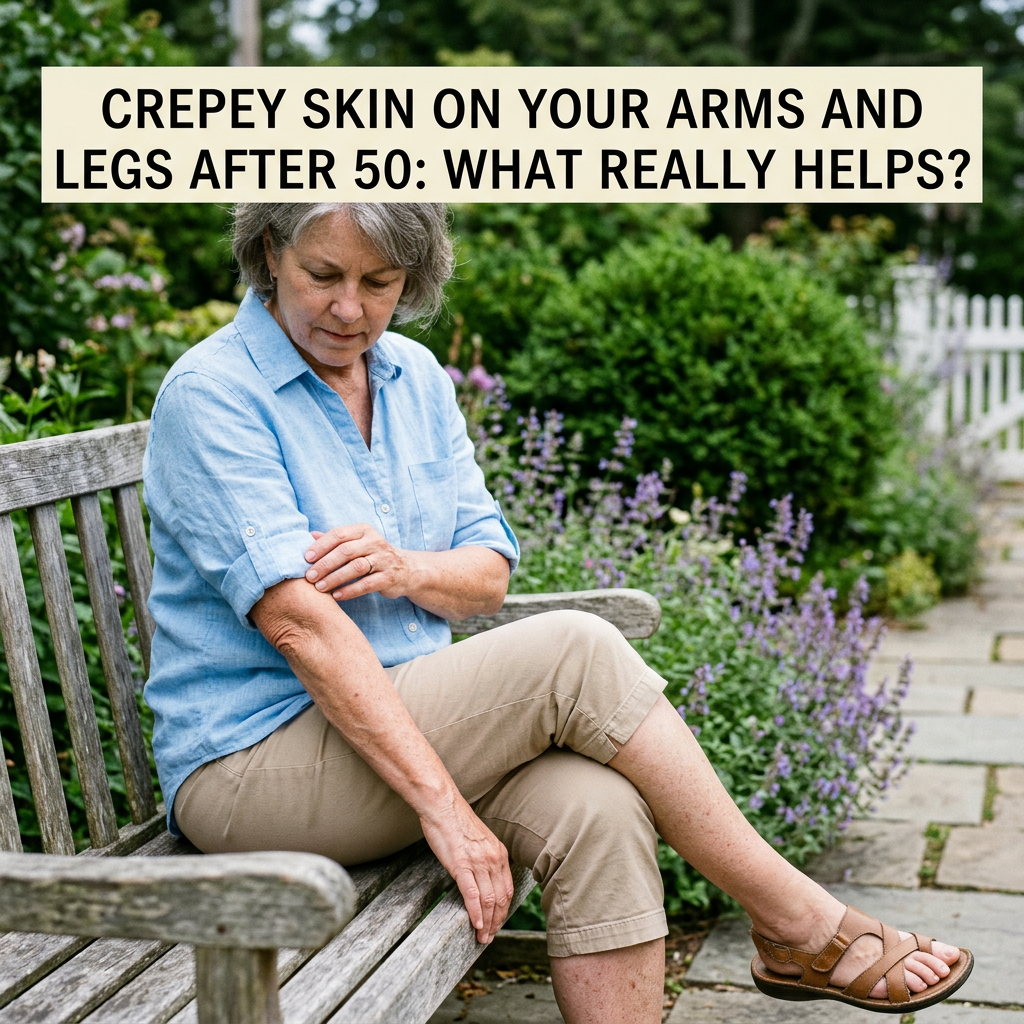
    Woman sitting outdoors examining the skin on her arm, with the article title about crepey skin after 50

    Can crepey skin on your arms and legs improve? Yes. Moisturizers can make dry, finely wrinkled skin look smoother; sun protection can prevent more damage; and some treatments can improve skin texture. But creams cannot lift a substantial amount of loose skin. Knowing the difference can save us money and disappointment.

    What’s happening to our skin?

    Our skin doesn’t suddenly get older on our fiftieth birthday. Over time, it can become thinner, hold moisture less effectively, and lose some of the collagen and elastic support that once gave it more bounce. Years of sun exposure also leave their mark.

    That papery, finely wrinkled appearance is often called crepey skin. Dryness can make it stand out even more. And while we can’t undo every change, we can take better care of the skin we’re in.

    Six things that can actually help

    1. Start with a good moisturizer, not an expensive promise

    I wonder how often we look for a remarkable new ingredient when a simple body cream is exactly where we ought to begin.

    Moisturizers help the outer layers of skin hold water. When dry skin becomes better hydrated, tiny lines can look less obvious and the surface may feel softer. Apply your moisturizer after bathing, while your skin is still slightly damp, and remember your upper arms, knees and lower legs.

    Ingredients such as glycerin, ceramides and hyaluronic acid can be useful. For rough, dry body skin, a urea-containing cream may also help. You don’t need all of them or the most expensive jar on the shelf.

    If you’re watching your budget, I’ve written a separate guide to simple, inexpensive crepey-skin habits. It focuses on affordable care rather than miracle claims.

    Skincare writer Michelle Wong of Lab Muffin Beauty Science has a wonderfully practical guide to choosing moisturizers by understanding the ingredients. I like that approach: find something that suits your skin instead of buying whatever has the biggest promise on the jar.

    2. Remember that our arms and legs need sunscreen, too

    Most of us have heard plenty about protecting our faces. But think of all those years our arms and legs have spent in the sunshine—gardening, walking, working, or simply enjoying a nice day.

    Ultraviolet exposure damages skin-supporting fibers and contributes to visible aging. The American Academy of Dermatology recommends broad-spectrum SPF 30 or higher on exposed skin, along with shade and protective clothing.

    It won’t erase yesterday’s sun damage. But protecting our skin today is still worth doing.

    I was interested to read Laura Galbato’s personal account on Sixty and Me. She describes suddenly noticing crepey skin during a yoga pose and thinking back to her sun-filled younger years. It’s the kind of honest experience that reminds us how many people notice these changes, even when they take good care of themselves.

    3. Consider retinoids—but give them the respect they deserve

    Retinol, retinoids, tretinoin: there are so many names that it’s easy to wonder whether we need a degree in chemistry to buy a skincare product.

    Here’s the useful part. Retinoids have evidence behind them for improving certain signs of sun-damaged skin, particularly fine lines and texture. Prescription tretinoin has been studied extensively. But much of that evidence concerns facial skin, not lifting loose upper arms or thighs.

    They can also cause irritation. And if our skin is already dry or sensitive, that’s important.

    Three dermatologists quoted by the American Academy of Dermatology offer particularly useful guidance. Dr. Tina Alster advises starting with a less-intense retinoid and introducing it gradually. Dr. Anne Chapas cautions that inflamed or unusually dry skin may not tolerate these products well. Dr. Sonia Badreshia-Bansal explains that irritation can leave dark marks on darker skin tones.

    Their advice concerns retinoid use generally; none of it is a promise that these products will tighten crepey arms and legs. If you’re considering prescription treatment, a dermatologist can help you decide what’s appropriate.

    Beauty blogger Giorgia Guazzarotti of Beautiful With Brains takes a similarly questioning approach in her review of a retinol night cream: she looks beyond the marketing to ingredients, limitations and who might actually benefit. Her review concerns a facial product, not a proven treatment for crepey arms or legs, but I appreciate the habit of asking what a product can realistically do.

    4. Don’t confuse smoother skin with tighter skin

    It’s understandable to be tempted by a cream that says lift, firm or restore across the label.

    Some of those creams really are good moisturizers. Some contain useful ingredients. But smoother, better-hydrated skin isn’t the same as skin that’s been physically lifted.

    The American Academy of Dermatology’s guidance on firming sagging skin explains why creams offer, at best, modest results when the problem is true skin laxity.

    I’d rather spend money on something that does one useful job well than on something promising to do the impossible.

    5. Don’t forget the muscles underneath

    We talk a lot about what to put on our arms and legs. But what’s underneath matters, too.

    Strength training can help maintain or build muscle, supporting the shape of our arms and legs as well as everyday independence. It won’t remove loose skin. But feeling stronger, climbing stairs more comfortably, and carrying our groceries with confidence are benefits worth having.

    If that’s something you’re working on, you might enjoy my practical guide to rebuilding muscle after 50.

    6. Sometimes our skin needs less, not more

    It’s easy to try one scrub, then another cream, then an exfoliating acid because the last product didn’t work quickly enough.

    But mature skin can be less forgiving when we overdo it. Hot showers, harsh rubbing and too many strong treatments may increase dryness and irritation.

    If the skin is rough, an ingredient such as lactic acid may help its surface texture, but it can irritate sensitive skin. Introduce new products one at a time. There’s no prize for using the longest skincare routine.

    What helps crepey skin on the arms?

    The backs of the upper arms can show a combination of sun damage, fine wrinkles and changes in underlying muscle. Start with regular moisturizer and sun protection. Gentle, appropriate resistance exercise may also help the arms look and feel stronger.

    If the main concern is significant loose skin hanging beneath the arms, creams probably won’t give the lift you’re hoping for. That’s a question worth discussing honestly with a dermatologist.

    How do you get rid of crepey skin on your legs?

    Crepey skin around the knees, thighs and lower legs can be particularly noticeable when we sit or bend. Begin by asking what seems to be causing the look: dry, finely wrinkled skin, or a larger amount of loose skin?

    Dryness may respond to a good body moisturizer; some people find urea or carefully chosen exfoliating lotions helpful for rough texture. Protect exposed legs from sun damage. Leg-strengthening exercise can support the muscles underneath, though it doesn’t tighten the skin itself.

    For marked laxity, talk with a qualified dermatologist before spending money on increasingly expensive creams.

    How long before you notice a difference?

    What you tryWhat to expect
    MoisturizerDryness and surface appearance may improve within days; continuing care matters.
    SunscreenHelps prevent additional damage rather than giving an immediate cosmetic lift.
    RetinoidsWhen appropriate and tolerated, improvement in photoaging can take weeks or months.
    Strength trainingStrength and function can improve over time; loose skin is not directly removed.
    In-office proceduresResults and recovery vary greatly with the procedure and the person.

    The AAD recommends allowing many anti-aging products at least six weeks, and sometimes up to three months, before judging their results.

    Do you need an expensive treatment?

    Not necessarily. If dry texture is the issue, inexpensive skincare may make a worthwhile difference. Prescription products vary in cost according to coverage and pharmacy. Cosmetic procedures are usually much more expensive, and their prices depend on the area, clinic and treatment plan.

    A dermatologist may discuss options such as certain lasers, ultrasound or radiofrequency treatments for skin laxity. But there are trade-offs: results can be modest, procedures can have risks and downtime, and no treatment fits everybody.

    Before booking anything, ask what improvement is realistic for your skin, whether you need more than one session, what recovery looks like, and what the total cost will be. Don’t settle for a vague promise.

    A simple four-week routine to try

    Week one: Keep showers gentle, apply moisturizer to slightly damp skin, and protect exposed arms and legs from the sun.

    Week two: Stay with the basics. Notice whether your skin feels more comfortable or looks less dry. That’s progress, even if the skin hasn’t tightened.

    Week three: If dryness is under control but you’re still concerned about texture, consider whether a targeted ingredient is appropriate. Don’t introduce several acids or retinoids together.

    Week four: Look back at what helped. If you’re comparing photographs, use similar lighting and distance. A dramatic before-and-after picture doesn’t always mean the skin itself has changed dramatically.

    Four weeks won’t tell you everything about longer-term treatments, but it’s a reasonable start without buying a shelf full of new products.

    When should you see a dermatologist?

    Gradual texture changes are common, but don’t assume every skin change is simply age. Seek professional assessment for sudden changes, unexplained bruising, persistent inflammation, suspicious spots, or skin that isn’t healing normally. It’s also sensible to get advice before prescription treatments or procedures.

    A few questions worth asking

    Can crepey skin go away completely?

    Some of its appearance may improve, particularly if dryness is making it look worse. Significant excess skin is much harder to change without professional treatment.

    Is retinol worth trying?

    It may help some signs of photoaging, but results on crepey body skin are less certain than the research on facial skin. Retinoids can irritate; ask a dermatologist if they’re right for you.

    Does drinking more water tighten skin?

    Staying hydrated supports health, but drinking extra water isn’t a proven way to lift established loose skin.

    What’s the best first step if I’m overwhelmed?

    Start with a gentle moisturizer and sun protection. Give them a fair chance before adding something stronger.

    There’s more to getting older than what we see in the mirror

    I don’t think taking care of ourselves means trying to become 25 again. We can appreciate who we’ve become and still enjoy looking after our skin, building our strength and feeling good about ourselves.

    Perhaps a moisturizer makes your arms more comfortable. Maybe you decide to speak with a dermatologist. Or perhaps you realize you don’t need another miracle cream at all.

    We’re getting older. We’re still learning. And we’re still worth taking care of.

    Your turn

    Have you found a simple cream, habit or treatment that actually made a difference to the skin on your arms or legs? Or have you bought something that didn’t live up to the promise? I’d love to hear what you learned in the comments. Your experience might help somebody else.

    Until next time, take good care of yourself.
    Tom Green — Well After 50

    Sources and helpful reading

    About the author

    Tom Green writes Well After 50. He’s just a regular, laid-back 64-year-old who keeps things simple. He shares what he learns about skincare, fitness and getting older, and what’s working for him. He’s also the author of A Practical Guide to Getting Older Without Giving Up on Yourself. Tom isn’t a doctor. He reads up on the research and passes along what’s useful, plain and simple.

    I’m not a doctor. I’m a man in my 60s sharing research and practical information. This article isn’t personal medical advice; speak with a qualified healthcare professional about your own skin or treatments.

    Keep reading

    I’ve also mapped out some great tools on my new Tech for Independent Living After 50 page.
error: Content is protected !!