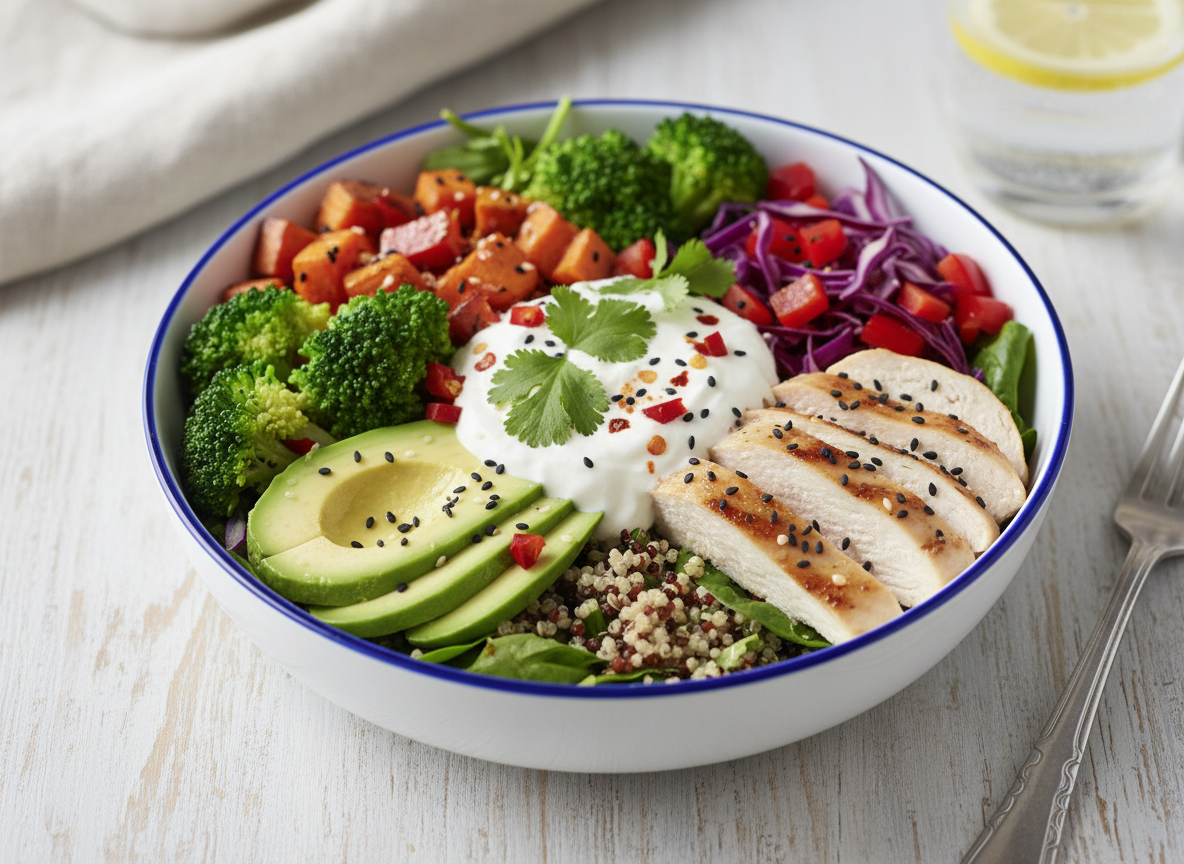
Turning 50 doesn’t mean you need a complicated diet. In fact, the best way to eat after 50 may be much simpler: build meals around foods that help you maintain muscle, support your bones, get enough fiber and keep your energy steady.
And no—you don’t have to give up everything you enjoy. Healthy eating after 50 is about what you eat most of the time, not being perfect.
What changes about eating after 50?
As we get older, getting enough nutrients can become more important. The National Institute on Aging recommends a varied eating pattern that includes vegetables, fruits, grains, protein foods, dairy or fortified alternatives and healthy fats. Good nutrition can support healthy aging, muscle, bones and independence.
1. Put protein on your plate
Protein helps your body build and repair tissues. Getting protein regularly throughout the day is also one practical way to support muscle as you age.
Easy choices include:
- Salmon, tuna, trout and other seafood
- Chicken or turkey
- Eggs
- Greek yogurt and cottage cheese
- Beans, lentils and chickpeas
- Tofu and other soy foods
- Nuts and seeds
You don’t have to eat meat to get protein. Beans, lentils, soy foods, dairy, eggs, nuts and seeds can all contribute.
2. Make vegetables and fruit regulars—not decorations
Colorful produce provides fiber, vitamins, minerals and other nutrients. Instead of worrying about one “superfood,” aim for variety.
Try berries, apples, oranges, spinach, broccoli, peppers, tomatoes, carrots, sweet potatoes, Brussels sprouts or whatever you actually enjoy eating.
3. Get serious about fiber
Fiber is found in plant foods such as vegetables, fruit, beans, nuts, seeds and whole grains. It can help keep digestion moving and may help with cholesterol and blood sugar.
If your diet is low in fiber now, increase it gradually and drink enough fluids. A sudden jump in high-fiber foods can leave you feeling more bloated rather than better.
4. Don’t overlook calcium and vitamin D
Bone health deserves attention as we age. Calcium-rich foods include milk, yogurt, cheese, calcium-fortified beverages, tofu made with calcium, and some fish such as canned sardines or salmon with bones.
Vitamin D is found naturally in a smaller number of foods and is added to some fortified foods. Whether you need a supplement depends on your diet, health and individual circumstances, so it’s worth asking your healthcare professional if you’re concerned about your intake.
5. Include healthy fats
Healthy eating doesn’t mean avoiding all fat. Foods such as olive oil, avocados, nuts, seeds and fish can fit into a balanced eating pattern.
Instead of obsessing over one ingredient, look at the whole meal. A piece of salmon with vegetables and a whole grain is a very different meal from a highly processed food that happens to advertise one “healthy” ingredient on the package.
6. Remember vitamin B12
Vitamin B12 is another nutrient worth knowing about as you get older. It occurs naturally in animal foods and is also added to some fortified foods. Some people have trouble absorbing enough B12 from food, so if you have concerns, ask your healthcare professional whether testing or a supplement makes sense for you.
7. Drink enough fluids
Water is easy to overlook, especially when you’re busy. Drinking fluids throughout the day helps you stay hydrated and supports normal digestion. Water is a simple everyday choice, and replacing sugary drinks with water can also cut down on added sugar.
8. Foods to eat less often—not foods you can never have
You don’t need a forbidden-food list. A healthier approach is to eat highly processed foods, sugary drinks and foods high in sodium or saturated fat less often, while making nutrient-rich foods the foundation of your meals.
And yes, you can still have dessert. One cookie isn’t going to undo a week of good choices.
A simple 3-day eating plan after 50
Day 1
- Breakfast: Greek yogurt, berries and a handful of nuts
- Lunch: Salmon or chicken salad with plenty of vegetables
- Snack: Apple with peanut butter
- Dinner: Chicken stir-fry with broccoli and brown rice
Day 2
- Breakfast: Oatmeal topped with blueberries, walnuts and yogurt
- Lunch: Lentil soup with a side salad
- Snack: Cottage cheese and fruit
- Dinner: Baked fish, roasted vegetables and a sweet potato
Day 3
- Breakfast: Vegetable omelet with whole-grain toast
- Lunch: Turkey or tofu wrap with spinach and hummus
- Snack: Nuts and fruit
- Dinner: Bean, chicken or tofu bowl with vegetables, avocado and a whole grain
The easiest way to build a better meal
When you don’t know what to make, start with four questions:
- Where is my protein?
- Where are my vegetables or fruit?
- Where is my fiber-rich carbohydrate?
- What healthy fat could round this out?
That simple checklist can turn an ordinary meal into a more balanced one without counting every calorie or following a rigid diet.
Healthy eating after 50 is not about eating perfectly
The goal isn’t to find a magic “women over 50 diet.” It’s to create an eating pattern you can actually live with.
Eat a variety of foods. Get enough protein. Choose plenty of plants. Pay attention to calcium, vitamin D and B12. Drink water. Keep highly processed foods from taking over your plate. And leave room for the foods that make life enjoyable.
Your turn
What is one food you started eating more of after 50 that made you feel better—or simply made healthy eating easier? Tell us in the comments. Your idea might help someone else.
Helpful source: The National Institute on Aging’s guidance on healthy eating as you age provides additional information about food groups, protein, fiber, hydration and meal planning.
Leave a Reply