I’ll be honest with y’all. For most of my life, sunscreen was something I figured was for the beach and for kids. Turns out that’s exactly backwards for folks our age, and there’s some real news this year that makes it a whole lot easier to fix.
Back in June, the FDA okayed a sunscreen ingredient called bemotrizinol (you’ll also see it called BEMT). It’s the first new sunscreen ingredient America has gotten in about 25 years, according to the Associated Press, and the first bottles hit store shelves this fall. So is it better? Let’s sit a spell and sort it out.
What Is Bemotrizinol, Anyway?
It’s a sunscreen filter folks in Europe have been using since about 2000. The FDA announced on June 9, 2026 that it can now go in American sunscreens at up to 6%, and the rule took effect August 9.
Here’s why that’s a big deal. The sun hits us with two kinds of rays. UVB burns you. UVA is the sneaky one. It ages your skin, causes wrinkles and age spots, and plays a part in skin cancer. It comes through clouds and even your car window all year long. Bemotrizinol blocks both kinds by itself, and it doesn’t break down in the sun the way some older ingredients do.
Dr. Abigail Waldman, a dermatologist at Brigham and Women’s Hospital, described it to Healio as “like a mineral sunscreen, but without the white cast.” If you’ve ever smeared on zinc and looked like you’d been painting the porch, you’ll appreciate that.
Why Did It Take 25 Years?
Over in Europe, sunscreen gets treated like a cosmetic, same as lotion. Here, it’s treated like a drug, and the approval process got stuck for decades. NPR reported that the company behind it spent at least $18 million over more than 20 years trying to get it through. A newer approval process set up in 2020 finally got it over the finish line.
Is It Safe?
This is where it really shines. In the FDA’s testing, very little of it soaked into the bloodstream, well under the level that would worry regulators. Out of 484 people tested, nobody had irritation or an allergic reaction. Alexa Friedman of the Environmental Working Group, a group that’s usually tough on chemical sunscreens, told NPR it has more safety data behind it than any other chemical filter sold in the U.S.
One thing I won’t tell you is that it’s “reef safe.” That’s not an official term, and the ocean research is still mixed.
Why This Matters More After 50
Here’s the part that got my attention. According to the American Cancer Society, the average age for a melanoma diagnosis is 67. Before 50, it’s more common in women. After 50, it’s more common in men, and men die of it at nearly twice the rate.
And we men are the worst about it. A CDC study found fewer than 15% of men regularly put sunscreen on their face. Ladies did better, but only about 30%. Consumer Reports found only 57% of folks 55 and up wear it when they’re out in the sun.
Nope. A well-known Australian study had people wear sunscreen every day, and after four and a half years their skin showed 24% less aging than folks who only used it now and then. Those folks were under 55, but dermatologists told Consumer Reports that starting later still helps.
Right now there are only a handful, and they’re all face sunscreens:
Neutrogena Ultra Sheer Daily Face SPF 70: about $17 to $19 for 1.4 oz at Walmart, Target, Amazon and drugstores. Dewy finish, good for drier skin, and water resistant for 80 minutes.
Neutrogena Clear Face SPF 60: same price, with a matte finish. Good if you get shiny.
La Roche-Posay Anthelios UV Defense SPF 50: about $40 for 1.7 oz.
Ultra Violette Unblock Screen SPF 50: about $40 for 1.7 oz at Sephora.
If you’re watching your pennies like I am, the Neutrogena costs about half as much per ounce. BuzzFeed’s Megan Liscomb tried the Neutrogena and said it basically disappears on your skin. To find it, check the “Active ingredients” box on the back of the bottle for the word bemotrizinol.
There’s no body lotion, spray or tinted version yet, so you’ll still need your regular sunscreen for your arms, neck and legs. And if age spots are your worry, dermatologist Dr. Jane Yoo points out that a tinted sunscreen with iron oxides gives extra help, since bemotrizinol doesn’t block visible light. I’ve got more budget picks in my post on the best Walmart skincare for over 50.
So, Is It Better?
It’s nicer to wear, it holds up better in the sun, and it’s been tested hard. But it’s no miracle. Dr. Daniel Schlessinger told NewBeauty it’s “not a magic bullet,” since brands still mix it with older ingredients. Nobody has proven it prevents more cancer or wrinkles than what you’ve already got.
Here’s how I see it. If you’ve got a sunscreen you like and actually wear, keep wearing it. If you’ve been skipping sunscreen because it’s greasy or leaves you white as a ghost, this is your chance to try again. And don’t put it away for winter. Snow can bounce up to 80% of the sun’s rays right back at you, according to the Skin Cancer Foundation.
The best sunscreen is the one you’ll put on every morning. I reckon that’s true at 25 and even truer at 65.
Your turn: Do you wear sunscreen every day, or is it a summer-only thing for you? Tell me in the comments.
Tom isn’t a doctor, and this article is general information, not medical advice. Prices were checked in early November 2026 and may change. Ask a dermatologist about any new or changing spots on your skin.
Apple’s earbuds can now work as over-the-counter hearing aids, and they’re on sale for Black Friday. Here’s who they help, who they don’t, and what to check before you spend a dime.
Most of us don’t like to talk about this one. Somewhere along the way, a lot of us started saying “What?” more than we used to. We turn the TV up a notch. We nod along at the restaurant table and hope we laughed at the right part.
And when we finally think about doing something about it, we find out a pair of hearing aids from an audiologist can run $4,000 to $7,000. Original Medicare doesn’t pay for them. That’s enough to make anybody put it off another year.
So when folks heard that a pair of Apple AirPods Pro can work as a hearing aid, and that AirPods Pro 3 are going for about $199 in early Black Friday sales, down from $249, a lot of ears perked up.
I dug through the reviews, the studies and what the hearing experts are saying. Here’s what I found, for men and women alike.
Can AirPods Really Work as Hearing Aids?
Yes, for some people. In September 2024 the FDA authorized Apple’s hearing aid feature as the first over-the-counter hearing aid software. It runs on AirPods Pro 2 and AirPods Pro 3. Regular AirPods don’t have it.
It’s made for adults with mild to moderate hearing loss. That’s the kind where quiet talk gets muddy, voices blur in a busy room and you keep asking folks to repeat themselves. It is not made for severe hearing loss.
Here’s what you get:
A free hearing test. You take it at home with your AirPods and iPhone. It takes about five minutes and gives you a hearing chart you can show your doctor.
Hearing aid mode. The AirPods use your test results to turn up the sounds you’re missing, like voices, and leave the rest alone.
Hearing protection. They can turn down loud noise like a lawn mower, a concert or a ballgame crowd.
Regular earbuds too. Phone calls, music, audiobooks and TV straight into your ears.
I didn’t want to take Apple’s word for it, so I looked at what the people who test hearing aids for a living found.
The good news. The audiologists at HearingTracker, Dr. Steve Taddei and Dr. Abram Bailey, gave AirPods Pro 3 a 4.1 out of 5. They said they can do the job as OTC hearing aids at a fair price. Jill Waldbieser at the National Council on Aging found they sound good in quiet places and make a fine way to try hearing help before buying real hearing aids.
The not-so-good news. Tech writer Stewart Wolpin tested them for Techlicious and called them “still flawed” as hearing aids. In loud places, like a room full of people talking, they sometimes cut back the help right when he needed it most. Wind noise was a problem outdoors. And the settings were scattered across several screens, which he said would be hard on folks who aren’t comfortable with phones. HearingTracker’s testers had the same gripe about the settings.
Pretty much everybody agrees on three things:
The battery won’t last all day. Plan on putting them back in the case for a while at lunch.
They’re easy to spot. Some folks don’t mind that. Earbuds are everywhere now. Others want something more hidden.
Fit matters. If they keep slipping, try the other ear tip sizes in the box.
Across everybody in the study, hearing help didn’t make a big difference in memory and thinking over three years. But in one group of older adults who were most at risk, it slowed the decline in thinking skills by 48%. The researchers say that finding needs more study, but it’s worth knowing.
Hearing also ties into getting out and staying connected. When it’s hard to follow a conversation, a lot of us quit going to the places where conversations happen. If that sounds familiar, I wrote about making new friends after 50 too.
Who Should Try AirPods First (and Who Shouldn’t)
They might be a good fit if:
You already use an iPhone.
Your trouble is mild, like soft voices, TV dialogue or busy restaurants.
You want to try hearing help without spending thousands.
You’d use them part of the day, not from sunup to bedtime.
Skip them and see a doctor or audiologist first if you have:
Hearing that went away suddenly in one or both ears.
One ear that’s a lot worse than the other.
Ringing, roaring or buzzing in your ears.
Ear pain or dizziness.
No idea how bad your hearing loss is.
That list comes from Dr. Devin McCaslin, director of audiology at Michigan Medicine. Those can be signs of something a doctor needs to look at. He also points out that 72% of men over 65 have never had a hearing test, so fellas, that one’s for us.
And if you use an Android phone, these aren’t your best pick. The hearing features need an iPhone or iPad. An OTC hearing aid built for Android will serve you better.
How to Turn On the Hearing Aid Feature
Once your AirPods Pro 2 or 3 are connected to an iPhone with the latest iOS update, here’s how it goes, according to Apple’s own instructions:
Put your AirPods in and sit somewhere quiet.
Open Settings and tap your AirPods’ name near the top.
Tap Take a Hearing Test. If you don’t see it, tap Hearing Health first. It takes about five minutes.
Go back and tap Hearing Assistance.
Follow the steps and turn on Hearing Aid.
Already have a hearing test from an audiologist? You can use those results instead of taking Apple’s test.
Ask a family member or a neighbor to help with setup if you’d like. I reckon there’s no shame in that. Better to have somebody show you twice than fumble with it for a week.
Shopping Smart This Black Friday
Make sure it says “Pro.” Only AirPods Pro 2 and Pro 3 have the hearing aid feature. The cheaper regular AirPods don’t.
Buy from a real store. Fake AirPods are all over the internet, and they won’t have the hearing features. Stick with Apple, Amazon (sold by Amazon), Best Buy, Target, Walmart or Costco.
Check the return policy. If they don’t fit your ears or don’t help, you want your money back.
Look at your Medicare Advantage plan. Some plans give an allowance for hearing aids. Open enrollment runs through December 7, so it’s a good time to compare plans on Medicare.gov.
Got an HSA or FSA? Ask your plan whether OTC hearing aids count. Some do.
The Bottom Line
AirPods Pro won’t replace a good pair of prescription hearing aids for everybody. But for a lot of us with mild hearing trouble and an iPhone in our pocket, they’re a cheap, easy way to find out how much we’ve been missing.
Like the old saying goes, an ounce of prevention is worth a pound of cure. Take that free hearing test. Even if you never use the hearing aid part, you’ll know where you stand. Then you can decide what to do next.
Well After 50 isn’t paid by Apple. This article has one Amazon affiliate link, so I may earn a small commission if you buy through it, at no extra cost to you. Prices were checked in early November 2026 and may change.
Have you tried the AirPods hearing test, or are you wearing hearing aids already? What helped and what didn’t? Tell me in the comments. Somebody reading might be on the fence and could use your two cents.
About the Author
Tom Green writes Well After 50. At 64, he shares practical research and everyday experiences about staying active, living well, and making the most of life after 50. He believes it’s never too late to keep learning.
Tom is not a doctor, audiologist or tech professional. This article is for general education only. Talk with your doctor or a hearing professional about your own hearing.
You don’t need a robot or a big budget. Most of the tech that helps folks keep living in their own homes is free, already on your phone, or cheaper than you’d think.
Living on your own after 50 mostly comes down to a handful of worries. Falling with nobody around. Missing a pill, or taking it twice. A scam call that sounds just like family. And the house getting awful quiet some evenings.
The good news is that AI got a lot better at those exact jobs this year, and plenty of folks our age have noticed. AARP’s latest tech survey of more than 3,000 people found that AI use among adults 50 and older jumped from 18% in 2024 to 30% in 2025.
If you want to learn to talk with a chatbot like ChatGPT, I covered that in Best Free AI for Seniors. This one’s different. These are the tools that help you stay safe and independent at home, starting with the free ones. For each one I’ll tell you what it does, what it costs and where it falls short. Fellas and ladies both, there’s something here for you.
The quick list
Medical ID on your phone: free, takes 5 minutes
The new Alexa+: free with Amazon Prime, or about $140 to $200 for an Echo Show 8
Be My Eyes, for reading labels and mail: free
A family safe word against AI scam calls: free
Medicine reminders: free, or a smart dispenser from about $40 a month
Fall detection on a watch: Apple Watch SE 3 from $249
An AI companion: ElliQ, free in some states, otherwise a lease
Borrowing gadgets before you buy: free through your state
1. Set up Medical ID on your phone (free, 5 minutes)
I’m starting with this one because it costs nothing and most folks have never touched it. If you’re ever found on the floor or in a wreck, an EMT can pull up your medicines, allergies and emergency contacts right from your lock screen, no passcode needed.
iPhone: open the Health app, tap your picture, then Medical ID. Fill it in and turn on “Show When Locked.”
Android: open Settings, then look for “Safety & emergency” and “Medical information.” The menu names vary a little by phone brand.
While you’re in there, add at least two emergency contacts. Everything else in this article works better once that’s done.
2. The new Alexa+ (free with Prime)
This is the big change this year. Amazon rebuilt Alexa with the same kind of AI that runs the chatbots, and since February it’s been free for every Prime member in the U.S. Without Prime, it’s $19.99 a month, which isn’t worth it when Prime costs less.
The difference is you can talk to it like a person now. Instead of memorizing exact commands, you can say something like “remind me to take my blood pressure pill after breakfast every day” or “call a ride to my doctor’s appointment Thursday.” If you already have an Echo, just say “Alexa, upgrade to Alexa+.”
If you’d like a device to go with it, the Amazon Echo Show 8 is the one senior tech guides keep coming back to. It’s a speaker with a screen, so you can see faces on video calls from across the room and read your reminders in big letters. With your OK, family can “Drop In” for a video check-in without you having to answer anything. The regular price runs about $180 to $200, but it goes on sale a lot, and deal sites have caught it around $140. With Black Friday coming, I’d hold off and wait for a sale.
Where it falls short: It’s new, and TechRadar reports some early users have had slow answers, broken routines and wrong information. For now you can switch back to the old Alexa if it gives you fits. It’s also not an emergency device. Amazon sells a paid add-on called Emergency Assist that connects you to a live agent, but nothing works if the power or internet goes out, so keep your phone handy too.
3. Be My Eyes: a free app that reads things for you
You point your phone’s camera at something, like a medicine label, the tiny print on a bill, the microwave display or a thermostat. Then either the app’s AI tells you what it says, or a real volunteer comes on a video call and helps you out.
It’s built for people who are blind or have low vision, but anybody whose eyes aren’t what they used to be can use it. It’s free on iPhone and Android, and there are millions of volunteers signed up around the world, so somebody’s usually awake to help no matter what time it is.
Where it falls short: AI can get things wrong. For something important, like a medication dose, double-check with your pharmacist. And don’t point it at your bank statements unless you’re comfortable with a stranger seeing them.
Rather not hold up a phone? Some AI smart glasses can read and describe things for you hands-free. BLACKSHEEP sells AI smart glasses at factory-direct prices. Check which phone they work with before you buy. (Sponsored link: I may earn a small commission at no extra cost to you.)
4. A family safe word: free protection from AI scam calls
Now for the ugly side of AI. Scammers can copy a voice from a few seconds of video posted online, then call you sounding just like your grandson, your niece or your brother, crying and begging for money.
It’s working, too. The Federal Trade Commission reports that adults 60 and older reported more than $3 billion in fraud losses in 2025, up from about $600 million in 2020.
The best protection doesn’t cost a dime. The FBI recommends a family safe word, something only y’all would know. No word, no money. Hang up and call that person back on the number you already have. (I also showed how a free AI helper can sniff out scam texts in Best Free AI for Seniors.)
And with Medicare open enrollment running until December 7, watch out for fake “Medicare” calls. Medicare isn’t going to call you out of the blue asking for your Medicare number. If you’re not sure, hang up and call 1-800-MEDICARE (1-800-633-4227) yourself.
5. Medicine reminders that won’t let you forget
Before you spend money on a fancy pill machine, try the free stuff. Your phone or Alexa can remind you at the same time every day. Many pharmacies will also pack your pills in little sealed packets labeled by day and time, so you can see at a glance whether you took them. Just ask at the counter.
If you take five or more medicines a day, a smart dispenser like Hero might be worth a look. You pour each pill type in once, and at pill time it chimes and gives you just that dose. It stays locked the rest of the time so you can’t double up by accident, and it can text family if you miss one. On Hero’s own site it runs about $40 to $60 a month, depending on the plan. If you’re on Medicare and managing an ongoing health condition, ask about their Medicare remote care program. It can bring the cost way down, sometimes to nothing, though co-pays may apply.
Where it falls short: You rent it, you don’t own it, and you’ll likely want a family member to help you set it up the first time. For one or two pills a day, a $5 pill box does the job.
6. A watch that calls for help after a fall (from $249)
Falls are the thing most of us worry about when we think about living alone. The Apple Watch SE 3 is Apple’s cheapest current watch, and it’s the one senior tech guides keep ranking first for fall detection.
The part I like best: if you’re 55 or older, Apple turns fall detection on by itself once you put in your age. If it feels a hard fall and you don’t move for about a minute, it calls for help on its own and sends your location to your emergency contacts. And it just looks like a regular watch, so folks actually wear it instead of leaving it in a drawer.
Prices start at $249. Get the cellular version, which costs more, so it works even when your phone is in the other room.
Where it falls short: Apple says plainly that the watch can’t detect every fall. A slow slide out of a chair might not set it off. It needs an iPhone, and you’ll have to charge it every day. A dead watch can’t help anybody.
7. An AI companion that checks on you (free in some states)
ElliQ is a little tabletop robot that looks something like a desk lamp with a screen. Unlike Alexa, it starts the conversation. It says good morning, asks how you slept, reminds you to drink water or take a walk, plays games and helps you video call family.
Now, the budget part most folks miss. Some states give it to qualifying older adults for free through their aging offices. New York just renewed its program in October 2026, and as of this past summer, Washington, Florida, Nevada, Wisconsin and New Jersey had programs too. Call your local Office for the Aging and ask. If you don’t qualify, it’s a lease: $249 to start, then $39 to $59 a month depending on how long you sign up for.
Where it falls short: New York reports that most users feel less lonely, but those numbers come from users rating themselves, with no comparison group. ElliQ is not an emergency device, so keep a phone or alert button close by. No machine takes the place of a real friend, but it might help fill the quiet hours.
8. Borrow it before you buy it (free)
Hardly anybody knows about this one. Every state has an assistive technology program, paid for by a federal law called the Assistive Technology Act. Many of them will let you try out gadgets, borrow them for a few weeks, or get gently used equipment for little or nothing.
That means you can test a magnifier, an easy phone or a medical alert before you spend a penny. To find yours, search for your state’s name plus “assistive technology program,” or start at the national directory at AT3Center.net.
AI for Seniors: A Friendly Beginner’s Guide to ChatGPT, Smart Tools, and Everyday Tasks by Wes Coburn https://link.amazon/B03Q1vQSR #ad
Bonus: help paying for your phone or internet
None of this works without a phone or internet. If you get SSI, Medicaid, SNAP, federal housing help or a veterans pension, you may qualify for the federal Lifeline program, which takes money off your monthly phone or internet bill. The bigger ACP internet discount ended in 2024, but Lifeline is still going. Apply through the official site, not some website promising a “free iPhone.”
Your weekend checklist ($0)
Print this out or stick it on the fridge. You can do every one of these by Sunday without spending a dime.
Fill in Medical ID on your phone and add two emergency contacts.
Pick a family safe word and share it with the people you love.
Set one daily reminder, for pills, water or a walk.
Download Be My Eyes and try it on a can label.
If you have Prime and an Echo, say “Alexa, upgrade to Alexa+.”
Look up your state’s assistive technology program before buying anything.
Then, if you’ve got some money set aside, a fall-detection watch or an Echo Show 8 on sale is where I’d look next. Like the old saying goes, an ounce of prevention is worth a pound of cure.
Other Voices Worth Following
Laurie Orlov of Aging and Health Technology Watch has spent years tracking the tech built for older adults. Read her if you want the big picture without the sales pitch.
Joseph Coughlin, founder of the MIT AgeLab and author of The Longevity Economy, has been asking for years why technology isn’t built better for people our age. He’s worth a listen.
Common Questions
What are the best free AI tools for seniors living alone?
Medical ID on your phone, the voice assistant already on your phone, Alexa+ if you have Prime, the Be My Eyes app for reading labels and mail, and your phone’s reminder app. A family safe word isn’t an app, but it’s free and one of the best defenses against AI voice scams.
Is Alexa+ free?
Yes, if you have Amazon Prime in the U.S. Without Prime it costs $19.99 a month, and there’s a limited free text version on Alexa.com.
What technology helps seniors living alone?
Fall detection, like the Apple Watch, which turns it on automatically at 55 and up. A voice assistant or smart display for hands-free calls and reminders. And daily check-ins, like ElliQ or a simple phone call routine with family.
Can seniors get ElliQ for free?
In some states, yes. New York, Washington, Florida, Nevada, Wisconsin and New Jersey have offered it free to qualifying older adults through aging programs. Call your local Office for the Aging to ask.
How do I protect myself from AI voice scams?
Set up a family safe word, never send money on an urgent call, and hang up and call the person back on a number you already know.
A Final Thought
Staying independent isn’t about having the fanciest gadget. It’s about having a little help in the right spots, so you can keep living in your own home, on your own terms. I reckon most of us can start with what’s already in our pocket.
Your turn: Which of these would help you most, or is there one you already use? Tell me in the comments. Somebody reading might need your tip.
Tom Green writes Well After 50. At 64, he shares practical research and everyday experience about staying active, living well and making the most of life after 50.
Prices and programs change often. Figures here were checked in early November 2026, so check the seller or program before you buy or apply. Tom isn’t paid by any company mentioned here. This article is general information, not medical, legal or financial advice.
You don’t need a new gadget or a monthly bill. Here’s how folks over 50 are using free AI as a helper around the house—and how to keep it from steering you wrong.
Now I’ll be honest with you. When folks first started talking about AI, I figured it was something for kids and computer people. Not for a fella sitting on his porch at 64.
Turns out I was wrong about that. And I’m not the only one coming around.
According to a Pew Research Center report from June 2026, about 42% of Americans ages 50 to 64 have used an AI chatbot like ChatGPT or Google Gemini. For folks 65 and up, it’s about 23%. So most of us still haven’t tried it.
That’s fine. But if you’re living on a budget and want to keep doing for yourself as long as you can, a free AI helper might be one of the handiest tools you never paid a dime for.
What Is an AI Helper, Anyway?
An AI chatbot is a program you can talk to or type to, like you’re texting a real smart friend. You ask a question in plain words, and it answers in plain words.
The big ones all have free versions:
ChatGPT (from OpenAI)
Google Gemini (built into a lot of Android phones)
Microsoft Copilot (built into Windows and the Edge browser)
Claude (from Anthropic)
You can use any of them in a web browser or download the free app. Most of them let you just talk out loud instead of typing, which is a real blessing if your fingers don’t care for those little phone keyboards.
9 Ways to Use Free AI Like a Personal Assistant After 50
1. Make Sense of Confusing Mail
Got a letter from Medicare, the insurance company or the power company that reads like it was written in another language? Type in the confusing part (leave out your name, account numbers and anything private) and ask, “Explain this to me in plain English. Do I need to do anything?”
2. Get Ready for a Doctor Visit
Before your next appointment, tell the AI what’s been bothering you and ask it to help you write down a short list of questions for your doctor. You walk in organized, and you don’t forget the thing you meant to ask in the parking lot.
Just remember: it helps you ask better questions. It doesn’t replace your doctor’s answers.
3. Stretch the Grocery Budget
Try asking, “I’ve got $60 for groceries this week, I’m cooking for one, and I need meals that are easy on the knees to make. Give me a plan and a shopping list.” You’ll be surprised what it comes up with. If saving money is on your mind, I wrote more about that in How to Save Money Without Making Life Miserable After 50.
4. Check if Something Smells Like a Scam
Got a strange text saying your package is stuck, or an email saying your bank account is locked? Copy the message (not your personal info) and ask, “Does this look like a scam?” AI is pretty good at spotting the usual tricks.
One more thing on scams. The FTC has warned that crooks now use AI to copy a loved one’s voice and call asking for money. Set up a family “safe word” so you can tell the real thing from a fake. If a call feels off, hang up and call your family member back yourself.
5. Read the Small Print for You
On many phones, the Gemini and ChatGPT apps let you point your camera at something and ask about it. A pill bottle label, a thermostat setting, a menu in a dim restaurant. It can read it out loud or make it bigger and simpler.
Rather not hold up a phone? Some AI smart glasses can read and describe things for you hands-free. BLACKSHEEP sells AI smart glasses at factory-direct prices. Check which phone they work with before you buy. (Sponsored link: I may earn a small commission at no extra cost to you.)
6. Write the Letters You’ve Been Putting Off
Need to write a complaint to the cable company, a note to your landlord or a thank-you card to a neighbor? Tell the AI what you want to say and ask it to help you word it. Then fix it up so it sounds like you.
7. Get Tech Help Without Waiting on Hold
“How do I make the text bigger on my iPhone?” “Why won’t my printer connect?” These are the kinds of questions AI handles well, step by step, as many times as you need. And it never sighs at you like a grandkid might.
8. Keep Your Mind Busy
Ask it for a trivia game, a crossword clue, a history lesson about your hometown or the story behind an old song. Margaret Sass, a lecturer at Boise State University, wrote a free online guide called Simple AI Tools for Seniors that covers brain games and entertainment like this. It’s worth a look.
9. Plan a Day Out (or a Trip)
Ask for a day trip within an hour of home that’s easy on the walking and cheap on the wallet. Or ask it to help you plan a visit to family with a packing list. It’s like having a travel agent who works for free.
What the Experts Say About Using It Right
Ethan Mollick, a Wharton professor and author of the bestselling book Co-Intelligence, has a few simple rules I like. One of them is “Be the human in the loop.” In plain talk, that means AI is the helper, and you’re still the boss. You check its work.
Tech journalist Joanna Stern found that out firsthand. She spent a whole year letting AI help run her life and wrote about it in her 2026 book I Am Not a Robot. AI saved her a lot of time on paperwork and busy work. But it also told her family that her son’s pet praying mantis was pregnant. It wasn’t. Her takeaway was that AI isn’t ready to be trusted with everything, so she kept parts of her life off-limits to it.
I reckon that’s good advice for all of us.
5 Simple Rules to Stay Safe
Never type in private numbers. No Social Security number, bank account, card numbers or passwords. Ever.
Double-check anything important. AI can sound sure of itself and still be flat wrong. Check health, money and legal answers with a real person.
Stick with the real apps. Download ChatGPT, Gemini, Copilot or Claude only from your phone’s official app store or the company’s own website. Fake look-alike apps are out there.
You don’t need to pay. The free versions do everything in this article. If something pushes you hard to subscribe, slow down.
Don’t let it replace people. Use it to free up time for the folks in your life, not to stand in for them.
How to Get Started in 5 Minutes
Pick one: ChatGPT, Gemini, Copilot or Claude. Any of them is fine.
Download the free app from your phone’s app store, or go to the company’s website on your computer.
Tap the microphone button if you’d rather talk than type.
Start small. Ask it something easy, like “What’s a good supper I can make with chicken, rice and frozen peas?”
If the answer’s not quite right, just tell it. “Make it simpler” or “I don’t have an oven” works fine.
Want somebody to walk you through it in person? AARP’s Senior Planet program offers free classes on smartphones and AI for older adults, and many local libraries offer them too.
The Bottom Line
You don’t have to love technology to get some good out of it. A free AI helper can read the fine print, help you plan meals on a budget, catch a scam before it catches you and answer the tech questions you’d rather not bother anybody with.
Like the old saying goes, a tool’s only as good as the hand that holds it. So use it, check it and stay the boss.
Have you tried ChatGPT, Gemini or another AI helper yet? What did you use it for, or what’s holding you back? Tell me in the comments. I’d love to hear.
About the Author
Tom Green writes Well After 50. At 64, he shares practical research and everyday experiences about staying active, living well, and making the most of life after 50. He believes it’s never too late to keep learning.
Tom is not a tech professional, doctor, lawyer or financial advisor. This article is for general education only.
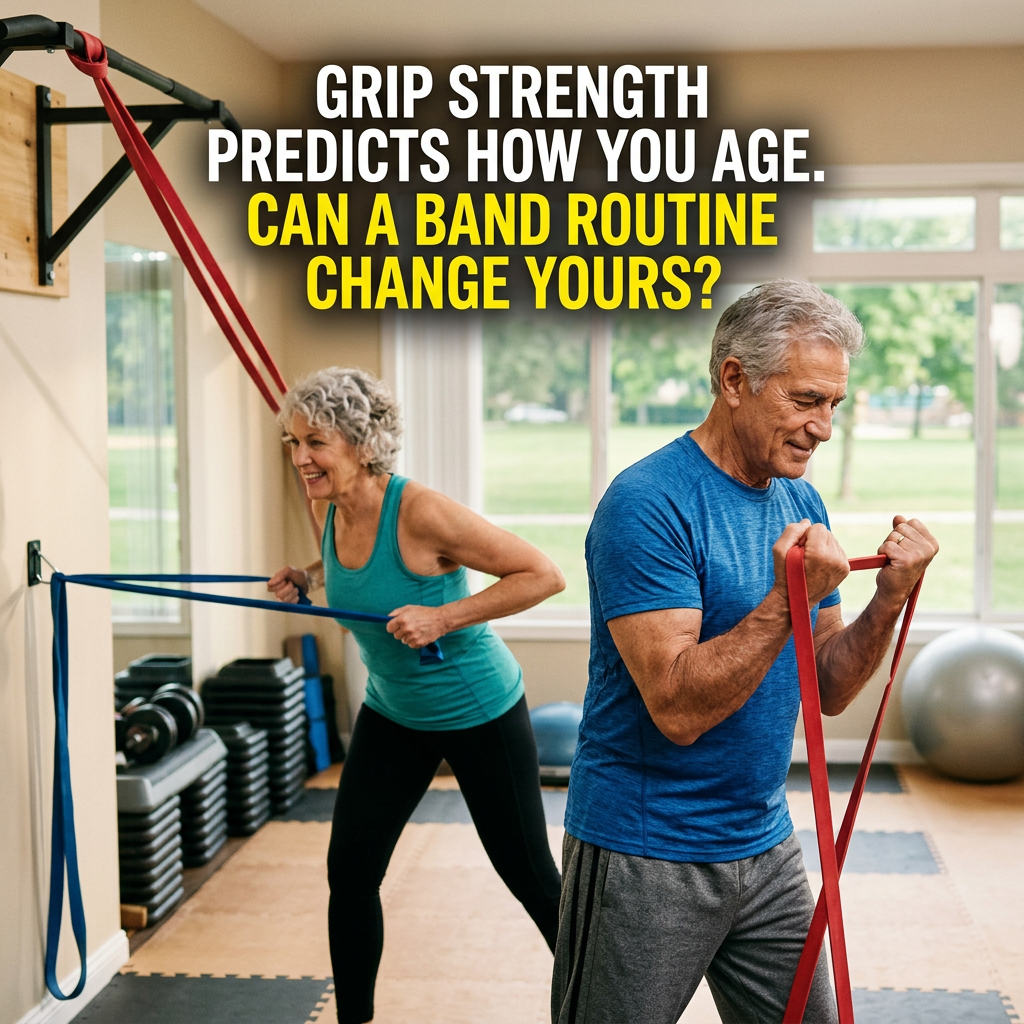
A surprising study shows what resistance bands can do for grip strength—and how a simple routine could help you stay stronger.
Now here’s something worth knowing if you’ve got a resistance band stuck in a drawer somewhere, or you’ve been thinking about picking one up.
Researchers worked with a group of women who averaged 75 years old. The ones who used resistance bands three times a week built a whole lot more grip strength than the ones who did it twice.
And I don’t mean just a little bit more.
Grip strength is one of those plain, simple things that says a good bit about how we’re aging. So let’s sit a spell and look at what they found, and what it might mean for the rest of us.
The Study, in Plain English
Published in 2026 in the European Review of Aging and Physical Activity, the study involved older women at geriatric centers in Serbia. Eighty-two women completed the 12-week program of chair-based resistance-band exercises.
Both groups followed the same basic routine, targeting the hips, knees, shoulders, and trunk. The difference? One group exercised twice a week. The other exercised three times.
After 12 weeks, both groups improved in several areas, including chair stands, arm curls, endurance, and flexibility. Both also reduced total and LDL cholesterol.
But two results really stood out:
Grip strength increased 28% in the three-day group, compared with 7% in the twice-weekly group.
HDL (good) cholesterol increased 9% in the three-day group, compared with 1% in the twice-weekly group.
Fasting glucose and triglycerides didn’t change much. Still, not bad for a chair and a few stretchy bands!
One Important Thing to Remember
Now before y’all go adding another workout day, there’s one thing worth knowing.
The three-day group also performed 50% more exercise each week. That means researchers couldn’t determine whether the greater improvements came from exercising more frequently or simply doing more total work.
And because there wasn’t a no-exercise comparison group, this study alone can’t tell us how much improvement was directly caused by the program.
Still, the results are encouraging. Twice a week is a good place to start. If you’re comfortable adding a third session, it may offer additional benefits.
Why Grip Strength Deserves Your Attention
Think about how often you use your hands throughout the day: opening jars, carrying groceries, working in the garden, pushing yourself out of a chair, or grabbing something to steady yourself.
We don’t always appreciate how important these everyday movements are until they become difficult. Researchers use grip strength as a quick, inexpensive way to assess aspects of overall muscle and nerve health.
The landmark PURE study, published in The Lancet in 2015, followed approximately 140,000 adults across 17 countries. Researchers found that every 5-kilogram decrease in grip strength was associated with a 16% higher risk of death from any cause and a 17% higher risk of cardiovascular death.
Those numbers will make you sit up, won’t they? But remember, grip strength is a health marker, not a crystal ball. A strong grip won’t promise you a longer life. What counts is keeping your muscles strong enough to stay active and keep doing for yourself.
A Simple Resistance-Band Routine
Want to give resistance bands a try? You don’t need anything complicated. Here’s a practical routine inspired by the study:
Choose two or three nonconsecutive days a week. Monday, Wednesday, and Friday work nicely if you’re ready for three sessions.
Warm up for 10 minutes. Try gentle marching in place, shoulder rolls, or easy movements.
Aim for two sets of 12–15 repetitions using light-to-moderate resistance, with about a minute of rest between sets.
Work your whole body. Try chair stands, seated rows, chest presses, biceps curls, band pull-aparts, hip hinges, triceps extensions, and side steps.
Start with a light band. Increase resistance gradually as movements become easier.
Finish with gentle stretching.
You don’t have to master everything on the first day. Start with what feels comfortable, learn the movements, and build from there.
A quick safety reminder: Inspect your bands for wear before using them. Stop if you experience sharp pain or dizziness. If you have arthritis, carpal tunnel syndrome, recent surgery, or balance difficulties, check with your healthcare professional before beginning.
The original study used a supervised chair-based program, so this home routine is an adaptation rather than an exact copy.
What You Need
One basic set of resistance bands is enough to get started. Choose a set with several resistance levels so you can gradually increase the challenge. If flat bands are uncomfortable to grip, bands with handles may be easier to use.
If you enjoy following a book, another option is Resistance Band Workout for Seniors by Fit Forever. It offers low-impact exercise ideas designed for older adults, with options for different experience levels.
One of the most encouraging things about exercise is looking back and realizing how far you’ve come. Maybe you’re completing a few more repetitions. Maybe that light resistance band doesn’t feel quite so challenging anymore.
That’s exactly the kind of progress our upcoming Well After 50 Strength & Fitness app is being developed to help you track. The app is intended to help you record exercises, sets, and repetitions so you can follow your progress over time.
Here’s what I like most about this one. These women weren’t young athletes. They were regular folks averaging 75 years old, and they got measurably stronger just by showing up and doing the work.
That’s good news at any age. You don’t have to jump in at three workouts a week or push past what feels right.
Two sessions a week is a fine place to start. And if you add a third down the road, I reckon you might surprise yourself. Sometimes getting stronger starts with something as simple as picking up a resistance band.
Other Voices Worth Following
SilverSneakers — Offers fitness classes focused on strength, endurance, and fall prevention, including chair-based and resistance-tubing options.
Have you tried resistance bands, or would you give them a try? Do you prefer working out at home or at the gym? Tell me in the comments—I’d love to hear what works for you.
About the Author
Tom Green writes Well After 50. At 64, he shares practical research and everyday experiences about staying active, living well, and making the most of life after 50. He believes it’s never too late to keep learning and getting stronger.
Tom is not a doctor or medical professional. This article is for general education, not personal medical advice. Check with your healthcare professional before starting a new exercise program, especially if you have an injury or health condition.
Lately I keep seeing a new phrase on skincare labels: skin longevity. It sounds exciting. It also sounds a whole lot like a promise.
So let me give you the straight answer to the question up top first, before anybody spends ninety dollars on a jar.
No, you can’t reverse cellular aging with anything you can buy today. Not with a cream, not with a serum, not with a pill.
Now, I’m not knocking the idea. I work out four days a week and I’ve started taking a longevity supplement myself, so I’m all for anything that helps us age well. I’ve just learned to read the fine print before I open my wallet.
And fellas, this one’s for us too. The sun doesn’t care whether you call it skincare or not.
So where did the idea come from?
It’s not all hype. Back in 2022, a team at the Babraham Institute in England, led by Professor Wolf Reik, took skin cells from older people and “rewound” them in the lab. By their measurements, the cells acted about 30 years younger, and they even started making more collagen again.
That’s a big deal. But here’s the catch. It happened in a dish, in a lab, using a genetic technique. Nobody’s tried it on a living person’s face, and the scientists themselves said they don’t fully understand how it works yet. That’s years away from anything you or I could use, if it ever gets here at all.
So when a bottle on the shelf says “longevity,” it’s borrowing the excitement from research like that. It’s not selling you the research itself.
What skin longevity really means
Dr. Jane Yoo is a board-certified dermatologist in New York, and she wrote a good piece on this. The way she puts it, old-school anti-aging was about how your skin looks. Skin longevity is about how well your skin works as it gets older: holding onto moisture, keeping a strong barrier, and bouncing back from wear and tear.
She also warns that the word is spreading faster than the science behind it. Just because a label says “longevity” doesn’t mean that product was ever tested to do anything special.
I reckon that’s a pretty fair way to see it. Think of it like taking care of an old truck. You can’t make it new again, but good upkeep keeps it running a lot longer.
The three things your skin cells need
1. Energy
Your skin cells run on energy to repair damage and make collagen. One molecule in the middle of all that is called NAD+, and our levels of it drop as we get older. That’s why NAD+ creams are suddenly everywhere. (It’s the same idea behind the NMN pills I looked at in my post on NMN supplements.)
The honest truth? The skin research on NAD+ creams is still early. They’re aimed at something real, but nobody’s proven they turn back the clock on a real person’s face.
2. A strong barrier
Your skin barrier is the outer wall that keeps moisture in and junk out. When it gets weak, your skin turns dry, tight and touchy, and no fancy ingredient can do its job. Plain stuff like ceramides and glycerin in a good moisturizer does more here than most folks think. I went through what to look for in how to pick a moisturizer after 50.
3. Repair signals
Peptides are little pieces of protein that act like messengers, nudging your skin to keep up its repair work. Some have better evidence than others, and they help a little over time. They’re not magic. I dug into the popular ones in Korean peptide serums for mature skin.
You’ll also see CoQ10 in a lot of these products. It’s an antioxidant your body already makes, and like NAD+, you make less of it as you age. It’s a sensible add-on, not a time machine.
What actually does the most
Here’s the part that won’t sell a fancy serum, but it matters more than anything else in this post: sunscreen, every day.
A study of nearly 300 women, published in 2013, found the sun seemed to be behind about 80% of the visible signs of aging on their faces. Wrinkles, spots, sagging, a lot of what we blame on birthdays is really years of sunshine.
Dr. Michelle Wong, a chemist who runs Lab Muffin Beauty Science, has spent years cutting through skincare marketing, and sunscreen is one of the things she keeps coming back to. If you like knowing the “why” behind a product, her site is a good one to bookmark.
After sunscreen, the plain basics carry the most weight:
A gentle routine you’ll actually stick with. Simple beats complicated.
Don’t strip your skin. Harsh scrubs and too many strong products wear the barrier down.
Real food and no smoking. Not exciting, but it shows on your face.
The trendy ingredients can sit on top of that foundation. They just can’t replace it.
Can you improve wrinkles and sun damage you already have?
Here’s the encouraging part: even if you’ve spent years in the sun, you can still improve some of the signs it left behind. Dermatologists call this photoaging. It can show up as fine lines, uneven color, rough texture, and sun spots. The American Academy of Dermatology says treatment can reduce some visible damage, although it can’t erase everything. Sunscreen helps prevent more damage; treatment is what may improve changes that are already there.
What about retinol, retinal, and prescription tretinoin?
These vitamin A relatives, called retinoids, deserve a spot in this conversation. They aren’t cellular time machines, but they can improve the appearance of aging skin. A systematic review of eight randomized trials, involving 1,361 people, found that prescription tretinoin improved fine and deeper wrinkles caused by sun exposure. A separate review comparing topical treatments found evidence of improvement in several photoaging measures with retinoids, including retinol. These products can also irritate skin, especially at first, so stronger isn’t automatically better for everybody.
If you’re wondering whether the newer retinal is worth paying extra for, I dig into the differences, the evidence, and the irritation question in Retinal vs. Retinol After 50: Which One Actually Works Better? It’s a useful next step before buying another bottle.
Looking younger isn’t the same as making skin cells younger
Here’s the distinction I don’t want lost in all the excitement. A treatment might soften wrinkles, fade spots, or improve texture without reversing the biological age of your skin cells. Those are two different claims. In the Babraham Institute’s 2022 experiment, scientists changed age-related markers in skin cells in a laboratory. That’s fascinating research, but it isn’t an anti-aging cream or a proven treatment for people. So yes, visible skin aging can sometimes be improved. Reversing cellular aging in a person’s skin is a much bigger scientific hurdle.
Other voices worth following
If you want to keep learning about this, here are a few folks I trust:
Angie of Hot & Flashy writes about style, beauty and health for women in their “hot-flash years,” and she tests a lot of skincare and sunscreen on her own 60-something skin.
Caroline Hirons, the British skincare expert who wrote Skincare: The Ultimate No-Nonsense Guide, keeps things practical.
Common Questions
What is skin longevity? It’s a newer way of thinking about skincare. Instead of just hiding wrinkles, the goal is keeping your skin healthy and working well as it ages: a strong barrier, good moisture, and steady repair.
Can you reverse cellular aging in your skin? Not with anything you can buy today. Scientists have made skin cells act younger in a lab dish, but that’s research, not a product.
Do NAD+ skin creams work? The research is still early. NAD+ does drop with age, but no cream has been proven to reverse aging in real people.
What’s the best thing you can do for aging skin after 50? Wear sunscreen every day. After that, a gentle routine, a good moisturizer, sleep and real food do more than any trendy ingredient.
So no, nobody can turn back the clock on your skin. But you can sure help it age about as well as it possibly can. Protect it from the sun, keep the barrier strong, and don’t fall for the miracle jars.
Next week in this little series, I’m looking at retinal vs. retinol, and why doctors keep bringing it up for mature skin.
What’s one thing in your skincare routine you’d never give up? Tell me in the comments.
— Tom
This is general information, not medical advice. If you have a skin condition or are thinking about a new treatment, talk with your dermatologist.
Tom Green writes Well After 50. He’s just a regular, laid-back 64-year-old who keeps things simple. He shares what he learns about skincare, fitness and getting older, and what’s working for him. He’s also the author of A Practical Guide to Getting Older Without Giving Up on Yourself.
Tom isn’t a doctor. He reads up on the research and passes along what’s useful, plain and simple.
Every month I pick three books worth your time, and they all have to earn a spot on the shelf here: they’ve got to be selling well right now, and they’ve got to have something real to offer folks over 50.
This month’s three line up with the things we talk about most on this site: staying strong, staying connected to people, and understanding the body we’ve got. One will get you moving, one will help you feel less alone, and one will make you laugh while it teaches you something.
1. The Forever Strong Playbook by Dr. Gabrielle Lyon
Dr. Gabrielle Lyon’s first book, Forever Strong, made a lot of folks rethink muscle. Her big idea is that muscle isn’t just about looks. It’s what keeps your metabolism, your balance and your independence going as you age. This new one, which came out in January and has been a New York Times and USA Today bestseller, takes that idea and turns it into a plan you can actually follow.
It’s a six-week program. You get more than 100 exercises you can do at the gym or at home, over 60 recipes, and plain advice on sleep, recovery and stress. The plans scale, so whether you’ve never lifted a thing or you’ve been at it for years, there’s a starting point for you.
Why I picked it: I work out four days a week, and if there’s one thing I’d tell anybody over 50, it’s that strength training matters more now, not less. Most books tell you why. This one tells you what to do on Monday morning. If you liked my post on building muscle after 60, this is the next step.
Great for: men and women who want a simple, week-by-week plan to get stronger without guessing.
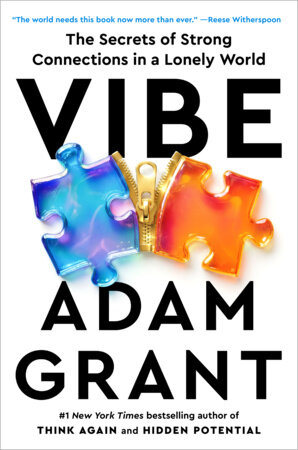
2. Vibe: The Secrets of Strong Connections in a Lonely World by Adam Grant
Adam Grant is an organizational psychologist at Wharton and one of the best-known writers on how people work and get along. Vibe came out October 13 and jumped right onto the New York Times, USA Today and independent bookstore bestseller lists. It’s all about the science of friendship, companionship and love, and how to build bonds that are faster, stronger and longer-lasting.
A few of his points surprised me. You don’t have to have a lot in common with somebody to get close to them. Chemistry doesn’t always show up right away. And getting close doesn’t always take years. He backs it up with research and some good stories, from astronauts to a rock band.
Why I picked it: Loneliness isn’t just a bad feeling. In 2023, U.S. Surgeon General Dr. Vivek Murthy put out a whole advisory on it, and he compared the health risk of being cut off from people to smoking up to 15 cigarettes a day. After 50, friend circles tend to shrink with retirement, moves and loss. I wrote about that in how to make new friends after 50, and I reckon this book is the perfect companion to it.
Great for: anybody who’s feeling a little more alone than they’d like, or who wants to get closer to the people already in their life.
3. Replaceable You: Adventures in Human Anatomy by Mary Roach
Mary Roach, the author of Stiff, has a gift for making science funny. In this one she looks at how medicine repairs and replaces the parts of us that wear out. She spends time in a burn unit, travels with cataract surgeons, talks with amputees and people living with ostomies, and visits researchers trying to grow new tissue and even 3D-print it. It was an instant New York Times bestseller and landed on a pile of best-of-the-year lists, and the new paperback came out September 1.
Why I picked it: After 50, replacement parts stop being a joke. Most of us know somebody with a new knee or hip, a pacemaker, or new lenses after cataract surgery, and some of us are that somebody. This book takes something that can feel a little scary and makes it fascinating. You’ll come away amazed at what your body can do and how far medicine has come.
Great for: folks who are curious about how the body works, like a good laugh, or have a surgery coming up and want to feel less nervous about it.
Popular isn’t enough. I check the current bestseller lists to see what folks are actually buying, then I only keep the ones that have something useful to say about health, strength, connection or getting older well. And they have to be books I’d hand to a friend on the porch without thinking twice.
What are y’all reading this month?
Tell me in the comments. You never know who’ll find their next favorite book because of you.
Tom Green writes Well After 50. He’s just a regular, laid-back 64-year-old who keeps things simple. He shares what he learns about skincare, fitness and getting older, and what’s working for him. He’s also the author of A Practical Guide to Getting Older Without Giving Up on Yourself.
Tom isn’t a doctor. He reads up on the research and passes along what’s useful, plain and simple.
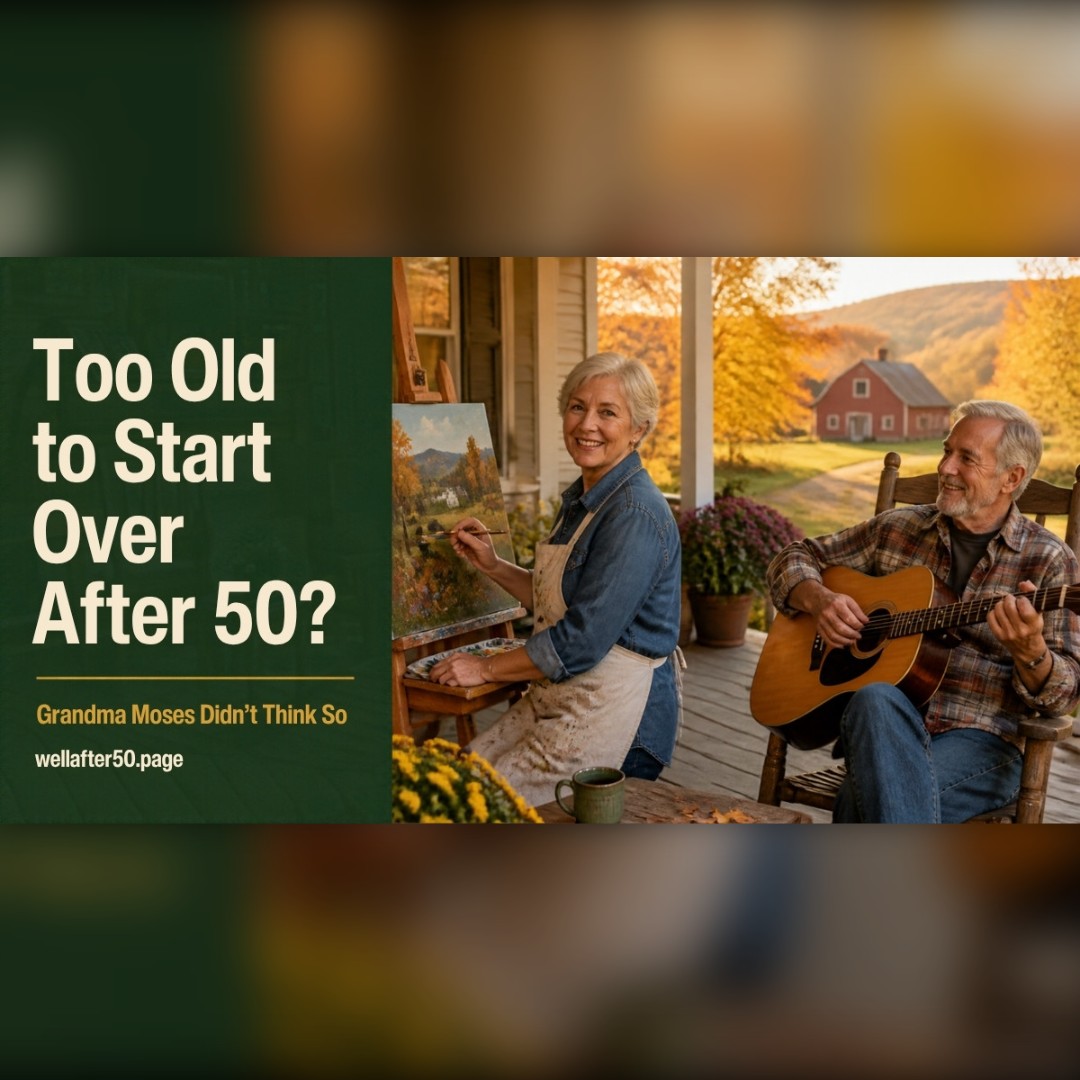
Ever catch yourself thinking, “I’m too old to start over”? Every so often somebody tells me, “I should’ve done this years ago.”
Maybe it’s a trip they never took. A guitar sitting in the closet. A garden they keep meaning to plant. A book they’ve been “fixing to write” since the kids were little.
And then right behind it comes the real question: At my age, what’s the point?
I reckon the point is that you’re still here. The years you’ve already lived don’t disqualify you from the ones still coming.
I Started This Site at 64
I’ll tell you straight: I started Well After 50 at 64. I didn’t know much about websites. I made plenty of mistakes, and some of them I’m still cleaning up. But I’m glad I didn’t wait for the “right time,” because the right time wasn’t coming. It was just going to keep being later.
I’m not telling you that to brag. I’m telling you so you know the fellow writing this is in the same boat as a lot of y’all.
Some Folks Who Didn’t Get Going Until Later
When I start thinking I’m too old for something, I think about these people:
Grandma Moses (Anna Mary Robertson Moses) didn’t take up painting seriously until she was in her late 70s, after arthritis made her embroidery too hard. She kept painting into her 100s, and her farm scenes ended up in museums. (Wikipedia)
Frank McCourt taught high school in New York for about 30 years. He published his first book, Angela’s Ashes, at 66, and it won the Pulitzer Prize. (NPR)
None of them knew how it would turn out when they started. They just started.
You’re Not Starting From Scratch
Starting something after 50 feels different because you know how fast time goes. But you also bring something you didn’t have at 20: experience.
You know what matters and what doesn’t. You’ve made mistakes and lived through things you weren’t sure you would. That’s not baggage. That’s the stuff you get to carry into whatever comes next.
Arthur Brooks, a Harvard professor, wrote a whole book about this called From Strength to Strength. His point is that some of our smarts fade as we get older, like quick thinking and raw speed, but another kind keeps growing: the know-how and judgment that come from years of living. That’s the kind that makes you good at teaching, advising and seeing the big picture. In other words, the second half isn’t just leftovers. It’s a different kind of strong.
Being Bad at It Is Part of the Deal
This is where a lot of us quit too soon.
The first painting looks like a kid made it. The first exercise class leaves you sore and a little embarrassed. The first try at anything new feels like everybody else got the instructions but you.
Well, they probably have been at it longer. You’re comparing your first page to their twentieth chapter. That’s not a fair fight, so don’t pick it.
Your first job isn’t to be good. Your first job is to show up.
Try the One-Hour Rule
You don’t need to plan the rest of your life. That’s too much pressure for anybody.
Just ask yourself: What would I enjoy trying for one hour this week?
An hour can be a class at the library, a walk somewhere you’ve never been, a new recipe, a beginner video, or a phone call to somebody who already does the thing you’re curious about.
If you like it, give it another hour. If you don’t, you’ve got your answer, and that’s not failure either. You’re allowed to say, “Tried it. Not for me. What’s next?”
Make It Easy on Yourself
Make the first step almost silly-small. Ten pages, ten minutes, one phone call.
Put it on the calendar. If it doesn’t have a day and time, “someday” turns into never.
Find the beginner version. The intro class, the easy trail, the “for dummies” book. No shame in it.
Expect it to feel awkward. Awkward doesn’t mean wrong. It means new.
Give it more than one try. The first time is usually the worst it’ll ever be.
If you want to dig a little deeper, James Clear’s book Atomic Habits is a good one. His whole idea is that tiny changes, done over and over, add up to big results, and that you’ll stick with a new habit a lot longer if you make it easy to start. He calls it the two-minute rule: shrink the new thing down until it takes two minutes or less.
You Don’t Have to Impress Anybody
This may be the best part of getting older. You don’t have to turn your new thing into a business, win a ribbon or post it online. You can paint because you like colors, or walk because you like being outside. You can take a class just to get out of the house and meet somebody new.
Not everything worth doing has to be an accomplishment.
And if the people around you don’t understand why you want to do it? They don’t have to. Like the old saying goes, you can’t plow a field by turning it over in your mind.
Common Questions
Am I too old to start over at 50 or 60?
No. People learn new skills, pick up hobbies and start new work well into their 60s, 70s and beyond. You don’t have to become an expert for it to be worth doing.
Is 60 too old to start a new career?
Not necessarily. Plenty of people switch to part-time work, consulting, teaching or a small business in their 60s. Start by using skills you already have, and test the idea small before you jump in with both feet.
What if I don’t know what I want to try?
Think about what you used to enjoy as a kid, what you catch yourself reading about, or what you’ve always said “I’d like to try that someday” about. Start there.
What if I start and then quit?
Then you learned something about yourself. That still counts.
Grab a piece of paper and write down three things you’re curious about. Not things you should do, but things that make you think, “I’ve always wondered what that’d be like.”
Circle one. Take the smallest first step this week.
You do not have to become a social butterfly to make a new friend.
You do not have to walk into a crowded room and work the crowd. You do not have to become someone who loves small talk.
And you certainly do not have to pretend you are younger than you are.
You just need a reason to cross paths with the same people often enough for something real to grow.
Friendship after 50 can be different
When we are younger, friendship often happens automatically. School. Work. Neighbors. Children. Sports. Shared schedules.
After 50, some of those built-in connections disappear. Retirement, divorce, moving, children leaving home and losing touch with old friends can quietly change a person’s social world.
You can be surrounded by people and still feel alone.
1. Stop looking for “a best friend”
That goal is too big.
Look for one person you enjoy talking to. One person you could have coffee with. One person who makes you laugh. One person you would like to see again.
Friendship usually grows through small repetitions, not one dramatic meeting.
2. Go where the same people go
If you attend a different event every week, you meet lots of people but rarely have enough repeated contact to build familiarity.
Try something recurring: the same walking group, class, volunteer shift, church activity, book club, gym time, community event or hobby group.
Familiarity is one of friendship’s quiet ingredients.
3. Use the “one extra minute” rule
If someone seems interesting, stay one extra minute.
Ask one question. Give one compliment. Mention something you have in common.
You do not have to perform. You are simply leaving the door open.
4. Invite people to something small
“Want to grab coffee sometime?” can feel surprisingly big.
Try something more specific:
“I’m going to walk Saturday morning. Want to come?”
“I’m grabbing lunch after this. Want to join me?”
“I’m going to that market next weekend. Want to go?”
Small invitations are easier to accept and easier to decline without embarrassment.
5. Do not take every “no” personally
Adults have complicated lives. Someone may be busy, tired, caring for family, working or simply not ready to expand their social circle.
One no does not mean you are unlikeable.
6. Let friendship be imperfect
A new friend does not have to agree with everything you believe. They do not have to share your entire history. They do not have to be available every day.
Sometimes a good friendship is simply two people who enjoy being around each other.
Why this matters more than people realize
The National Institute on Aging notes that loneliness and social isolation can affect physical, mental and cognitive health. That does not mean everyone needs a huge social calendar. It means meaningful connection matters.
So if you have been telling yourself, “I’m just not a people person,” consider changing the sentence.
Maybe you are not a crowd person. That is different.
A challenge for this week
Do not promise yourself you will make five new friends.
Instead, start one conversation. Return to one place. Say yes to one invitation. Invite one person to do something simple.
That is enough.
Common Questions
Is it harder to make friends after 50?
It can be because some natural sources of connection change, but adults can absolutely form new friendships later in life.
What if I am shy?
Choose low-pressure settings with repeated contact. You do not need to become outgoing to become connected.
Where can I meet people after 50?
Try recurring activities such as volunteering, classes, walking groups, hobbies, community organizations, faith communities or places you already enjoy.
What if someone does not respond to my invitation?
Do not automatically interpret it as rejection. Keep meeting people and leave room for friendships to develop naturally.
Keep Reading
Find more practical ideas for living a fuller life after 50 at Well After 50.
About Tom Green
Tom Green is the creator of Well After 50, sharing practical ideas for healthier, happier and more meaningful life after 50.
Note: If loneliness is accompanied by persistent sadness, hopelessness or loss of interest in normal activities, consider talking with a healthcare professional.
A Book Worth Picking Up
If this post spoke to you, here is a book that goes deeper. In Vibe: The Secrets of Strong Connections in a Lonely World, Adam Grant looks at the science of how closeness actually forms, and why building meaningful ties feels so hard right now. What I like best is that Grant starts from his own experience as a shy introvert, so this is not advice from someone who never struggled to connect. It is a practical, encouraging read for anyone who wants stronger friendships without pretending to be someone they are not. You can find Vibe on Amazon.
Disclosure: Purchases through affiliate links may earn Well After 50 a commission at no additional cost to the reader.
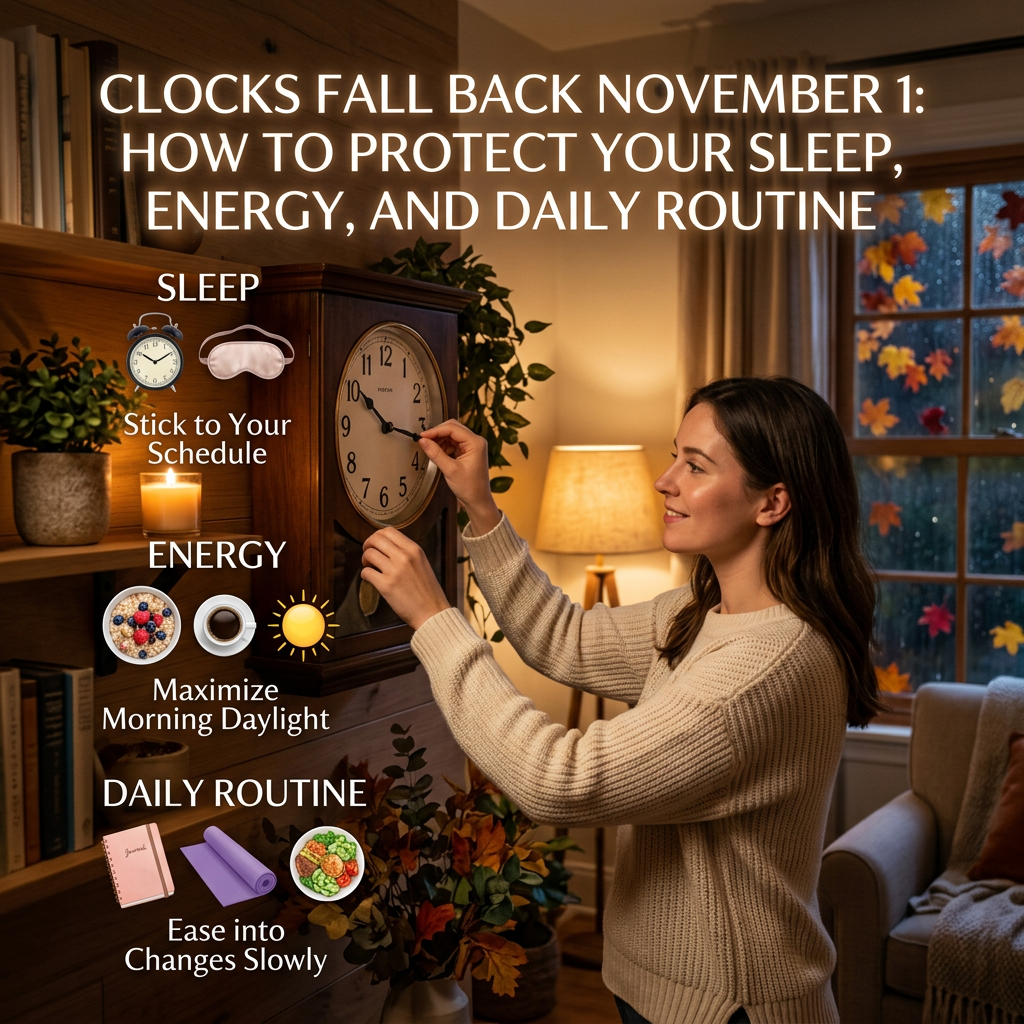
That extra hour of sleep sounds wonderful. But changing the clock can throw more than your bedtime off. Here’s how to make the adjustment a little easier.
Every fall, we turn our clocks back an hour, and everybody talks about getting an extra hour of sleep.
Sounds pretty good, doesn’t it?
But there’s something they don’t always tell you. Just because the clock says one thing doesn’t mean your body agrees.
You might find yourself waking up at 4:30 in the morning, getting sleepy before supper, or wondering why you’re dragging around when you supposedly gained an hour.
And then there’s the darkness. One day you’re enjoying daylight in the early evening, and the next it seems like somebody turned the lights off before you’ve even finished your day.
I’ve always thought the older we get, the more important it becomes to pay attention to these little changes. Not because getting older means we can’t handle them, but because getting good sleep and having enough energy are worth protecting.
So instead of just telling you to turn your clocks back, I want to share some things that can actually help you feel better during the change.
First, When Do the Clocks Change?
This year, daylight saving time ends on Sunday, November 1, 2026, at 2 a.m.
At that moment, clocks go backward to 1 a.m.
Most of the United States makes this change, although Hawaii and most of Arizona do not.
Here’s what that means for your day:
You’ll have an extra hour on the clock overnight.
Sunrise will happen about an hour earlier by the clock.
Sunset will also happen about an hour earlier.
Your body may need a few days to adjust, even though you haven’t traveled anywhere.
And while some people won’t notice much difference, others may experience earlier waking, tiredness, or changes in their usual sleep patterns.
1. Start Getting Ready Before Sunday
One of the easiest things you can do is start making small changes a few days before the clocks go back.
You don’t have to change everything overnight.
Try moving your bedtime and wake-up time about 15 minutes later each day, beginning Wednesday, October 28.
Day
What to do
Wednesday, October 28
Go to bed and wake up 15 minutes later
Thursday, October 29
Move both another 15 minutes later
Friday, October 30
Move another 15 minutes later
Saturday, October 31
Move another 15 minutes later
For example, if you normally go to bed at 10 p.m., you’d aim for 10:15 on Wednesday, 10:30 on Thursday, 10:45 on Friday, and 11 p.m. on Saturday.
After the clocks fall back, that 11 p.m. bedtime corresponds to 10 p.m. on the new clock.
Why does this help?
Your body follows an internal 24-hour clock that helps regulate when you feel sleepy and awake. Making small adjustments gives that system a chance to adapt without such an abrupt change.
Sleep specialists recommend gradual schedule changes for people who have trouble adjusting.
And don’t worry if you can’t follow the plan perfectly. Even a couple of small adjustments may help.
2. Don’t Let That Extra Hour Throw Off Your Whole Week
Here’s something that’s easy to do.
You realize you’re getting an extra hour, so you stay up late Saturday night watching television, looking at your phone, or doing a little more around the house.
Then Sunday morning comes, you sleep late, and Sunday night you aren’t tired.
By Monday, you’re wondering why your sleep is all mixed up.
The best approach is to keep a fairly regular schedule once the clocks change.
Try getting up around the same time each morning, including weekends.
If you normally wake at 7 a.m., aim to keep that 7 a.m. wake-up time on the new clock rather than drifting an hour earlier or later every day.
And if you do sleep poorly one night, don’t feel like you’ve ruined anything. Get back to your usual routine the next day.
One more thing: Don’t deliberately cut your sleep short just to make yourself tired. Most adults need at least seven hours of sleep, and many do best with seven to nine.
3. Get Some Daylight — It Does More Than You Think
This may be one of the simplest things on the whole list, and it doesn’t cost a penny.
Get outside during the day.
You don’t have to go for a long walk or start a new exercise program. Sit on the porch, walk to the mailbox, have your morning coffee outdoors, or spend a little time working in the yard.
Natural light helps tell your brain when it’s daytime. That helps regulate your sleep-wake cycle.
Morning daylight can be especially useful for establishing a regular wake-up routine, and daylight later in the day may help people who find themselves getting sleepy too early after the fall change.
If walking is difficult, sitting outside is perfectly fine.
And if the weather isn’t cooperating, open the curtains and spend time near a bright window. Outdoor light is generally stronger, but getting some daytime brightness is better than spending the whole day in a dim room.
There’s another benefit, too. Shorter days can affect how energetic and cheerful we feel, so getting outside and staying active can be helpful for our mood.
4. Those Dark Evenings Can Affect Your Mood
Nobody talks about this enough.
For some people, that early darkness is more difficult than the clock change itself.
You finish a few chores, look outside, and it’s already getting dark. It can make the whole day feel shorter.
And when it’s dark early, it’s tempting to sit down, turn on the television, and stay there for the rest of the evening.
There’s nothing wrong with relaxing. But we don’t want those shorter days to take away the things that keep us feeling good.
Here are a few things worth trying:
Schedule your walks, errands, or outdoor activities earlier while there’s still daylight.
Keep doing things you enjoy, even if it’s already dark outside.
Turn on the lights and enjoy your home instead of treating sunset like bedtime.
Stay connected with friends and family rather than spending every evening alone.
Keep some gentle physical activity in your day.
If you notice that every fall brings ongoing sadness, a loss of interest in things you enjoy, or changes in sleep and appetite, mention it to your healthcare provider. Seasonal depression is real, and help is available.
The important thing is not to let the darker evenings quietly take over your routine.
5. Watch the Coffee and Afternoon Naps
I know how tempting another cup of coffee can be when you’re dragging through the afternoon.
But caffeine can stay in your system for hours, and that late cup may be part of the reason you’re still awake when you want to be sleeping.
If you’re having trouble falling asleep, try keeping coffee and other caffeinated drinks to the morning or early afternoon.
The same goes for naps.
A short nap can be refreshing, but sleeping for an hour or two late in the afternoon can make it harder to fall asleep at night.
If you need a nap, try keeping it around 20 to 30 minutes and taking it earlier in the day.
And don’t make the mistake of thinking you have to stay awake at all costs. If you’re genuinely exhausted, rest. The goal is a healthier routine, not making yourself miserable.
6. Make Your Bedroom Work for You
You don’t need expensive bedding, sleep gadgets, or a cabinet full of supplements to get started.
A few simple changes may help.
Keep your bedroom cool and comfortable. Most people sleep better when the room isn’t overly warm.
Block unwanted light. Streetlights, hallway lights, and glowing electronics can make a difference, especially if you’re already a light sleeper.
Turn the television and phone down before bed. Bright screens and stimulating programs can keep your mind active when you’re trying to wind down.
Give yourself a little quiet time. Read a few pages of a book, listen to peaceful music, or enjoy a warm shower.
And here’s something people overlook: If you lie awake for a long time and start getting frustrated, get up for a little while and do something relaxing in dim light. Return to bed when you feel sleepy.
Sometimes trying harder to sleep only makes it more difficult.
7. Check Your Medications, Alarms, and Appointments
This is one of those practical details that’s easy to forget.
Your smartphone will usually change time automatically. Many computers and smartwatches will, too.
But your microwave, stove, wall clock, car clock, and older alarm clocks may need to be changed manually.
Take a few minutes Saturday evening to check them.
And pay particular attention if you take medications at specific times.
Don’t automatically move your medication schedule by an hour without checking.
For most routine reminders, you can simply confirm they’re set correctly for the new time. But certain medications require more careful timing.
If you take insulin, seizure medication, medication for Parkinson’s disease, or anything else that must be taken at precise intervals, ask your pharmacist or healthcare provider how to handle the change.
Also check medical equipment with programmed schedules, such as some feeding pumps or medication devices.
A little preparation can prevent a lot of confusion.
8. Be Especially Careful Driving After Dark
When the clocks change, your familiar evening drive may suddenly happen after sunset.
That matters.
Pedestrians, cyclists, animals, and other hazards are harder to see in low light, especially around intersections, parking lots, and roads without good lighting.
A few reminders:
Clean the inside and outside of your windshield.
Make sure your headlights are working properly.
Slow down when visibility is poor.
Watch carefully for people crossing streets or walking through parking lots.
Avoid driving if you’re unusually sleepy.
Give yourself a little more time instead of rushing.
As we get older, glare from oncoming headlights and changes in nighttime vision can become more noticeable. If night driving is getting difficult, bring it up at your next eye exam.
There’s no shame in planning errands earlier in the day when visibility is better.
9. What If You Already Have Trouble Sleeping?
Some people are fortunate enough to sleep through just about anything.
Others have a difficult time getting a good night’s rest even when the clocks aren’t changing.
If that’s you, don’t feel like you need to follow every suggestion perfectly.
Start with three things:
Get up at roughly the same time each day.
Spend some time outdoors during daylight hours.
Give yourself a consistent, relaxing bedtime routine.
If you regularly wake up exhausted, snore loudly, gasp during sleep, or have ongoing insomnia, don’t automatically blame age or daylight saving time.
Those can be signs of sleep problems worth discussing with your doctor.
Good sleep matters at every age, and poor sleep isn’t something we’re simply supposed to accept after 50.
If you want to understand why sleep matters so much, Matthew Walker’s book Why We Sleep is worth a read. He’s a sleep scientist at UC Berkeley, and he explains in plain language what sleep does for your memory, your mood and your body. It might make you think twice about that late-night TV.
Your Simple Weekend Clock-Change Checklist
Before you head to bed Saturday night, here’s a quick list worth checking off:
Set your manual clocks back one hour.
Check your phone’s time-zone and automatic-time settings.
Make sure your alarms are set correctly.
Review medication reminders and any time-sensitive dosing instructions.
Check your Sunday appointments and activities.
Make a plan to get some daylight on Sunday.
Keep your bedtime and wake-up routine as steady as possible.
Prepare for darker evening driving.
Nothing complicated. Just a few minutes of preparation.
A Final Thought: Don’t Let One Hour Steal Your Energy
Getting older teaches us something important: Sometimes the smallest changes in our daily routine can make a bigger difference than we expect.
A good night’s sleep, a little sunshine, some movement, and a regular routine may not sound exciting. But they’re part of what helps us feel good enough to enjoy our lives.
The clocks are going to change whether we like it or not.
What we can do is make the adjustment easier on ourselves.
So enjoy that extra hour if you can. Just remember that your body may need a little time to catch up.
And if the darker evenings bother you, don’t let them convince you the day is over.
There’s still plenty of life to enjoy after sunset.
That’s what Well After 50 is all about — finding practical ways to take care of ourselves and keep enjoying the years ahead.