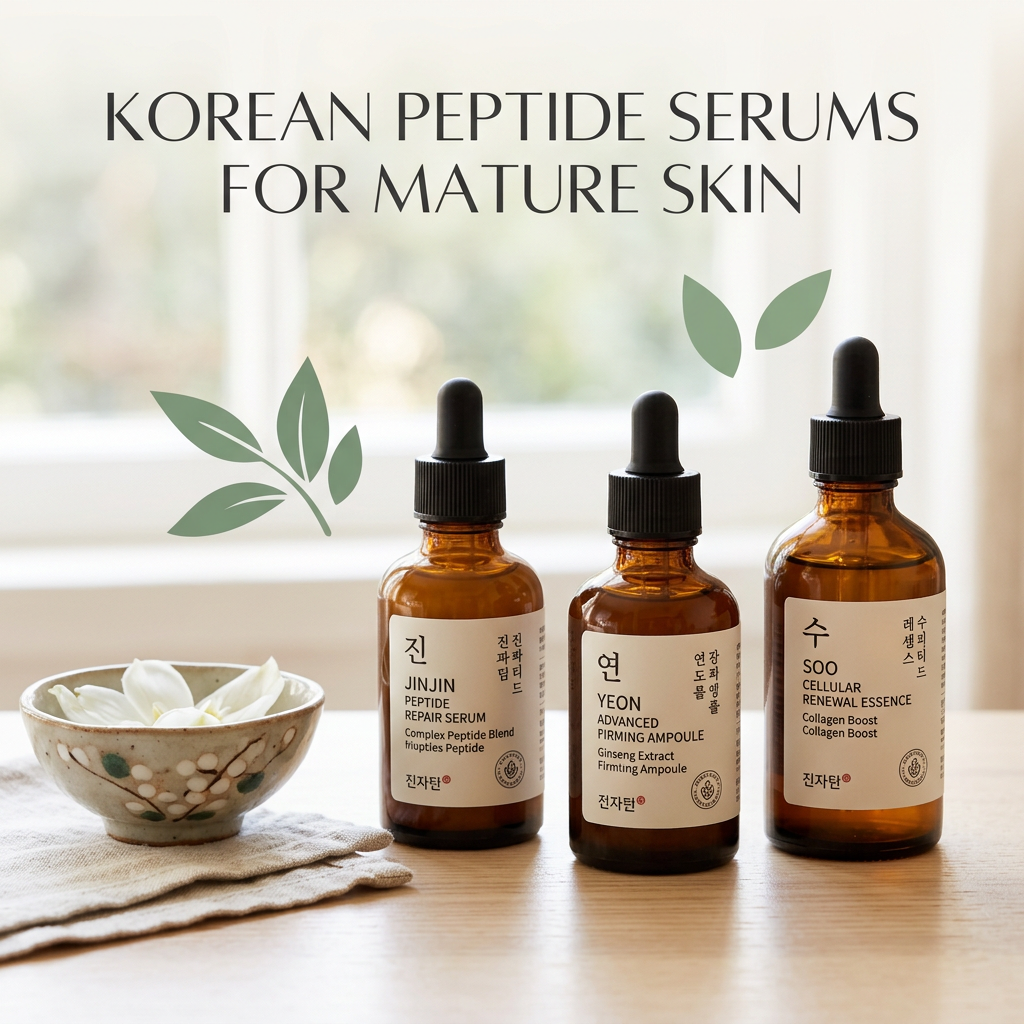
Korean skincare gets a lot of attention for its layers, glass-skin look and constant stream of new products. But the part that interests me most for skin over 50 isn’t the hype. It’s the focus on hydration, gentle routines and taking care of the skin barrier.
Peptide serums are a big part of that. They aren’t magic, and no serum is going to erase decades overnight. But the right one can be a useful step if your goal is comfortable, hydrated, smoother-looking skin. Here’s what peptides can really do, five popular Korean serums worth a look, and how to tell if one is actually worth your money.
The short answer
- Peptide serums can help skin look more hydrated and a bit smoother, but the research on topical peptides shows modest results at best.
- Korean isn’t an ingredient. Judge the formula, not the country on the box.
- Pick one serum, use it for 8 to 12 weeks, and take before-and-after photos in the same light.
- Sunscreen still matters more than any serum for protecting mature skin.
What peptides can and can’t do for skin over 50
Peptides are short chains of amino acids. In skincare, different peptides are used for different jobs, and some are designed to support the look of firmer, smoother skin. The American Academy of Dermatology lists peptides among the ingredients people consider for wrinkles, while stressing the basics: sun protection, moisturizer and choosing products for your actual skin concern.
Here’s the reality check. Researcher Houriah Y. Nukaly and colleagues analyzed 19 randomized trials of oral and topical peptides for aging skin. They found modest overall effects on wrinkles, mostly driven by oral peptides. The effects of topical peptides alone were less convincing.
- What a good peptide serum can do: add lightweight hydration, make skin feel more comfortable, and help it look a little smoother.
- What it can’t do: replace a retinoid, lift sagging skin, restore lost facial volume, or match an in-office treatment.
Keep in mind that well-hydrated skin looks smoother for a while even when nothing has changed structurally. That’s not a bad thing. It just means you should judge a serum over weeks, not the morning after.
5 popular Korean serums worth a look after 50
These are well-known, widely available Korean serums that come up again and again for mature skin. I chose them for their ingredient lists and for covering different needs and budgets. Check the full ingredient list against your own skin before buying, and patch-test anything new.
1. COSRX The 6 Peptide Skin Booster Serum
Best for: a simple, affordable first peptide serum. It combines several peptides with niacinamide and hyaluronic acid, so it does double duty as a hydrating step. A good place to start if you’ve never tried peptides.
2. Medicube PDRN Pink Peptide Serum
Best for: people curious about the PDRN trend. It pairs peptides with PDRN (a DNA-derived ingredient that’s popular in Korea right now), plus niacinamide and hyaluronic acid. PDRN is newer to the U.S. market, so think of it as an interesting extra, not a proven miracle.
3. PURITO Wonder Releaf Centella Serum Unscented
Best for: sensitive or easily irritated skin. It’s unscented and built around centella (cica), a soothing plant extract, with niacinamide, hyaluronic acid and ceramides. Not a peptide-focused serum, but a smart choice if your skin reacts to everything.
4. Sulwhasoo Concentrated Ginseng Rejuvenating Serum
Best for: a luxury treat. This is one of Korea’s best-known high-end serums, built around ginseng and aimed at dull, tired-looking mature skin. It costs a lot more than the others, so only go here if the texture and experience matter to you.
5. Some By Mi Retinol Intense Reactivating Serum
Best for: people ready to try a retinoid. Retinoids have far stronger evidence for wrinkles than peptides do. Start slowly, two or three nights a week, always wear sunscreen during the day, and don’t stack it with other strong actives until you know how your skin handles it.
How to choose the right one for your skin
- Dry skin: look for hydrators high on the list, like glycerin and hyaluronic acid.
- Sensitive skin: choose fragrance-free or unscented, with fewer actives.
- Fine lines are your main concern: a peptide serum is a gentle option. A retinoid is the stronger one.
- Watch the marketing: words like “lifting” and “collagen-boosting” are claims, not guarantees. A topical cosmetic can’t restore lost volume.
- Compare price per ounce and check the return policy before you buy.
A simple Korean-inspired routine (no ten steps needed)
Morning: gentle cleanser if needed → serum → moisturizer → broad-spectrum SPF 30 or higher.
Night: gentle cleanser → serum or retinoid → moisturizer.
Not sure what order things go in? I break it down in skincare routine order after 50: what goes first. And for the moisturizer step, see how to choose a moisturizer after 50.
How to tell if a serum is worth keeping
Give a serum 8 to 12 weeks of daily use before you judge it, and take a photo on day one in the same light. Then ask yourself:
- Does my skin feel more comfortable and less tight?
- Does it look better in the photos, not just in my head?
- Is it irritating me at all?
- Have I actually used it every day?
- Is it worth the price compared to a plain moisturizer?
Expensive doesn’t automatically mean effective. The AAD notes that good anti-aging products exist at every price point. Stop any product that causes persistent stinging, burning or a rash.
Don’t let layering turn into a skin experiment
One of the easiest mistakes with Korean skincare is thinking more layers must mean better skin. They don’t. Stacking acids, retinoids and several serums can quietly irritate mature skin. Dermatologists recommend adding one new product at a time. For skin over 50, a better goal is comfortable, consistent and simple.
And about “glass skin”: it’s a pretty trend, but real skin has pores, texture and lines. You don’t need to look like a filtered photo to have healthy-looking skin.
Three experts worth reading before you buy
Dr. Michelle Wong, the cosmetic chemist behind Lab Muffin Beauty Science, encourages looking at the whole formula and the evidence, not just the ingredient on the front of the bottle.
Dermatologist Dr. Wilma Bergfeld discusses peptide products in Cleveland Clinic’s guide to whether they’re worth buying, and helps separate a promising ingredient from the idea that every expensive serum will firm your skin.
The Nukaly review of 19 peptide trials mentioned above is a useful reality check before spending big on a topical serum.
Common Questions
What is the best Korean serum for anti-aging after 50?
There’s no single best one. For a gentle, affordable start, a peptide serum like COSRX The 6 Peptide Skin Booster is a common pick. For stronger results on wrinkles, a retinol serum has better evidence. Choose based on your skin type and how sensitive it is.
Do peptide serums really firm mature skin?
Some formulas may slightly improve the look of firmness and fine lines, but research on topical peptides shows modest effects. Don’t expect them to tighten loose skin.
Are Korean serums better than American ones?
Not automatically. Korean brands are known for lightweight, hydrating textures, but the formula matters more than where it’s made.
Can you use a peptide serum with retinol?
Often, yes. Peptides generally work alongside other ingredients. If your skin is easily irritated, use fewer products and add one at a time.
Can you use peptides with vitamin C?
Generally, yes, as long as your skin tolerates both.
How long does a peptide serum take to work?
Hydration shows up right away. For any change in fine lines or texture, give it 8 to 12 weeks of daily use.
My take on Korean peptide serums after 50
I like the idea of a peptide serum when it solves a real problem in your routine: extra hydration, a nice texture, or an ingredient you want to try. I don’t like the idea of buying five serums because TikTok or a product page says you need them.
If you want to try one, start with one, use it every day, and give your skin time. Keep everything else simple. And keep sunscreen in your morning routine, because that’s still the foundation of protecting mature skin.
Your turn: Have you tried a Korean serum? Tell me in the comments which one, and whether it was worth it. Other readers will thank you.
This is general skincare information, not medical advice. If you have persistent irritation, a changing skin spot or a specific skin condition, a dermatologist can help you choose the right products.
About Tom Green
Tom Green writes Well After 50. He’s just a regular, laid-back 64-year-old who keeps things simple. He shares what he learns about skincare, fitness and getting older, and what’s working for him. He’s also the author of A Practical Guide to Getting Older Without Giving Up on Yourself. Tom isn’t a doctor. He reads up on the research and passes along what’s useful, plain and simple.
Keep Reading
I’ve also mapped out some great tools on my new Tech for Independent Living After 50 page.

What do you think? Have a tip, question, or personal experience to share? We’d love to hear from you. After 50, there’s always something new to discover—and your thoughts might help someone else, too!