Tag: healthy aging

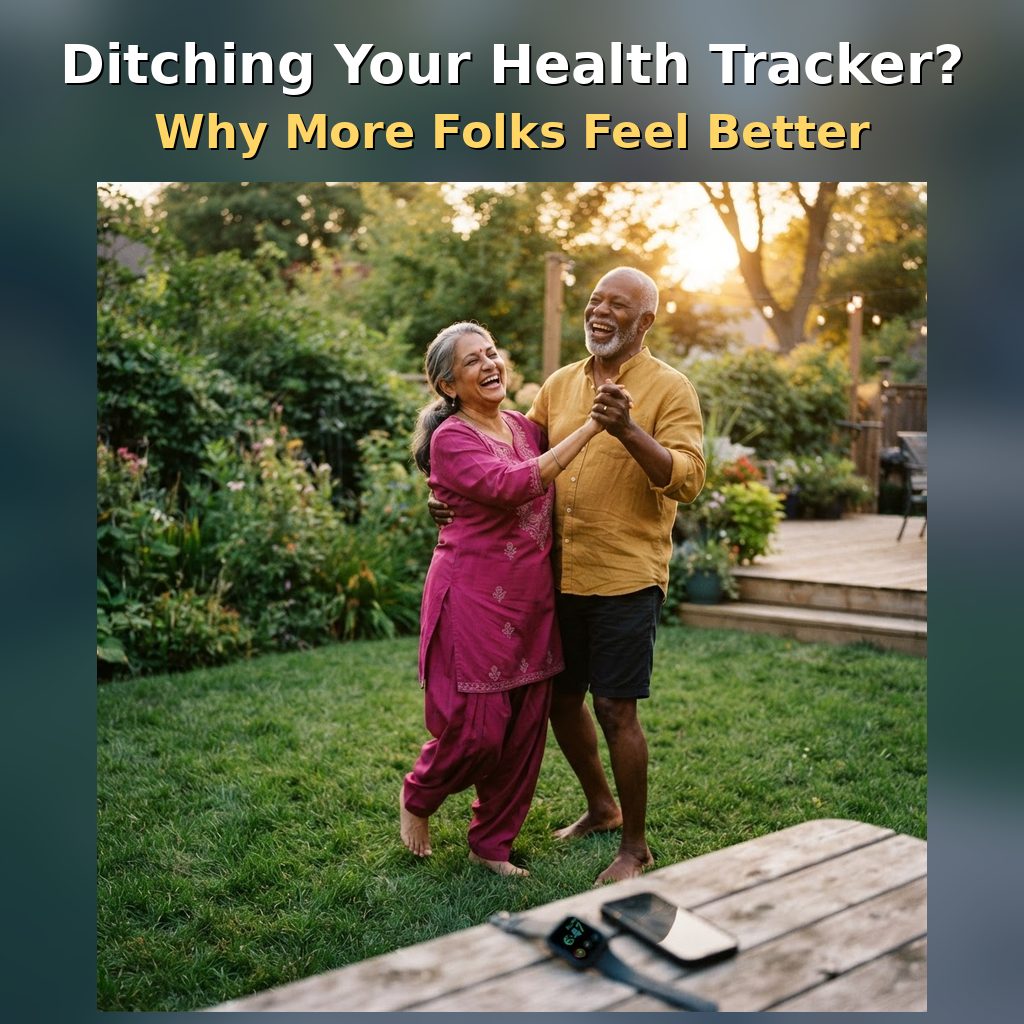
  • Ditching Your Health Tracker? Why More Folks Feel Better

    Ditching Your Health Tracker? Why More Folks Feel Better

    Is your fitness watch making you feel worse instead of better?

    Short answer: For a lot of folks, it is. Sleep trackers guess wrong a good bit, the famous 10,000 steps started out as a sales pitch, and fretting over scores can actually wreck your sleep. Keep the few numbers your doctor cares about, like blood pressure, and try a week without the rest. You might be surprised how good you feel.

    John Battelle helped start Wired magazine. If anybody on God’s green earth loves a gadget, it’s him.

    So listen to what happened this past summer. He’d worn an Oura ring every day for about a year. Sleep scores, calorie counts, daily goals, the whole works. Then he left the charger at home, and the ring went dead.

    He didn’t run out and buy a new charger. He just waited to see what would happen.

    What happened was, he felt better. On his blog, he wrote that he felt lighter and less anxious with the ring off, and he believes he’s sleeping better without it than he did with it. Last he said, he wasn’t sure he’d ever put it back on.

    Now, if a tech man like that can take the ring off and breathe easier, I reckon the rest of us can at least think about it.

    How can a bad sleep score make you feel tired?

    Picture this. You wake up feeling fine. Rested, even. You pour your coffee, glance at your wrist, and your watch says you scored a 62 on sleep.

    And just like that, you’re dragging.

    Nothing changed in your body. A little screen talked you out of a good morning. It happens so often that sleep doctors gave it a name: orthosomnia. That’s when chasing a perfect sleep score makes you sleep worse.

    Sleep psychologist Dr. Kelly Baron came up with that word back in 2017. She had patients who trusted their wristband more than a real sleep test done in a lab. Some stayed in bed longer just to bump their score up, which is about the worst thing you can do for sleep. She’s said she’s watched people develop insomnia from worrying over what their tracker told them.

    Here’s the kicker. According to the Sleep Foundation, one 2021 study found trackers only picked out deep sleep correctly about 59% of the time. So that 62 on your wrist? Could be nothing but a guess.

    What really helps sleep hasn’t changed one bit. Same bedtime, same wake-up time, a cool dark room. And if you snore hard or wake up gasping, ask your doctor about sleep apnea. I went deeper on that in Could Your Sleep Schedule Affect How Long You Live?

    Where did 10,000 steps a day even come from?

    This one tickled me. That 10,000 number didn’t come from a doctor. It came from a gadget sale.

    Back in 1965, a Japanese company put out one of the first pedometers and named it the manpo-kei, which means “10,000-step meter.” Harvard researcher Dr. I-Min Lee went digging, and she told Harvard Health the name was a marketing tool. She’s also said the Japanese character for 10,000 looks a little like a man walking. That’s it. That’s the whole science.

    So she tested it. Her team followed more than 16,000 women who averaged about 72 years old. The ones walking around 4,400 steps a day lived longer than the ones under 2,700, and the benefits topped out around 7,500.

    Then a big 2025 review out of the University of Sydney looked at 57 studies and more than 160,000 adults. Compared with folks taking about 2,000 steps a day, around 7,000 steps was tied to a 47% lower risk of dying early. Even 4,000 steps was tied to a 36% lower risk. Past about 7,000, the extra benefit mostly leveled off.

    Lead researcher Professor Melody Ding put it best: shift the focus “from perfection to progress.” For about 60 years, folks have felt like failures for missing a number somebody picked because it looked good on a box.

    Is your tracker helping you or running you?

    Quick gut-check. Be honest now:

    • Do you check your score before you check how you feel?
    • Has a bad number ever spoiled a day you felt fine about?
    • Have you ever walked laps around the kitchen at night just to close a ring?
    • Do you feel a little guilty when the watch comes off?
    • Have you skipped something fun because it would “mess up” your numbers?

    Two or more yeses, and that gadget might be holding the reins. No shame in it. It just means it’s time to take them back.

    Who else is telling folks to put the gadget down?

    Battelle’s got plenty of company. The Global Wellness Summit, which puts out one of the best-known wellness trend reports around, named “The Over-Optimization Backlash” a big trend for 2026. Writer Jessica Smith says all that health data leaves a lot of people overwhelmed instead of healthier.

    Bestselling author Brad Stulberg says one bad night or one missed walk isn’t the real problem. The problem is the worried spiral that comes after. In his essay “Optimization Culture is Making Us Fragile”, he’s got a line I’d put on a coffee mug: “Life isn’t meant to be optimized. It’s meant to be lived.”

    And Oliver Burkeman, who wrote the bestseller Four Thousand Weeks, says in Meditations for Mortals that if you keep optimizing everything, you can optimize away the very things that make life worth living.

    Our grandparents never counted a step in their lives. They knew when they were tired, hungry or needed to get up and move. Somewhere along the way, a lot of us handed that job to a gadget. I reckon it’s about time we took it back.

    What health numbers are still worth keeping?

    Now, I’m not telling you to fly blind. A few numbers really do matter:

    • Your blood pressure. The U.S. Preventive Services Task Force and the American Heart Association both recommend checking it at home. Use an upper-arm cuff that fits, sit quiet a few minutes first, and keep your feet flat on the floor.
    • Anything your doctor asks you to track, like blood sugar or your weight with heart failure. Don’t quit those.
    • Real changes in how you feel. New chest pain, shortness of breath, dizziness or a fall matter more than any score on your wrist. Call your doctor.

    And if your step counter is what gets you off the couch, keep it. A tool’s only a problem when it starts running you.

    How do you try life without a tracker?

    Do what Battelle did, just on purpose. Here’s a 7-day experiment. It costs nothing, and you can strap the watch back on next Sunday if you miss it.

    1. Day 1: Ask yourself first. Before you look at any score, ask “How do I feel?”
    2. Day 2: Kill the buzzing. Turn off the alerts, rings and daily scores.
    3. Day 3: Walk by the clock, not the count. Take a 20-minute walk and don’t check the steps.
    4. Day 4: Call somebody to walk with you. A friend beats any step goal, and you’ll actually show up.
    5. Day 5: Same bedtime. No score. Just a steady bedtime.
    6. Day 6: Take the watch off all day. Notice how you sleep, move and feel.
    7. Day 7: Look back. Worse, the same, or better? That’s the only score that counts.

    Like the old saying goes, a watched pot never boils. Some things just go better when you quit staring at them.

    Common Questions

    Can a fitness tracker make you feel worse?

    Yes, for some people. Worrying over sleep and activity scores can raise anxiety and even hurt sleep. Sleep experts call it orthosomnia.

    Where did the 10,000 steps a day goal come from?

    A 1965 Japanese pedometer called the manpo-kei, or “10,000-step meter.” Harvard researchers say the name was a marketing tool, not science.

    How many steps a day do you really need?

    About 7,000 steps a day was linked to a 47% lower risk of early death in a 2025 review of 57 studies. Even 4,000 steps helped.

    Are sleep trackers accurate?

    Not very for sleep stages. One 2021 study found trackers picked out deep sleep correctly only about 59% of the time.

    Should older adults check blood pressure at home?

    Yes. Home checks with a fitted upper-arm cuff are recommended by the U.S. Preventive Services Task Force and the American Heart Association.

    So tell me, y’all: does your tracker help you or just nag you? Try the 7-day experiment and come back and tell me how it went in the comments.

    — Tom

    About Tom Green

    Tom Green writes Well After 50. He was born in Pell City, Alabama, in 1962, and he’s a country boy and a true Southerner through and through. He’s a regular, laid-back 64-year-old who keeps things simple and passes along what he learns about getting older. Tom isn’t a doctor. He reads up on the research and shares what’s useful, plain and simple. Read more about Tom.

    Health note: This article is for general education and isn’t medical advice. Don’t stop tracking anything your doctor has asked you to monitor, and call your doctor about new symptoms instead of relying on a device.

    Research & Sources

  • Nearly Half of Us Get Better With Age. Yale Just Proved It.

    Nearly Half of Us Get Better With Age. Yale Just Proved It.

    Can you really get better with age?

    Short answer: Yes, and it’s more common than you’d think. A Yale study that followed more than 11,000 Americans 65 and older for up to 12 years found that 45% of them got better at thinking, walking or both. The folks who had good feelings about getting older were the most likely to improve, and those feelings are something you can work on.

    Julia Hawkins grew up in a time when folks were expected to slow down and sit down as they got older. She never got the memo. The Baton Rouge, Louisiana, great-grandmother spent years racing bicycles in the Senior Olympics, and when the hills and gears got to be too much, she didn’t quit. She switched to running. At 100 years old.

    A year later she ran the 100-meter dash in 39.62 seconds and set a world record for her age group, and folks started calling her “Hurricane.” At 105 she became the oldest woman ever to run in a sanctioned track race, and Growing Bolder’s video of that race was watched millions of times all over the world. She passed away in 2024 at 108, still setting an example.

    Here’s the thing. Julia wasn’t some one-in-a-million miracle. A big study out of Yale says a whole lot of us get better as we get older, not worse. Nearly half of us, in fact.

    I’ll tell you why this one hits home. I’m a country boy from Pell City, Alabama, and I started this website at 64. The hardest part wasn’t learning how to build it. It was fighting that little voice that kept telling me I was too old, it was too late, and who’d want to listen to me anyway. I decided now’s a better time than never. So when I read this study, it felt like somebody finally put numbers on what I’d been hoping was true.

    What did the Yale study find?

    Dr. Becca Levy and Martin Slade at Yale looked at more than 11,000 men and women 65 and older from a long-running national study of older Americans, some of them followed for as long as 12 years. They checked two things: how sharp folks’ minds were, and how fast they walked. Walking speed might sound like a funny thing to measure, but geriatric doctors treat it as one of the best signs of overall health.

    Here’s what they found:

    • 45% got better in at least one of the two areas.
    • About 32% got sharper in their thinking.
    • About 28% got faster on their feet.

    That’s close to half of everybody, and these weren’t just folks who started out sick and bounced back. People who began the study in good shape got better too. Dr. Levy put it in six words I keep coming back to: “improvement in later life is not rare, it’s common.”

    So why don’t we hear about this? Because most aging studies look at averages. Add everybody up, and the average drifts down a little each year. But that average hides all the people who are quietly getting better.

    Why do some people get better with age and others don’t?

    This is the part that got me. The people who had more positive beliefs about getting older at the start of the study were a lot more likely to improve, both in their thinking and in their walking. That held up even after the researchers accounted for age, sex, education, chronic illness and depression.

    In other words, what you expect from getting older seems to shape what you get.

    Dr. Levy has been studying this a long time, too. Years ago she followed 660 people 50 and older in a small Ohio town for more than two decades. The ones with a positive outlook on aging lived about 7.5 years longer than the ones who dreaded it. She told health writer Judith Graham, who writes the Navigating Aging column for KFF Health News, that age beliefs made a bigger difference to how long people lived than high cholesterol, high blood pressure, being overweight or smoking.

    Now, I’ll be straight with you. This kind of study shows a strong link, not proof that thinking happy thoughts fixes everything. Folks who feel good about aging may also walk more, see the doctor more and stay more social. But I reckon that’s kind of the point. When you believe you’ve still got good years ahead, you act like it.

    What do well-known aging writers say about this?

    Ashton Applewhite has been blogging about aging and ageism since 2007 at This Chair Rocks, and her book by the same name made the Washington Post’s list of 100 best books to read at every age. She’s spoken on the TED main stage and at the United Nations, and when she talks about Dr. Levy’s research, she calls it “blue chip science.” Her whole message is that the gloomy picture of old age most of us carry around just doesn’t match how people actually live it.

    Emmy-winning broadcaster Marc Middleton walked away from his TV anchor job to start Growing Bolder, which tells stories of folks doing amazing things at 70, 80 and 100. His take on aging well fits right in with this study. He believes that when you stop opening doors, the ones you’ve already opened begin to close. So keep opening them.

    I wrote about this same fight a while back in They Want Me to Act My Age. I Refuse. Turns out the science is on our side.

    Quick gut-check: what do you really believe about getting older?

    Before we get to the fixes, take 30 seconds. Answer yes or no to these five. Be honest, nobody’s grading you.

    1. Things keep getting worse as I get older.
    2. I’m as happy now as I was when I was younger.
    3. When I forget something, my first thought is “I’m just getting old.”
    4. I can still learn new things and get better at them.
    5. Most older people I see on TV and in ads seem frail or out of it.

    How to score it: Give yourself a point for every “no” on 1, 3 and 5, and a point for every “yes” on 2 and 4.

    • 4 or 5 points: You’ve got a healthy outlook. Keep it up and pass it on.
    • 2 or 3 points: You’re somewhere in the middle, like most of us.
    • 0 or 1 point: Those old messages have been getting to you. The steps below are made for you.

    This isn’t a medical test, just a gut-check to get you thinking. The first two are a lot like statements Dr. Levy’s team asked people about in her long-running Ohio study.

    How can you change your beliefs about aging?

    Here’s the hopeful part. Dr. Levy says age beliefs aren’t set in stone, and in her book Breaking the Age Code and her talk with Judith Graham she lays out some simple ways to work on them. Here’s how I’d put them, porch-style:

    1. Catch your first thoughts. Think of an older person and notice the first five words that pop in your head. Are they “frail” and “forgetful,” or “wise” and “funny”? Just noticing is step one.
    2. Keep a one-week tally. For a week, jot down every time you see older folks shown on TV, in ads or online, and whether it’s good, bad or they’re missing altogether. You’ll be surprised how often we’re the punchline or not there at all.
    3. Quit blaming everything on age. Forgot where you put your keys? Younger folks do that too. Before you say “I’m just getting old,” ask if you were tired, rushed or stressed.
    4. Pick five role models. They can be people you know, famous folks or even characters. Write down what you admire about each one. Grandma Moses, who started painting in her late 70s, is on my list.
    5. Make friends of all ages. Take a class, join a club or volunteer somewhere you’ll be around younger and older people both. It’s good for everybody.

    And since walking speed was one of the things that improved, don’t sit still. A daily walk is one of the easiest ways to stay quick on your feet. I covered how much it helps in Does Walking Prevent Falls After 65?

    Is it too late to start if you’re already in your 70s or 80s?

    Not according to this study. Everybody in it was 65 or older when it started, and plenty of them kept improving for years. Dr. Levy says there’s often a “reserve capacity” for getting better later in life, meaning most of us have more left in the tank than we give ourselves credit for. Like they say, it’s not how old you are, it’s how you are old.

    If you want to see what the very best agers have going on upstairs, my post on super agers is a good next read.

    Common Questions

    Do people really get better with age?

    Many do. In a Yale study of more than 11,000 adults 65 and older, 45% improved in thinking, walking speed or both over up to 12 years.

    How do beliefs about aging affect your health?

    People with more positive views of aging were more likely to improve their memory and walking speed, and an earlier study found they lived about 7.5 years longer.

    Can you change your beliefs about aging?

    Yes. Researcher Becca Levy suggests noticing your first thoughts about older people, questioning when you blame things on age, and finding positive role models.

    Why does walking speed matter as you age?

    Doctors who care for older adults treat walking speed as one of the best signs of overall health, and in the Yale study 28% of people got faster over time.

    So here’s my question for y’all: what’s one thing you’re better at now than you were at 40? Tell me in the comments. I’ll go first: I’m a whole lot better at not sweating the small stuff.

    — Tom

    About Tom Green

    Tom Green writes Well After 50. He was born in Pell City, Alabama, in 1962, and he’s a country boy and a true Southerner through and through. He’s a regular, laid-back 64-year-old who keeps things simple and passes along what he learns about getting older. Tom isn’t a doctor. He reads up on the research and shares what’s useful, plain and simple. Read more about Tom.

    Health note: This article is for general education and isn’t medical advice. If you notice real changes in your memory or walking, talk with your doctor rather than chalking it up to age.

    Research & Sources

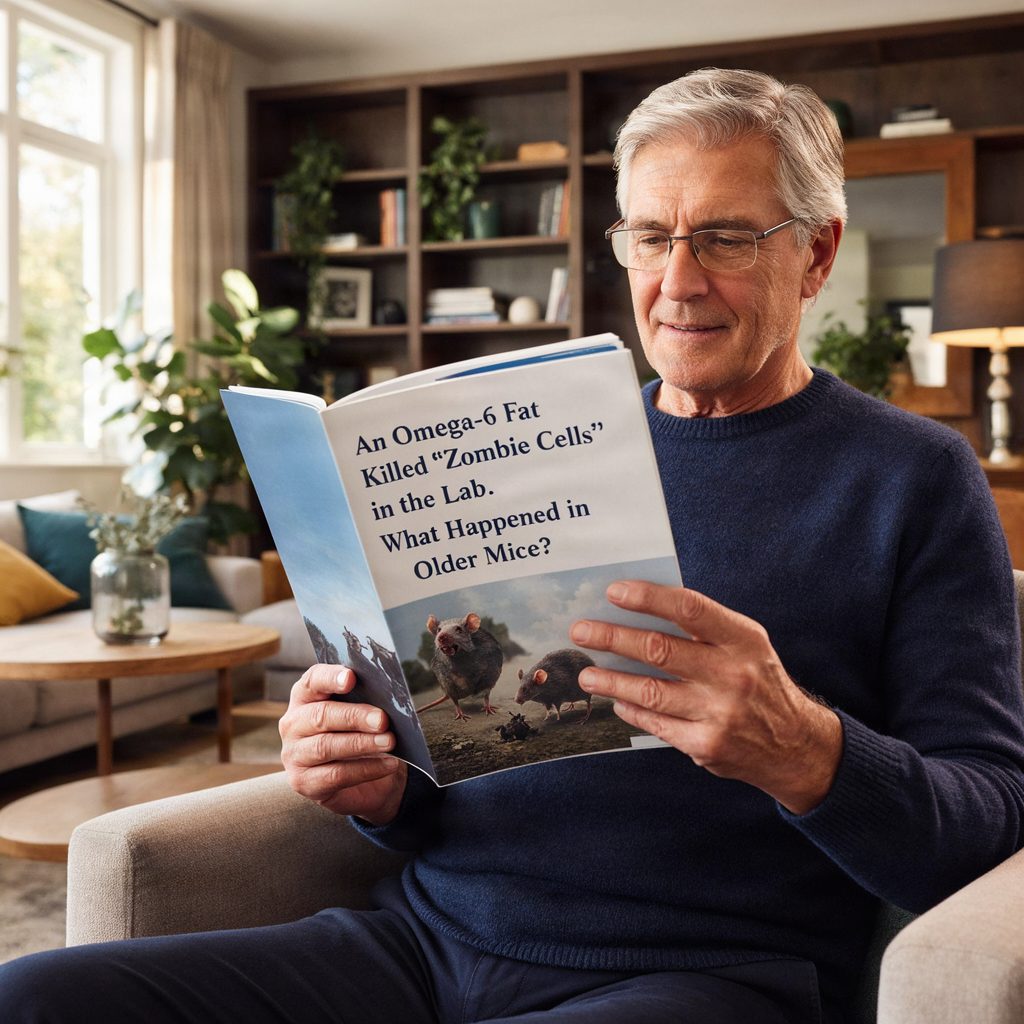
  • An Omega-6 Fat Killed “Zombie Cells” in the Lab. What Happened in Older Mice?

    An Omega-6 Fat Killed “Zombie Cells” in the Lab. What Happened in Older Mice?

    Can an omega-6 fat called DGLA clear out zombie cells and help us age better?

    Short answer: In mice, partly yes. In a Cell study published November 2, 2026, DGLA made worn-out “zombie” cells die in lab dishes and left healthy cells alone. A 5-day course in mice 22 to 24 months old lowered signs of those cells in fat and liver. It hasn’t been tested in people, there’s no safe human dose, and you can’t get it from food, so don’t start borage oil or DGLA supplements because of this study.

    Y’all know how an old fence post can rot from the inside while it still looks like it’s standing? Our bodies have something like that going on, and a new study found a plain old fat that might help clear it out. In mice, anyway.

    What are zombie cells?

    Zombie cells are worn-out cells that quit dividing but flat refuse to die. Scientists call them senescent cells, and I’ll be honest, the first time I read about them I thought of that one neighbor who won’t move out and won’t mow the yard either. They just sit there leaking out inflammation that riles up the tissue around them and pushes the healthy cells next door toward the same tired state, and the older we get the faster we make them and the slower our body cleans them up, men and women both. A drug that clears them out and leaves the good cells alone is called a senolytic, and there’s not one approved for aging yet.

    What did the DGLA study find?

    The study found that zombie cells keep a fat called DGLA low on purpose, and when you put it back they die. DGLA, short for dihomo-gamma-linolenic acid, is an omega-6 your own body makes out of another fat called GLA. In the Cell paper, led by Chisaka Kuehnemann and Christopher D. Wiley of Tufts University, they gave worn-out human cells DGLA and within about 3 days those cells were dead, while the healthy cells sitting right there with the same dose were just fine. They tried other omega-6 and omega-3 fats at the same strength too, and none of them did it, so it’s something about DGLA in particular.

    How does DGLA kill zombie cells?

    DGLA kills zombie cells by setting off ferroptosis, which is a kind of cell death driven by iron. The way I picture it is an old tin roof that rusts and rusts till it finally splits open, instead of the cell quietly packing its bags and leaving like cells normally do. Zombie cells are already halfway rusted because they carry extra loose iron, and the only thing holding them together is keeping DGLA low and making extra of an enzyme called GPX4 that mops up the rust, so when DGLA comes back in they just can’t keep up.

    What happened to zombie cells in the older mice?

    In the older mice there were fewer signs of zombie cells, healthier fat, and the old males got healthier livers and kidneys, but liver fat went up. These were mice 22 to 24 months old, which is about as old as a lab mouse gets, and they got DGLA by mouth once a day for 5 days and then 2 weeks of rest, according to the Cell paper. Here’s how it shook out:

    • Signs of zombie cells dropped in fat and liver.
    • Fat had fewer inflamed spots, and the blood had less free fat.
    • Males had less liver scarring and better liver and kidney blood numbers. Females didn’t see those changes.
    • Liver fat went up. The authors think the liver may have been storing the extra DGLA.

    The study didn’t test whether the mice lived longer.

    Does DGLA work on zombie cells in people?

    Nobody knows yet if DGLA works on zombie cells in people, because there hasn’t been a human trial. The only human piece in the Cell paper is from 185 people with obesity in Finland, 131 women and 54 men, and the folks carrying a gene that slows down how fast DGLA gets used up had fewer signs of worn-out cells in their fat, and it showed up clearest in the women. That’s interesting, but it’s a link and not proof, and the paper itself calls the mouse results “somewhat speculative,” which I appreciate because they could’ve oversold it and didn’t.

    Maija Vaittinen of the University of Eastern Finland told reporters DGLA can selectively kill senescent cells, but she’s one of the study’s authors so that’s not exactly an outside opinion. Wiley also holds patent applications on using DGLA this way, and I went looking for an independent expert who’d weighed in and couldn’t find one, so just keep that in the back of your mind.

    Has anybody been watching this idea before?

    Yes, folks have been watching this idea for about five years. Back in 2021 Wiley told Tufts Now he stumbled onto it by accident while studying DGLA for arthritis, and he said, “I’m a researcher, not a health care provider,” and I like a man who knows his lane. Reason, who has written the Fight Aging! blog for years, shared that interview back then, and it had Wiley’s idea about DGLA-rich soybeans in it, so maybe one day you’ll get a little bowl of souped-up edamame with your sushi.

    Can you get DGLA from food?

    Not really, you can’t get DGLA from food in any amount that matters, it only shows up in trace amounts in some animal foods. Your body makes it from GLA, and GLA is in borage oil (about 17 to 25% GLA), blackcurrant seed oil (about 15 to 20%) and evening primrose oil (about 7 to 10%), but none of those have ever been tested as a zombie-cell cleaner in people, so please don’t go clearing the shelf at the health food store just yet.

    Memorial Sloan Kettering warns that borage may raise your bleeding risk if you take a blood thinner, and they say to only use borage oil that’s certified free of pyrrolizidine alkaloids, which are natural plant compounds that can hurt your liver. And more DGLA isn’t automatically better either, because a study of 225 people with type 2 diabetes tied high blood DGLA to more body fat and insulin resistance.

    What else is new on zombie cells?

    Two other early zombie-cell results came out this fall, and both are worth knowing about. Vanadyl sulfate, a mineral that’s already sold as a supplement, stretched male mice’s median lifespan from 887 to 952 days, about 7.4% longer, but Arkadi Mazin at Lifespan.io pointed out there were only about 20 mice in each group and the gain barely counted as statistically significant, so that’s a maybe and not a sure thing.

    The other one is an experimental treatment called SenoMune-0257 that went to its very first patient on October 29, 2026, according to Immorta Bio’s announcement. That was one person with advanced cancer treated in Mexico, there aren’t any results yet, and the news came from the company itself, so we’ll just have to wait and see.

    What should you do about zombie cells after 50?

    Watch for a human trial and keep doing what’s proven. The Mayo Clinic team led by James Kirkland, the pioneers of this field, warned back in 2018 that people shouldn’t take these agents until clinical trials show they’re safe, and that still holds. Lifting something heavy, walking, good sleep and not smoking are boring, but they work in people. I reckon slow and steady still builds the best fence. If a human trial starts, y’all will hear it from me first.

    Common Questions

    What are zombie cells?

    They’re worn-out cells, called senescent cells, that stop dividing but won’t die. They leak inflammatory signals that harm nearby tissue, and they build up with age.

    What is DGLA?

    DGLA (dihomo-gamma-linolenic acid) is an omega-6 fat your body makes from GLA. In a 2026 Cell study, adding it back made zombie cells die by ferroptosis.

    Does DGLA clear zombie cells in people?

    That’s unknown. It worked in lab dishes and in old mice, but there’s no human trial yet.

    Can I get DGLA from food?

    Only in trace amounts. Your body makes it from GLA, found in borage, blackcurrant seed and evening primrose oils, but none of those has been tested for this.

    Is it safe to take DGLA or borage oil for this?

    There’s no tested human dose, and liver fat rose in the mice. Borage may raise bleeding risk with blood thinners, so talk to your doctor first.

    About Tom Green

    Tom Green writes Well After 50. He was born in Pell City, Alabama, in 1962, and he’s a country boy and a true Southerner through and through. He’s a regular, laid-back 64-year-old who keeps things simple and passes along what he learns about getting older. Tom isn’t a doctor. He reads up on the research and shares what’s useful, plain and simple. Read more about Tom.

    Health note: This article is for general education and isn’t medical advice. Talk with your healthcare professional before changing supplements, especially if you take a blood thinner.

    Research & Sources

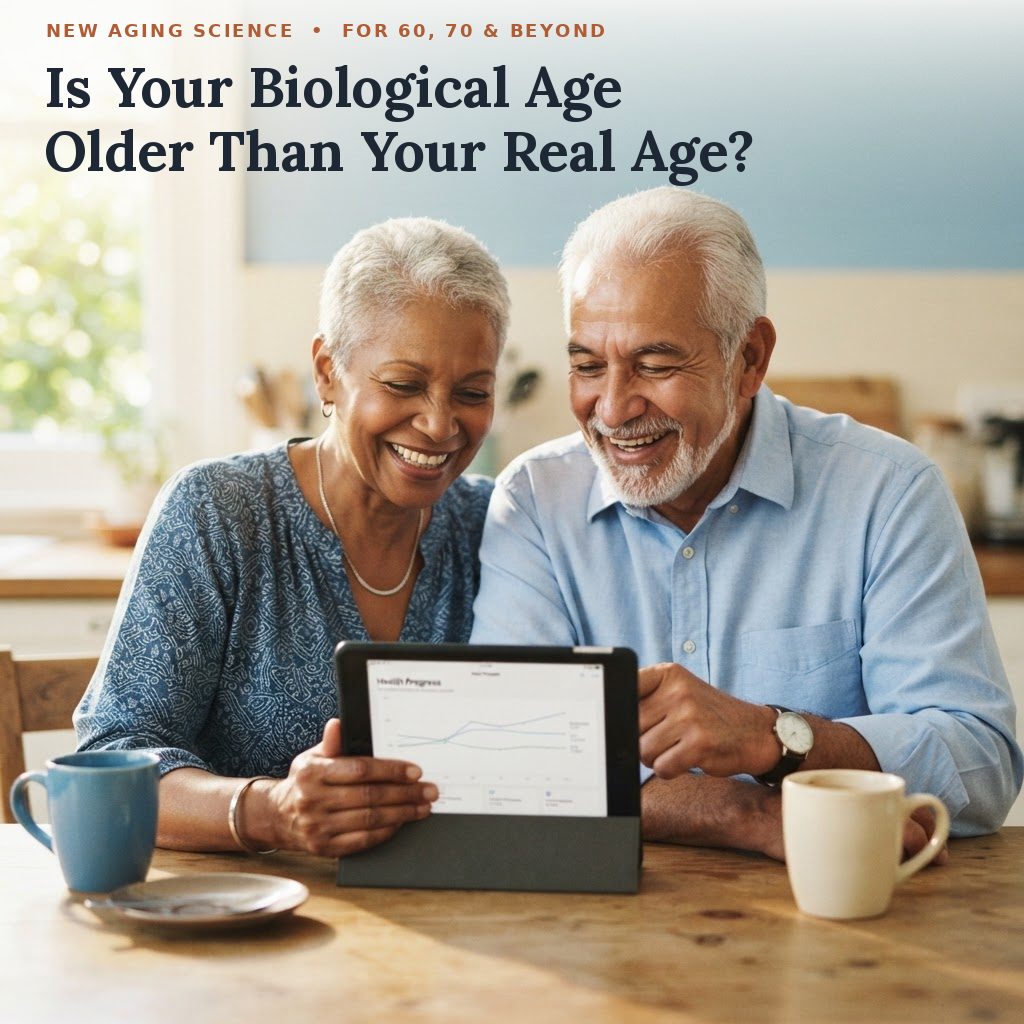
  • Is Your Biological Age Older Than Your Real Age? A New AI Clock Reads Your Chart

    Is Your Biological Age Older Than Your Real Age? A New AI Clock Reads Your Chart

    What is biological age, and can AI tell if yours is older than your real age?

    Short answer: Your biological age is how worn your body really is inside, while your real age is just your birthdays. A new AI tool from the University of Oxford, called ClinicalAge, estimates it from your medical chart. It isn’t available to the public yet, but type 2 diabetes, high blood pressure, smoking and depression were tied to aging faster.

    I’m 64 and I’ve been wondering lately if my body is as old as my birthday says it is or if it’s older or maybe even a little younger, and this week some scientists over in England came out with a new way of guessing that and it doesn’t take a blood test or a DNA kit or anything like that, it just reads the medical chart your doctor already has on you.

    I read the whole study over a couple cups of coffee and I’m going to tell you what I got out of it the way I’d tell a friend on the porch, and I’ll tell you up front the best part of it is something you can actually do something about.

    Biological age vs chronological age

    Your chronological age is just how many birthdays you’ve had and your biological age is how worn your body really is inside, your heart and kidneys and blood sugar and all the rest of it. You know how you go to a class reunion and one fella looks like he could still play ball and another one looks ten years older than everybody else and they’re the same age, that’s what they’re talking about.

    Dr. Morgan Levine is a scientist who wrote a book called True Age and she said it better than I can in an interview with Big Think, “We all age, but we don’t all age at the same rate.”

    If you want to dig a little deeper, Dr. David Sinclair, a genetics professor at Harvard Medical School, wrote a book called Lifespan: Why We Age―and Why We Don’t Have To. He makes the case that aging is something science may be able to slow down. (As an Amazon Associate I earn from qualifying purchases.)

    The AI clock that reads your medical chart

    It’s called ClinicalAge and it came out of the University of Oxford and was published November 12 in The Lancet Digital Health. What it does is go through everything in your chart in the order it happened, what you were diagnosed with and what you were prescribed and any procedures you had, and it figures out if your record looks like somebody who is aging fast or slow. They built it on about 320,000 people and then tried it out on more than 4.7 million regular patients from doctors’ offices over there.

    Then they went back and looked at what happened to all those people over the next ten years and the ones whose charts looked older had more heart disease and kidney trouble and diabetes and lung problems and more of them passed away, and that held up even after they took into account things like age and weight and blood pressure and smoking. Those people also walked slower and had a weaker grip and slept worse and felt tired more, so the chart wasn’t just guessing, it was picking up on how people were really doing.

    What made people age faster

    This is the part that got my attention. They watched people’s charts from age 40 to 65 and when somebody went from the slow aging group to the fast aging group the things that kept showing up were type 2 diabetes and high blood pressure and smoking and depression. People with diabetes had an older looking chart starting at 40 and it kept getting worse as they went along.

    Now none of those are something you’re just stuck with like your height or your eye color, a doctor can check every one of them and there’s things that can be done about every one of them, and even the scientists who did the study said most of those have good ways to prevent them and treat them. So I don’t look at this as bad news at all, I look at it like somebody finally wrote down what to keep an eye on.

    One more thing that surprised me, out of all the people who stayed in the youngest aging group the whole way from 40 to 65 there were 5,004 women and only 86 men, and the study doesn’t say why. I reckon us men have got some catching up to do, and ladies, whatever you’re doing just keep doing it.

    Can you get your score

    No not yet, and I don’t want anybody getting their hopes up. There’s no app or test and your doctor doesn’t have it, the scientists called it a proof of concept which just means they showed it can work but it’s not ready for regular folks. They put the code online but not the finished AI because it was built on private patient records. So if you see somebody selling a ClinicalAge test online keep your money in your pocket because it isn’t real.

    It was also all British records so nobody knows yet if it works the same on records here, and the study started with people 40 to 69 and only followed how they aged up to 65, so if you’re in your 70s it’s interesting but they didn’t prove it on you. And it shows things go together, it doesn’t prove that changing your number would change your health.

    Should you buy a biological age test

    There’s a bunch of biological age tests for sale online and some of them cost a lot of money. Dr. Eric Topol is a heart doctor who wrote the book Super Agers and he’s about as interested in these aging clocks as anybody, and even he wrote in his newsletter Ground Truths that he’d suggest not buying the ones on the market right now because they aren’t standardized or reliable yet and they’re expensive. Paul von Zielbauer who writes the Aging With Strength newsletter wrote about Topol’s advice too and I’m with both of them on that.

    If you’re just curious there’s an older measure called PhenoAge that ClinicalAge was trained to copy, and it uses nine regular blood test numbers like your glucose and creatinine and albumin and white blood cell count plus your age, and there’s free calculators for it online. I’d just look at whatever number it gives you as a rough idea and not the final word and take it to your doctor.

    What I’m doing with this

    You can’t go after a score you can’t get but you can go after the same things the score was picking up on, so here’s what I’m taking away from it for me and I think it works whether you’re 60 or 75.

    Next time I’m at the doctor I’m asking for my A1C so I know where my blood sugar is, since diabetes was the biggest thing making people’s charts look older. I’m checking my blood pressure at home a couple times a week with one of those cheap cuffs. If you still smoke this is just one more reason to quit because it kept showing up. If you’ve been feeling down for a while tell your doctor, depression was on that list too and it’s just as important as your heart. And keep moving and keep your strength up because walking speed and grip strength went right along with a younger chart, my floor test that may predict longevity is a free way to see where you’re at today.

    What I like about this whole thing is it takes some of the mystery out of getting older. Your biological age isn’t some secret locked up in your genes, a lot of it shows up in everyday stuff like your blood sugar and blood pressure and how you’re feeling, and most of that we can still work on at 60 or 70 or whatever age you are. It’s never too late, I didn’t start this site until I was 64.

    If you like reading about the new science on aging I also wrote about the first human age-reversal trial and what it means for those of us over 60.

    Would y’all want to know what your medical chart says about how fast you’re aging? Tell me in the comments, I read every one.

    — Tom

    Common Questions

    What’s the difference between biological age and chronological age?
    Chronological age is how many years you’ve been alive and biological age is a guess at how worn your body is compared to other people your age.

    What is ClinicalAge?
    It’s an AI aging clock from the University of Oxford that guesses how fast somebody is aging from what’s in their medical record. It was published in The Lancet Digital Health in November 2026.

    Can I get my ClinicalAge score?
    No, it’s only a research model right now and no test or doctor’s office offers it.

    Can you lower your biological age?
    The study didn’t test that, but the things that went along with faster aging like diabetes and high blood pressure and smoking and depression can be prevented or treated, so working on those with your doctor is a good place to start.

    Source: Lian J and others, ClinicalAge, The Lancet Digital Health, published online November 12, 2026 (doi 10.1016/j.landig.2026.101060). This is general information and not medical advice, talk to your own doctor about your own health.

    About Tom Green

    Tom Green writes Well After 50. He was born in Pell City, Alabama, in 1962, and he’s a country boy and a true Southerner through and through. He’s just a regular, laid-back 64-year-old who keeps things simple. He shares what he learns about skincare, fitness and getting older, and what’s working for him. He’s also the author of A Practical Guide to Getting Older Without Giving Up on Yourself. Tom isn’t a doctor. He reads up on the research and passes along what’s useful, plain and simple.

    I’ve also mapped out some great tools on my new Tech for Independent Living After 50 page.

  • First Human Age-Reversal Trial: What It Means for Those of Us Over 60

    First Human Age-Reversal Trial: What It Means for Those of Us Over 60

    What is the first human age-reversal trial, and does it work?

    Short answer: ER-100 from Life Biosciences is the first age-reversal treatment tested in people. It’s a single shot into one eye for glaucoma and a related optic nerve condition. Early results shared October 8, 2026 came from just 3 people over 8 weeks, and 2 of them improved on one vision test. It’s hopeful, but it’s an early start, not a cure.

    What would you do if a doctor told you there was a shot that could make the worn-out cells in your eye act young again?

    For years now every time I’d see “scientists reverse aging” in a headline I’d click on it and find out it was mice again. Always the mice. I started to figure those mice were going to outlive all of us.

    Well this fall that changed. Somewhere in this country a regular person with glaucoma, maybe somebody about our age, rolled up their sleeve, well not their sleeve, they got a shot in the eye, and became one of the first humans ever to try a treatment built to make old cells act young again.

    I’ll be honest, that gave me goosebumps. So I sat down with my coffee and read every bit of it I could find, and here’s what happened, plain and simple, and what it really means for folks our age.

    What happened in the first human age reversal trial

    On October 8, 2026, a Boston company called Life Biosciences shared the first results from the first human age reversal trial ever done. The treatment is called ER-100. Harvard geneticist David Sinclair co-founded the company, and you might know his name from his books and talks on aging.

    Three people with glaucoma got the lowest dose. After eight weeks all three handled it fine with no serious side effects, and two of the three did better on a standard eye test that measures how well you see light across your field of vision. The safety board liked what it saw enough to let them move up to a stronger dose.

    Think about that for a minute. These are people with glaucoma, a disease where the damage is supposed to be permanent, and two out of three saw better on their test after two months. It’s early and it’s small, but that’s the kind of thing that makes you sit up in your chair.

    What ER-100 actually does

    This isn’t a pill or a cream and you can’t buy it. It’s one shot into one eye, given in a clinic as part of the trial.

    The idea goes like this. As we get older the instructions that tell our cells which genes to turn on and off get scrambled up, kind of like an old cassette tape that’s been played too many times. The music is still on there, the tape just plays it wrong. ER-100 tries to clean up those instructions in the nerve cells of the eye so they work more like young ones again. It doesn’t change your DNA, it just helps the cell read it right.

    Patients take a common antibiotic called doxycycline for eight weeks to switch the treatment on, and when they stop taking it the treatment shuts off. I thought that was smart, it gives the doctors a way to turn it off if they need to.

    The young scientist behind it

    Here’s the part of the story I liked best. It all started with a young man named Yuancheng “Ryan” Lu. Age-related blindness runs in his family, and he’s said a great-aunt of his back in China was killed crossing a road because she couldn’t see the traffic coming. So when he was a student in Sinclair’s lab at Harvard he went after it, and he used this idea to bring sight back to old mice and mice with glaucoma. That work was published in the journal Nature in 2020 and it set the whole field on fire.

    MIT Technology Review just named him one of its Innovators Under 35, and I liked what he said about it. Sinclair has said he thinks people could live to 200, but Lu doesn’t buy that. He calls his own work more a proof that it can be done than a silver bullet.

    I appreciate a fella who doesn’t oversell his own work.

    Why start with the eyes

    Glaucoma is one of the leading causes of blindness for people our age, and once those eye nerve cells are damaged they don’t grow back on their own. There’s another condition being tested too called NAION, sometimes called a stroke of the eye, and right now there’s no approved treatment for it at all.

    The eye is also a safe place to start. It’s small and closed off, doctors can check your vision without cutting anything, and the treatment mostly stays where they put it.

    Here’s the catch

    I’m going to be straight with you because I’d want somebody to be straight with me.

    This was three people for eight weeks. That’s a start, not an answer. Two of three improving on one test is hopeful, but nobody can say yet if it lasts, if it helps everyday vision like reading or driving, or if it’s safe at higher doses. The results came from the company itself at a medical conference, and they haven’t been checked by outside scientists yet.

    Not everybody is cheering either. Paul Knoepfler, a stem cell scientist at UC Davis, called it a high-risk study and wrote that the treatment has been a bit oversold in the longevity world. I think it’s good to hear from the doubters too.

    And this is not a treatment to make your whole body younger. Nobody has shown that, in people, at all.

    What happens next

    The trial plans to treat 18 people ages 40 to 85 at four sites around the country, including Glendale, California and Charleston, South Carolina. The main results are expected around spring 2027, and they’ll keep checking on patients until 2032. Even if it all goes well, it would take years more testing before any doctor could offer it.

    What I’d do with this news today

    • Get your eyes checked. Glaucoma often sneaks up with no symptoms, and catching it early is still the best thing going.
    • Keep up with the treatment you have. If you already have glaucoma, don’t stop your drops or skip appointments waiting on something new.
    • Watch out for anybody selling “age reversal.” If somebody is selling a supplement, cream or shot that claims to do what ER-100 does, keep your wallet in your pocket. This treatment is only available inside the trial.
    • Ask your eye doctor. If you have glaucoma or have lost vision suddenly and you’re curious about the trial, your eye doctor can look up trial NCT07290244 on ClinicalTrials.gov with you.

    The Blue Zones Kitchen: 100 Recipes to Live to 100

    My take

    I reckon this is one of the more hopeful things I’ve read in a good while. Not because anybody is about to turn back the clock on us, but because smart people are finally testing whether worn-out cells can be brought back, and the first three people did fine. If it works, the first ones helped will be folks losing their sight to glaucoma, and that’s a pretty good place to start.

    While we wait on the scientists, there’s something you can do today. Try the simple floor test that may predict longevity. It takes a minute and it’ll tell you more about how you’re aging than any headline will.

    I’ll keep an eye on this one, no pun intended, and when the next results come out I’ll tell you what they show, good or bad.

    What do y’all think? Would you sign up for a trial like this one? Let me know in the comments.

    — Tom

    Common Questions

    What is the first human age reversal trial?
    It’s a small Phase 1 trial of ER-100, a gene therapy from Life Biosciences that tries to return eye nerve cells to a more youthful state in people with glaucoma or NAION.

    Did ER-100 reverse aging in humans?
    Not proven. In the first three people it was well tolerated for eight weeks, and two of three improved on a visual field test. No one has shown that it made human cells younger.

    Can I get ER-100?
    No. It’s only available inside the clinical trial, for people ages 40 to 85 with certain types of glaucoma or NAION.

    Who is David Sinclair?
    A Harvard Medical School geneticist who studies aging and co-founded Life Biosciences, the company testing ER-100.

    ER-100 is an experimental treatment and is not approved by the FDA. This article is general information, not medical advice. If you have glaucoma or sudden vision loss, see your eye doctor.

    About Tom Green

    Tom Green writes Well After 50. He was born in Pell City, Alabama, in 1962, and he’s a country boy and a true Southerner through and through. He’s just a regular, laid-back 64-year-old who keeps things simple. He shares what he learns about skincare, fitness and getting older, and what’s working for him. He’s also the author of A Practical Guide to Getting Older Without Giving Up on Yourself. Tom isn’t a doctor. He reads up on the research and passes along what’s useful, plain and simple.

    I’ve also mapped out some great tools on my new Tech for Independent Living After 50 page.

  • Best Walmart Skincare for Over 50: 4 Picks With Real Proof (for Men and Women)

    Best Walmart Skincare for Over 50: 4 Picks With Real Proof (for Men and Women)

    What’s the best Walmart skincare for over 50?

    Short answer: The American Academy of Dermatology says sunscreen and moisturizer are the two most effective anti-aging products you can buy, and a higher price doesn’t mean better results. At Walmart, four picks with real research behind them are CeraVe AM SPF 30, Neutrogena Rapid Wrinkle Repair retinol, Olay Regenerist niacinamide cream and CeraVe Moisturizing Cream, all for about $14 to $25.

    You don’t need a cabinet full of fancy jars to take care of your skin after 50. And you sure don’t need to spend $100 on a cream just because the label says “anti-aging.”

    So I went to Walmart’s shelves with one rule: a product only makes this list if there’s real research behind it, or behind the main ingredient in it, showing it helps aging skin. Pretty packaging and big promises didn’t count.

    Only four made the cut. Every one works for men and women, and the whole routine comes to less than one fancy department-store cream.

    Prices are what Walmart.com listed on October 29, 2026. They change, so check before you buy.

    First, what actually matters after 50

    The American Academy of Dermatology puts it plain: sunscreen and moisturizer are the two most effective anti-aging products you can buy. They also say a higher price doesn’t mean better results, and that piling on a bunch of anti-aging products at once can irritate your skin and make you look older.

    That’s good news for your wallet. You don’t need twelve products. You need the right few.

    1. Sunscreen: CeraVe AM Facial Moisturizing Lotion SPF 30

    About $13.62 for 3 ounces. See it at Walmart

    The proof: This is the strongest evidence on the whole list. In a study run by Professor Adele Green in Australia and published in the Annals of Internal Medicine, about 900 adults were followed for about four and a half years. The folks who put on sunscreen most days showed no detectable increase in skin aging, and 24% less aging than the people who used it now and then.

    That study tested daily sunscreen, not this exact bottle. I picked this one because it’s a moisturizer and SPF 30 in one step, which makes it easy to actually use every morning. Fellas, if you only buy one thing on this list, make it this.

    If your skin is very dry, look for a sunscreen labeled for dry skin instead. The best sunscreen is the one you’ll wear every single day.

    2. Retinol: Neutrogena Rapid Wrinkle Repair Retinol Cream

    About $24.97 for 1.7 ounces. See it at Walmart

    The proof: Retinol has more research behind it than almost anything else you can buy without a prescription. Back in 2007, Dr. Reza Kafi and a University of Michigan team tested a 0.4% retinol lotion on people whose average age was 87. After 24 weeks, the treated skin had fewer fine wrinkles and was making more collagen.

    This Neutrogena line uses 0.1% stabilized retinol, and the company that makes it has published several studies comparing it to the same cream without retinol, including one that ran a full year. Wrinkles and dark spots improved more with the retinol. In fairness, the company paid for those studies, so I lean on the independent research too.

    Use it at night, start two or three nights a week, and always wear sunscreen the next day. Retinol makes your skin more sensitive to the sun.

    3. Niacinamide and peptides: Olay Regenerist Micro-Sculpting Cream (Fragrance-Free)

    About $24.94 for 1.7 ounces. See it at Walmart

    The proof: The main ingredient here is niacinamide, a form of vitamin B3. In a 12-week study of 50 women in Dermatologic Surgery, the side of the face treated with 5% niacinamide had fewer fine lines and wrinkles, fewer dark spots, less redness and better bounce than the untreated side.

    And here’s the one that surprised me. In a 2010 study in the British Journal of Dermatology, 196 women used either a set of Olay niacinamide-and-peptide products or prescription tretinoin (Retin-A). After 8 weeks, the Olay group’s wrinkles had improved more, and by 24 weeks the two were about even, with the Olay products a lot easier on the skin.

    Two honest notes. Both studies came from scientists at Procter & Gamble, the company that makes Olay, and the 2010 study used Olay’s Pro-X line, which shares the same key ingredients but isn’t this exact jar. Still, that’s more homework than most creams on the shelf can show. I picked the fragrance-free version because fragrance is one of the most common skin irritants.

    4. Ceramide moisturizer: CeraVe Moisturizing Cream

    About $15.97 for a 16-ounce tub. See it at Walmart

    The proof: Older skin makes less of its own natural oils and holds less water. Ceramides are part of the skin’s natural “mortar.” In a study presented at the American Academy of Dermatology’s 2023 meeting, 30 men and women over 70 with very dry skin used a ceramide cleanser and cream for four weeks. Roughness, flaking, discomfort and cracking all dropped way down, and most said dry skin no longer bothered their daily life.

    That study was small, had no comparison group and hasn’t been published in a full journal yet, so take it as encouraging, not the final word. But a 16-ounce tub works on your face, hands, arms and legs, and at this price, I reckon it’s the best value on the list.

    What about a cleanser?

    I didn’t rank one, because no cleanser has proof it turns back the clock. Its job is just to clean without stripping your skin. If your face feels tight after washing, your cleanser’s too harsh. Two gentle, cheap options: Vanicream Gentle Facial Cleanser (about $9.97) or CeraVe Hydrating Facial Cleanser (about $13.68). More on that in how to pick a facial cleanser after 50.

    The simple routine

    Morning: gentle cleanser, then the CeraVe AM SPF 30.

    Night: gentle cleanser, the retinol cream on retinol nights, and the Olay or CeraVe cream on the other nights or on top if you’re dry.

    Not sure what goes on first? I covered that in skincare routine order after 50.

    What it all costs

    • CeraVe AM SPF 30: about $13.62
    • Neutrogena Rapid Wrinkle Repair Retinol Cream: about $24.97
    • Olay Regenerist Micro-Sculpting Cream: about $24.94
    • CeraVe Moisturizing Cream: about $15.97

    That’s about $80 for all four, and the tub of CeraVe lasts a long while. But don’t buy it all at once. Start with sunscreen and a moisturizer. Give it a few weeks, then add retinol if wrinkles are what bug you most. Like the old saying goes, don’t bite off more than you can chew.

    Two Walmart shopping tips

    • Look for “Sold and shipped by Walmart.com.” Some listings are third-party sellers charging more for the same product. When I checked, one seller wanted $29.48 for the same Neutrogena cream Walmart sells for $24.97.
    • Check the date on sunscreen. Sunscreen has an expiration date for a reason. Skip anything expired, no matter how cheap.

    Men, this list is for you too

    Men and women need the same things here: sun protection, moisture and, if you want it, something for wrinkles. You don’t need a bottle with a man on it. If you want the simplest version, use the SPF 30 every morning and the CeraVe cream at night. I wrote more for the fellas in what a man over 50 can do to look younger.

    What I’d skip

    Anything promising to erase wrinkles overnight, make you look ten years younger, or “replace” a facelift or sunscreen. The AAD says skincare gives modest results, and that’s the truth of it. Modest, steady results you keep up with beat big promises every time.

    Other voices worth following

    Common Questions

    What is the best Walmart skincare for over 50?
    Based on the research, daily sunscreen comes first, then a retinol at night and a good moisturizer. This list’s picks: CeraVe AM SPF 30, Neutrogena Rapid Wrinkle Repair Retinol Cream, Olay Regenerist Micro-Sculpting Cream and CeraVe Moisturizing Cream.

    Does drugstore skincare work as well as expensive brands?
    Often, yes. The American Academy of Dermatology says good anti-aging products come at every price, and a 2010 study found an Olay drugstore regimen improved wrinkles about as well as prescription tretinoin.

    Is retinol safe to start after 60?
    For most people, yes. A study of people with an average age of 87 found retinol reduced fine wrinkles. Start two or three nights a week and wear sunscreen daily.

    Do men need different skincare than women?
    No. Men and women benefit from the same basics: daily sunscreen, a moisturizer and, if wanted, a retinol.

    What one product should I buy if I’m on a tight budget?
    Sunscreen. A study of about 900 adults found daily sunscreen users had 24% less skin aging over about four and a half years.

    What’s in your cart when you hit the Walmart skincare aisle? Y’all let me know in the comments.

    — Tom

    This is general information, not medical advice. I’m not paid by any of these brands, and these aren’t affiliate links. If a product burns, stings or causes a rash, stop using it and talk to a dermatologist.

    I’ve also mapped out some great tools on my new Tech for Independent Living After 50 page.

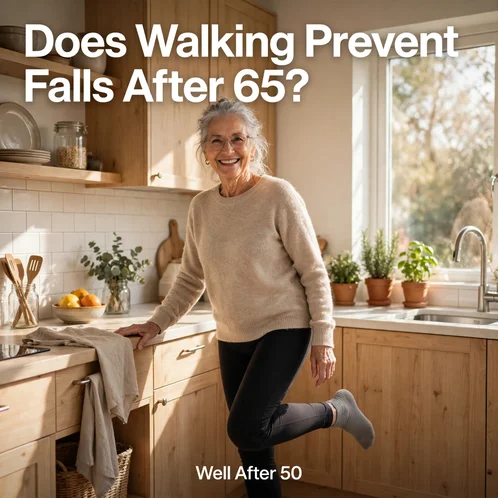
  • Does Walking Prevent Falls After 65? What Actually Cuts Falls by 25%

    Does Walking Prevent Falls After 65? What Actually Cuts Falls by 25%

    Does walking prevent falls after 65?

    Short answer: Walking alone doesn’t cut falls much. In one Australian trial of 386 inactive people 65 and older, a 48-week walking program didn’t lower falls in any way that mattered. What works is balance exercise. A big review of 108 trials found balance and everyday-movement exercise cut falls by about 24 percent, and about 34 percent when strength work was added.

    Does walking prevent falls after 65? Not on its own, it doesn’t. I wish somebody had sat me down and told me that plain years ago.

    Now don’t get me wrong, I walk every day and I’m not about to quit. It’s good for my heart and my blood pressure and my mood, and it gets me out the door. But walking doesn’t teach your body how to catch itself when your toe snags a rug, or how to stay steady when you spin around too quick in the kitchen. That takes a different kind of work, and the good news is it’s simple, it’s free and you can do it holding onto your own counter.

    So I went digging through what the research actually says. Here’s what I found and what I’m doing about it.

    The big study that surprised a lot of folks

    This September a big Cochrane review came out on tailored fall-prevention plans. That’s the kind where a professional checks all your risks and builds a plan just for you. It pulled together 110 studies and close to 49,000 older people living in their own homes.

    Here’s what caught me off guard. Those fancy personalized plans did no better than plain good fall-prevention advice, the kind you’d get in a leaflet. Matter of fact, compared with just getting the advice, people on the tailored plans probably had a few more falls, not fewer.

    That doesn’t mean fall prevention doesn’t work. It means the complicated stuff isn’t the magic answer. Dr. Cynthia Swarnalatha at the University of Exeter, one of the lead researchers, put it pretty simple: give people good advice and get them exercising. Those simpler things looked like they help the most.

    So what does work? Balance work

    It’s the boring-sounding answer, but it’s the one that holds up.

    Back in 2019, Professor Cathie Sherrington and her team in Sydney rounded up 108 exercise trials with more than 23,000 people, average age 76. Exercise overall cut the rate of falls by about 23 percent. Balance and functional exercise, the kind that challenges your balance on purpose and works the moves you do every day, cut falls by about 24 percent. That was high-certainty evidence, the strongest kind they’ve got.

    Put some strength work together with that balance work and the drop looked even bigger, around 34 percent fewer falls. Tai Chi helped too, about 19 percent fewer.

    And walking all by itself? The evidence was uncertain. Not proven to stop falls and not proven not to. In one Australian trial, 386 inactive people 65 and older followed a walking program for 48 weeks. They walked more, sure enough, but their falls didn’t go down in any way that mattered.

    Dr. Peter Attia, who wrote the bestseller Outlive, says he treats stability as just as important as cardio and strength. I reckon he’s onto something. You can have a strong heart and still go down hard if your balance is shot.

    So keep walking. Just don’t count on walking alone to keep you on your feet.

    If Tai Chi sounds like more your speed, an easy way to get started at home is Tai Chi Walking for Weight Loss. It’s a beginner 28-day plan with 10 minutes a day, it comes in large print, and it mixes slow Tai Chi moves into your walk, so you’re working your balance while you’re out there anyway. It’s a how-to book, not a study, so think of it as a friendly guide to the kind of moves the research backs.

    As an Amazon Associate I earn from qualifying purchases. It doesn’t cost you a penny more.

    The 10-minute routine your doctor might hand you

    Here’s a newer one I really liked. It’s called the eSTEPS trial, led by Nancy Latham and her team at Mass General Brigham, and it came out in JAMA Network Open this October. They followed 11,945 people 65 and older who were at risk of falling, across 22 regular doctor’s offices.

    Doctors in half the offices got a tool that helped them hand patients a simple home exercise plan that fit their balance level, plus handouts or an app to follow along. Those offices ended up with about 9 percent fewer falls showing up in patients’ medical records.

    Nine percent might not sound like a lot, but think about this. Only about 1 in 5 of those patients actually got the exercise plan. Imagine what could happen if more of us got it and stuck with it. It’s not some fringe idea either. The US Preventive Services Task Force tells doctors to recommend exercise to folks 65 and up who are at higher risk of falling. So if your doctor hasn’t brought it up, you bring it up.

    A lot of these home routines come from the Otago Exercise Programme, which was built in New Zealand. Done properly with a physio, about 30 minutes three times a week, it cut falls and fall injuries by about 35 percent, and folks over 80 got the most out of it.

    A starter routine for your kitchen counter

    Here’s a simple version you can start with at home. Stand at the kitchen counter so you’ve got something to grab.

    • Chair rise. Stand up from a sturdy chair and sit back down, 10 to 15 times. Use your hands only if you need to.
    • One-leg stand. Hold the counter, lift one foot, hold for 5 to 10 seconds, then switch. Build up over the weeks.
    • Heel-to-toe walk. Walk a straight line along the counter with your heel right in front of your toes, holding on at first.
    • Toe stands. Rise up on your toes, hold a second, then lower down slow, 10 to 15 times.

    Do it three times a week and push it a little each week. Hold a second longer, use one less finger on the counter, stand a little further from the wall. Give it at least 12 weeks and then keep right on going. The World Falls Guidelines say the same thing: balance and strength work that gets a little harder over time, and that you keep doing. This isn’t a 12-week fix, it’s a habit.

    If you want to see where your balance stands right now, try the 10-second one-leg test from Dr. Claudio Gil Araújo’s research. I wrote about it in The Floor Test That May Predict Longevity. And if you’re working on the strength side too, my post on getting back the muscle you lose after 50 is a good place to start.

    If you already feel unsteady or dizzy, or you’ve had a fall, talk to your doctor first and ask about seeing a physical therapist. Don’t try to push through pain or dizziness on your own.

    It’s not just exercise

    Two more things in the research are worth knowing.

    Your home. Occupational therapist Lindy Clemson and her team looked at 22 trials with 8,463 people in 2023. Fixing trip hazards like loose rugs, cluttered walkways, poor lighting and missing grab bars cut falls by about 26 percent overall, and about 38 percent in people at higher risk, like folks who’d already had a fall or just come home from the hospital. That 38 percent number was the strongest kind of evidence there is. It didn’t do much for people who weren’t at much risk to begin with, and just reading about it without fixing anything didn’t help much either. So go walk your house tonight and look at it like a stranger would.

    Your medicines. Some medicines are strongly tied to falls, especially certain antidepressants, antipsychotics and sleeping pills. That doesn’t mean stop taking them, and never stop a medicine on your own. It means ask your doctor or pharmacist for a medicine review, and speak up if you feel dizzy, sleepy or wobbly after starting something new.

    Getting your eyes checked matters for plenty of reasons, but in the trials, just fixing vision didn’t clearly cut falls on its own. Still get them checked.

    My take from the porch

    I’m still walking every day, and I hope you are too.

    But I’m adding the balance work three times a week, ten minutes at my kitchen counter. The way I see it, walking keeps you moving and balance work keeps you upright. Men and women both, it doesn’t matter, our balance slips as we get older if we don’t use it, and it comes back when we do.

    Start with the good advice like the researchers said, clear out the trip hazards, and then do the exercise. That’s the part that can cut falls by about a quarter, and it’s never too late to start.

    This is general information only, not medical advice, and it’s no substitute for your own doctor who knows your history. If you’ve fallen, feel unsteady or have a condition that affects your balance, talk to your doctor before starting a new exercise routine.

    — Tom, Well After 50

    Sources

    Join the Conversation

  • Protein Coffee After 60: Make Your Morning Cup Work for Your Muscles

    Protein Coffee After 60: Make Your Morning Cup Work for Your Muscles

    Does protein coffee help you keep muscle after 60?

    Short answer: Yes, protein coffee can help you keep muscle after 60 – if it puts a real 25 to 30 grams of protein into your breakfast, and you pair it with strength work. The coffee alone does not do it. The protein and the lifting do.

    I learned that the hard way. I used to think a cup of coffee in the morning was enough to get me going. It woke me up, sure. But it did not do a thing for my muscles – and after 60, muscle is what starts to slip away if you are not paying attention.

    Not all at once. Just a little at a time. A jar that is harder to open. Stairs that feel steeper than they used to. Getting up from a low chair and needing a hand. That is muscle loss, and it happens to most of us.

    “It does not mean you are done. It means you need more protein than you used to, and you need to use your muscles on purpose.”

    Breakfast is where most of us come up short

    For a lot of us, breakfast is the weakest meal of the day for protein. Toast. Cereal. Coffee, black. Maybe an egg if you are feeling good about yourself. That is maybe 10 grams if you are lucky – and dinner ends up carrying the whole day.

    That is why protein coffee caught my eye. Not because it is magic. Because it is already in my hand in the morning. A full serving of protein in that cup, and I have won breakfast without cooking a big meal I do not want.

    Read the label like this: the numbers that matter

    Forget the fancy packaging. Turn the bottle or the tub around and check four numbers. These targets are the fact-checked version – what the research actually supports for people our age:

    CheckTargetWhy
    Protein25-30 g per meal; look for 20-30 g in the servingOlder muscle needs a bigger per-meal signal. Ten grams is not enough on its own; fifteen helps, but you will still need eggs or yogurt alongside it to reach 25-30 g.
    Daily protein1.0-1.2 g per kg of body weightThe PROT-AGE and ESPEN guidance for healthy adults over 65. For a 70 kg person, that is 70-84 g a day, spread across meals. The 2025-2030 Dietary Guidelines put the general adult range at 1.2-1.6 g/kg.
    Sugar0-2 gA lot of sweet coffee drinks are dessert in a bottle. If it tastes like a milkshake, check the sugar. You do not need that in the morning.
    CaffeineAbout 95 mg – one cup of coffeeThat is plenty for most of us. Treat 175-225 mg in one can or bottle as a caution: that is roughly two cups at once, and it can cost you sleep and push on blood pressure.

    One more thing: if it says protein coffee on the front, it should actually be coffee with protein in it. Not a yogurt drink. Not a flavored milk. Real coffee, with protein added.

    Please read this part – it matters

    This article is general information only. It is not medical advice, and it is not a substitute for your own clinician who knows your history.

    Kidney disease is the exception: if you have kidney disease, or you have ever been told to limit protein, do not raise your protein intake without talking to your clinician first. The same goes for raising caffeine if you watch your blood pressure or your sleep, and before you start strength training if you have not been active.

    When in doubt, ask first. That is not weakness – that is how you stay in the game.

    “If it tastes like a milkshake, check the sugar. You do not need dessert for breakfast.”

    How I make it: simple on purpose

    I keep it simple, because if it is complicated, I will not do it. Neither will you, if we are being honest.

    1. Make your regular coffee, the way you like it. Hot or iced – it does not matter.
    2. Add the protein. Stir in a scoop of unflavored or coffee-flavored protein powder, or pour in a ready protein shake instead of milk.
    3. Mix it well so it does not clump. A good shake or a thorough stir does it.
    4. Drink it in the morning. If that cup already carries 25-30 g, you have done the hard part. Add a piece of fruit or a handful of nuts if you want more.
    Protein coffee in a glass beside coffee beans
    Hot or iced, it is the same idea: your regular coffee, with protein mixed in well.

    Do not drink it late in the day if caffeine keeps you up. Morning is the time for this one.

    The part the coffee cannot do

    Here is the honest part, and I do not want to skip it. No drink builds muscle on its own. Not this one, not any of them. Muscle comes from using your muscles.

    Two days a week of strength work is the target most health groups give – and before you start, check with your clinician if you have not been active. It does not mean a gym membership or heavy weights:

    • Resistance bands at home, a few simple moves done well
    • Bodyweight work – getting up and down from a chair on purpose counts
    • Light dumbbells, and grip work to keep your hands strong

    “If it is complicated, I will not do it. So I do not make it complicated – in the kitchen, or in the workout.”

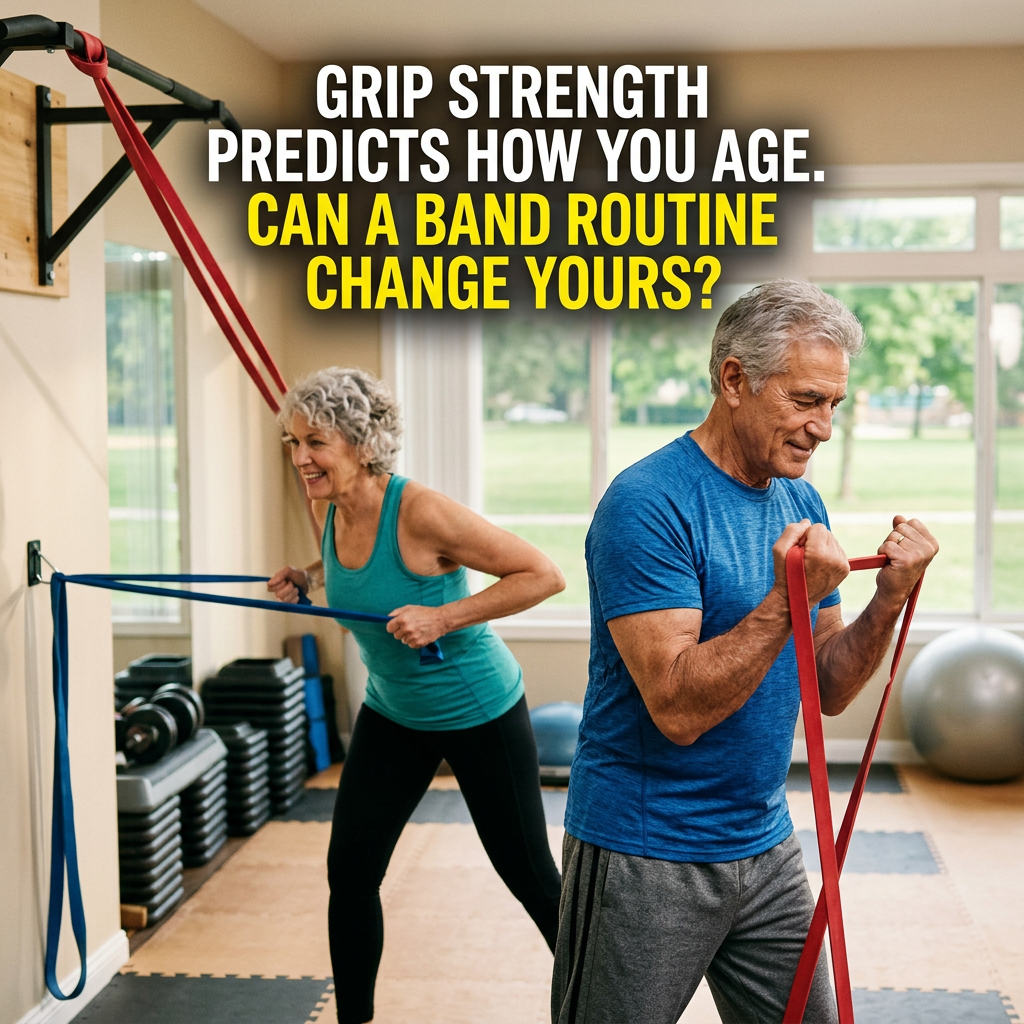
    Older man and woman exercising with resistance bands
    Strength work at home counts. Bands, bodyweight, light weights – it all tells your body to keep the muscle.

    “Protein is the material. Strength work is the signal that tells your body to use it. You need both.”

    If you only drink the coffee and never lift anything, you are just drinking expensive coffee. But the cup plus two honest sessions a week? That is a routine a regular person can actually keep – and keeping it is the whole game at our age.

    Older man drinking coffee from a mug
    Staying strong after 60 is not about extremes. It is about showing up, twice a week, on purpose.

    Start where you are

    You do not need to overhaul your life this week. Start with breakfast – one cup, done right. Add one short strength session, then a second. Small, kept promises beat big plans that last four days. I have tried both. I know which one is still standing a month later.

    That is the frame for everything on the next page, too: the people I learn from are not selling miracles. They are showing what steady work looks like after 60 – and in one case, after 70.

    People who helped me think about this

    I do not do this alone. I read people who know more about this than I do, and I like to pass them on:

    Bryan Krahn – training smarter after 50

    Bryan Krahn, C.S.C.S., is a veteran strength coach and the creator of Men’s Health Max Muscle at 50. He writes and coaches for regular people in their 50s and beyond, not just lifelong lifters – train hard, but train in a way your joints can keep doing. Start at bryankrahn.com.

    Shelly Stettner – proof it is not too late to start

    Shelly Stettner first picked up a barbell at 65. At the 2022 IPF World Masters Championships she won her Masters 4 (70+) class and set world records – a squat of 115 kg (about 254 lb) and a deadlift of 142.5 kg (about 314 lb). If you think you started too late, read her story first. Follow her at instagram.com/shelly_ann_28 and hear her interview at silveredgefitness.com/episode74.

    Dr. Lisa Mosconi – food, and the brain it feeds

    Dr. Lisa Mosconi is a neuroscientist at Weill Cornell Medicine, where she directs the Alzheimer’s Prevention Program. She is the author of Brain Food, The XX Brain, and The Menopause Brain – the clearest writing I know on why what we eat matters for more than our waistline. Find her at lisamosconi.com.

    “Strength, food, and staying sharp are not three separate projects after 60. They are the same project.”

    The bottom line

    Protein coffee works for me, not because it is trendy, but because it is practical: breakfast and coffee in one cup, and a real start on the protein I need, without a big fuss. Check the numbers – 25 to 30 grams of protein, low sugar, about one cup’s worth of caffeine – and then go use your muscles a couple of times a week. That is it. No magic. Just a morning cup that actually works for you.

    FROM MY BOOK

    A Practical Guide to Getting Older Without Giving Up on Yourself

    If this article helped, the book goes deeper on all of it – strength and staying active, food and protein, skin and appearance, staying engaged, and making the most of the years ahead. No hype. Just what has actually worked, written for people like us.

    Get the book on Amazon

    You can also find it – along with my other books, and the coffee and tea I actually drink – at Tom’s Coffee, Tea and Books Shop, right here: wellafter50.page/books/

    One cup, done right, is a good place to start

    I am not going to tell you a cup of coffee changes your life. It does not. What changes your life after 60 is a handful of small things you actually do, most days, for a long time – eating enough protein, using your muscles, sleeping, staying curious, staying connected.

    Protein coffee just happens to be the easiest of those to start tomorrow morning. It is already in your hand. Make it count: check the label, hit your 25 to 30 grams, keep the sugar down and the caffeine sensible, and talk to your clinician if your kidneys, your blood pressure, or your history say you should.

    Then go do something with the strength you are keeping. Open the jar yourself. Take the stairs. Get up out of that low chair without a hand. That is what this is for – not a number on a tub, but a life you can keep living on your own terms.

    “No magic. Just a morning cup that actually works for you – and a body you keep using, on purpose.”

    Thank you for reading. If it helped, pass it to one friend still starting the day on black coffee and good intentions. We are all figuring this out together.

    – Thomas Green, Well After 50

    Affiliate disclosure: Well After 50 may earn from qualifying purchases made through affiliate links, at no extra cost to you.

    About Tom Green

    Tom Green writes Well After 50. He was born in Pell City, Alabama, in 1962, and he’s a country boy and a true Southerner through and through. He’s just a regular, laid-back 64-year-old who keeps things simple. He shares what he learns about skincare, fitness and getting older, and what’s working for him. He’s also the author of A Practical Guide to Getting Older Without Giving Up on Yourself. Tom isn’t a doctor. He reads up on the research and passes along what’s useful, plain and simple.

  • AI Tools for Seniors Living Alone: Free and Cheap Ways to Stay Independent at Home

    AI Tools for Seniors Living Alone: Free and Cheap Ways to Stay Independent at Home

    What AI tools help seniors who live alone stay independent?

    Short answer: Most of the tech that helps you keep living on your own is free, already on your phone, or cheaper than you’d think. Start with Medical ID on your phone, which is free and takes 5 minutes, so an EMT can see your medicines in an emergency. Then look at Alexa+, free with Amazon Prime, and Be My Eyes, a free app that reads things for you.

    You don’t need a robot or a big budget. Most of the tech that helps folks keep living in their own homes is free, already on your phone, or cheaper than you’d think.

    Living on your own after 50 mostly comes down to a handful of worries. Falling with nobody around. Missing a pill, or taking it twice. A scam call that sounds just like family. And the house getting awful quiet some evenings.

    The good news is that AI got a lot better at those exact jobs this year, and plenty of folks our age have noticed. AARP’s latest tech survey of more than 3,000 people found that AI use among adults 50 and older jumped from 18% in 2024 to 30% in 2025.

    If you want to learn to talk with a chatbot like ChatGPT, I covered that in Best Free AI for Seniors. This one’s different. These are the tools that help you stay safe and independent at home, starting with the free ones. For each one I’ll tell you what it does, what it costs and where it falls short. Fellas and ladies both, there’s something here for you.

    The quick list

    • Medical ID on your phone: free, takes 5 minutes
    • The new Alexa+: free with Amazon Prime, or about $140 to $200 for an Echo Show 8
    • Be My Eyes, for reading labels and mail: free
    • A family safe word against AI scam calls: free
    • Medicine reminders: free, or a smart dispenser from about $40 a month
    • Fall detection on a watch: Apple Watch SE 3 from $249
    • An AI companion: ElliQ, free in some states, otherwise a lease
    • Borrowing gadgets before you buy: free through your state

    1. Set up Medical ID on your phone (free, 5 minutes)

    I’m starting with this one because it costs nothing and most folks have never touched it. If you’re ever found on the floor or in a wreck, an EMT can pull up your medicines, allergies and emergency contacts right from your lock screen, no passcode needed.

    • iPhone: open the Health app, tap your picture, then Medical ID. Fill it in and turn on “Show When Locked.”
    • Android: open Settings, then look for “Safety & emergency” and “Medical information.” The menu names vary a little by phone brand.

    While you’re in there, add at least two emergency contacts. Everything else in this article works better once that’s done.

    2. The new Alexa+ (free with Prime)

    This is the big change this year. Amazon rebuilt Alexa with the same kind of AI that runs the chatbots, and since February it’s been free for every Prime member in the U.S. Without Prime, it’s $19.99 a month, which isn’t worth it when Prime costs less.

    The difference is you can talk to it like a person now. Instead of memorizing exact commands, you can say something like “remind me to take my blood pressure pill after breakfast every day” or “call a ride to my doctor’s appointment Thursday.” If you already have an Echo, just say “Alexa, upgrade to Alexa+.”

    If you’d like a device to go with it, the Amazon Echo Show 8 is the one senior tech guides keep coming back to. It’s a speaker with a screen, so you can see faces on video calls from across the room and read your reminders in big letters. With your OK, family can “Drop In” for a video check-in without you having to answer anything. The regular price runs about $180 to $200, but it goes on sale a lot, and deal sites have caught it around $140. With Black Friday coming, I’d hold off and wait for a sale.

    Where it falls short: It’s new, and TechRadar reports some early users have had slow answers, broken routines and wrong information. For now you can switch back to the old Alexa if it gives you fits. It’s also not an emergency device. Amazon sells a paid add-on called Emergency Assist that connects you to a live agent, but nothing works if the power or internet goes out, so keep your phone handy too.

    3. Be My Eyes: a free app that reads things for you

    You point your phone’s camera at something, like a medicine label, the tiny print on a bill, the microwave display or a thermostat. Then either the app’s AI tells you what it says, or a real volunteer comes on a video call and helps you out.

    It’s built for people who are blind or have low vision, but anybody whose eyes aren’t what they used to be can use it. It’s free on iPhone and Android, and there are millions of volunteers signed up around the world, so somebody’s usually awake to help no matter what time it is.

    Where it falls short: AI can get things wrong. For something important, like a medication dose, double-check with your pharmacist. And don’t point it at your bank statements unless you’re comfortable with a stranger seeing them.

    4. A family safe word: free protection from AI scam calls

    Now for the ugly side of AI. Scammers can copy a voice from a few seconds of video posted online, then call you sounding just like your grandson, your niece or your brother, crying and begging for money.

    It’s working, too. The Federal Trade Commission reports that adults 60 and older reported more than $3 billion in fraud losses in 2025, up from about $600 million in 2020.

    The best protection doesn’t cost a dime. The FBI recommends a family safe word, something only y’all would know. No word, no money. Hang up and call that person back on the number you already have. (I also showed how a free AI helper can sniff out scam texts in Best Free AI for Seniors.)

    And with Medicare open enrollment running until December 7, watch out for fake “Medicare” calls. Medicare isn’t going to call you out of the blue asking for your Medicare number. If you’re not sure, hang up and call 1-800-MEDICARE (1-800-633-4227) yourself.

    5. Medicine reminders that won’t let you forget

    Before you spend money on a fancy pill machine, try the free stuff. Your phone or Alexa can remind you at the same time every day. Many pharmacies will also pack your pills in little sealed packets labeled by day and time, so you can see at a glance whether you took them. Just ask at the counter.

    If you take five or more medicines a day, a smart dispenser like Hero might be worth a look. You pour each pill type in once, and at pill time it chimes and gives you just that dose. It stays locked the rest of the time so you can’t double up by accident, and it can text family if you miss one. On Hero’s own site it runs about $40 to $60 a month, depending on the plan. If you’re on Medicare and managing an ongoing health condition, ask about their Medicare remote care program. It can bring the cost way down, sometimes to nothing, though co-pays may apply.

    Where it falls short: You rent it, you don’t own it, and you’ll likely want a family member to help you set it up the first time. For one or two pills a day, a $5 pill box does the job.

    6. A watch that calls for help after a fall (from $249)

    Falls are the thing most of us worry about when we think about living alone. The Apple Watch SE 3 is Apple’s cheapest current watch, and it’s the one senior tech guides keep ranking first for fall detection.

    The part I like best: if you’re 55 or older, Apple turns fall detection on by itself once you put in your age. If it feels a hard fall and you don’t move for about a minute, it calls for help on its own and sends your location to your emergency contacts. And it just looks like a regular watch, so folks actually wear it instead of leaving it in a drawer.

    Prices start at $249. Get the cellular version, which costs more, so it works even when your phone is in the other room.

    Where it falls short: Apple says plainly that the watch can’t detect every fall. A slow slide out of a chair might not set it off. It needs an iPhone, and you’ll have to charge it every day. A dead watch can’t help anybody.

    7. An AI companion that checks on you (free in some states)

    ElliQ is a little tabletop robot that looks something like a desk lamp with a screen. Unlike Alexa, it starts the conversation. It says good morning, asks how you slept, reminds you to drink water or take a walk, plays games and helps you video call family.

    Now, the budget part most folks miss. Some states give it to qualifying older adults for free through their aging offices. New York just renewed its program in October 2026, and as of this past summer, Washington, Florida, Nevada, Wisconsin and New Jersey had programs too. Call your local Office for the Aging and ask. If you don’t qualify, it’s a lease: $249 to start, then $39 to $59 a month depending on how long you sign up for.

    Where it falls short: New York reports that most users feel less lonely, but those numbers come from users rating themselves, with no comparison group. ElliQ is not an emergency device, so keep a phone or alert button close by. No machine takes the place of a real friend, but it might help fill the quiet hours.

    8. Borrow it before you buy it (free)

    Hardly anybody knows about this one. Every state has an assistive technology program, paid for by a federal law called the Assistive Technology Act. Many of them will let you try out gadgets, borrow them for a few weeks, or get gently used equipment for little or nothing.

    That means you can test a magnifier, an easy phone or a medical alert before you spend a penny. To find yours, search for your state’s name plus “assistive technology program,” or start at the national directory at AT3Center.net.

    AI for Seniors: A Friendly Beginner’s Guide to ChatGPT, Smart Tools, and Everyday Tasks by Wes Coburn https://link.amazon/B03Q1vQSR

    Bonus: help paying for your phone or internet

    None of this works without a phone or internet. If you get SSI, Medicaid, SNAP, federal housing help or a veterans pension, you may qualify for the federal Lifeline program, which takes money off your monthly phone or internet bill. The bigger ACP internet discount ended in 2024, but Lifeline is still going. Apply through the official site, not some website promising a “free iPhone.”

    Your weekend checklist ($0)

    Print this out or stick it on the fridge. You can do every one of these by Sunday without spending a dime.

    1. Fill in Medical ID on your phone and add two emergency contacts.
    2. Pick a family safe word and share it with the people you love.
    3. Set one daily reminder, for pills, water or a walk.
    4. Download Be My Eyes and try it on a can label.
    5. If you have Prime and an Echo, say “Alexa, upgrade to Alexa+.”
    6. Look up your state’s assistive technology program before buying anything.

    Then, if you’ve got some money set aside, a fall-detection watch or an Echo Show 8 on sale is where I’d look next. Like the old saying goes, an ounce of prevention is worth a pound of cure.

    Other Voices Worth Following

    • Laurie Orlov of Aging and Health Technology Watch has spent years tracking the tech built for older adults. Read her if you want the big picture without the sales pitch.
    • Kim Komando, the longtime tech radio host and columnist, has written about how scammers use AI to copy voices. Her plain-talk tips are easy to follow.
    • Joseph Coughlin, founder of the MIT AgeLab and author of The Longevity Economy, has been asking for years why technology isn’t built better for people our age. He’s worth a listen.

    Common Questions

    What are the best free AI tools for seniors living alone?

    Medical ID on your phone, the voice assistant already on your phone, Alexa+ if you have Prime, the Be My Eyes app for reading labels and mail, and your phone’s reminder app. A family safe word isn’t an app, but it’s free and one of the best defenses against AI voice scams.

    Is Alexa+ free?

    Yes, if you have Amazon Prime in the U.S. Without Prime it costs $19.99 a month, and there’s a limited free text version on Alexa.com.

    What technology helps seniors living alone?

    Fall detection, like the Apple Watch, which turns it on automatically at 55 and up. A voice assistant or smart display for hands-free calls and reminders. And daily check-ins, like ElliQ or a simple phone call routine with family.

    Can seniors get ElliQ for free?

    In some states, yes. New York, Washington, Florida, Nevada, Wisconsin and New Jersey have offered it free to qualifying older adults through aging programs. Call your local Office for the Aging to ask.

    How do I protect myself from AI voice scams?

    Set up a family safe word, never send money on an urgent call, and hang up and call the person back on a number you already know.

    A Final Thought

    Staying independent isn’t about having the fanciest gadget. It’s about having a little help in the right spots, so you can keep living in your own home, on your own terms. I reckon most of us can start with what’s already in our pocket.

    Your turn: Which of these would help you most, or is there one you already use? Tell me in the comments. Somebody reading might need your tip.

    — Tom

    Keep Reading

    Find more on my Tech for Independent Living After 50 page.

    About the Author

    Tom Green writes Well After 50. He was born in Pell City, Alabama, in 1962, and he’s a country boy and a true Southerner through and through. At 64, he shares practical research and everyday experience about staying active, living well and making the most of life after 50.

    Prices and programs change often. Figures here were checked in early November 2026, so check the seller or program before you buy or apply. Tom isn’t paid by any company mentioned here. This article is general information, not medical, legal or financial advice.

  • Grip Strength Predicts How You Age. Can a Band Routine Change Yours?

    Grip Strength Predicts How You Age. Can a Band Routine Change Yours?

    Can a resistance band routine build grip strength as you age?

    Short answer: Yes, a simple band routine can build grip strength. In a 2026 study, 82 women who averaged 75 years old did chair-based resistance band exercises for 12 weeks. The ones who trained three times a week built a lot more grip strength than the ones who trained twice, though they also did 50% more exercise each week.

    A surprising study shows what resistance bands can do for grip strength—and how a simple routine could help you stay stronger.

    Now here’s something worth knowing if you’ve got a resistance band stuck in a drawer somewhere, or you’ve been thinking about picking one up.

    Researchers worked with a group of women who averaged 75 years old. The ones who used resistance bands three times a week built a whole lot more grip strength than the ones who did it twice.

    And I don’t mean just a little bit more.

    Grip strength is one of those plain, simple things that says a good bit about how we’re aging. So let’s sit a spell and look at what they found, and what it might mean for the rest of us.

    The Study, in Plain English

    Published in 2026 in the European Review of Aging and Physical Activity, the study involved older women at geriatric centers in Serbia. Eighty-two women completed the 12-week program of chair-based resistance-band exercises.

    Both groups followed the same basic routine, targeting the hips, knees, shoulders, and trunk. The difference? One group exercised twice a week. The other exercised three times.

    After 12 weeks, both groups improved in several areas, including chair stands, arm curls, endurance, and flexibility. Both also reduced total and LDL cholesterol.

    But two results really stood out:

    • Grip strength increased 28% in the three-day group, compared with 7% in the twice-weekly group.
    • HDL (good) cholesterol increased 9% in the three-day group, compared with 1% in the twice-weekly group.

    Fasting glucose and triglycerides didn’t change much. Still, not bad for a chair and a few stretchy bands!

    One Important Thing to Remember

    Now before y’all go adding another workout day, there’s one thing worth knowing.

    The three-day group also performed 50% more exercise each week. That means researchers couldn’t determine whether the greater improvements came from exercising more frequently or simply doing more total work.

    And because there wasn’t a no-exercise comparison group, this study alone can’t tell us how much improvement was directly caused by the program.

    Still, the results are encouraging. Twice a week is a good place to start. If you’re comfortable adding a third session, it may offer additional benefits.

    Why Grip Strength Deserves Your Attention

    Think about how often you use your hands throughout the day: opening jars, carrying groceries, working in the garden, pushing yourself out of a chair, or grabbing something to steady yourself.

    We don’t always appreciate how important these everyday movements are until they become difficult. Researchers use grip strength as a quick, inexpensive way to assess aspects of overall muscle and nerve health.

    The landmark PURE study, published in The Lancet in 2015, followed approximately 140,000 adults across 17 countries. Researchers found that every 5-kilogram decrease in grip strength was associated with a 16% higher risk of death from any cause and a 17% higher risk of cardiovascular death.

    Those numbers will make you sit up, won’t they? But remember, grip strength is a health marker, not a crystal ball. A strong grip won’t promise you a longer life. What counts is keeping your muscles strong enough to stay active and keep doing for yourself.

    A Simple Resistance-Band Routine

    Want to give resistance bands a try? You don’t need anything complicated. Here’s a practical routine inspired by the study:

    1. Choose two or three nonconsecutive days a week. Monday, Wednesday, and Friday work nicely if you’re ready for three sessions.
    2. Warm up for 10 minutes. Try gentle marching in place, shoulder rolls, or easy movements.
    3. Aim for two sets of 12–15 repetitions using light-to-moderate resistance, with about a minute of rest between sets.
    4. Work your whole body. Try chair stands, seated rows, chest presses, biceps curls, band pull-aparts, hip hinges, triceps extensions, and side steps.
    5. Start with a light band. Increase resistance gradually as movements become easier.
    6. Finish with gentle stretching.

    You don’t have to master everything on the first day. Start with what feels comfortable, learn the movements, and build from there.

    A quick safety reminder: Inspect your bands for wear before using them. Stop if you experience sharp pain or dizziness. If you have arthritis, carpal tunnel syndrome, recent surgery, or balance difficulties, check with your healthcare professional before beginning.

    The original study used a supervised chair-based program, so this home routine is an adaptation rather than an exact copy.

    What You Need

    One basic set of resistance bands is enough to get started. Choose a set with several resistance levels so you can gradually increase the challenge. If flat bands are uncomfortable to grip, bands with handles may be easier to use.

    If you enjoy following a book, another option is Resistance Band Workout for Seniors by Fit Forever. It offers low-impact exercise ideas designed for older adults, with options for different experience levels.

    Resistance Band Workout for Seniors book cover

    Take a Look at Resistance Band Workout for Seniors

    Track Your Progress With Well After 50

    One of the most encouraging things about exercise is looking back and realizing how far you’ve come. Maybe you’re completing a few more repetitions. Maybe that light resistance band doesn’t feel quite so challenging anymore.

    That’s exactly the kind of progress our upcoming Well After 50 Strength & Fitness app is being developed to help you track. The app is intended to help you record exercises, sets, and repetitions so you can follow your progress over time.

    It’s not available for purchase yet, but you can explore what’s coming on our Well After 50 Apps & Store page.

    A Final Thought

    Here’s what I like most about this one. These women weren’t young athletes. They were regular folks averaging 75 years old, and they got measurably stronger just by showing up and doing the work.

    That’s good news at any age. You don’t have to jump in at three workouts a week or push past what feels right.

    Two sessions a week is a fine place to start. And if you add a third down the road, I reckon you might surprise yourself. Sometimes getting stronger starts with something as simple as picking up a resistance band.

    Other Voices Worth Following

    SilverSneakers — Offers fitness classes focused on strength, endurance, and fall prevention, including chair-based and resistance-tubing options.

    Kris Herbert, featured in Tom’s Guide — Shares a 15-minute resistance-band routine designed for adults over 70.

    Chris Tiley of Never Too Old To Lift — Offers practical advice and resistance-band exercises for older adults who want to build strength at home.

    Research Sources

    Purchases made through affiliate links on this page may earn Well After 50 a commission at no additional cost to you.

    Keep Reading

    Your Turn

    Have you tried resistance bands, or would you give them a try? Do you prefer working out at home or at the gym? Tell me in the comments—I’d love to hear what works for you.

    About the Author

    Tom Green writes Well After 50. He was born in Pell City, Alabama, in 1962, and he’s a country boy and a true Southerner through and through. At 64, he shares practical research and everyday experiences about staying active, living well, and making the most of life after 50. He believes it’s never too late to keep learning and getting stronger.

    Tom is not a doctor or medical professional. This article is for general education, not personal medical advice. Check with your healthcare professional before starting a new exercise program, especially if you have an injury or health condition.

    I’ve also mapped out some great tools on my new Tech for Independent Living After 50 page.