Tag: Korean skincare

  • Budget-Friendly Skincare After 50: TJ Maxx, Ross & Marshalls

    Budget-Friendly Skincare After 50: TJ Maxx, Ross & Marshalls

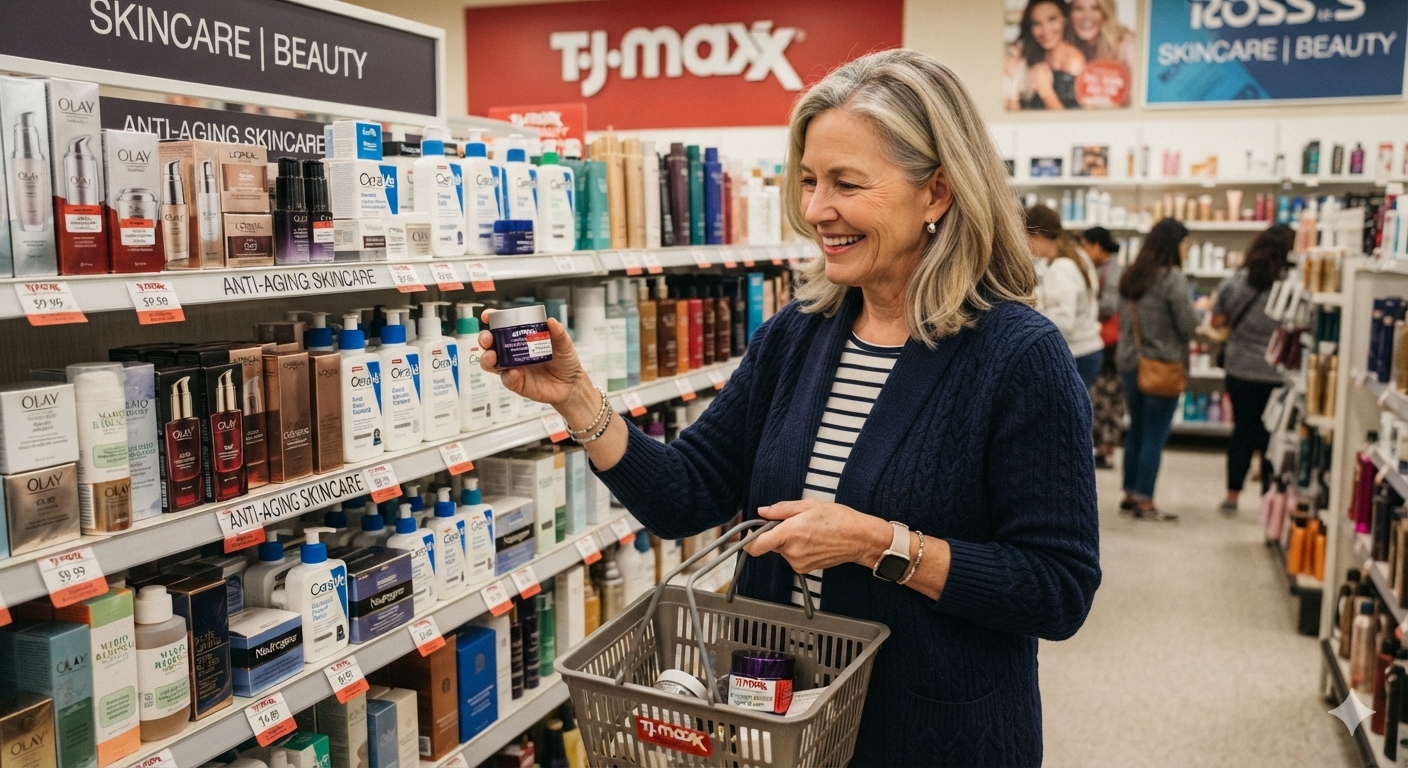
    If you like finding good skincare without paying full beauty-store prices, there are three stores worth checking: TJ Maxx, Ross and Marshalls.

    I was at TJ Maxx recently and was surprised by how much skincare was on the shelves for fall. There were plenty of products I hadn’t seen before, including a lot of Korean skincare. That made me wonder: Can you actually find good skincare for less at these stores?

    Yes—but bargain shopping for skincare takes a little more attention than simply grabbing the prettiest bottle.

    Why TJ Maxx, Ross and Marshalls Are Worth Checking

    Inventory changes constantly at discount retailers, which is part of what makes shopping there interesting. You may find cleansers, moisturizers, serums, masks, eye products and other skincare at prices well below the comparison prices shown by the retailer.

    TJ Maxx currently lists a large selection of skincare, including products made in Korea. Its online selection has included rice serums, ginseng cleansers, ceramide cleansers, hydrogel masks, vitamin C products and other skincare at relatively low prices. Marshalls also currently lists Korean skincare such as hyaluronic acid essence, toner pads, peptide eye patches and snail mucin serum.

    That doesn’t mean every bargain is a great bargain. The product still matters more than the price.

    Korean Skincare Is One of the Interesting Finds

    One of the things that caught my attention was the amount of Korean skincare showing up on these shelves.

    Korean skincare often puts a big emphasis on hydration, gentle cleansing, skin-barrier support and lightweight layers. You may see ingredients such as hyaluronic acid, ceramides, niacinamide, centella asiatica, rice extracts, peptides and snail mucin.

    For many people 50+, that focus on hydration can be appealing because skin often becomes drier and more easily irritated with age.

    But don’t buy a product just because the words Korean skincare are printed on the package. Read the ingredient list and decide whether you actually need it.

    What I Would Look For After 50

    1. A gentle hydrating cleanser

    If your skin feels tight after washing, a gentler cleanser may make more sense than a harsh, squeaky-clean formula. Look for moisturizing ingredients such as glycerin and consider a cleanser designed for dry or sensitive skin if that describes you.

    2. A good moisturizer

    A moisturizer is one of the places where you don’t necessarily need to spend a fortune. Ingredients such as glycerin, ceramides, hyaluronic acid and squalane are worth recognizing when you read labels.

    3. A simple hydrating serum

    You don’t need five serums sitting on your bathroom counter. A simple hydrating serum can be enough if dryness is your main concern.

    4. Niacinamide

    Niacinamide is another ingredient worth knowing. It is used in many skincare formulas and can be found in affordable products. As with any active ingredient, more isn’t automatically better.

    5. Sunscreen—but check the date

    This is where I would be especially careful with bargain shopping. Sunscreen is regulated as a drug in the United States, unlike ordinary cosmetics, and sunscreen products are required to carry expiration dating. Don’t buy expired sunscreen just because the price looks good.

    The Expiration-Date Warning You Shouldn’t Ignore

    Here’s something many shoppers don’t realize: ordinary cosmetics are not required by U.S. law to have an expiration date printed on the package. The FDA explains that cosmetic shelf life depends on the product, how it is used and how it is stored.

    That makes it especially important to inspect bargain-store skincare before you buy it.

    • Look for an expiration date when one is provided.
    • Check that the seal is intact.
    • Don’t buy a leaking or damaged package.
    • Look for unusual changes in color or texture.
    • Smell the product only if it can be safely checked without opening a sealed package.
    • Be especially careful with products that have been exposed to heat or moisture.

    The FDA notes that cosmetics can change in color, texture and smell as they deteriorate, and heat and moisture can make problems worse.

    Be Extra Careful With Eye Products

    I’m more cautious when bargain shopping for anything that goes around the eyes.

    Eye-area cosmetics can have shorter useful lives because applicators can repeatedly introduce microorganisms. The FDA specifically warns that older eye cosmetics can pose infection risks.

    If an eye product looks old, damaged or questionable, I would leave it on the shelf.

    Don’t Let a $7 Price Tag Talk You Into Buying Everything

    This is probably the easiest mistake to make in a discount beauty aisle.

    You see a $7 serum. Then an $8 mask. Then a $6 toner. Suddenly you’ve spent $30 on products you never planned to buy.

    Instead, ask yourself one question:

    What does my skin actually need?

    If your skin is dry, start with a gentle cleanser and moisturizer. If your basic routine is already working, maybe add one serum. You don’t need a 10-step routine because the products are inexpensive.

    Read the Back Before You Fall in Love With the Front

    Beautiful packaging can be tempting, especially when the price is low. But the front of the bottle doesn’t tell you everything you need to know.

    Check the ingredient list, directions, warnings, skin-type information and size of the container. And don’t assume words such as “natural” or “hypoallergenic” automatically mean a product is safer or better for you. The FDA recommends reading the complete label.

    TJ Maxx, Ross or Marshalls?

    I wouldn’t declare one store the winner.

    The inventory changes, so one visit may be completely different from the next. You might find the best moisturizer at Marshalls one week and a great Korean cleanser at TJ Maxx the next. Ross can surprise you, too.

    Shop the product—not the store.

    My 50+ Bargain-Skincare Strategy

    1. Start with what your skin actually needs.
    2. Look at ingredients instead of just the packaging.
    3. Check seals and packaging for damage.
    4. Check expiration dates when applicable.
    5. For sunscreen, always check the expiration date.
    6. Don’t assume a “compare at” price means the product is automatically a bargain.
    7. Buy one or two products and see how your skin responds before building a whole new routine.

    The Bottom Line

    TJ Maxx, Ross and Marshalls can be worth exploring if you’re looking for budget-friendly skincare after 50.

    The growing selection of Korean skincare makes these stores even more interesting. But bargain shopping still requires a little homework.

    Don’t assume expensive means better. Don’t assume cheap means bad. And don’t assume a beautiful package means the product is right for your skin.

    Read the ingredients. Check the packaging. Watch the dates. And buy for your skin—not simply because the price tag is tempting.

    For another perspective on affordable skincare and beauty choices for mature skin, Angie of Hot & Flashy’s guide to budget-friendly anti-aging skincare compares product options and routines.

    Common Questions

    Is TJ Maxx a good place to buy skincare?

    It can be. TJ Maxx currently carries a wide range of skincare, including Korean products. Inventory changes frequently, so inspect each product before buying.

    Is Korean skincare good for people 50+?

    It can be. Many Korean skincare products emphasize hydration and gentle routines, but the best choice depends on your skin and the ingredients in the individual product.

    Do skincare products at TJ Maxx expire?

    Some products have expiration dates and ordinary cosmetics are not required by U.S. law to display one. That is why it is important to inspect packaging, condition and dates when available.

    Should I buy sunscreen at a discount store?

    You can, but check the expiration date carefully. Sunscreen is regulated differently from ordinary cosmetics and should not be used after its expiration date.

    What’s the best skincare bargain after 50?

    There isn’t one product that is best for everyone. A gentle cleanser, moisturizer and daily sunscreen are a sensible starting point for many people, with other products added according to individual needs.

    Keep Reading

    Sources

    This article is for general information and isn’t a substitute for professional medical or dermatological advice. If a skincare product causes persistent irritation, burning, swelling or another concerning reaction, stop using it and seek appropriate medical advice.

    About the Author

    Tom Green writes Well After 50. He’s just a regular, laid-back 64-year-old who keeps things simple. He shares what he learns about skincare, fitness and getting older, and what’s working for him. He’s also the author of A Practical Guide to Getting Older Without Giving Up on Yourself.

    Tom isn’t a doctor. He reads up on the research and passes along what’s useful, plain and simple.

    I’ve also mapped out some great tools on my new Tech for Independent Living After 50 page.
  • What Do Koreans Use Instead of Retinol?

    What Do Koreans Use Instead of Retinol?

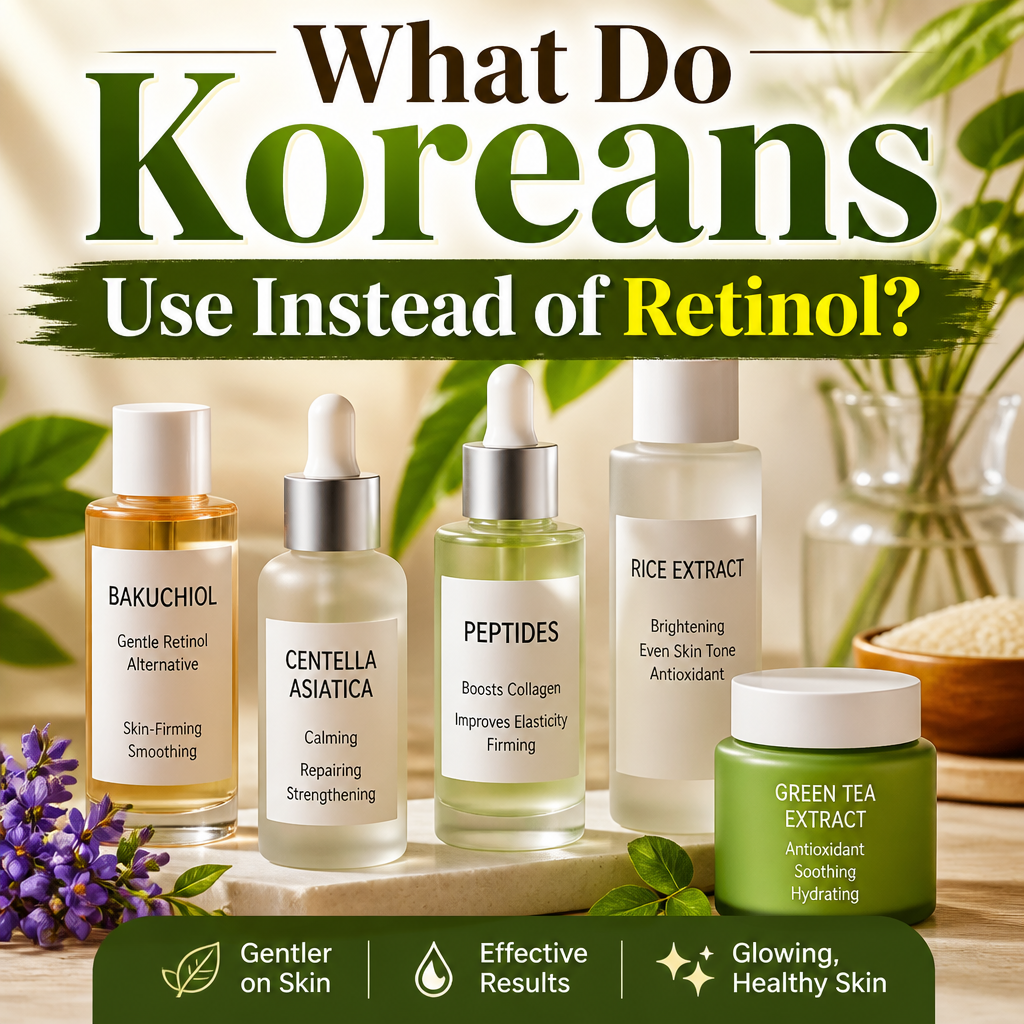
    If you’re over 50 and retinol feels too harsh, you may be wondering what people in Korean skincare routines use instead. The short answer is that there isn’t one single replacement. K-beauty often focuses on gentler ingredients that support smoother, brighter-looking skin without making the routine overly aggressive.

    Bakuchiol

    Bakuchiol is one of the most talked-about alternatives to retinol. It is a plant-derived ingredient that has been studied for improving the appearance of fine lines and uneven skin. In a small randomized study, bakuchiol produced results comparable to retinol for some signs of photoaging, while the retinol group reported more scaling and stinging.

    Ginseng

    Ginseng is a longtime ingredient in Korean skincare. It is used in products aimed at helping skin look brighter, healthier and more refreshed. For mature skin, it can be an appealing ingredient when you want something gentler than a strong retinoid routine.

    Adenosine

    Adenosine is another ingredient commonly found in K-beauty products. It is used in anti-aging formulas designed to improve the appearance of fine lines while keeping the routine relatively simple.

    Peptides

    Peptides are popular in Korean skincare because they can be added to moisturizers and serums without making a routine complicated. They are commonly used in products designed to support the look and feel of firmer, smoother skin.

    What About Retinal?

    Retinal is not the same thing as avoiding vitamin A altogether. It is another vitamin A ingredient that can be converted to retinoic acid in the skin. Some people find retinal a useful option, but it can still cause irritation, especially when you are new to it.

    The Simple Takeaway After 50

    You do not have to use the strongest ingredient to have a good skincare routine. A gentle cleanser, a hydrating product, a moisturizer, sunscreen and one carefully chosen active ingredient can be a much easier routine to stick with.

    My take: If retinol has left your skin dry, irritated or uncomfortable, looking at ingredients such as bakuchiol, ginseng, adenosine or peptides may make sense. Start with one new active at a time and give your skin time to adjust.

    For another perspective on skincare ingredients and cosmetic claims, cosmetic chemist Stephen Alain Ko of Kind of Stephen writes about the science behind beauty products and how to assess the evidence behind them.

    Common Questions

    What do Koreans use instead of retinol?
    Korean skincare doesn’t rely on one single retinol replacement. Ingredients such as bakuchiol, peptides, niacinamide, vitamin C, and snail mucin are commonly used for different skincare goals.

    Is bakuchiol as effective as retinol?
    Bakuchiol has been studied as a possible gentler alternative to retinol, but the evidence base is smaller. It shouldn’t automatically be considered identical to retinol.

    Is Korean skincare good for 50+ skin?
    It can be. Many Korean skincare routines emphasize hydration, gentle cleansing, barrier support, and consistent sunscreen use, which can be useful for mature skin.

    Can peptides replace retinol?
    Peptides may support the appearance and feel of skin, but they work differently from retinoids. Whether they are a suitable alternative depends on what you’re trying to accomplish.

    What if retinol irritates my skin?
    You may be able to reduce irritation by using it less frequently, using a lower-strength product, or discussing alternative ingredients with a dermatologist.

    Do I still need sunscreen if I use Korean skincare?
    Yes. Daily broad-spectrum sunscreen is an important part of protecting skin from UV exposure, regardless of whether your routine includes retinol or other ingredients.

    What’s the simplest Korean-inspired routine for 50+ skin?
    A gentle cleanser, hydrating product, moisturizer, and daily broad-spectrum sunscreen can provide a simple foundation. Additional ingredients can be added based on your specific skin concerns.

    This article is for general information and reflects researched skincare information and personal observations. It is not medical advice.

    About Tom Green

    Tom Green writes Well After 50. He’s just a regular, laid-back 64-year-old who keeps things simple. He shares what he learns about skincare, fitness and getting older, and what’s working for him. He’s also the author of A Practical Guide to Getting Older Without Giving Up on Yourself. Tom isn’t a doctor. He reads up on the research and passes along what’s useful, plain and simple.

    I’ve also mapped out some great tools on my new Tech for Independent Living After 50 page.

  • Skincare Mistakes After 50: 7 Habits That Can Make Skin Look Older

    Skincare Mistakes After 50: 7 Habits That Can Make Skin Look Older

    Sometimes the skincare routine meant to make you look better is the thing leaving your skin looking worse. If your face is dry, red, shiny in the wrong way or constantly peeling, adding another “anti-aging” product may not be the answer.

    After 50, I think one of the smartest skincare moves is learning when to stop adding things.

    Five mistakes I would look for first

    1. Using too many strong actives at once. Several effective ingredients can become an irritating combination when layered without a plan.
    2. Exfoliating too often. Smooth skin does not require aggressive scrubbing every day.
    3. Skipping moisturizer. If your skin is dry, removing moisture support can make texture look worse.
    4. Ignoring daily sun protection. A great nighttime routine cannot undo every day of unprotected UV exposure.
    5. Changing products constantly. If you replace everything every week, you never learn what is actually helping.

    Look at your skin before your shopping list

    Ask whether your skin feels comfortable. Is it tight after cleansing? Is it peeling? Are you getting redness or burning? Those clues may tell you more than a marketing label.

    Try a reset when your skin is unhappy

    If your skin is irritated, simplify. Gentle cleansing, moisturizer and daytime sun protection can give you a basic foundation while you figure out what went wrong. Then add targeted products back one at a time.

    Don’t confuse irritation with results

    Burning, persistent redness and severe peeling are not trophies proving that a product is powerful. More irritation can make the skin look rougher and can make it harder to maintain a routine.

    Give products a fair chance

    Some changes in hydration or texture may be noticeable fairly quickly, while other cosmetic improvements take longer. Constant switching makes it difficult to judge a product fairly.

    What I want from skincare after 50

    I want skin that looks healthy and cared for, not a bathroom full of products that I am afraid to stop using. A good routine should fit real life.

    Two More Mistakes Worth Adding to the List

    6. Treating every new dark spot as harmless aging. Sun spots are common, but a new, changing, bleeding or nonhealing lesion should be checked by a clinician. A brightening serum is not a diagnosis.

    7. Using products because the label says ‘mature skin.’ Shop for whether your skin is dry, oily, acne-prone or sensitive. A product marketed to older women isn’t automatically more appropriate for an older man—or for you.

    A Three-Stage Reset When Your Face Is Irritated

    First, stop introducing nonprescription active products. If you recently added several serums, scrubs or acids, simplify to a gentle cleanser, moisturizer and suitable sunscreen. Don’t stop a prescribed treatment without discussing significant side effects with the prescribing clinician.

    Next, watch for improvement. If the discomfort settles, consider whether you need an active at all. A small patch test and one new product at a time can help reveal what your skin tolerates.

    Finally, rebuild cautiously. Introduce a specific product for a specific problem, following the label and avoiding combinations that repeatedly sting. If redness, swelling, burning or rash persists, see a dermatologist.

    Three Dermatologists Explain Why ‘More’ Isn’t Better

    Dr. Anne Chapas explains that people with significant dryness, allergies or inflamed skin may not be good candidates for some retinoids. This matters when you feel tempted to solve irritation by buying something stronger.

    Dr. Tina Alster recommends starting a retinoid at a less-intense level and building tolerance gradually. A daily high-strength routine isn’t a badge of commitment.

    Dr. Sonia Badreshia-Bansal warns that irritation can cause dark marks on skin of color. It’s an especially good reason to prevent avoidable over-treatment instead of assuming peeling means progress.

    The American Academy of Dermatology’s guide to maximizing skincare results recommends introducing one anti-aging product at a time and testing a new product before full-face use.

    What Changes Can You Expect—and When?

    Moisturizer may make dry skin look smoother fairly quickly, but treatments for pigmentation and fine lines can require weeks or months. More product or more frequent application doesn’t guarantee faster results. If a product’s irritation is worse than the cosmetic concern you’re trying to improve, reconsider the routine.

    Related: The Ordinary skincare after 50 and choosing a moisturizer after 50.

    Common Questions

    Can your skincare routine make your skin look older after 50?
    Yes. Over-cleansing, using too many strong products, skipping moisturizer, or neglecting sunscreen can leave mature skin looking dry, irritated, or more lined.

    What skincare habits can make skin look older after 50?
    Using harsh cleansers, over-exfoliating, layering too many active ingredients, and failing to protect your skin from the sun can work against your routine.

    Can washing your face too much make your skin look older after 50?
    It can contribute to dryness and irritation, especially if you’re using a harsh cleanser or washing more often than your skin needs.

    Can too much exfoliation damage mature skin?
    Yes. Over-exfoliating can cause dryness, redness, irritation, and a weakened skin barrier.

    Can using too many skincare products make your skin look worse after 50?
    Yes. More products aren’t automatically better. Too many active ingredients can increase the chance of irritation.

    Should you moisturize after 50 even if you have oily skin?
    Usually, yes. Choose a lightweight moisturizer suited to your skin type rather than skipping moisturizer altogether.

    Can skipping sunscreen make your skin look older after 50?
    Yes. Regular UV exposure is a major contributor to visible skin aging, including wrinkles, uneven pigmentation, and loss of firmness.

    What is a simple skincare routine after 50?
    Morning: gentle cleanse or rinse → targeted serum if desired → moisturizer → broad-spectrum sunscreen.
    Evening: gentle cleanse → one targeted treatment if appropriate → moisturizer.

    How do you know when your skincare routine is too much?
    Persistent dryness, burning, redness, peeling, or increased sensitivity can be signs that you need to simplify your routine.

    What is the biggest skincare mistake after 50?
    Trying to do too much. A consistent, gentle routine that protects and moisturizes your skin can be more useful than constantly adding new products.

    Practical takeaway: After 50, your skincare routine should leave your skin feeling comfortable—not tight, burning, excessively dry, or irritated. If your routine is doing the opposite, simplify it.

    A gentle health note: Persistent redness, swelling, burning, rash, or other significant skin changes should be discussed with a dermatologist rather than assumed to be normal aging.

    General skincare information and personal experience, not medical advice.


    About Tom Green

    Tom Green writes Well After 50. He’s just a regular, laid-back 64-year-old who keeps things simple. He shares what he learns about skincare, fitness and getting older, and what’s working for him. He’s also the author of A Practical Guide to Getting Older Without Giving Up on Yourself. Tom isn’t a doctor. He reads up on the research and passes along what’s useful, plain and simple.

    I’ve also mapped out some great tools on my new Tech for Independent Living After 50 page.
  • Korean Peptide Serums for Mature Skin: Are They Worth It?

    Korean Peptide Serums for Mature Skin: Are They Worth It?

    Korean skincare gets a lot of attention for its layers, glass-skin look and constant stream of new products. But the part that interests me most for skin over 50 isn’t the hype. It’s the focus on hydration, gentle routines and taking care of the skin barrier.

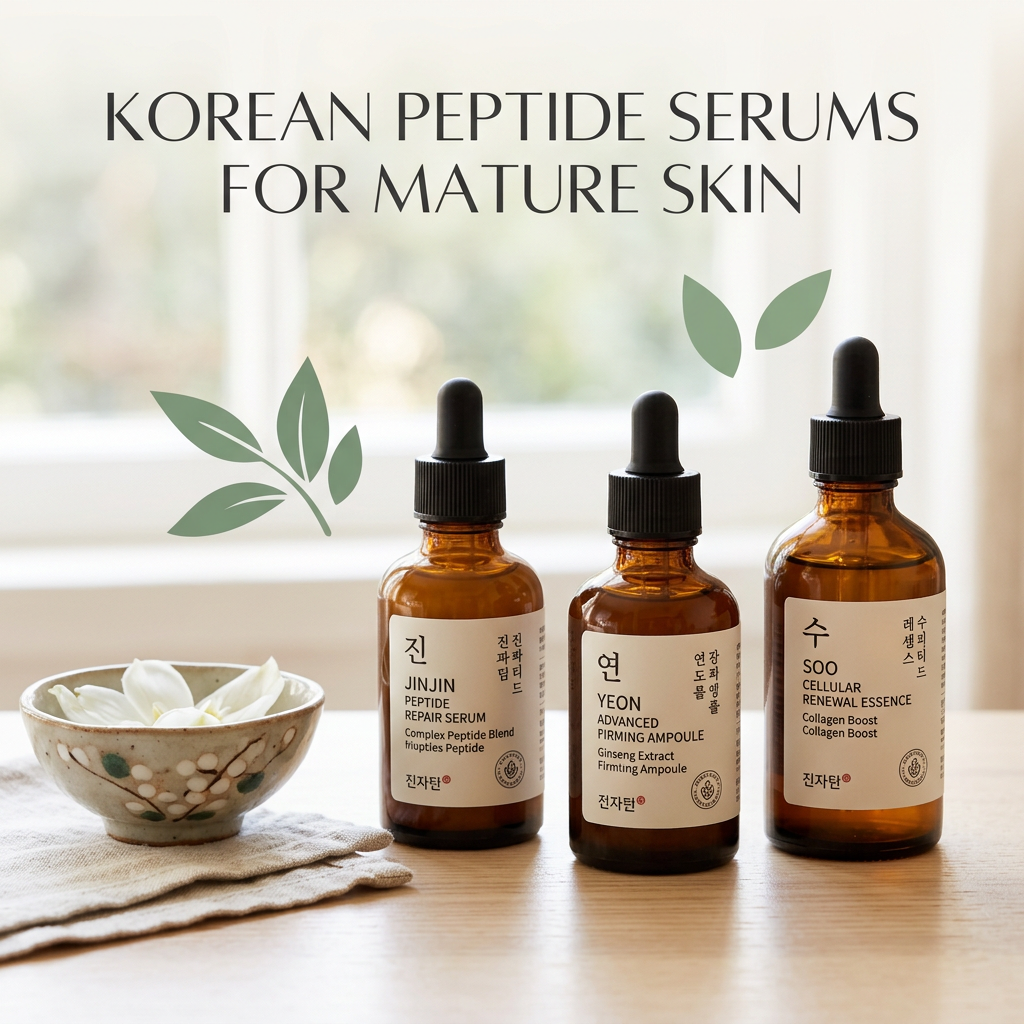
    Peptide serums are a big part of that. They aren’t magic, and no serum is going to erase decades overnight. But the right one can be a useful step if your goal is comfortable, hydrated, smoother-looking skin. Here’s what peptides can really do, five popular Korean serums worth a look, and how to tell if one is actually worth your money.

    The short answer

    • Peptide serums can help skin look more hydrated and a bit smoother, but the research on topical peptides shows modest results at best.
    • Korean isn’t an ingredient. Judge the formula, not the country on the box.
    • Pick one serum, use it for 8 to 12 weeks, and take before-and-after photos in the same light.
    • Sunscreen still matters more than any serum for protecting mature skin.

    What peptides can and can’t do for skin over 50

    Peptides are short chains of amino acids. In skincare, different peptides are used for different jobs, and some are designed to support the look of firmer, smoother skin. The American Academy of Dermatology lists peptides among the ingredients people consider for wrinkles, while stressing the basics: sun protection, moisturizer and choosing products for your actual skin concern.

    Here’s the reality check. Researcher Houriah Y. Nukaly and colleagues analyzed 19 randomized trials of oral and topical peptides for aging skin. They found modest overall effects on wrinkles, mostly driven by oral peptides. The effects of topical peptides alone were less convincing.

    • What a good peptide serum can do: add lightweight hydration, make skin feel more comfortable, and help it look a little smoother.
    • What it can’t do: replace a retinoid, lift sagging skin, restore lost facial volume, or match an in-office treatment.

    Keep in mind that well-hydrated skin looks smoother for a while even when nothing has changed structurally. That’s not a bad thing. It just means you should judge a serum over weeks, not the morning after.

    5 popular Korean serums worth a look after 50

    These are well-known, widely available Korean serums that come up again and again for mature skin. I chose them for their ingredient lists and for covering different needs and budgets. Check the full ingredient list against your own skin before buying, and patch-test anything new.

    1. COSRX The 6 Peptide Skin Booster Serum

    Best for: a simple, affordable first peptide serum. It combines several peptides with niacinamide and hyaluronic acid, so it does double duty as a hydrating step. A good place to start if you’ve never tried peptides.

    2. Medicube PDRN Pink Peptide Serum

    Best for: people curious about the PDRN trend. It pairs peptides with PDRN (a DNA-derived ingredient that’s popular in Korea right now), plus niacinamide and hyaluronic acid. PDRN is newer to the U.S. market, so think of it as an interesting extra, not a proven miracle.

    3. PURITO Wonder Releaf Centella Serum Unscented

    Best for: sensitive or easily irritated skin. It’s unscented and built around centella (cica), a soothing plant extract, with niacinamide, hyaluronic acid and ceramides. Not a peptide-focused serum, but a smart choice if your skin reacts to everything.

    4. Sulwhasoo Concentrated Ginseng Rejuvenating Serum

    Best for: a luxury treat. This is one of Korea’s best-known high-end serums, built around ginseng and aimed at dull, tired-looking mature skin. It costs a lot more than the others, so only go here if the texture and experience matter to you.

    5. Some By Mi Retinol Intense Reactivating Serum

    Best for: people ready to try a retinoid. Retinoids have far stronger evidence for wrinkles than peptides do. Start slowly, two or three nights a week, always wear sunscreen during the day, and don’t stack it with other strong actives until you know how your skin handles it.

    How to choose the right one for your skin

    • Dry skin: look for hydrators high on the list, like glycerin and hyaluronic acid.
    • Sensitive skin: choose fragrance-free or unscented, with fewer actives.
    • Fine lines are your main concern: a peptide serum is a gentle option. A retinoid is the stronger one.
    • Watch the marketing: words like “lifting” and “collagen-boosting” are claims, not guarantees. A topical cosmetic can’t restore lost volume.
    • Compare price per ounce and check the return policy before you buy.

    A simple Korean-inspired routine (no ten steps needed)

    Morning: gentle cleanser if needed → serum → moisturizer → broad-spectrum SPF 30 or higher.

    Night: gentle cleanser → serum or retinoid → moisturizer.

    Not sure what order things go in? I break it down in skincare routine order after 50: what goes first. And for the moisturizer step, see how to choose a moisturizer after 50.

    How to tell if a serum is worth keeping

    Give a serum 8 to 12 weeks of daily use before you judge it, and take a photo on day one in the same light. Then ask yourself:

    1. Does my skin feel more comfortable and less tight?
    2. Does it look better in the photos, not just in my head?
    3. Is it irritating me at all?
    4. Have I actually used it every day?
    5. Is it worth the price compared to a plain moisturizer?

    Expensive doesn’t automatically mean effective. The AAD notes that good anti-aging products exist at every price point. Stop any product that causes persistent stinging, burning or a rash.

    Don’t let layering turn into a skin experiment

    One of the easiest mistakes with Korean skincare is thinking more layers must mean better skin. They don’t. Stacking acids, retinoids and several serums can quietly irritate mature skin. Dermatologists recommend adding one new product at a time. For skin over 50, a better goal is comfortable, consistent and simple.

    And about “glass skin”: it’s a pretty trend, but real skin has pores, texture and lines. You don’t need to look like a filtered photo to have healthy-looking skin.

    Three experts worth reading before you buy

    Dr. Michelle Wong, the cosmetic chemist behind Lab Muffin Beauty Science, encourages looking at the whole formula and the evidence, not just the ingredient on the front of the bottle.

    Dermatologist Dr. Wilma Bergfeld discusses peptide products in Cleveland Clinic’s guide to whether they’re worth buying, and helps separate a promising ingredient from the idea that every expensive serum will firm your skin.

    The Nukaly review of 19 peptide trials mentioned above is a useful reality check before spending big on a topical serum.

    Common Questions

    What is the best Korean serum for anti-aging after 50?
    There’s no single best one. For a gentle, affordable start, a peptide serum like COSRX The 6 Peptide Skin Booster is a common pick. For stronger results on wrinkles, a retinol serum has better evidence. Choose based on your skin type and how sensitive it is.

    Do peptide serums really firm mature skin?
    Some formulas may slightly improve the look of firmness and fine lines, but research on topical peptides shows modest effects. Don’t expect them to tighten loose skin.

    Are Korean serums better than American ones?
    Not automatically. Korean brands are known for lightweight, hydrating textures, but the formula matters more than where it’s made.

    Can you use a peptide serum with retinol?
    Often, yes. Peptides generally work alongside other ingredients. If your skin is easily irritated, use fewer products and add one at a time.

    Can you use peptides with vitamin C?
    Generally, yes, as long as your skin tolerates both.

    How long does a peptide serum take to work?
    Hydration shows up right away. For any change in fine lines or texture, give it 8 to 12 weeks of daily use.

    My take on Korean peptide serums after 50

    I like the idea of a peptide serum when it solves a real problem in your routine: extra hydration, a nice texture, or an ingredient you want to try. I don’t like the idea of buying five serums because TikTok or a product page says you need them.

    If you want to try one, start with one, use it every day, and give your skin time. Keep everything else simple. And keep sunscreen in your morning routine, because that’s still the foundation of protecting mature skin.

    Your turn: Have you tried a Korean serum? Tell me in the comments which one, and whether it was worth it. Other readers will thank you.

    This is general skincare information, not medical advice. If you have persistent irritation, a changing skin spot or a specific skin condition, a dermatologist can help you choose the right products.

    About Tom Green

    Tom Green writes Well After 50. He’s just a regular, laid-back 64-year-old who keeps things simple. He shares what he learns about skincare, fitness and getting older, and what’s working for him. He’s also the author of A Practical Guide to Getting Older Without Giving Up on Yourself. Tom isn’t a doctor. He reads up on the research and passes along what’s useful, plain and simple.

    I’ve also mapped out some great tools on my new Tech for Independent Living After 50 page.