Tag: mental health after 50

  • When You Don’t Recognize Yourself Anymore: How to Make Peace With Aging After 50

    When You Don’t Recognize Yourself Anymore: How to Make Peace With Aging After 50

    How do you make peace with aging when you don’t recognize yourself?

    Short answer: Making peace with aging starts with not letting the mirror be the judge. There’s nothing wrong with wanting to look good, but maybe the goal isn’t to look younger. Your body is for living, not just for being looked at, so stop inspecting yourself so closely and give yourself grace on the hard days.

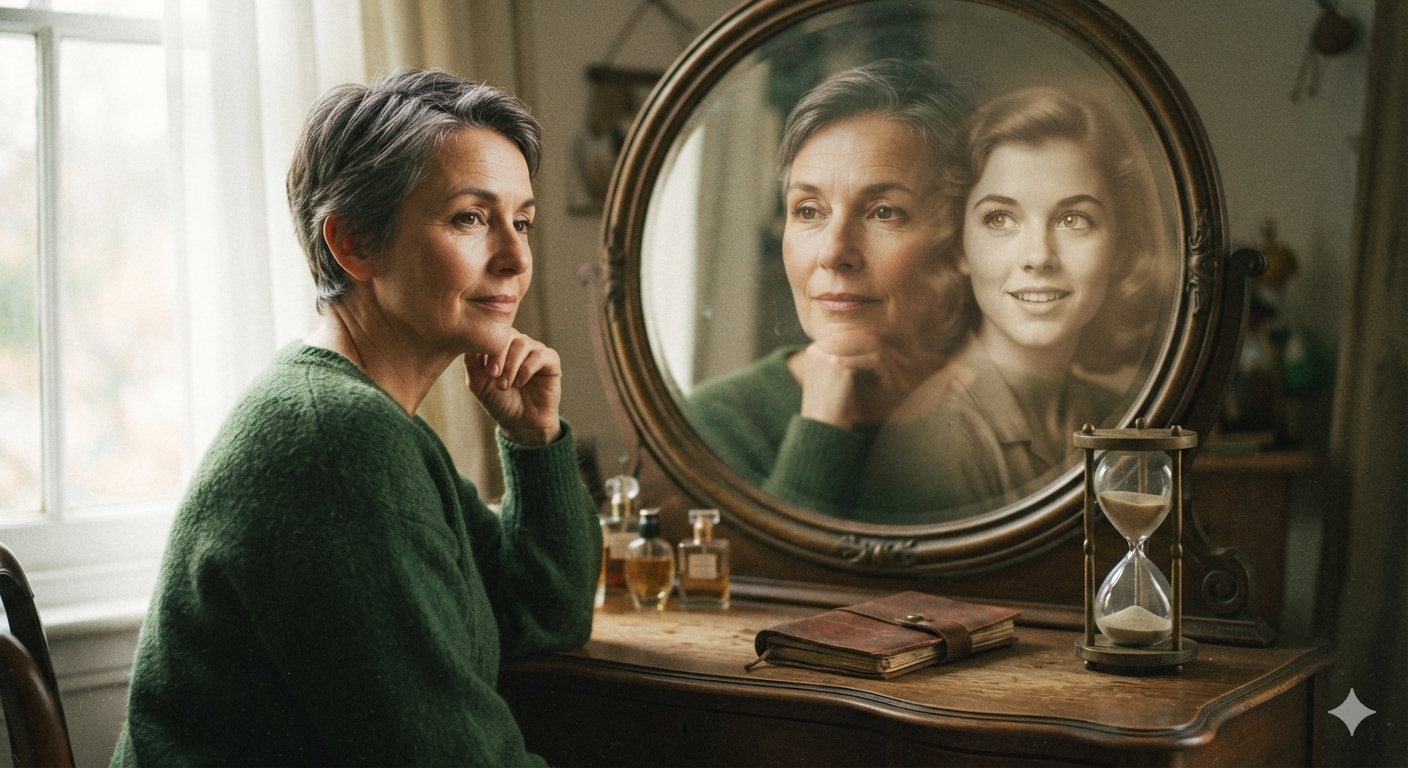
    There can be a strange moment in the aging process when you look in the mirror and realize something has changed.

    Maybe it is the lines around your eyes.

    Maybe your face looks thinner or softer than it used to. Your neck has changed. Your hair is different. Your body doesn’t look quite the way it did ten, twenty or thirty years ago.

    And sometimes the hardest part isn’t the wrinkle itself.

    It’s realizing that the person looking back at you doesn’t look like the person you still feel like inside.

    If you’ve ever had that experience, you’re not being vain.

    You’re being human.

    Aging changes our appearance, but it can also change the way we think about ourselves.

    And learning to live with that may be one of the less-discussed challenges of getting older.

    You can know you’re aging and still be surprised by it

    Most of us understand intellectually that we’re going to get older.

    We know our hair may turn gray. Skin loses some of its elasticity. Muscle mass becomes harder to maintain. Facial features change. Our bodies don’t necessarily respond to exercise, food or lack of sleep the way they once did.

    But knowing something is coming doesn’t necessarily prepare you emotionally for seeing it.

    That’s especially true when the change happens gradually.

    You don’t wake up one morning twenty years older.

    Instead, you notice little things.

    • A photograph.
    • A reflection in a store window.
    • A video someone took when you weren’t expecting it.
    • A shirt that fits differently.
    • A face in the mirror that suddenly looks older than you feel.

    And you may find yourself thinking:

    When did that happen?

    The mirror can become more powerful than it deserves to be

    Our appearance isn’t just about appearance.

    It can become tied to identity.

    For decades, you may have received messages—directly and indirectly—that looking young meant looking attractive, energetic, successful or desirable.

    Advertising certainly hasn’t helped.

    The beauty industry has built an enormous market around the idea that every visible sign of aging is something that should be corrected.

    And social media can make the comparison even harder.

    Research published in 2025 found associations between appearance-focused social media use, self-objectification and body-image concerns. The researchers also identified self-compassion as a potentially protective factor.

    There’s nothing wrong with wanting to look good

    This is important.

    Accepting aging does not mean you have to stop caring about your appearance.

    • You can still enjoy skincare.
    • You can color your hair if you want to.
    • You can exercise because you like the way a stronger body looks.
    • You can dress well.
    • You can take care of your teeth, skin and hair.
    • You can use products that make you feel better about yourself.

    And if you choose a cosmetic treatment after understanding its risks and benefits, that is your decision.

    The problem begins when taking care of yourself turns into being at war with yourself.

    There’s a big difference between:

    “I want to look my best.”

    and

    “I can’t stand the person I’m becoming.”

    The first can be healthy.

    The second can become exhausting.

    Maybe the goal isn’t to look younger

    This may be one of the most useful changes in thinking after 50.

    Instead of asking:

    “How can I look younger?”

    try asking:

    “How can I look healthy, cared for, confident and like myself?”

    Those aren’t the same goal.

    You may never get your 35-year-old face back.

    None of us does.

    But you can become the 50-, 60-, 70- or 80-year-old version of yourself who looks like she takes care of herself, stands tall, smiles easily and still has somewhere she wants to go.

    That’s a different kind of beauty.

    And arguably a more interesting one.

    Your body isn’t only something other people look at

    This is where aging can offer an unexpected opportunity.

    For much of our younger lives, we’re taught to think about our bodies from the outside.

    • How do I look?
    • Am I thin enough?
    • Do I look attractive?
    • Do other people notice me?
    • Do I look younger than my age?

    But eventually, many people begin to appreciate something different.

    What can my body still do for me?

    • Can I walk around the neighborhood?
    • Carry groceries?
    • Get up from the floor?
    • Travel?
    • Play with grandchildren?
    • Lift weights?
    • Garden?
    • Dance?
    • Climb stairs without stopping?
    • Go somewhere new?

    Those things may not show up in a selfie.

    But they can become far more important than a selfie.

    There is actually research behind this shift

    A 2026 study involving adults ages 60 to 80 found that greater body appreciation was associated with greater life satisfaction, and self-acceptance helped explain that relationship.

    That doesn’t mean you have to suddenly love every part of your body.

    That’s not realistic.

    You can dislike a particular wrinkle.

    You can wish your waist were smaller.

    You can miss your old hair.

    You can wish your skin were firmer.

    Acceptance doesn’t require pretending everything is perfect.

    It means learning not to let the things you dislike become the entire story about yourself.

    What if you stopped inspecting yourself so closely?

    Here’s an experiment worth trying.

    For a week, stop looking for flaws.

    • Don’t stand in front of the bathroom mirror examining your neck.
    • Don’t repeatedly pull the skin under your eyes.
    • Don’t take five photographs looking for the “bad side.”
    • Don’t zoom in on every line in a picture.

    Take care of yourself normally.

    Then step back.

    Look at the whole person.

    • How do you carry yourself?
    • Do you look healthy?
    • Do your eyes look alive?
    • Are you smiling?
    • Does your clothing fit?
    • Does your hair make you feel good?
    • Do you look like someone who is participating in life?

    Sometimes we become so focused on individual imperfections that we completely miss the person.

    And yes, there will be days when you don’t feel good about yourself

    That’s normal too.

    You don’t have to turn aging into a positive-thinking exercise every morning.

    Some days you may look in the mirror and think:

    “I really don’t like what I see today.”

    That’s okay.

    You don’t have to argue with yourself.

    You can simply say:

    “This is how I look today. I’m still going to have a good day.”

    That’s a powerful distinction.

    Your appearance doesn’t have to improve before you’re allowed to enjoy your life.

    Be careful about who gets inside your head

    Pay attention to the people and accounts you follow.

    If every photograph makes you feel older, heavier, less attractive or less successful, ask yourself why you’re continuing to look at it.

    You don’t have to hate social media.

    You don’t even have to stop following beauty accounts.

    But you can choose more carefully.

    Follow people who make you feel inspired rather than inadequate.

    Follow women who are active, funny, stylish, interesting and honest about getting older.

    Follow people who remind you that life doesn’t end when your face changes.

    Your feed becomes part of your environment.

    Choose an environment that helps you.

    Don’t confuse acceptance with giving up

    This may be the biggest misconception of all.

    Accepting your age doesn’t mean giving up.

    It can actually make it easier to take good care of yourself.

    You can say:

    “My skin is changing, so I’m going to take good care of it.”

    Not:

    “My skin is changing, so I need to fight it every day.”

    You can say:

    “I’m losing some muscle as I get older, so I’m going to strength train.”

    Not:

    “My body isn’t what it used to be, so what’s the point?”

    You can say:

    “I don’t look 40 anymore, but I still want to look my best.”

    Not:

    “If I can’t look 40, I don’t want to look at all.”

    That difference matters.

    Maybe growing older requires a new definition of beautiful

    When we’re young, beauty can be largely about symmetry, smooth skin, hair, body shape and looking desirable.

    Later, something else begins to show.

    • Character.
    • Confidence.
    • Humor.
    • Kindness.
    • Strength.
    • Curiosity.
    • How you treat people.
    • How you carry yourself.
    • Whether you still get excited about something.
    • Whether you have something to look forward to.
    • Whether you’ve learned how to survive difficult things without becoming bitter.

    None of those things erase wrinkles.

    They make wrinkles less important.

    You don’t have to love every change

    Maybe that’s the most honest place to end.

    You don’t have to celebrate every gray hair.

    You don’t have to love every wrinkle.

    You don’t have to pretend you never miss your younger face.

    You don’t have to stop wanting to look attractive.

    And you don’t have to apologize for caring about yourself.

    But you also don’t have to spend the rest of your life trying to defeat a process that every human being eventually faces.

    Take care of your appearance. Take care of your body. Take care of your health. But don’t forget to take care of the person underneath all of it.

    Because there is still a person in that mirror who has somewhere to go, people to love, things to learn and experiences that haven’t happened yet.

    And perhaps that’s the part of aging we don’t talk about enough.

    You may look different than you once did.

    But you’re not finished becoming who you’re going to be.

    A Final Thought

    The goal after 50 doesn’t have to be looking like the person you were twenty years ago.

    Maybe the goal is to look in the mirror and eventually say:

    “Yes. This is me now. And I still like where I’m going.”

    That may be a much better definition of aging well.

    For another thoughtful perspective on emotional well-being and finding your footing in later life, you may enjoy Sixty and Me, founded by Margaret Manning, which explores life transitions and personal growth.

    Common Questions

    Is it normal to struggle with changes in appearance after 50?

    Yes. Changes in appearance can affect how people think and feel about themselves, and research suggests that body dissatisfaction and concerns about aging appearance don’t simply disappear with age.

    Does accepting aging mean I shouldn’t care about how I look?

    No. Acceptance and self-care can exist together. You can enjoy skincare, exercise, clothing, hair care and other ways of looking after yourself without making youthfulness the only measure of your worth.

    Can social media make aging and body image harder?

    It can. Research has linked appearance-focused social media use with self-objectification and body-image concerns. Choosing what you consume online—and practicing more self-compassion—may help.

    What is a healthier goal than trying to look younger?

    Try aiming to look healthy, cared for, confident and like yourself. You can still improve things you want to improve without making your entire identity about reversing age.

    Can accepting my changing appearance actually make me feel better?

    Research in older adults has found an association between body appreciation, self-acceptance and greater life satisfaction.

    A Note From Tom Green

    At Well After 50, I don’t think getting older means giving up on yourself. I think it means figuring out what is worth improving, what is worth accepting and what is worth letting go.

    You can still care about how you look.

    You can still work on your health.

    You can still get stronger.

    You can still take pride in yourself.

    But you don’t have to spend your life apologizing for getting older.

    Tom Green

    Well After 50

    Medical & Wellness Note

    This article discusses general experiences and research related to aging, appearance and body image. It is not medical or mental-health advice. If concerns about your appearance are causing significant distress or interfering with your daily life, consider talking with a qualified healthcare or mental-health professional

    Sources & Further Reading

    Keep Reading

    About the Author

    Tom Green writes Well After 50. He was born in Pell City, Alabama, in 1962, and he’s a country boy and a true Southerner through and through. He’s just a regular, laid-back 64-year-old who keeps things simple. He shares what he learns about skincare, fitness and getting older, and what’s working for him. He’s also the author of A Practical Guide to Getting Older Without Giving Up on Yourself. Tom isn’t a doctor. He reads up on the research and passes along what’s useful, plain and simple.

    I’ve also mapped out some great tools on my new Tech for Independent Living After 50 page.
  • Crepey Skin After 50: 7 Things That Cost Almost Nothing

    Crepey Skin After 50: 7 Things That Cost Almost Nothing

    What helps crepey skin without costing much?

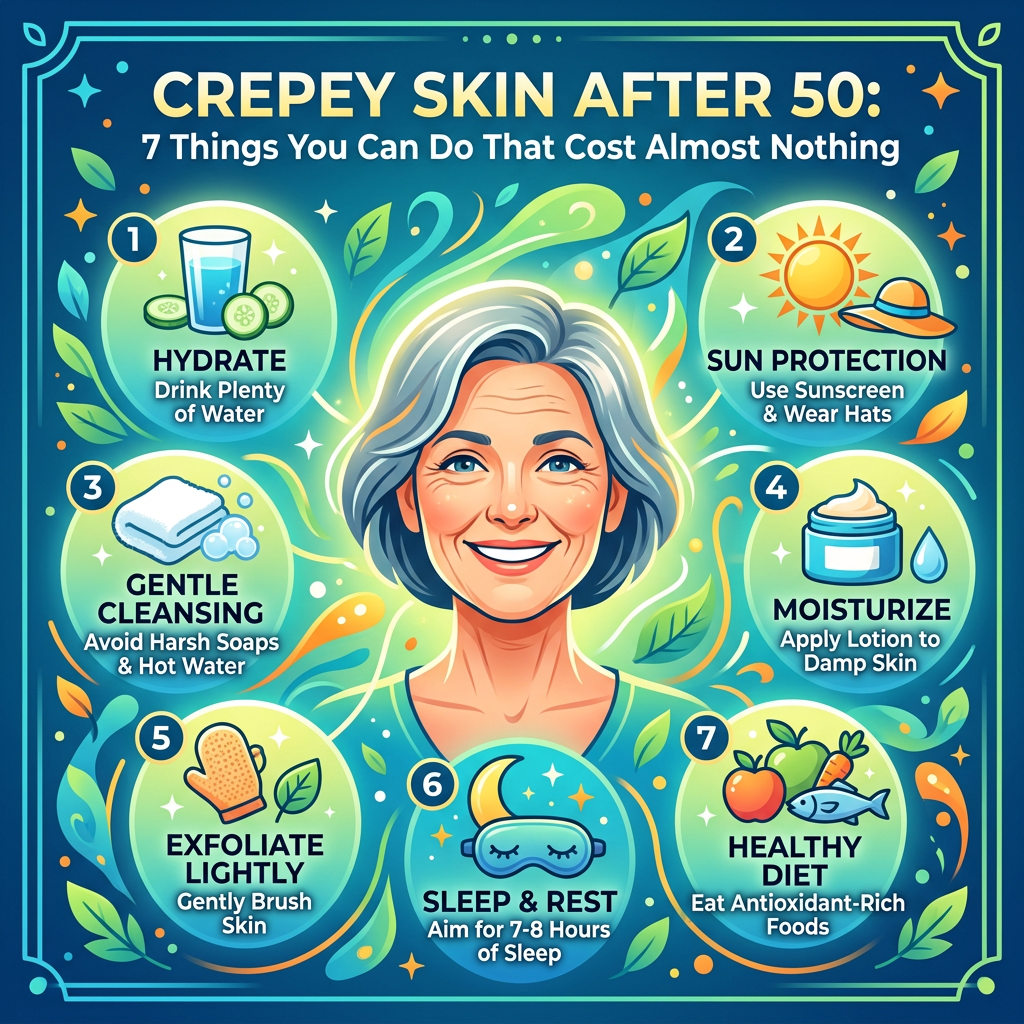
    Short answer: You can help crepey skin without spending much. Be gentle instead of scrubbing, moisturize while your skin is still damp, and put sunscreen on spots you usually forget, like your neck, chest, arms and hands. A low-cost body lotion with urea can help hydrate and soften rough, dry skin, and staying active helps too.

    If you’ve noticed that your skin seems to have changed after 50 — thinner, looser, drier, or suddenly looking a little like crumpled paper — you’re definitely not imagining it.

    Crepey skin is one of those aging changes that can sneak up on you.

    And before you start buying every expensive “firming” cream you see, there’s some good news: you don’t necessarily need a bathroom cabinet full of expensive products to take better care of mature skin.

    Some of the most useful things you can do are surprisingly simple — and inexpensive.

    They won’t magically erase crepey skin. Nothing really does. But they can help your skin look and feel healthier, more hydrated and better protected.

    1. Stop Treating Your Skin Like It’s 25

    This may be one of the cheapest changes you can make.

    As we age, skin tends to become drier and more vulnerable to irritation. Scrubbing, harsh cleansers and constantly trying new products can work against you.

    Instead of trying to make your skin feel “squeaky clean,” try being gentler.

    Use a mild cleanser and lukewarm water. Skip aggressive scrubbing and be careful with products that leave your skin burning or irritated.

    In other words: your skin doesn’t need punishment to be clean.

    2. Moisturize While Your Skin Is Still Damp

    This costs almost nothing if you already have a moisturizer you like.

    After washing or bathing, don’t wait until your skin is completely dry before applying it. Put your moisturizer on while your skin still has a little moisture.

    Moisturizers help trap water in the skin, which can temporarily make fine lines look less noticeable and give dry, crepey-looking skin a smoother appearance.

    Want to try something that’s getting a lot of attention?

    Urea is an ingredient worth knowing about.

    Urea has been used in skincare for years, but it’s getting renewed attention because it can both help hydrate the skin and soften rough, dry areas. That makes it particularly interesting for areas such as crepey-looking arms, legs, elbows and feet.

    And you don’t necessarily need a luxury product. Look for a reasonably priced body lotion or cream containing urea, especially if your skin is very dry or rough.

    It’s one of those ingredients that sounds more complicated than it really is.

    3. Put Sunscreen on the Places You Usually Forget

    Most of us learned to put sunscreen on our face.

    But what about your neck? Your chest? Your hands?

    Those areas can tell the story of years of sun exposure too.

    Use broad-spectrum SPF 30 or higher on exposed skin. UV exposure is one of the major contributors to premature skin aging and can damage the collagen and elastin that help keep skin looking firm.

    So if you’re already buying sunscreen, use it beyond your face.

    Your hands may appreciate it later.

    4. Stop Chasing the “Tight” Feeling

    Here’s a strange one.

    Some people think a product is working because their skin feels tight afterward.

    But tight doesn’t necessarily mean better.

    If a cleanser or skincare product leaves your mature skin feeling dry, stretched or uncomfortable, that may simply mean it is stripping too much moisture.

    Comfortable skin is a better goal than that squeaky-tight feeling.

    5. Give Your Body Some Attention — and Know These Three Ingredients

    Crepey skin isn’t just a face problem. It commonly shows up on areas such as the upper arms, thighs, neck and hands.

    And one of the easiest mistakes is giving your face a skincare routine while giving your arms and legs absolutely nothing.

    You don’t have to buy a separate product for every body part. A basic body moisturizer can go a long way.

    But if you want to experiment, there are three ingredients worth knowing about:

    Urea: Helps hydrate and soften rough, dry skin.

    Lactic acid: An alpha-hydroxy acid that can help loosen dead surface skin and improve rough texture. It’s often found in body lotions.

    Peptides: These are popular in skincare because of their connection with skin-supporting proteins and are increasingly appearing in body-care products aimed at mature skin.

    You don’t need all three.

    Pick one and see how your skin responds.

    And remember: more ingredients don’t automatically mean better results.

    6. Keep Moving

    This one costs nothing if you’re already walking, exercising at home or going to the gym.

    Exercise isn’t a wrinkle eraser.

    But regular physical activity is good for overall health, and maintaining muscle can improve the way your body looks underneath the skin.

    It won’t magically tighten loose skin, but getting stronger can change the overall appearance of your arms, legs and body.

    Sometimes the answer isn’t another cream. Sometimes it’s getting stronger.

    7. Give Your Skin a Break From Constant Experimenting

    This might be the most underrated tip on the list.

    If you’re constantly adding another serum, exfoliant, acid, scrub or “miracle” treatment, your skin may never get a chance to settle down.

    And mature skin can be less forgiving when it’s irritated.

    That doesn’t mean you have to give up every active ingredient. It means you don’t need to use everything at once.

    A simple routine can be remarkably effective:

    Morning

    • Gentle cleansing if needed
    • Moisturizer
    • Broad-spectrum SPF 30+

    Evening

    • Gentle cleanser
    • Moisturizer
    • Any treatment product you know your skin tolerates

    For the body, a simple moisturizer can be enough. If you want to try urea, lactic acid or peptides, introduce just one new product at a time.

    You can always add something later. You don’t have to start with everything.

    What About Expensive Crepey-Skin Treatments?

    There are professional treatments that dermatologists and cosmetic specialists use for skin laxity, wrinkles and texture.

    Some can produce more noticeable changes than a moisturizer.

    But they’re also much more expensive and may involve procedures, downtime or potential side effects.

    And that’s not what this article is about.

    This is about the things you can do today without spending a fortune.

    For mild crepey-looking skin, basic skincare can improve its appearance, while more significant loose skin may require professional treatment.

    Freshly compounded Rx Tretinoin, Hydroquinone, Niacinamide, and more – formulated to treat sun damage, improve skin texture, and reduce fine lines and wrinkles on the neck and chest.

    The Bottom Line

    Crepey skin after 50 is normal.

    Your skin isn’t failing you.

    It’s changing.

    Age, sun exposure, dryness, weight changes and the gradual loss of collagen and elastin can all play a role.

    But that doesn’t mean you have to surrender to it either.

    You can protect your skin from more sun damage.

    You can keep it moisturized.

    You can try useful ingredients like urea or lactic acid without spending a fortune.

    You can keep moving and maintain muscle.

    And you can stop spending money on every product that promises to make you look 25 again.

    Maybe the better goal after 50 isn’t younger-looking skin.

    Maybe it’s healthy-looking skin that you take good care of.

    And honestly, that’s a pretty good goal.

    For another perspective on crepey skin, Angie of Hot & Flashy’s article “How To FIX Crepey Skin!” shares her personal experience and routine. Treat product reviews as one source of information—not a promise that a cream will reverse loose or crepey skin.

    Common Questions About Crepey Skin After 50

    Can moisturizer really help crepey skin?

    Yes. Moisturizer can hydrate the skin and temporarily make fine lines and dry, crepey-looking skin appear smoother. It won’t replace lost collagen or permanently tighten loose skin.

    What is urea used for in skincare?

    Urea is a moisturizing ingredient that can also help soften rough, dry skin. It can be particularly useful for dry body areas such as the arms, legs, elbows and feet.

    Is lactic acid good for crepey-looking body skin?

    Lactic acid can help exfoliate the surface of the skin while also providing some hydration. It may help improve rough texture, but sensitive skin should start slowly.

    Are peptides worth trying?

    Peptides are popular in skincare and are increasingly included in body-care products. They may be worth trying if you’re interested in an ingredient-focused routine, but don’t expect a peptide cream to completely eliminate loose or crepey skin.

    Is crepey skin always caused by dry skin?

    No. Dryness can make it look worse, but aging, sun exposure, changes in collagen and elastin, and weight changes can also contribute.

    Does sunscreen help with crepey skin?

    It can help prevent additional sun-related skin aging. Broad-spectrum SPF 30 or higher is recommended for exposed skin.

    Can exercise tighten crepey skin?

    Exercise isn’t a treatment that directly tightens loose skin. However, maintaining muscle can improve the overall appearance of the body, while regular physical activity supports overall health and healthy aging.

    When should I see a dermatologist?

    If a skin change is sudden, unusual, rapidly worsening, painful, itchy, bleeding or otherwise concerning, it’s worth having it evaluated rather than assuming it’s simply normal aging.

    Gold Bond Age Renew Crepe Corrector Body Lotion — 2022 Product of the Year In Skincare Category, replenishing & smoothing formula, Gold Bond crepe corrector body lotion   Save 10%: Coupon available when you select Subscribe & Save .

    Shop Gold Bond Age Renew Crepe Corrector on Amazon

    About the Author

    Tom Green writes Well After 50. He was born in Pell City, Alabama, in 1962, and he’s a country boy and a true Southerner through and through. He’s just a regular, laid-back 64-year-old who keeps things simple. He shares what he learns about skincare, fitness and getting older, and what’s working for him. He’s also the author of A Practical Guide to Getting Older Without Giving Up on Yourself. Tom isn’t a doctor. He reads up on the research and passes along what’s useful, plain and simple.

    He believes getting older doesn’t mean you stop caring about how you look, how you feel or what you can still accomplish.

    You’re 50+. You’re still becoming.

    Image: Well After 50 Media Library.

    I’ve also mapped out some great tools on my new Tech for Independent Living After 50 page.
  • 5 Signs You Might Need a Mental Health Day After 50

    5 Signs You Might Need a Mental Health Day After 50

    How do you know you need a mental health day?

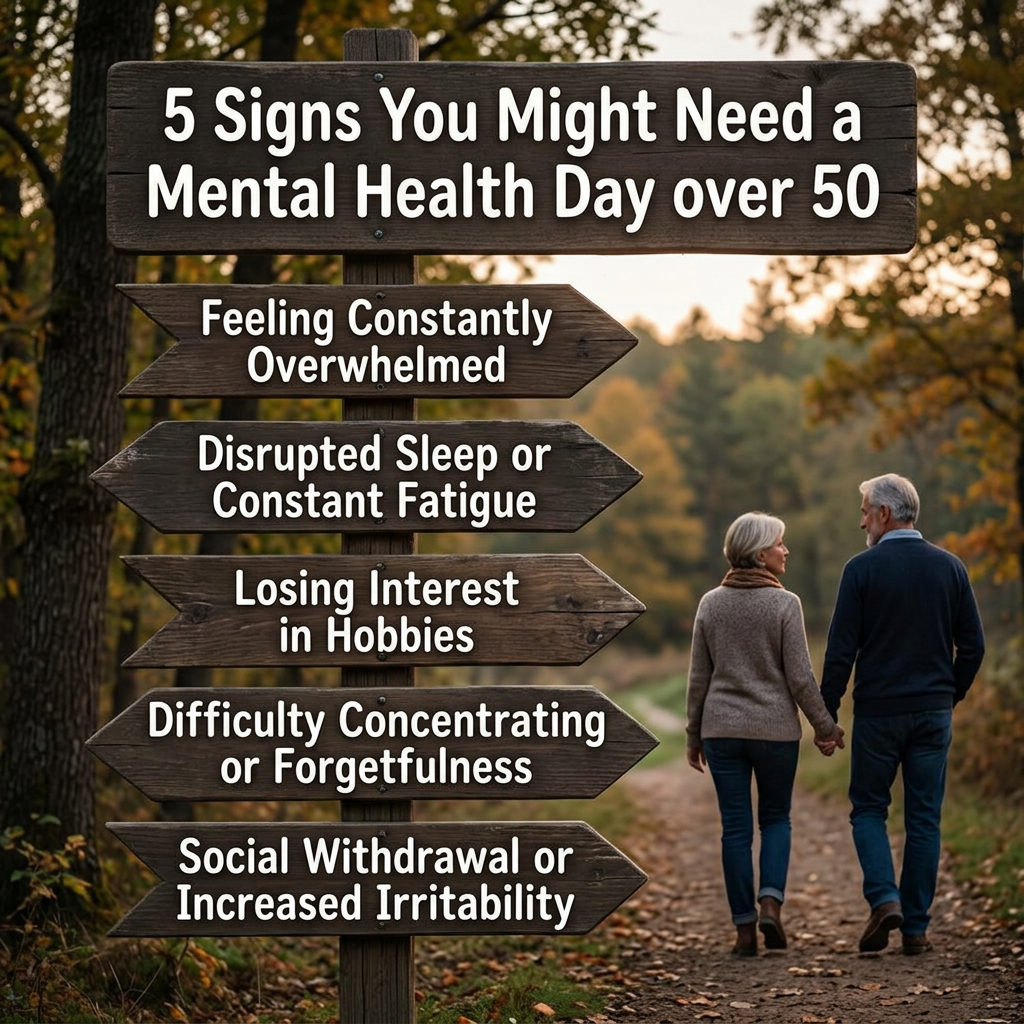
    Short answer: You might need a mental health day if you’re more irritable than usual, everything feels like a chore, your brain won’t shut off, you’re worn out even after sleeping, or you just want to get away from everyone. A day to rest and reset can help, but it’s no substitute for professional help if those feelings stick around.

    Everyone has days when life feels like too much. Work, family responsibilities, everyday stress, poor sleep, and simply having too much on your mind can leave you feeling worn down.

    A mental health day can be a simple way to pause, reset, and give yourself some breathing room. It is not a cure for a mental health condition, but it can be a useful form of self-care when you recognize that you are running on empty.

    5 Signs You Might Need a Mental Health Day After 50

    1. You Are More Irritable Than Usual

    If little things that normally would not bother you suddenly get under your skin, it may be a sign that you are mentally overloaded.

    Stress can affect your mood and patience. If you find yourself snapping at people, feeling unusually frustrated, or having a much shorter fuse than normal, a day to slow down may be worthwhile.

    2. Everything Feels Like a Chore

    When even simple tasks seem exhausting, pay attention. You may still be getting everything done, but it feels like you are forcing yourself through every part of the day.

    There is an important difference between occasionally having a lazy day and feeling persistently drained or losing interest in things you normally enjoy. If that loss of interest continues or starts interfering with everyday life, it is worth talking with a health professional rather than simply taking a day off.

    3. Your Brain Will Not Shut Off

    You sit down to relax, but your mind keeps going. You replay conversations, worry about tomorrow, think about unfinished tasks, or jump from one concern to another.

    A mental health day can give you permission to step away from the constant pressure to accomplish something. A quiet morning, a walk outside, reading, or another relaxing activity may help you create some mental space.

    4. You Feel Mentally Exhausted Even After Sleeping

    Sometimes your body gets enough time in bed but your mind still feels completely worn out.

    Stress and poor-quality sleep can leave you feeling foggy, tired, and unable to concentrate. If fatigue is new, severe, persistent, or unexplained, do not assume it is simply stress. Sleep problems and many physical health conditions can also cause fatigue and deserve proper attention.

    5. You Want to Get Away From Everyone

    Wanting a little quiet time is perfectly normal. But if you suddenly stop wanting to see people, answer messages, participate in hobbies, or do things you normally enjoy, take notice.

    Sometimes a little solitude is exactly what you need. But ongoing social withdrawal can also be associated with depression, anxiety, or other mental health concerns. The key is to notice whether you are taking a healthy break or gradually pulling away from life.

    What Should You Actually Do on a Mental Health Day?

    You do not need an elaborate plan. The goal is to reduce pressure and give your mind some room to recover.

    • Start slowly. Give yourself permission not to rush through the morning.
    • Get outside. A walk, sitting in the sunshine, or simply spending time in nature can make a day feel different.
    • Put the phone down for a while. Constant notifications and scrolling can keep your brain switched on.
    • Do something you genuinely enjoy. Read, listen to music, work on a hobby, cook something you like, or simply relax.
    • Do not feel guilty about resting. Rest is not wasted time. Sometimes it is exactly what you need to get back to feeling like yourself.

    A Mental Health Day Is Not a Substitute for Professional Help

    A mental health day is best thought of as a short pause, not a replacement for treatment. If sadness, anxiety, hopelessness, loss of interest, sleep problems, fatigue, difficulty concentrating, or other symptoms are persistent or are interfering with your everyday life, talk with a doctor or qualified mental health professional.

    If you are in immediate emotional distress or thinking about harming yourself, call or text 988 in the United States to reach the Suicide & Crisis Lifeline, or call 911 for an emergency.

    For thoughtful writing about later-life wellbeing and the emotional side of aging, Next Avenue offers reporting and resources on mental health, aging, and finding support when life feels overwhelming. Persistent or severe symptoms deserve support from a qualified professional.

    Common Questions About Taking a Mental Health Day After 50

    What is a mental health day?

    A mental health day is a planned break from normal responsibilities so you can rest, decompress, and take care of your emotional well-being.

    How do I know if I really need one?

    If you are unusually irritable, mentally exhausted, overwhelmed, unable to relax, or simply feel like you need to step away from the usual routine, a day of rest may help. If symptoms are persistent or getting worse, seek professional advice instead of relying only on time off.

    Should I spend my mental health day alone?

    That depends on what you need. Some people benefit from quiet time alone, while others feel better talking with a trusted friend or spending relaxed time with family. Choose what feels restorative rather than what you think you are supposed to do.

    Should I stay in bed all day?

    Rest is fine, but staying in bed all day is not necessarily the most helpful choice. Getting up, eating normally, getting some daylight, moving gently, and doing one enjoyable thing can make the day feel more restorative.

    When should I talk to a professional instead of taking a mental health day?

    If symptoms last, become severe, interfere with daily life, or make it difficult to function, talk with a doctor or mental health professional. A mental health day can provide a pause, but it should not replace appropriate care.

    I suggest this for a great fun read work your mind:

    About the Author

    Tom Green writes Well After 50. He was born in Pell City, Alabama, in 1962, and he’s a country boy and a true Southerner through and through. He’s just a regular, laid-back 64-year-old who keeps things simple. He shares what he learns about skincare, fitness and getting older, and what’s working for him. He’s also the author of A Practical Guide to Getting Older Without Giving Up on Yourself. Tom isn’t a doctor. He reads up on the research and passes along what’s useful, plain and simple.

    Sources

    For general information about mental health, symptoms, stress, and when to seek help, see the National Institute of Mental Health and the Centers for Disease Control and Prevention.

    Image Attribution

    Featured image: Original image created for Well After 50.

    I’ve also mapped out some great tools on my new Tech for Independent Living After 50 page.

  • Retirement and Mental Health: 7 Ways to Build a Life You Actually Enjoy

    Retirement and Mental Health: 7 Ways to Build a Life You Actually Enjoy

    How do you stay happy and mentally healthy in retirement?

    Short answer: Retirement can feel strange because it takes away your routine, coworkers and daily reasons to get out the door. Replace your routine before you miss it, put people on your calendar, find a reason to be needed, keep learning and keep moving. If you feel down for weeks, reach out for help.

    Retirement is supposed to feel freeing. So why can it sometimes feel surprisingly strange?

    Leaving a job can mean more time, but it can also remove routines, coworkers, goals and daily reasons to get out the door. That transition can affect your mood and sense of purpose.

    1. Replace the routine before you miss it

    You don’t need to recreate your working life. But having a reason to get up, get dressed and go somewhere can make a big difference. Build a loose morning and weekly rhythm that gives your days some shape.

    2. Put people on your calendar

    Don’t wait until you feel lonely to call somebody. Schedule coffee, walks, lunch, game nights, volunteer work or regular phone calls. Social connection is an important part of healthy aging.

    3. Find a reason to be needed

    Purpose doesn’t have to mean a new career. Helping a neighbor, mentoring someone, caring for a garden, volunteering or contributing to a community can give your week meaning.

    4. Give yourself something to learn

    Take a class. Learn photography. Try a language. Learn to cook something you’ve never made. Pick up an instrument. Your retirement years don’t have to be a period of standing still.

    5. Keep moving

    Physical activity can support mood, sleep, physical function and overall quality of life. It can also become a social activity when you walk with a friend or join a group.

    6. Watch for the signs that you need help

    Feeling unsettled during a major life change is normal. But persistent sadness, loss of interest, isolation or other troubling changes deserve attention. Talking with a doctor or mental-health professional can be a useful next step.

    7. Don’t make retirement smaller than your working life

    This may be the first time in decades when you have more freedom to decide what belongs in your life. You can change your schedule, meet different people, explore new places and finally make room for things you postponed.

    Your retirement reset

    • One thing that gets you moving.
    • One person you make time for.
    • One activity that challenges your brain.
    • One thing you do simply because you enjoy it.

    Retirement doesn’t have to be an empty space where work used to be. It can become a life with a different rhythm—and one that feels more like your own.

    Common Questions

    Can retirement affect your mental health?
    Yes. Retirement can bring more freedom, but it can also change your daily routine, social connections, sense of purpose, and identity.

    How can I stay mentally healthy after retiring?
    Keeping a regular routine, staying physically active, maintaining relationships, learning new things, and having activities you look forward to can all support well-being.

    Why can retirement feel lonely?
    Leaving the workplace can reduce everyday social interaction. Building new connections through hobbies, volunteering, clubs, classes, or community activities can help.

    Do you need a purpose after retirement?
    Having things that give your days meaning can make retirement more satisfying. Purpose can come from family, hobbies, volunteering, learning, work, creativity, or simply pursuing interests you’ve put off.

    How can I enjoy retirement if I don’t know what I want to do?
    Start small. Try different activities without expecting yourself to find one perfect passion immediately. Pay attention to what leaves you feeling interested, useful, or energized.

    When should I ask for help with my mental health?
    If sadness, anxiety, loneliness, loss of interest, or other emotional difficulties persist or interfere with everyday life, consider talking with a healthcare professional or mental-health professional.

    Question for you: What did retirement give you that you didn’t expect?

    Tom Green writes Well After 50. He was born in Pell City, Alabama, in 1962, and he’s a country boy and a true Southerner through and through. He’s just a regular, laid-back 64-year-old who keeps things simple. He shares what he learns about skincare, fitness and getting older, and what’s working for him. He’s also the author of A Practical Guide to Getting Older Without Giving Up on Yourself. Tom isn’t a doctor. He reads up on the research and passes along what’s useful, plain and simple.

    I’ve also mapped out some great tools on my new Tech for Independent Living After 50 page.