How do you know you need a mental health day?
Short answer: You might need a mental health day if you’re more irritable than usual, everything feels like a chore, your brain won’t shut off, you’re worn out even after sleeping, or you just want to get away from everyone. A day to rest and reset can help, but it’s no substitute for professional help if those feelings stick around.
Everyone has days when life feels like too much. Work, family responsibilities, everyday stress, poor sleep, and simply having too much on your mind can leave you feeling worn down.
A mental health day can be a simple way to pause, reset, and give yourself some breathing room. It is not a cure for a mental health condition, but it can be a useful form of self-care when you recognize that you are running on empty.
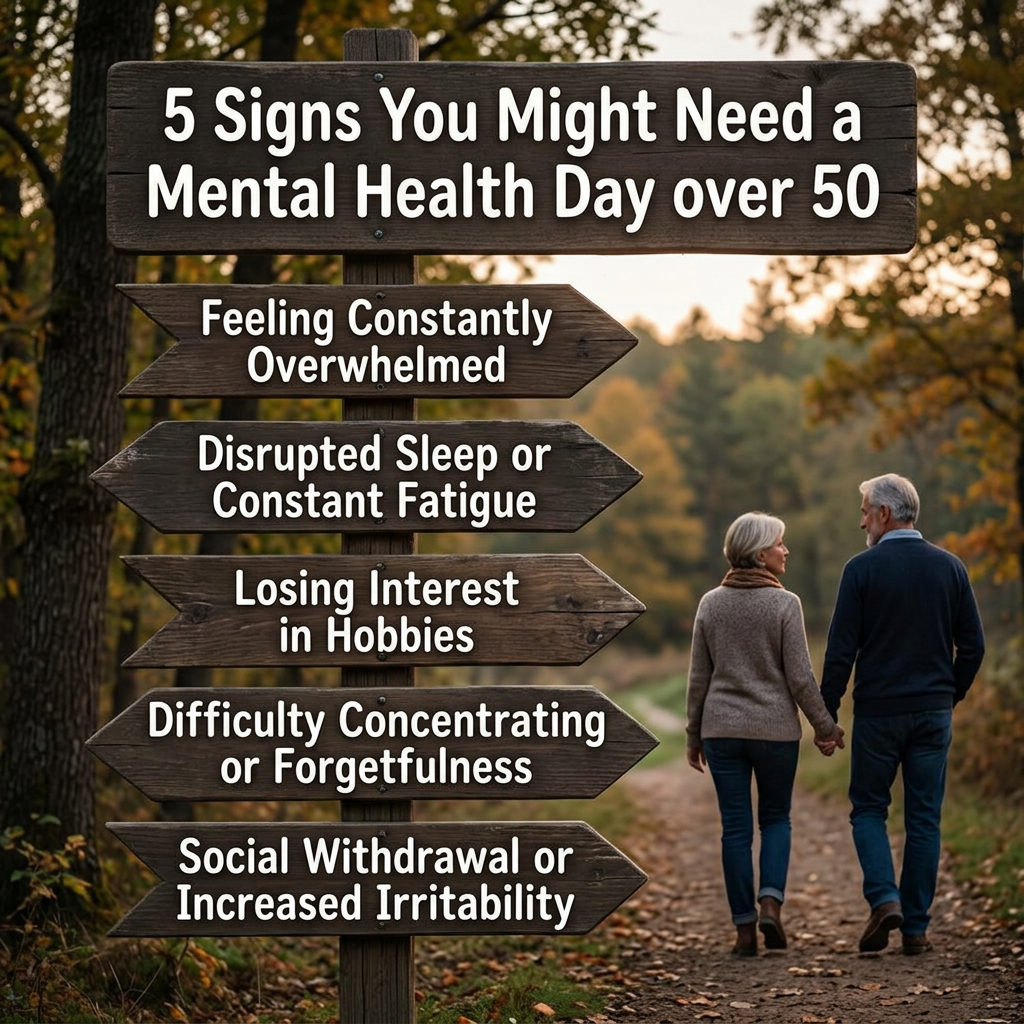
5 Signs You Might Need a Mental Health Day After 50
1. You Are More Irritable Than Usual
If little things that normally would not bother you suddenly get under your skin, it may be a sign that you are mentally overloaded.
Stress can affect your mood and patience. If you find yourself snapping at people, feeling unusually frustrated, or having a much shorter fuse than normal, a day to slow down may be worthwhile.
2. Everything Feels Like a Chore
When even simple tasks seem exhausting, pay attention. You may still be getting everything done, but it feels like you are forcing yourself through every part of the day.
There is an important difference between occasionally having a lazy day and feeling persistently drained or losing interest in things you normally enjoy. If that loss of interest continues or starts interfering with everyday life, it is worth talking with a health professional rather than simply taking a day off.
3. Your Brain Will Not Shut Off
You sit down to relax, but your mind keeps going. You replay conversations, worry about tomorrow, think about unfinished tasks, or jump from one concern to another.
A mental health day can give you permission to step away from the constant pressure to accomplish something. A quiet morning, a walk outside, reading, or another relaxing activity may help you create some mental space.
4. You Feel Mentally Exhausted Even After Sleeping
Sometimes your body gets enough time in bed but your mind still feels completely worn out.
Stress and poor-quality sleep can leave you feeling foggy, tired, and unable to concentrate. If fatigue is new, severe, persistent, or unexplained, do not assume it is simply stress. Sleep problems and many physical health conditions can also cause fatigue and deserve proper attention.
5. You Want to Get Away From Everyone
Wanting a little quiet time is perfectly normal. But if you suddenly stop wanting to see people, answer messages, participate in hobbies, or do things you normally enjoy, take notice.
Sometimes a little solitude is exactly what you need. But ongoing social withdrawal can also be associated with depression, anxiety, or other mental health concerns. The key is to notice whether you are taking a healthy break or gradually pulling away from life.
What Should You Actually Do on a Mental Health Day?
You do not need an elaborate plan. The goal is to reduce pressure and give your mind some room to recover.
- Start slowly. Give yourself permission not to rush through the morning.
- Get outside. A walk, sitting in the sunshine, or simply spending time in nature can make a day feel different.
- Put the phone down for a while. Constant notifications and scrolling can keep your brain switched on.
- Do something you genuinely enjoy. Read, listen to music, work on a hobby, cook something you like, or simply relax.
- Do not feel guilty about resting. Rest is not wasted time. Sometimes it is exactly what you need to get back to feeling like yourself.
A Mental Health Day Is Not a Substitute for Professional Help
A mental health day is best thought of as a short pause, not a replacement for treatment. If sadness, anxiety, hopelessness, loss of interest, sleep problems, fatigue, difficulty concentrating, or other symptoms are persistent or are interfering with your everyday life, talk with a doctor or qualified mental health professional.
If you are in immediate emotional distress or thinking about harming yourself, call or text 988 in the United States to reach the Suicide & Crisis Lifeline, or call 911 for an emergency.
For thoughtful writing about later-life wellbeing and the emotional side of aging, Next Avenue offers reporting and resources on mental health, aging, and finding support when life feels overwhelming. Persistent or severe symptoms deserve support from a qualified professional.
Common Questions About Taking a Mental Health Day After 50
What is a mental health day?
A mental health day is a planned break from normal responsibilities so you can rest, decompress, and take care of your emotional well-being.
How do I know if I really need one?
If you are unusually irritable, mentally exhausted, overwhelmed, unable to relax, or simply feel like you need to step away from the usual routine, a day of rest may help. If symptoms are persistent or getting worse, seek professional advice instead of relying only on time off.
Should I spend my mental health day alone?
That depends on what you need. Some people benefit from quiet time alone, while others feel better talking with a trusted friend or spending relaxed time with family. Choose what feels restorative rather than what you think you are supposed to do.
Should I stay in bed all day?
Rest is fine, but staying in bed all day is not necessarily the most helpful choice. Getting up, eating normally, getting some daylight, moving gently, and doing one enjoyable thing can make the day feel more restorative.
When should I talk to a professional instead of taking a mental health day?
If symptoms last, become severe, interfere with daily life, or make it difficult to function, talk with a doctor or mental health professional. A mental health day can provide a pause, but it should not replace appropriate care.
I suggest this for a great fun read work your mind:
About the Author
Tom Green writes Well After 50. He was born in Pell City, Alabama, in 1962, and he’s a country boy and a true Southerner through and through. He’s just a regular, laid-back 64-year-old who keeps things simple. He shares what he learns about skincare, fitness and getting older, and what’s working for him. He’s also the author of A Practical Guide to Getting Older Without Giving Up on Yourself. Tom isn’t a doctor. He reads up on the research and passes along what’s useful, plain and simple.
Sources
For general information about mental health, symptoms, stress, and when to seek help, see the National Institute of Mental Health and the Centers for Disease Control and Prevention.
Image Attribution
Featured image: Original image created for Well After 50.
Keep Reading
I’ve also mapped out some great tools on my new Tech for Independent Living After 50 page.






What do you think? Have a tip, question, or personal experience to share? We’d love to hear from you. After 50, there’s always something new to discover—and your thoughts might help someone else, too!