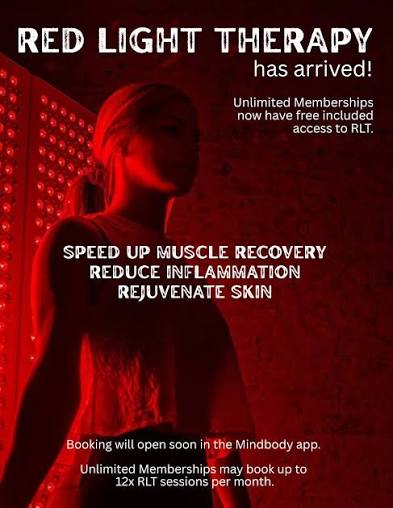
I’ll admit it: I was curious about red light therapy, so I tried it myself.
After a workout, I sat under a red light machine for a treatment. It’s one of those things that makes you wonder, “Is this actually doing something, or am I just sitting in a bunch of red lights?”
So I decided to look past the hype and see what the research actually says.
What Is Red Light Therapy?
Red light therapy is often called photobiomodulation. It uses specific wavelengths of red and sometimes near-infrared light rather than ultraviolet light.
The basic idea is pretty interesting. Researchers think these wavelengths can interact with cells and influence cellular signaling and energy production, including processes involving the mitochondria—the parts of our cells that help produce energy.
That doesn’t mean red light is some magic reset button for aging. It means there is a biological reason researchers are interested in it, and there is a growing body of clinical research looking at where it may actually help.
What Might Red Light Therapy Actually Do?
This is where I think it gets interesting—especially after 50. Research has looked at photobiomodulation for several different uses, although the strength of the evidence isn’t the same for all of them.
- Skin: Studies have looked at skin texture, wrinkles, healing and other signs of photoaging. Some research suggests red and near-infrared light may support changes in skin biology.
- Hair: Photobiomodulation has been studied for certain types of hair loss, with some evidence of increased hair density.
- Pain and recovery: Researchers have studied it for pain, inflammation and musculoskeletal problems. Results vary depending on the condition and treatment protocol.
- Wound healing: This is one of the areas where photobiomodulation has received serious medical research attention.
- Older adults: A 2024 systematic review found some promising results in older adults, but also pointed out a major problem: studies used very different devices, wavelengths and treatment schedules.
So “red light therapy works” is actually too broad a statement. The better question is: works for what, with which device, at what dose, and for how long?
Why Would Light Affect Your Cells?
This is the part that sounds a little strange at first.
Red and near-infrared light can penetrate tissue to some degree. Researchers believe light can interact with cellular components and influence signaling pathways, including pathways associated with mitochondrial function and energy production.
Think of it less like “the light is healing you” and more like giving certain cells a signal that may influence what they do.
The science is real, but researchers are still working out exactly how different wavelengths, intensities and treatment schedules translate into useful results.
What About Skin After 50?
This is probably where most of us hear about red light therapy.
As we get older, skin changes. Collagen production decreases, skin becomes thinner and changes in texture and elasticity become more noticeable. That has made light-based treatments particularly interesting in dermatology.
There is evidence that low-energy red and near-infrared light can have effects relevant to skin rejuvenation, but the research is not a license to believe every “anti-aging” claim attached to an expensive red light device.
Different machines use different wavelengths and power levels, and studies don’t all use the same treatment schedule. That makes comparing one person’s home device with a clinical study surprisingly difficult.
And What Did I Notice?
Here’s my honest answer: I don’t know yet.
I worked out, then I sat under the red lights. I wasn’t expecting to walk out looking ten years younger or suddenly feel like Superman.
What I’m interested in is what happens with regular use. Does my skin look or feel different? Do I notice anything about recovery after workouts? Is there any difference I can actually see or feel over time?
One treatment isn’t enough to answer any of those questions. And that’s an important point when you’re trying something like this: your personal experience is not the same thing as scientific proof.
Is Red Light Therapy Worth Trying?
I think the interesting part is that this isn’t just an internet fad with no science behind it. Photobiomodulation has been studied for years, and a 2025 evidence-based consensus concluded that it is a safe treatment modality for adults when appropriately used, while also emphasizing that the evidence varies by medical application.
At the same time, I wouldn’t spend a fortune because somebody promises that a red light panel will reverse aging.
If you’re considering a device, pay attention to the wavelengths it uses, the manufacturer’s treatment instructions, eye-safety guidance and the actual evidence for the result you’re interested in. More light or longer sessions aren’t automatically better.
Common Questions
What is red light therapy?
Red light therapy uses specific wavelengths of red or near-infrared light that are intended to interact with cells and tissues.
Does red light therapy really work after 50?
Research suggests it may have benefits for certain uses, but results vary depending on the condition, device, treatment schedule, and individual.
Can red light therapy help your skin look better?
Some research suggests red and near-infrared light may support improvements in aspects of skin appearance, including fine lines and skin texture.
How often should you use red light therapy?
There isn’t one schedule that works for every device or purpose. Follow the instructions for the specific device you’re using.
Is red light therapy safe?
It is generally considered low risk when used properly, but following the manufacturer’s instructions is important. Avoid staring directly into bright treatment lights unless the device specifically indicates that it is safe.
How long does it take to see results?
Results aren’t usually immediate. If red light therapy helps, noticeable changes generally require consistent use over time.
Is red light therapy a replacement for medical treatment?
No. It shouldn’t be used as a substitute for diagnosis or treatment from a healthcare professional when you have a medical condition.
The Bottom Line
Red light therapy is one of those things where the truth is more interesting than the hype.
There is legitimate research behind photobiomodulation, and there are some areas where the evidence is encouraging. But there are also plenty of unanswered questions, especially because devices and treatment protocols vary so much.
I’m going to keep trying it and see what I notice. If something changes, I’ll tell you. If nothing changes, I’ll tell you that too.
Because getting older doesn’t mean we have to believe every new health trend—but it also doesn’t mean we should automatically dismiss something just because it sounds a little strange.
Sources & Further Reading
- Evidence-based consensus on the clinical application of photobiomodulation
- Efficacy of Photobiomodulation Therapy in Older Adults: A Systematic Review
- Effects of photobiomodulation on multiple health outcomes: an umbrella review of randomized clinical trials
- Photobiomodulation: The Clinical Applications of Low-Level Light Therapy
This article is for general information and isn’t a substitute for medical advice. If you have a medical condition or take medications that make you sensitive to light, check with your healthcare professional before using light therapy.

Red Light Therapy Pad for Body Back Knee Shoulder Hands Feet 660nm 850nm Home Use 3 Chips in 1 Infrared Wrap Belt Gift for Women Men (Corded)
Try it out: https://amzn.to/3VmB5fr
Disclosure: Some links in this article are affiliate links. If you purchase through one of these links, Well After 50 may earn a commission at no additional cost to you.
Written by Tom Green, creator of Well After 50
Tom is the creator of Well After 50, focused on practical skincare, wellness, fitness, and healthy-aging ideas after 50.