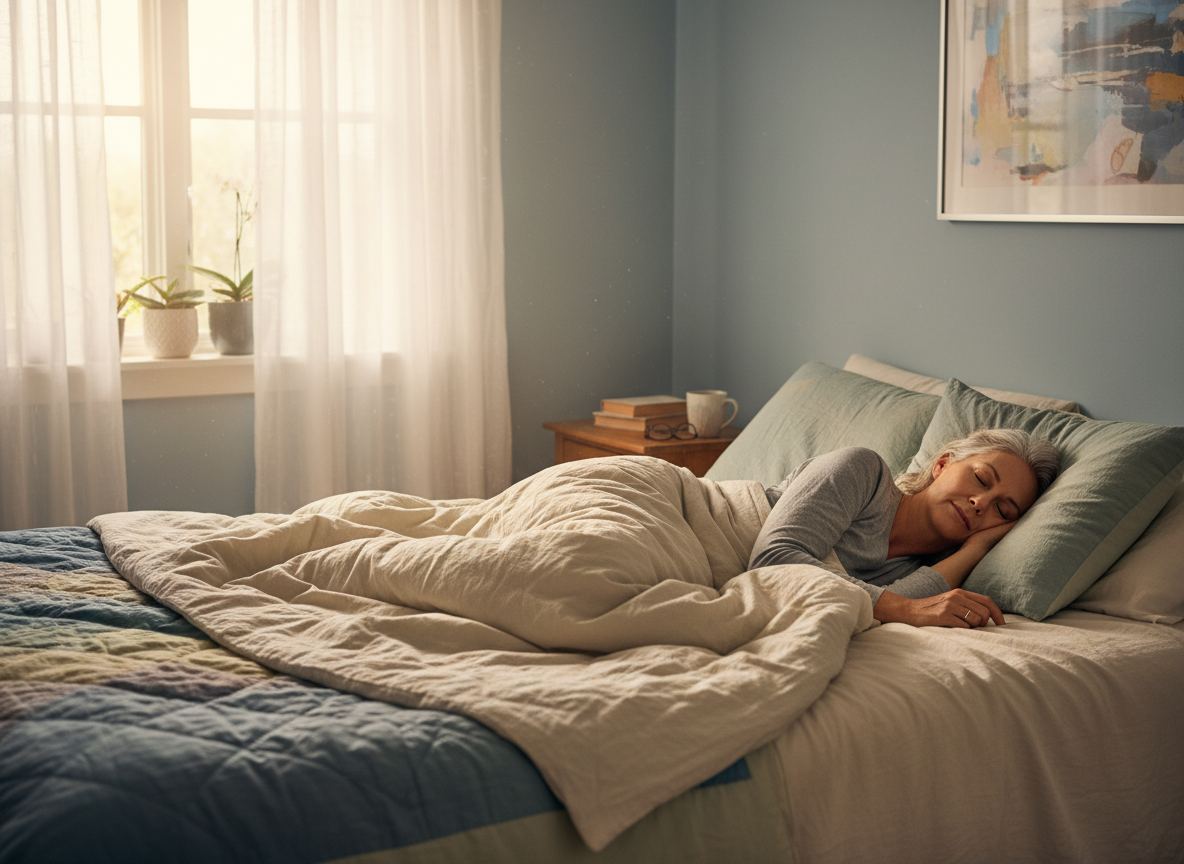
When I don’t sleep well, I can usually see it before I feel completely caught up. My face may look duller, my eyes can look tired and my skin doesn’t seem as comfortable.
Sleep isn’t a skincare product, but it is part of the environment your skin has to work with. And after 50, I think it is easy to focus on another cream while overlooking the basics.
What Poor Sleep Can Make More Noticeable
Short or disrupted sleep can affect how rested you look. Puffiness, dryness, irritation and a tired complexion may be more noticeable, and poor sleep can also make it harder to keep up with good habits.
That doesn’t mean one bad night permanently damages your skin. Day-to-day appearance can change, and recovery matters.
Don’t Try to Out-Product Bad Sleep
- Cleanse gently rather than scrubbing tired skin.
- Moisturize if your skin feels dry or tight.
- Use daytime sun protection.
- Avoid suddenly adding several strong actives when your skin is already irritated.
- Put effort into getting your sleep schedule back on track.
Look at Why You’re Not Sleeping
Stress, an inconsistent schedule, late caffeine, alcohol, room temperature, discomfort, medications and health conditions can all affect sleep. If poor sleep is persistent, it is worth discussing the problem with a healthcare professional instead of simply deciding it is part of getting older.
Skincare Helps, But It Doesn’t Replace Recovery
A moisturizer can moisturize. Sunscreen can protect exposed skin. A properly chosen active can address certain cosmetic concerns. None of those replaces adequate rest.
My Practical Take
If I had to choose between buying another serum and working on a consistently better sleep routine, I’d look at sleep first. It costs less, supports more than appearance and may make the skincare routine you already have easier to stick with.
Aging well isn’t about having a perfect night of sleep every night. It is about noticing when poor sleep has become a pattern and doing something about the basics.
This is general information and personal experience, not medical advice.
Leave a Reply