Tag: senior nutrition

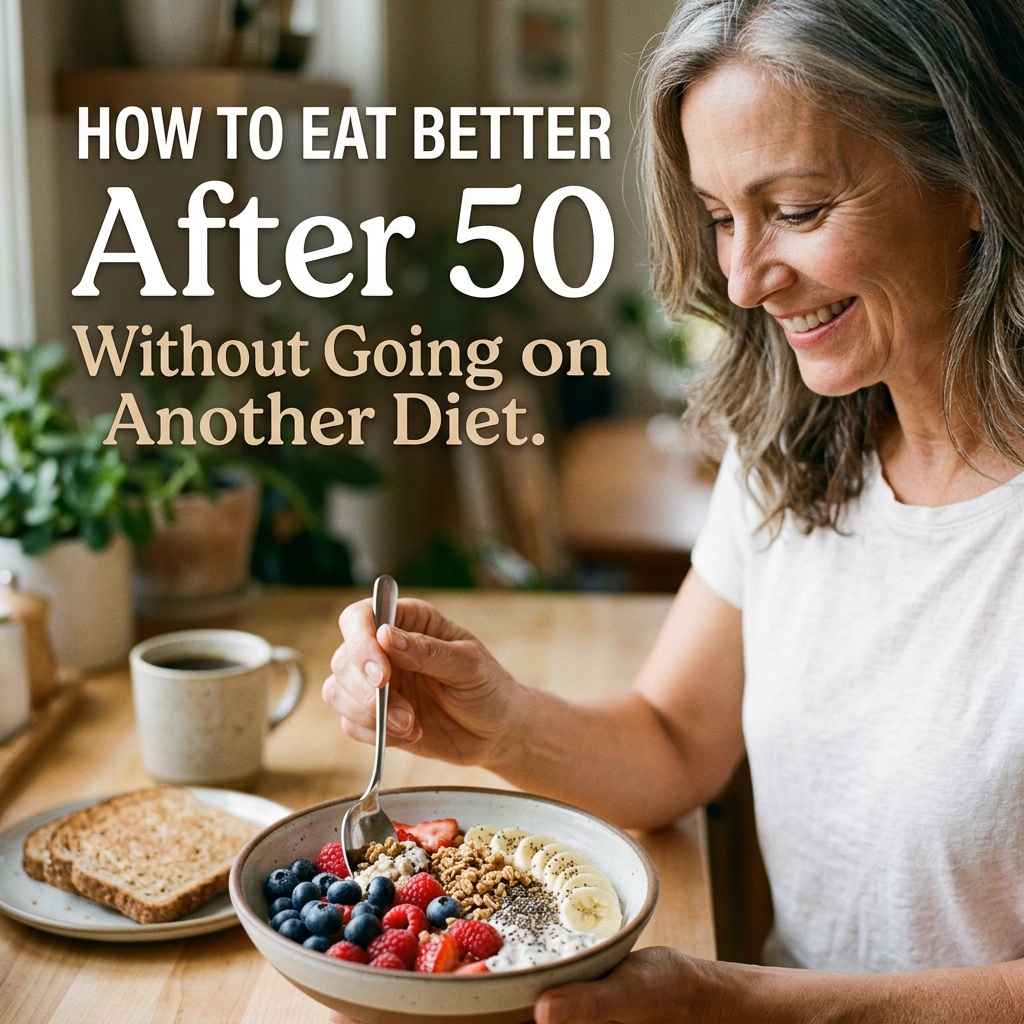
  • How to Eat Better After 50 Without Going on Another Diet

    How to Eat Better After 50 Without Going on Another Diet

    How do you eat better after 50 without going on a diet?

    Short answer: You don’t need another diet. Start by adding good things instead of banning foods: an egg or Greek yogurt at breakfast, more fiber from oats, beans and berries, and enough protein to help keep your muscle. When you’re not sure what to cook, use the Harvard Healthy Eating Plate, with about half your plate vegetables and fruit.

    Every few months, it seems somebody comes along with another diet that promises to fix everything. Cut out bread. Stop eating after six. Buy a powder. Count every bite. After 50, I think most of us have earned the right to ask a better question: How can I eat a little better without making food another source of stress?

    You don’t need a perfect refrigerator, expensive groceries, or the willpower to turn down every piece of birthday cake. You need a few meals you enjoy, a sensible shopping list, and habits that still work when you’re tired or your week goes sideways.

    Start with what you can add, not everything you must give up

    Instead of declaring certain foods forbidden, take a look at an ordinary day of eating. Is breakfast mostly coffee and toast? Could you add an egg or Greek yogurt? Is lunch a sandwich? Could you add fruit or a handful of baby carrots? A small improvement that lasts is more useful than a dramatic change you abandon by Thursday.

    Stanford nutrition researcher Christopher Gardner, interviewed by Elle Hunt in The Guardian, makes a similar argument: eat well most of the time instead of treating nutrition as an all-or-nothing contest. That’s not permission to ignore nutrition; it’s a way to make a generally healthy pattern sustainable.

    Use a simple plate as your guide

    When you’re not sure what to cook, the Harvard Healthy Eating Plate is a useful starting point: aim for about half a plate of vegetables and fruit, one-quarter whole grains, and one-quarter healthy protein, with sensible amounts of healthy fats and water as a usual drink. These are flexible proportions, not rules you must measure at every meal.

    Here’s what that can look like in a real kitchen: baked chicken or beans, a serving of brown rice, and a generous helping of frozen broccoli with olive oil and seasoning. Don’t like broccoli? Use green beans, cabbage, carrots, or the vegetables you’ll actually eat.

    Try this tonight: Before changing anything else on your dinner plate, add one vegetable or fruit that wasn’t there yesterday.

    After 50, don’t forget the protein

    Protein matters for maintaining muscle and supporting recovery, especially if you exercise. You don’t have to live on shakes or eat a steak at every meal. Fish, eggs, yogurt, cottage cheese, chicken, lentils, tofu, and beans can all contribute. How much you need depends on your size, activity, health, and goals; people with kidney disease or dietary restrictions should ask their care team about a suitable target.

    For a practical start, include a protein-containing food at breakfast, lunch, and dinner. That could be yogurt in the morning, tuna or hummus at lunch, and chicken, fish, or beans at supper. See my guide to protein after 50 if you’d like more detail.

    Fiber is one of the easiest upgrades

    Fiber helps keep digestion regular, and fiber-rich foods can support heart health and make meals more satisfying. Oats, beans, lentils, vegetables, berries, pears, and whole grains are everyday options. There’s no need to make every meal a giant salad.

    Three low-effort changes: choose oatmeal a few mornings a week; stir canned beans into soup, chili, or a rice bowl; and swap white bread for whole-grain bread when you enjoy the taste. Increase fiber gradually and drink enough fluids, particularly if you’ve been eating very little fiber.

    Make breakfast work for you

    Some mornings you’re hungry; other mornings you aren’t. Rather than forcing yourself into a complicated breakfast, keep two reliable options on hand:

    • Sweet: Plain or lower-sugar Greek yogurt with oats, berries, and a sprinkle of nuts or seeds.
    • Savory: Eggs with spinach or tomatoes and whole-grain toast.

    Registered dietitian Keri Gans, speaking with Prevention, describes Mediterranean-style eating as a balanced approach rather than a rigid diet. Her examples show how protein, whole grains, produce, and healthy fats can fit into an ordinary breakfast.

    Build a lunch you can repeat without getting bored

    One of the biggest obstacles to eating better isn’t knowing what to eat. It’s being hungry at noon and having absolutely nothing ready.

    Business Insider writer Rachel Hosie shares a simple, make-ahead grain bowl built from whole grains, beans, protein, and vegetables. Registered dietitian Nichola Ludlam-Raine comments in that article on why this combination is balanced and adaptable.

    You can make your own version with whatever is affordable: leftover rice, canned chickpeas, chopped cucumber or frozen vegetables, chicken or tofu, and a little dressing. Keep cooked leftovers refrigerated promptly, and follow safe storage guidance. Or skip the bowl entirely and make a tuna sandwich with fruit on the side. The point is to have a plan, not a complicated recipe.

    Eat better on a regular grocery budget

    Healthy eating doesn’t require boutique groceries. A few basics stretch a long way:

    • Frozen vegetables and fruit: Usually convenient, often less waste, and useful when fresh produce spoils before you can eat it.
    • Canned beans and fish: Shelf-stable meal starters. Compare labels for sodium when appropriate.
    • Oats, rice, and potatoes: Flexible, filling staples; combine them with protein and produce.
    • Eggs, yogurt, peanut butter, tofu, or chicken: Choose the proteins that fit your budget and dietary needs.
    • Cabbage, carrots, apples, and seasonal produce: Often practical options that keep relatively well.

    Five-minute shopping trick: Before leaving home, choose two proteins, three produce items, and one whole-grain staple. Then think of three meals you can make from them. This cuts down on buying ingredients that don’t fit together.

    A realistic one-day menu

    • Breakfast: Greek yogurt, oatmeal, and berries.
    • Lunch: Tuna or chickpea sandwich on whole-grain bread, plus carrots or fruit.
    • Snack, if hungry: An apple with peanut butter or cottage cheese.
    • Dinner: Baked fish, chicken, or tofu; roasted vegetables; and rice or a potato.
    • Dessert: Something you enjoy if you want it. One dessert doesn’t cancel out the rest of your day.

    Adjust portions and foods to your appetite, medical needs, activity, and preferences. This is an example, not a calorie-controlled diet or a medical meal plan.

    If dinner is the meal where you keep running out of ideas, a meal kit can carry some of that load a few nights a week. Marley Spoon sends the recipe and the ingredients right to your door, so a decent supper with protein and vegetables doesn’t take a lot of planning. (affiliate link)

    What I’d stop worrying about

    I’d stop chasing every food trend, buying “detox” products, and treating one meal as proof that I’ve failed. I’d also stop assuming packaged foods are automatically bad. Canned beans, frozen vegetables, and plain yogurt can make good eating easier. Nutrition is about the pattern over time—not a purity test.

    That doesn’t mean every choice has the same nutritional value. The American Heart Association’s overview of Mediterranean-style eating emphasizes vegetables, fruit, legumes, whole grains, healthy fats, and protein choices that support heart health. These basics are much more useful than a dramatic three-day reset.

    Try this for the next seven days

    1. Pick one breakfast you can repeat.
    2. Add a vegetable or fruit to lunch or dinner.
    3. Include a protein food at each main meal.
    4. Plan two simple dinners before shopping.
    5. Keep one easy backup meal in the house for a tiring day.
    6. Drink water regularly, unless your clinician has advised a fluid restriction.
    7. At week’s end, ask what felt easier—not what you did perfectly.

    Keep the habits that helped and change the ones that didn’t. That’s how eating better becomes part of life instead of another project you have to start over every Monday.

    Common questions about eating better after 50

    Do I need to go on a diet to eat healthier after 50?

    No. Many people can improve the nutritional quality of their usual meals by adding more vegetables, fruit, fiber-rich foods, and appropriate protein rather than following a restrictive diet.

    Are carbohydrates bad after 50?

    No. Carbohydrate quality and portion size matter more than avoiding all carbs. Oats, beans, fruit, and whole grains can be part of a healthy eating pattern.

    What if I cook for one?

    Buy smaller amounts when possible, use frozen produce, and plan meals around ingredients you can reuse. A can of beans might become soup one day and a rice bowl the next.

    What if I’m not hungry?

    Try smaller, nutrient-dense meals and snacks rather than forcing a large plate. Persistent appetite loss, unexpected weight change, or difficulty eating deserves a discussion with a healthcare professional.

    My bottom line

    After 50, the best way to eat better may be the one you can keep doing. Make breakfast a little stronger. Keep a few good groceries on hand. Add more plants. Eat enough protein. Enjoy your food. And don’t turn eating into another reason to be hard on yourself.

    Your turn: What’s one affordable, easy meal you keep coming back to? Share it in the comments—someone else might need that idea.

    Keep Reading

    About Tom Green

    Tom Green writes Well After 50. He was born in Pell City, Alabama, in 1962, and he’s a country boy and a true Southerner through and through. He’s just a regular, laid-back 64-year-old who keeps things simple. He shares what he learns about skincare, fitness and getting older, and what’s working for him. He’s also the author of A Practical Guide to Getting Older Without Giving Up on Yourself. Tom isn’t a doctor. He reads up on the research and passes along what’s useful, plain and simple.

    I’ve also mapped out some great tools on my new Tech for Independent Living After 50 page.
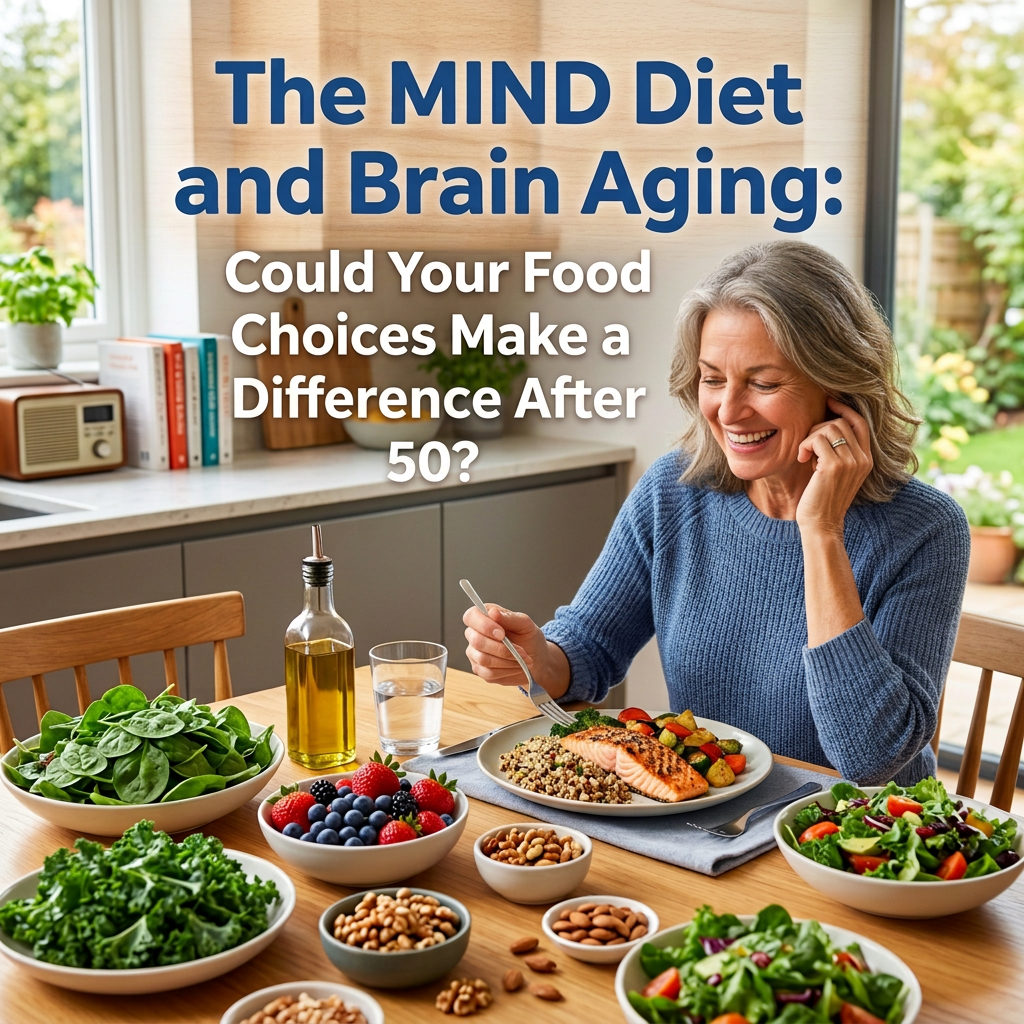
  • The MIND Diet and Brain Aging: Could Your Food Choices Make a Difference After 50?

    The MIND Diet and Brain Aging: Could Your Food Choices Make a Difference After 50?

    Can the MIND diet slow brain aging?

    Short answer: The MIND diet mixes the Mediterranean and DASH diets to help protect the brain. In a 2026 study of 1,647 adults followed for about 12 years, people who stuck closer to it lost brain gray matter more slowly. It doesn’t prove the diet prevents Alzheimer’s, but it’s a good reason to pay attention to what’s on your plate.

    What you eat may matter for your brain as you get older. A 2026 study gives us another reason to pay attention to the food on our plates—but the finding needs a little explanation.

    Researchers studying adults in the long-running Framingham Heart Study found that people who followed the MIND diet more closely experienced slower loss of gray matter over time. The difference associated with a three-point increase in their MIND diet score was estimated to be equivalent to about 2.5 years of age-related brain change over the study period.

    That is an interesting finding. But let’s keep it honest: the study does not prove that this diet makes your brain younger, prevents Alzheimer’s disease, or guarantees that your memory will stay sharp. It does give us a practical reason to look at how we eat—and a few changes that may be worth making after 50.

    What Is the MIND Diet?

    MIND stands for Mediterranean-DASH Intervention for Neurodegenerative Delay. The name is a mouthful, but the basic idea is simple. It combines elements of the Mediterranean and DASH eating patterns, with an emphasis on foods that fit into a generally healthy way of eating.

    You don’t need special powders, expensive supplements, or a refrigerator full of trendy products to understand it. The focus is on everyday foods:

    • Leafy green vegetables: spinach, kale, collards and other greens.
    • Other vegetables: add variety and color to your meals.
    • Berries: blueberries, strawberries and other berries.
    • Whole grains: oatmeal, brown rice and whole-grain bread.
    • Beans and legumes: beans, lentils and chickpeas.
    • Nuts: a small handful can be an easy snack.
    • Fish and poultry: practical sources of protein.
    • Olive oil: a useful replacement for some less healthful fats.

    The eating pattern also encourages limiting foods such as butter, fried foods, pastries, sweets, and large amounts of red meat and cheese. This isn’t about never eating a piece of cake again. It’s about what you do most of the time, not whether every meal is perfect.

    What Did the Researchers Find?

    The 2026 research examined 1,647 adults from the Framingham Heart Study Offspring cohort. Participants were followed for a median of about 12 years, and researchers used brain imaging to examine changes in brain structure over time.

    People with higher MIND diet scores tended to show slower loss of gray matter. Gray matter contains many of the brain’s nerve cell bodies and plays important roles in thinking, memory and other functions.

    The researchers estimated that each three-point increase in the MIND diet score was associated with a difference equivalent to about 2.5 years of age-related gray-matter change over the follow-up period.

    Here’s the important distinction: this was an observational study. Researchers observed people’s eating patterns and brain changes; they did not randomly assign participants to follow the diet and prove that the diet caused the difference. People who eat healthier diets may also differ in other ways, including exercise habits, sleep, income, education and general health. Researchers can account for some factors, but they cannot eliminate every possible explanation.

    So the finding is promising evidence of an association, not a guarantee of results. And a change in brain structure is not the same thing as proving better memory or preventing dementia.

    Berries and poultry stood out in the researchers’ analysis of individual foods. That doesn’t mean blueberries or chicken are miracle foods. The study looked at a broader dietary pattern, and its findings about individual foods should not be treated as proof that any one item independently slows brain aging.

    Still, both can fit easily into everyday meals. You could add berries to oatmeal at breakfast, have them with plain yogurt, or keep frozen berries on hand when fresh ones are expensive. Poultry can be part of a simple lunch or dinner alongside vegetables and a whole grain.

    You don’t have to buy organic berries, expensive specialty foods, or a stack of supplements to get started. Use foods you enjoy and can afford.

    You don’t have to overhaul your kitchen overnight. Start with one or two changes you can keep doing.

    If vegetables aren’t a regular part of lunch or dinner, start there. Frozen vegetables count, too. They’re convenient, often affordable and can save preparation time.

    Fresh berries are great, but frozen ones are useful when prices are high. Add a handful to oatmeal or yogurt, or eat them as a snack.

    Try oatmeal for breakfast, brown rice with dinner, or whole-grain bread for a sandwich. You don’t have to change everything at once.

    Beans and lentils can be inexpensive, filling sources of fiber and plant protein. Add them to soup, chili, salads or a side dish.

    A single meal won’t determine your future brain health. What matters more is the pattern you build over time. If you eat fried food today, that doesn’t mean you’ve failed. Make your next meal a reasonable one and keep going.

    Eating well matters, but it isn’t the only thing worth doing after 50. Regular physical activity, adequate sleep, social connection, and managing conditions such as high blood pressure and diabetes are also important parts of looking after your health.

    If you have concerns about memory or changes in thinking, talk with a qualified health professional rather than assuming food alone will solve the problem. Be wary of products that promise to reverse brain aging or prevent dementia. A promising study is not proof that a supplement, a single food, or a particular diet can deliver those results.

    My Takeaway

    I like research that gives us something practical to work with without pretending there’s a magic answer.

    The MIND diet study doesn’t mean we can turn back the clock on our brains. It does suggest that healthier eating patterns may be associated with more favorable changes in brain structure as we age.

    For me, the sensible approach is straightforward: eat more vegetables, include berries and beans when you can, choose whole grains more often, and pay attention to the overall pattern. Keep moving, get enough sleep, and look after your general health, too.

    If planning all those meals is the hard part, a meal kit can take a lot of the guesswork out of it. Marley Spoon sends the recipe and the ingredients right to your door, so getting more vegetables and good protein on the plate gets a whole lot easier. And if green tea is more your speed than coffee, More Than Matcha makes matcha you can stir up in about a minute. (affiliate links)

    You don’t have to eat perfectly. You just have to keep making reasonable choices.

    Getting older is part of life. Giving up on looking after yourself doesn’t have to be.

    Common Questions About the MIND Diet

    Does the MIND diet prevent Alzheimer’s disease?

    We cannot say that it does. Research has found associations between the MIND eating pattern and certain measures of brain health, but this study does not prove that the diet prevents Alzheimer’s disease or other forms of dementia.

    What does “2.5 years less brain aging” actually mean?

    It refers to an estimated difference in age-related gray-matter loss associated with a higher MIND diet score over the study period. It does not mean participants’ brains were literally rejuvenated by 2.5 years, nor does it guarantee better memory.

    Do I need to follow the MIND diet perfectly?

    No. Focus on the overall pattern of your eating rather than making every meal perfect. Start with changes that are affordable, enjoyable and realistic for you.

    Are blueberries the most important food for brain health?

    The study highlighted berries among the foods associated with favorable brain-imaging findings, but it did not establish blueberries as a miracle food. The overall eating pattern matters, and no single food guarantees protection.

    Is the MIND diet expensive?

    It doesn’t have to be. Frozen vegetables and berries, dried or canned beans, oatmeal, brown rice and other basic foods can help you build meals without relying on costly specialty products. Compare prices and choose what works for your budget.

    Research and Further Reading

    For another perspective on brain health and aging, explore the work of neuroscientist Dr. Lisa Mosconi, whose research and writing focus on the brain and women’s brain health. This is additional reading, not a claim that she reviewed or endorsed this article.

    MIND diet, cerebrovascular health, and cognition among community-dwelling older adults — Puja Agarwal and colleagues, Rush University. Alzheimer’s & Dementia, 2026. Studied 761 older adults without known dementia at the start (713 with complete diet, brain scan, and thinking-test data; average age 81). In plain words: older adults whose eating matched the MIND diet more closely had healthier small blood vessels in the brain — less hardening and narrowing — along with larger brain volume and fewer white spots on brain scans that are linked to dementia risk. They also scored better on thinking tests. The healthier blood vessels and larger brain size partly explained why better eating went along with better thinking. The link held even after accounting for exercise, weight, race, and existing vascular disease. This was an observational study, so it shows a link, not proof that the diet caused the difference. Link: Read the study

    Adherence to the MIND diet and longitudinal brain structural changes over a decade: evidence from the Framingham Heart Study Offspring cohort — Hui Chen and colleagues. Journal of Neurology, Neurosurgery & Psychiatry, 2026; 97(6):505–512. DOI: 10.1136/jnnp-2025-336957. Studied 1,647 middle-aged and older adults (average age about 60) from the Framingham Heart Study Offspring group, followed for about 12 years with repeated brain scans. In plain words: people whose eating matched the MIND diet more closely lost gray matter (brain tissue) more slowly over about 12 years. Each 3-point higher MIND score was linked to about 20% less age-related gray-matter loss — roughly equal to 2.5 years of delayed brain aging. Higher scores were also linked to slower widening of the brain’s fluid-filled spaces, about a 1-year delay. Berries and poultry showed the strongest favorable links, while sweets and fried fast food were tied to faster shrinkage in the memory area. This was an observational study, so it shows a link, not proof that the diet caused the difference. Link: Read the study

    Keep Reading

    About the Author

    Tom Green writes Well After 50. He was born in Pell City, Alabama, in 1962, and he’s a country boy and a true Southerner through and through. He’s just a regular, laid-back 64-year-old who keeps things simple. He shares what he learns about skincare, fitness and getting older, and what’s working for him. He’s also the author of A Practical Guide to Getting Older Without Giving Up on Yourself. Tom isn’t a doctor. He reads up on the research and passes along what’s useful, plain and simple.

    Health Disclaimer

    This article is for general educational purposes and is not a substitute for individual medical advice, diagnosis or treatment. Research findings do not guarantee individual results. Talk with a qualified health professional about dietary changes if you have medical conditions, special nutritional needs, or concerns about memory or thinking.

    I’ve also mapped out some great tools on my new Tech for Independent Living After 50 page.

  • How Much Protein Do You Need After 50? A Practical Guide

    How Much Protein Do You Need After 50? A Practical Guide

    How much protein do you need after 50?

    Short answer: Many experts suggest about 1.0 to 1.2 grams of protein per kilogram of body weight a day for healthy adults over 65, higher than the standard 0.8. At 150 pounds, that works out to roughly 68 to 82 grams a day, and at 180 pounds, about 82 to 98 grams. Spread it across your meals and start with real food.

    How Much Protein Do You Need After 50?

    How much protein do you need after 50 to help maintain muscle and strength? Your body weight, activity and health matter. Below are research-based ranges, everyday meal ideas and reasons protein works best alongside resistance training.

    Protein gets called a “secret” for a reason: people often underestimate how much their food choices matter when they are trying to maintain muscle as they get older. But protein is not magic, and more is not automatically better.

    For me, protein makes the most sense when it is part of the bigger picture: resistance training, enough total food, good sleep and a diet that provides more than one nutrient.

    Why protein matters after 50

    Your body uses protein to build and repair tissues. As we get older, maintaining muscle becomes increasingly important for strength and everyday function. Resistance training and adequate protein work together much better than either one by itself.

    Build meals around real food

    • Eggs, milk, cottage cheese and yogurt if you tolerate dairy.
    • Chicken, turkey, fish and lean meats.
    • Beans, lentils and other legumes.
    • Tofu, tempeh and other soy foods.
    • Protein-rich snacks when meals are spread far apart.

    Spread protein across the day

    Instead of eating almost all your protein at dinner, it can be practical to include a meaningful source at several meals. That makes it easier to reach an appropriate daily intake without turning one meal into a giant plate of food.

    Don’t forget the rest of the plate

    Protein does not replace vegetables, fruit, whole grains, healthy fats or enough total calories. If you are trying to gain muscle while chronically under-eating, simply adding a protein shake may not solve the bigger problem.

    Food first, supplements when useful

    A protein powder can be convenient. It is not mandatory. I look at supplements as a practical tool when normal meals do not make it easy to meet my needs.

    How much is enough?

    There is no single protein number that is right for every person. Body size, activity, goals and medical conditions matter. Someone with kidney disease or another condition requiring dietary restrictions should discuss appropriate intake with their clinician.

    So How Many Grams Should an Older Adult Aim For?

    The basic U.S. adult recommended dietary allowance is 0.8 grams per kilogram of body weight per day, but some expert groups propose higher amounts for healthy older adults. In a PROT-AGE expert position paper, researchers suggested roughly 1.0–1.2 g/kg/day for many adults over 65, with individualized guidance when active or recovering from illness. This is not a universal prescription, particularly for people with certain kidney conditions.

    Here’s a practical example: at 150 pounds (about 68 kg), a range of 1.0–1.2 g/kg works out to roughly 68–82 grams of protein per day. At 180 pounds (about 82 kg), it’s roughly 82–98 grams. Body composition, health status, goals, and professional advice can change the target.

    What Protein Researchers Actually Recommend

    Dr. Jürgen Bauer and Rebecca Diekmann reviewed protein needs in older people and discussed intake around 1.0–1.2 grams per kilogram of body weight daily for many healthy older adults. That is a research recommendation, not an individual prescription.

    Dr. Stuart Phillips and Dr. Gianni Biolo were coauthors, along with Bauer and others, of the same PROT-AGE position paper. That team considered how protein needs can change with age, activity and illness. I’m mentioning their shared paper as one source, not pretending these are three independent studies.

    Stephanie Harris, Jessica DePalma and Hope Barkoukis published a separate 2025 review discussing practical barriers to adequate protein intake, including appetite and access to food, and strategies for spreading protein through the day. The review synthesizes existing studies rather than reporting a new clinical trial.

    Calculate Your Daily Protein: A Quick Cheat Sheet

    Want a starting number you can use when planning meals? Divide your weight in pounds by 2.2 to get kilograms, then multiply by a suitable daily target in grams per kilogram. For example, a 160-pound person weighs about 73 kg; at 1.2 g/kg, that is about 87 grams of protein per day. The 1.0–1.2 g/kg range discussed in the PROT-AGE report is guidance for many healthy older adults, not a universal prescription.

    • 120 pounds: roughly 55–65 grams a day at 1.0–1.2 g/kg.
    • 140 pounds: roughly 64–76 grams a day.
    • 160 pounds: roughly 73–87 grams a day.
    • 180 pounds: roughly 82–98 grams a day.
    • 200 pounds: roughly 91–109 grams a day.

    These are rounded examples. Your activity, goals and health can change the appropriate amount. If your goal is around 90 grams, one practical distribution is 25 grams at breakfast, 25 at lunch, 30 at dinner and 10 from a snack. You don’t have to eat a mountain of food at dinner just to meet the day’s total.

    An Ordinary Day That Spreads Protein Across Meals

    Breakfast: Greek yogurt with berries, or eggs with a high-protein side. Lunch: tuna, chicken, tofu or beans in a substantial meal. Dinner: fish, poultry, soy or another protein source alongside vegetables and grains. If you’re short at the end of the day, a shake can be convenient, but it’s not automatically superior to food.

    A 2025 research review on protein and aging discusses servings around 25–30 grams at meals as a practical strategy for supporting muscle protein synthesis in many older adults. That’s a helpful meal-planning idea, not a mandatory limit or a guarantee of muscle growth.

    If You Have a Poor Appetite, Start Here

    Instead of demanding an enormous dinner, add one reliable protein-containing item to breakfast, replace a low-protein snack with yogurt or cottage cheese, or include tofu, beans or fish in a familiar dish. Keep enough total calories on the plate; protein alone won’t fix chronic under-eating.

    Protein Without Resistance Exercise Isn’t the Whole Answer

    Your muscles respond to challenges. If it’s safe for you, regular resistance exercise—even simple, progressive movements—gives the body a reason to maintain strength. Tailor exercise to injuries and medical limitations. See our guides to building muscle after 60 and losing muscle after 50.

    Common Questions

    Why is protein so important after 50?
    Protein helps support muscle maintenance, strength, recovery, and many other functions as you age.

    How much protein do you need after 50?
    There isn’t one number that fits everyone. Needs depend on factors such as body size, activity level, goals, and health.

    Can eating enough protein help protect muscle after 50?
    Yes. Adequate protein combined with regular resistance exercise can help support muscle maintenance and growth.

    Can protein help you maintain your energy after 50?
    Protein provides calories and supports muscle, but feeling energetic also depends on sleep, overall nutrition, physical activity, hydration, and health.

    Should you spread protein throughout the day after 50?
    Including a meaningful source of protein at each meal can be a practical way to consistently meet your daily needs.

    What are good protein foods after 50?
    Options include eggs, fish, poultry, lean meats, Greek yogurt, cottage cheese, beans, lentils, tofu, and other protein-rich foods.

    Do you need protein powder after 50?
    No. Protein powder is optional. It can be convenient when getting enough protein from regular foods is difficult.

    Can you build muscle after 50 with protein alone?
    No. Protein supports muscle, but resistance training is also important for giving your muscles a reason to become stronger.

    Is too much protein better after 50?
    More isn’t automatically better. Your overall protein intake should fit your individual needs, diet, activity level, and health.

    What is the simplest protein strategy after 50?
    Include a good protein source at each meal → strength train regularly → eat a balanced diet → stay consistent.

    Practical takeaway: Don’t think of protein as a magic food. Think of it as one important part of protecting your muscle as you get older—especially when combined with strength training.

    My bottom line

    Protein is important, but it works best as part of a complete plan. Lift, eat enough nutritious food, include protein regularly and give your body time to recover.

    General nutrition information, not individualized medical advice.

    About Tom Green

    Tom Green writes Well After 50. He was born in Pell City, Alabama, in 1962, and he’s a country boy and a true Southerner through and through. He’s just a regular, laid-back 64-year-old who keeps things simple. He shares what he learns about skincare, fitness and getting older, and what’s working for him. He’s also the author of A Practical Guide to Getting Older Without Giving Up on Yourself. Tom isn’t a doctor. He reads up on the research and passes along what’s useful, plain and simple.

    I’ve also mapped out some great tools on my new Tech for Independent Living After 50 page.