Category: Wellness & Lifestyle

  • Men vs. Women After 55: 9 Surprising Ways Aging Is Different

    Men vs. Women After 55: 9 Surprising Ways Aging Is Different

    Getting older doesn’t look exactly the same for men and women. After 55, some changes are shaped by hormones and biology, while others have much more to do with lifestyle, activity, sleep, nutrition, and plain old genetics.

    That doesn’t mean men and women age on completely different tracks. Far from it. But there are some differences worth understanding—especially if you’re trying to stay strong, energetic, healthy, and comfortable in your own skin.

    1. Hormones Change in Different Ways

    For women, the years around menopause bring a major change in estrogen and other reproductive hormones. Men don’t go through an equivalent event, but testosterone generally declines gradually with age.

    The result can be different experiences with sleep, body composition, sexual health, energy, and other everyday changes. But neither sex follows one perfectly predictable pattern.

    2. Muscle Matters for Both

    Muscle loss becomes an increasingly important issue as we get older. Men generally start with more muscle mass, while women typically have less to begin with, but both can lose strength and muscle with inactivity and age.

    This is one area where the advice is refreshingly simple: keep using your muscles. Resistance training, walking, adequate protein, and regular movement can all be part of an active aging routine.

    3. Bone Changes Can Be Different

    Bone density tends to decline with age in both sexes. Women can experience a faster period of bone loss around and after menopause, while men also experience gradual bone loss later in life.

    Weight-bearing activity, resistance exercise, adequate nutrition, and talking with a healthcare professional about individual risk can all matter.

    4. Where Body Fat Goes Can Change

    After 55, both men and women may notice that the same foods and routines don’t seem to affect the body quite the way they used to. Muscle tends to decrease with age unless we actively work to maintain it, and body fat distribution can change.

    For many men, abdominal fat becomes more noticeable. Women may also notice more abdominal fat after menopause as body composition changes.

    5. Skin Has Its Own Aging Story

    Both men and women eventually deal with drier skin, changes in elasticity, wrinkles, and slower skin renewal. Women may notice a more pronounced change around menopause because estrogen levels affect several aspects of skin structure and moisture.

    Men aren’t off the hook. Sun exposure, smoking, genetics, shaving habits, and everyday skincare can all influence how skin looks and feels.

    6. Heart Health Becomes Increasingly Important

    Age is an important risk factor for cardiovascular disease for both men and women. The timing and pattern of risk can differ, particularly before and after menopause, but neither group gets a free pass.

    Blood pressure, cholesterol, smoking, physical activity, diet, diabetes, family history, and other factors matter far more than simply counting birthdays.

    7. Sleep Can Become a Different Kind of Problem

    Sleep often changes with age for everyone. Women may deal with sleep disruption associated with menopause, while men may experience changes related to urinary symptoms, sleep disorders, or other age-related conditions.

    Either way, waking up tired every morning isn’t something you simply have to accept as the price of getting older.

    8. Sexual Health Changes—But Differently

    Sexual health can change with age for both men and women. Men may experience changes in erections or sexual desire, while women may experience vaginal dryness or other changes associated with menopause.

    These changes are common, but they aren’t automatically something you have to ignore or simply live with. A healthcare professional can help distinguish normal aging from a treatable problem.

    9. Lifestyle May Matter More Than the Sex Difference

    Here’s the part I think is easy to overlook: by the time we’re in our late 50s, 60s, and beyond, the differences between two individual people can be much larger than the average difference between men and women.

    A 60-year-old who strength trains, walks regularly, eats reasonably well, sleeps enough, doesn’t smoke, and stays socially engaged may have a very different experience of aging from another 60-year-old who has been sedentary for years.

    The Bottom Line After 55

    Men and women don’t experience every part of aging in exactly the same way. Hormones, menopause, muscle, bones, body fat, skin, sexual health, and cardiovascular risk can follow different patterns.

    But there’s an even bigger lesson: aging isn’t a competition between the sexes, and 55 isn’t a deadline. There is plenty we can do to support strength, mobility, healthy habits, and quality of life as the years go by.

    And honestly, after 55, that’s probably more useful than worrying about whether we’re aging exactly the way someone else is.

    Common Questions

    Do men and women really age differently after 55?
    Yes. Biological changes, hormones, body composition, and patterns of certain health conditions can differ between men and women, although individual experiences vary widely.

    What are some of the biggest differences in aging after 55?
    Hormonal changes, muscle and bone changes, cardiovascular risk, sexual health, and changes in body composition can follow different patterns in men and women.

    Do women lose muscle faster after menopause?
    Hormonal changes associated with menopause can contribute to changes in muscle and body composition. Regular resistance exercise and adequate nutrition can help support muscle as you age.

    Do men experience major hormone changes after 55?
    Men can experience gradual changes in testosterone and other hormones with aging, but the timing and degree vary considerably from person to person.

    Are men or women more likely to develop certain health problems after 55?
    The risks for many conditions differ by sex, but age, genetics, lifestyle, family history, and other individual factors also matter.

    Does aging affect men and women differently emotionally?
    There is no single emotional experience of aging for either sex. Retirement, relationships, health changes, caregiving, and other life circumstances can affect anyone differently.

    What can both men and women do to age well after 55?
    Regular physical activity, strength training, nutritious food, adequate sleep, social connection, preventive healthcare, and avoiding tobacco can all support healthy aging.

    Well After 50 is about practical ways to look, feel, and live better as we get older—without pretending we’re 25 again.

    About Tom Green

    Tom Green writes Well After 50. He’s just a regular, laid-back 64-year-old who keeps things simple. He shares what he learns about skincare, fitness and getting older, and what’s working for him. He’s also the author of A Practical Guide to Getting Older Without Giving Up on Yourself. Tom isn’t a doctor. He reads up on the research and passes along what’s useful, plain and simple.

    I’ve also mapped out some great tools on my new Tech for Independent Living After 50 page.

  • Why Do You Suddenly Feel Older After 60? 9 Things That Can Speed Up Aging

    Why Do You Suddenly Feel Older After 60? 9 Things That Can Speed Up Aging

    Have you ever had one of those mornings when you look in the mirror and think, “When did I suddenly get old?”

    Maybe your face looks different. Your knees are stiffer. Your energy isn’t what it used to be. You don’t recover from a hard day as quickly. You notice more gray hair, thinner skin, a little more belly fat or a little less muscle.

    And if you’re in your 60s or 70s, the changes can sometimes seem to arrive in bunches.

    But here’s something important: aging usually doesn’t suddenly switch into high gear because you reached a particular birthday. What often happens is that several gradual changes finally become noticeable at the same time.

    Why Can Aging Feel So Much Faster After 60?

    Your body has been changing for decades. After 60, however, the effects of muscle loss, accumulated sun exposure, sleep problems, hormonal changes, chronic conditions and lifestyle can become harder to ignore.

    The encouraging part is that not everything you notice is permanent, and not everything should simply be blamed on age.

    1. You’re Losing Muscle Without Realizing It

    This is one of the biggest changes that can make a person suddenly feel older.

    Muscle mass and strength tend to decline with age, and inactivity can accelerate the process. You may notice it when stairs become harder, carrying groceries takes more effort, getting up from a low chair becomes slower or everyday tasks leave you more tired.

    The important distinction is between getting older and becoming weaker. They are not the same thing.

    Strength training and regular physical activity can help older adults maintain or improve strength and physical function. That matters enormously in your 60s and 70s because strength is closely tied to independence.

    2. Your Sleep May Be Changing

    Sleep often changes with age. Some people have trouble staying asleep, wake earlier, or find that a night that once left them refreshed no longer does.

    And poor sleep can create a nasty loop. You feel tired, move less, exercise less, have less patience and motivation, and then wonder why you suddenly feel old.

    If you regularly snore loudly, gasp during sleep, have excessive daytime sleepiness or have persistent insomnia, don’t simply accept it as “part of getting older.” Talk with a healthcare professional.

    3. Years of Sun Exposure Finally Show Up

    Your skin keeps a record of years of ultraviolet exposure.

    Sun damage contributes to wrinkles, uneven pigmentation and loss of elasticity. You may notice a dramatic difference in your 60s even though the damage accumulated slowly over decades.

    This is one reason sunscreen is not just a young person’s skincare product. Protecting exposed skin still matters after 60 and 70.

    4. Your Body Composition Is Changing

    You can weigh almost the same as you did years ago and still look and feel different.

    With aging, people often lose some muscle and gain a greater proportion of body fat. Where that fat is stored can change too. The result can be a softer midsection, less definition and a feeling that your body has somehow changed shape.

    The answer isn’t starving yourself. Extreme dieting can make muscle loss worse. A better long-term strategy is to focus on adequate nutrition, physical activity and preserving strength.

    5. Hormonal Changes Can Be Part of the Picture

    Hormone levels change throughout adulthood. Menopause brings major hormonal changes for women, while men also experience age-related changes in testosterone and other hormones.

    These changes can affect body composition, sleep, sexual health, mood, muscle and other aspects of health. But symptoms are individual, and a new problem shouldn’t automatically be attributed to “just hormones.”

    6. Stress Can Make You Feel Years Older

    There is a difference between having a stressful week and living under constant stress.

    Long-term stress can interfere with sleep, physical activity, eating habits and overall well-being. It can leave you feeling exhausted even when you haven’t done anything physically demanding.

    Sometimes the first step isn’t some complicated wellness program. It is identifying what is consuming your energy—and deciding what can be reduced, delegated or stopped.

    7. You’re Not Eating Enough of the Right Things

    Appetite and eating patterns can change as people get older. Some people eat less because they aren’t as hungry. Others rely more heavily on convenient foods.

    But older adults still need adequate protein, vitamins, minerals, fiber and overall calories to support the body. Protein becomes particularly important when you’re trying to preserve muscle.

    Think less about finding a magical “anti-aging food” and more about consistently eating a varied, nutritious diet.

    8. You’re Moving Less Than You Used To

    This one can sneak up on you.

    You retire. You drive more. You spend more time at home. You stop playing a sport. A painful joint makes you avoid certain activities. Suddenly your average day contains far less movement than it did ten or twenty years ago.

    Then your body adapts to the new level of activity.

    Walking, resistance training, balance work and ordinary daily movement all have a place. You don’t have to become a marathon runner to become more physically capable.

    9. You May Be Dealing With a Health Problem You Shouldn’t Blame on Age

    This is the one I don’t want people in their 60s and 70s to overlook.

    Persistent fatigue, unexplained weight loss, shortness of breath, major changes in exercise tolerance, new weakness, ongoing pain, significant sleep problems or a sudden change in how you function deserve attention.

    Sometimes what feels like “I’m just getting old” has another explanation that can be evaluated and treated.

    What About Your 70s?

    The same basic principles still matter in your 70s—but the stakes can become even more obvious.

    Strength, balance, mobility, adequate nutrition, sleep, social connection and managing health conditions can all influence how independent and active you remain.

    And this is worth remembering: 70 is not a single physical condition. Two people can be the same age and have dramatically different levels of strength, mobility and daily function.

    The Most Important Question Isn’t “How Young Do I Look?”

    It’s tempting to measure aging by wrinkles, gray hair and the number on the bathroom scale.

    But a more useful question is: “What can my body still do?”

    Can you get up from a chair without using your hands? Can you carry your groceries? Can you walk comfortably? Can you climb stairs? Can you get down on the floor and get back up safely? Can you keep doing the activities you enjoy?

    Those answers tell you something much more useful about aging than a wrinkle ever will.

    What Can You Start Doing Right Now?

    • Build or preserve strength. Resistance exercise is one of the most useful tools for maintaining physical function.
    • Move every day. Walking and ordinary activity count.
    • Protect your skin. Sunscreen and sun protection still matter.
    • Eat enough protein and nutritious food. Don’t let a low appetite quietly turn into poor nutrition.
    • Take sleep seriously. Persistent problems deserve attention.
    • Stay connected. Friends, family, groups and activities can help keep life active and meaningful.
    • Don’t automatically blame new symptoms on age. Get unexplained changes checked.

    The Well After 50 Bottom Line

    If you suddenly feel older after 60, don’t assume your body has simply “given up.” Aging is real, but the experience of aging is influenced by many things that can still be addressed.

    You may not be able to stop the calendar. You can, however, work on strength, movement, nutrition, sleep, sun protection, stress and the health problems that deserve attention.

    The goal isn’t to become 30 again. The goal is to make 60, 70 and beyond as capable, active and enjoyable as you can.

    Common Questions

    Why can you suddenly feel older after 60?
    Aging can involve gradual changes in strength, energy, sleep, recovery, and mobility. Sometimes several changes happen around the same period, making you feel as though you’ve aged suddenly.

    Does feeling older always mean you’re aging faster?
    No. Feeling tired, weaker, or less energetic can have many causes that aren’t simply normal aging, including poor sleep, stress, medications, inactivity, or health problems.

    Can inactivity make you feel older?
    Yes. Spending less time moving and exercising can contribute to loss of strength, endurance, balance, and mobility, which can make everyday activities feel harder.

    Can losing muscle make you feel older?
    It can. Maintaining muscle and strength becomes increasingly important with age because they support everyday movement, balance, and independence.

    Can poor sleep make you feel older?
    Poor sleep can affect energy, mood, concentration, and physical recovery, which may make you feel older than usual.

    What can help you feel younger and more energetic after 60?
    Regular movement, strength training, nutritious food, adequate sleep, social connection, and staying engaged with activities you enjoy can all support healthy aging.

    When should a sudden change in how I feel be checked?
    If a change in energy, strength, mobility, memory, or overall health is sudden, persistent, or significantly different from your normal baseline, it’s worth discussing with a healthcare professional.

    Written by Tom Green, creator of Well After 50

    Tom Green writes Well After 50. He’s just a regular, laid-back 64-year-old who keeps things simple. He shares what he learns about skincare, fitness and getting older, and what’s working for him. He’s also the author of A Practical Guide to Getting Older Without Giving Up on Yourself. Tom isn’t a doctor. He reads up on the research and passes along what’s useful, plain and simple.


    Disclosure: Some links in this article are affiliate links. If you purchase through one of these links, Well After 50 may earn a commission at no additional cost to you.

    I’ve also mapped out some great tools on my new Tech for Independent Living After 50 page.

  • The Longevity Blueprint: How to Align Your Skincare and Fitness Routines for Cellular Health

    The Longevity Blueprint: How to Align Your Skincare and Fitness Routines for Cellular Health

    What if the best “anti-aging” routine has less to do with looking younger—and more to do with staying capable?

    After 50, skincare and fitness can seem like completely separate subjects. One is about your face; the other is about your body. But the bigger picture is healthy aging: protecting yourself from avoidable damage while keeping your muscles, heart, balance and everyday function working as well as possible.

    That is what I mean by a longevity blueprint. It isn’t a promise that a particular cream or workout will make you live to 100. It is a practical framework built around habits that have actual evidence behind them.

    1. Protect the Skin You Have

    Sun exposure is one of the major contributors to premature visible skin aging. The American Academy of Dermatology recommends broad-spectrum SPF 30 or higher and other sun-protection measures.

    There is real trial evidence here. In a randomized study of 903 adults, daily sunscreen use was associated with 24% less skin aging over 4.5 years compared with discretionary use. That doesn’t mean sunscreen stops aging—it means regular protection can reduce one important source of premature skin damage.

    2. Keep Your Muscles in the Conversation

    Cardio is important, but it shouldn’t be the entire fitness plan. The National Institute on Aging recommends a combination of aerobic, muscle-strengthening and balance activities as we get older.

    The evidence for strength training is especially encouraging. A systematic review of randomized trials found that resistance training improved strength and muscle size even in adults 75 and older. A newer meta-analysis of 16 studies involving adults 60 and older also found improvements in muscle mass, strength and functional performance.

    In practical terms, that means resistance training isn’t just about building bigger arms or a better-looking chest. It can help you stay capable of doing the things you want to keep doing.

    3. Don’t Ignore Aerobic Fitness

    CDC guidance calls for adults to work toward 150 to 300 minutes of moderate aerobic activity per week, or the vigorous equivalent, along with strength training at least two days a week. For adults 65 and older, balance activity is also part of the recommendation.

    Moderate intensity doesn’t have to mean destroying yourself. Brisk walking is a classic example. A useful rule of thumb is that you can talk, but singing a full song would be difficult.

    4. Eat to Support the Body You’re Trying to Keep

    There is no single “longevity food” that can make up for everything else. A better approach is a varied diet that supplies enough protein and a broad range of nutrients.

    Protein becomes particularly relevant when you’re trying to maintain muscle. Your exact needs depend on factors such as body size, activity level and health, so this is one area where individualized advice from a qualified health professional can be useful.

    5. Give Recovery Some Respect

    Training is only part of the equation. Sleep, recovery and managing stress affect how well you can keep up the habits that support healthy aging. You don’t need a perfect stress-free life; you need enough recovery that your routine remains sustainable.

    6. Be Skeptical of “Cellular Health” Claims

    “Cellular health” sounds scientific, and sometimes it is used that way. But it can also become a marketing phrase attached to supplements, powders and expensive skincare products.

    There is no magic serum or supplement that has been shown to guarantee longer life. When a product claims to “activate longevity” or “repair aging cells,” ask a simple question: What human evidence supports that exact claim?

    Amazon.com: The Death of Aging: A Comprehensive Medical Guide to Living A Longer Healthier Life: 9798194907588: Swierczewski M.D., Magdalena, Michalos M.D., Peter: Books Amazon.com: The Death of Aging: A Comprehensive Medical Guide to Living A Longer Healthier Life: 9798194907588: Swierczewski M.D., Magdalena, Michalos M.D., Peter: Books

    Anti-aging… yes, it’s possible. Learn about the latest advancements and staying younger and healthier, longer than ever before, in this comprehensive guide written by anti-aging physician experts with over 50 years of combined medical experience. https://link.amazon/B00dYrYBv #AD #AFFILIATE 

    Your Simple After-50 Blueprint

    • Every morning: protect exposed skin with broad-spectrum SPF 30+.
    • Most weeks: build toward at least 150 minutes of moderate aerobic activity.
    • At least 2 days: train the major muscle groups.
    • 65 and older: include balance work.
    • At meals: choose nutrient-rich foods and get adequate protein for your needs.
    • Every night: make sleep and recovery part of the plan.
    • All year: ignore miracle claims that cannot show good human evidence.

    The Part I Like Most

    None of this requires you to become obsessed with aging. In fact, the whole point is almost the opposite.

    You want to be able to walk comfortably, lift something when you need to, get up from a chair, protect your skin, enjoy a meal, sleep reasonably well and keep doing the things that make life yours

    Common Questions

    Can skincare and exercise really work together to support healthy aging?
    Yes. Skincare helps protect and maintain your skin, while exercise supports muscle, circulation, cardiovascular health, and overall physical function. Together, they can be part of a broader healthy-aging routine.

    What skincare habits matter most for longevity?
    Daily sunscreen, consistent moisturizing, gentle cleansing, and using proven ingredients that your skin tolerates well are practical places to start.

    Does exercise help your skin look healthier after 50?
    Regular exercise supports circulation and overall health, which can contribute to a healthier appearance. It also helps maintain muscle and physical function as you age.

    What type of workout fits into a longevity routine after 50?
    A combination of strength training, aerobic activity, mobility work, and balance exercises can give you a well-rounded routine without making every workout feel like a major production.

    Can strength training help you look younger?
    It can improve muscle tone, posture, strength, and body composition, all of which can affect how you look and carry yourself after 50.

    How important is sunscreen if you’re focused on healthy aging?
    Very important for skin health. Regular UV protection can help reduce cumulative sun damage and visible signs of premature skin aging.

    What’s the simplest way to build a skincare and fitness routine after 50?
    Keep it consistent rather than complicated: protect your skin from the sun, moisturize, stay active, strength train regularly, eat well, sleep enough, and give your body time to recover.

    Tom’s take: Aging well isn’t one product, one workout or one supplement. It’s a collection of boring little decisions that become powerful because you keep making them. That’s the kind of longevity plan I can believe in.

    Sources and Evidence

    CDC: Older Adult Activity Guidelines
    National Institute on Aging: Types of Exercise
    Systematic review: Resistance Training in Very Elderly Adults
    Systematic review and meta-analysis: Resistance Training in Adults 60+
    Randomized trial: Sunscreen and Prevention of Skin Aging
    American Academy of Dermatology: Selecting Anti-Aging Products

    About Tom Green

    Tom Green writes Well After 50. He’s just a regular, laid-back 64-year-old who keeps things simple. He shares what he learns about skincare, fitness and getting older, and what’s working for him. He’s also the author of A Practical Guide to Getting Older Without Giving Up on Yourself. Tom isn’t a doctor. He reads up on the research and passes along what’s useful, plain and simple.

    I’ve also mapped out some great tools on my new Tech for Independent Living After 50 page.

  • Menopause After 50: Natural Ways to Manage Symptoms

    Menopause After 50: Natural Ways to Manage Symptoms

    Menopause after 50 can feel less like one big change and more like somebody quietly changed the rules while you were busy living your life. Maybe sleep suddenly became unreliable. Maybe you are warmer at night, more tired during the day, or wondering why your body seems to be doing things it never did before. And then there are the endless promises online: teas, supplements, hormone-balancing powders and miracle routines. Here is the good news: you do not need a cabinet full of expensive products to start taking better care of yourself. There are practical, natural habits that can support your health and make some menopause symptoms easier to manage. They are not magic cures, and they will not work exactly the same way for every woman. But they are sensible places to start.

    First: natural does not mean you have to suffer

    Wanting a natural approach is perfectly reasonable. But “natural” should not become another word for “put up with everything.” Menopause can bring hot flashes, night sweats, sleep problems, mood changes, vaginal dryness, urinary symptoms, changes in body composition and other symptoms. Some women have only a few mild changes. Others find that symptoms interfere with work, relationships, exercise or simply enjoying the day. The goal is not to prove how much discomfort you can tolerate. The goal is to feel as well and capable as possible.

    1. Make hot flashes easier to live with

    You may not be able to control when a hot flash arrives, but you can make your surroundings work in your favor.
    • Keep the bedroom cool at night.
    • Wear lightweight layers that are easy to remove.
    • Keep a fan nearby if it helps.
    • Notice whether alcohol, spicy foods, hot drinks or stressful situations seem to trigger symptoms for you.
    • Keep water nearby, especially if night sweats leave you feeling overheated.
    Do not get discouraged if one popular “trigger list” does not match your experience. Your triggers are personal. A simple symptom note for a couple of weeks can be more useful than trying to avoid everything at once.

    2. Stop treating poor sleep like it is just part of getting older

    Sleep can take a beating during menopause. Night sweats are an obvious culprit, but they are not the only one. Changes in stress, sleep habits and other health conditions can also play a role. Start with the boring basics because boring basics often work:
    • Go to bed and get up at roughly the same time.
    • Keep the bedroom dark, quiet and comfortably cool.
    • Limit caffeine later in the day if it keeps you awake.
    • Give yourself a short wind-down period instead of going straight from television or scrolling to bed.
    • Get regular daytime movement and natural light.
    If insomnia becomes persistent, do not assume you simply have to live with it. Cognitive behavioral therapy for insomnia, often called CBT-I, is an evidence-based approach that can be very useful for ongoing sleep problems. And if you snore loudly, wake up gasping, or are unusually sleepy during the day, talk with a healthcare professional. Not every sleep problem after 50 is caused by menopause.

    3. Strength training deserves a place in your 50+ routine

    If there is one habit I would hate for women to overlook after menopause, it is strength training. You do not have to become a bodybuilder. You do not need to lift enormous weights. The point is to give your muscles a reason to stay strong. Strength training can help support muscle, bone health, balance, mobility and everyday function. Those benefits become increasingly valuable as we get older. Start with movements you can perform with good control. Machines, resistance bands, dumbbells and body-weight exercises can all have a place in a sensible program. Increase the challenge gradually rather than trying to prove something on day one. Walking and other aerobic activity matter too. Think of your routine as a team: strength for muscle and bone, aerobic movement for heart and fitness, and balance and mobility work for staying capable.

    4. Eat for the woman you want to be at 60, 70 and beyond

    There is no single “menopause diet” that makes every symptom disappear. A better strategy is to build meals around foods that support your long-term health. Think protein, vegetables, fruit, beans, whole grains, healthy fats and enough fluids. Protein deserves particular attention after 50 because maintaining muscle becomes more important with age. Spread protein across meals rather than trying to cram it all into dinner. Bone health matters too. Calcium-rich foods and adequate vitamin D are important parts of a healthy eating pattern, although individual needs vary. And please do not let social media convince you that you need to eliminate half the foods in your kitchen because they supposedly “destroy your hormones.” If a diet is so restrictive that you hate every meal, it is probably not a practical long-term plan.

    5. Give your heart and blood vessels some attention

    Menopause is not only about hot flashes. Midlife is also a good time to pay attention to the things that quietly influence long-term health. Regular activity, nutritious food, not smoking, adequate sleep and keeping up with recommended health checks all matter. Know your blood pressure and discuss cholesterol, blood sugar and other risk factors with your healthcare professional when appropriate. You do not need to turn your life into a laboratory. A handful of consistent habits can do more for your future than chasing a new wellness trend every Monday.

    6. Take vaginal and urinary symptoms seriously

    This is one of the most important parts of menopause that does not get enough honest conversation. Vaginal dryness, irritation, discomfort during sex and urinary changes can occur as estrogen levels change. They are common, but common does not mean you have to ignore them. Vaginal moisturizers can help with ongoing dryness, while lubricants can make sexual activity more comfortable. Gentle, fragrance-free products are often preferable around sensitive skin. If symptoms continue or are affecting your quality of life, talk with a healthcare professional. There are treatments specifically for these symptoms, including local therapies that may be appropriate for some women.

    7. Be skeptical of “hormone-balancing” supplements

    This is where I would slow down before spending money. The word natural on a bottle is not a guarantee that a product is safe, effective or right for you. Black cohosh, herbal blends, DHEA, magnesium and other supplements are marketed heavily to women in menopause. The evidence is not equally strong for all of them, and supplements can interact with medications or be inappropriate with certain medical conditions. If you are considering a supplement, show the exact product and dose to your doctor or pharmacist. That is especially important if you take prescription medications or have a significant medical history.

    8. Lower stress without turning wellness into another job

    There is a funny thing about modern wellness: sometimes the cure for stress is presented as a 14-step morning routine that requires a spreadsheet. You do not need that. A daily walk. Ten quiet minutes. Time with a friend. Reading something you enjoy. Gardening. Music. Deep breathing. Prayer or meditation if that is meaningful to you. Getting outside. The best stress-management habit is often the one you will actually keep doing.

    9. Keep moving even on the days when you do not feel your best

    Some days after 50, the perfect workout is not going to happen. That does not mean the day is a failure. Walk around the neighborhood. Stretch while watching television. Do a shorter strength session. Take the stairs when it makes sense. Get up from the chair more often. Consistency beats perfection.

    10. Know when “natural” is no longer enough

    This may be the most important advice in the article. If menopause symptoms are seriously affecting your sleep, work, relationships, exercise or quality of life, you do not get extra points for suffering through them. Hormone therapy can be very effective for certain menopause symptoms, but it is not appropriate for everyone. Nonhormonal prescription treatments are also available. Whether a treatment makes sense depends on your symptoms, age, timing, medical history and personal circumstances. There is also a difference between a symptom that is uncomfortable and a symptom that needs evaluation. For example, unexpected bleeding after menopause should be discussed with a healthcare professional rather than simply blamed on menopause.

    A simple 50+ menopause reset

    If everything above feels like too much, forget the giant checklist. Start with these five things:
    1. Move every day. Walk, exercise or simply stay physically active.
    2. Strength train regularly. Give your muscles and bones a reason to stay strong.
    3. Build better meals. Prioritize protein, plants, fiber and nutrient-rich foods.
    4. Protect your sleep. Make your bedroom and evening routine work for you.
    5. Get help when you need it. Lifestyle changes are valuable, but they are not a test you have to pass before discussing treatment.

    Common Questions

    Can menopause symptoms still happen after 50?

    Yes. Some women continue to experience symptoms after 50, and symptoms can change over time. Hot flashes, sleep problems, vaginal symptoms and other changes can persist for years in some women.

    What are the best natural ways to manage menopause symptoms?

    Helpful foundations include regular physical activity, strength training, a balanced diet, good sleep habits, stress management and avoiding personal triggers when you identify them. These habits support overall health even when they do not eliminate every symptom.

    Can exercise reduce hot flashes?

    Exercise is excellent for overall health during and after menopause, but it should not be presented as a guaranteed cure for hot flashes. Some women find that regular activity helps them feel better overall, while significant hot flashes may require additional treatment.

    What should women eat after menopause?

    There is no single perfect menopause diet. A practical pattern includes adequate protein, vegetables, fruit, beans, whole grains, healthy fats and foods that provide nutrients important for bones and overall health.

    Does strength training help after menopause?

    Yes. Regular resistance exercise can help maintain muscle and support bone strength, balance, mobility and everyday function. Start at a level you can control and increase gradually.

    Are menopause supplements safe because they are natural?

    No. Natural products can have side effects and can interact with medications. Some menopause supplements also have limited or mixed evidence. Ask a healthcare professional or pharmacist about a specific product before taking it regularly.

    What can help with menopause-related vaginal dryness?

    Vaginal moisturizers can help with ongoing dryness, and lubricants can improve comfort during sexual activity. Persistent symptoms should be discussed with a healthcare professional because additional treatments are available.

    When should I talk with a doctor about menopause?

    Talk with a healthcare professional when symptoms are severe, persistent, interfere with daily life, or concern you for any reason. Unexpected bleeding after menopause should be evaluated rather than automatically attributed to menopause.

    Do I have to use hormone therapy if natural approaches do not work?

    No. Treatment decisions are personal. Hormone therapy is one option for appropriate patients, and nonhormonal treatments are also available. A healthcare professional can help you weigh the options based on your symptoms and medical history.

    The Bottom Line

    Menopause after 50 does not have to become a battle between you and your body. Start with the things that make sense: move your body, build and protect muscle, eat nourishing food, take sleep seriously, make yourself comfortable, manage stress in a realistic way and do not ignore symptoms that are affecting your life. And remember this: choosing a natural approach does not mean refusing medical help. Good health is not about proving how tough you are. It is about finding what helps you live well. Health note: This article is for general information, not individual medical advice. Menopause symptoms vary widely, and some symptoms can have causes unrelated to menopause. Talk with a qualified healthcare professional about persistent, severe or unusual symptoms and before starting supplements or changing prescribed treatment.

    About Tom Green

    Tom Green writes Well After 50. He’s just a regular, laid-back 64-year-old who keeps things simple. He shares what he learns about skincare, fitness and getting older, and what’s working for him. He’s also the author of A Practical Guide to Getting Older Without Giving Up on Yourself. Tom isn’t a doctor. He reads up on the research and passes along what’s useful, plain and simple.

    Keep Reading


    I’ve also mapped out some great tools on my new Tech for Independent Living After 50 page.

  • Best Serum After 50: Which Ingredients Are Worth It?

    Best Serum After 50: Which Ingredients Are Worth It?

    The best serum after 50 is the one that addresses a specific skin concern without making your routine harder or more irritating. Hydrating, brightening and retinoid products serve different purposes—and you may not need any serum at all.

    A serum can be useful, but choosing one because the bottle looks expensive or the ingredient list sounds impressive is an easy way to spend money without knowing what you are buying. After 50, I look for a clear purpose first.

    Start with the problem you actually want to address

    Before buying anything, I ask what I want the product to do. Different ingredients and formulas are aimed at different concerns.

    • Dryness or tightness: Look for hydrating and barrier-supporting ingredients.
    • Uneven tone: Look for ingredients intended to improve the appearance of pigmentation, while staying serious about sun protection.
    • Texture and fine lines: Certain proven actives may help, but tolerance matters.
    • General maintenance: You may not need a serum at all if your basic routine is already working.

    Ingredients I pay attention to

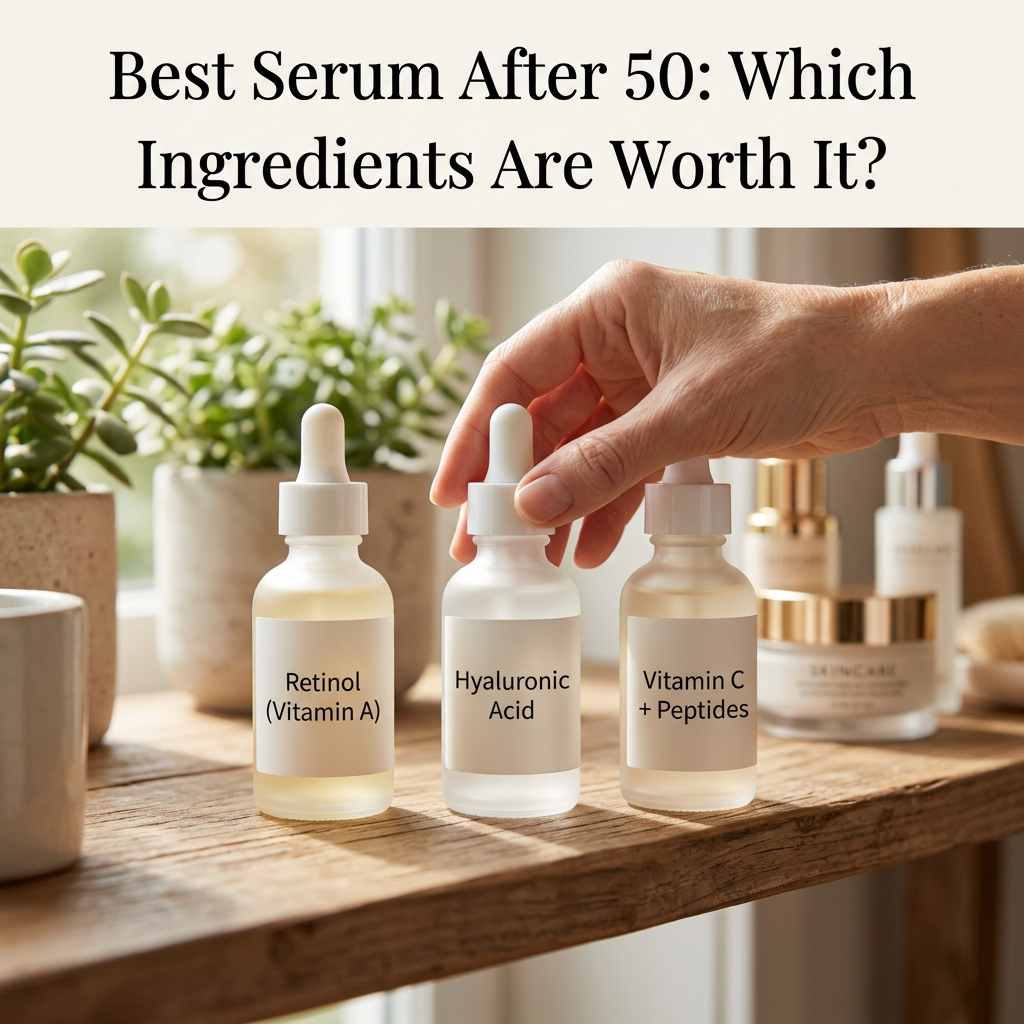
    Hyaluronic acid and other humectants can help the skin hold water. Niacinamide is commonly used for several skin concerns and may be useful in a well-tolerated formula. Vitamin C products are popular for antioxidant support and uneven tone. Retinoids have a stronger history for addressing signs of photoaging, but they can also be irritating and need to be introduced thoughtfully.

    The ingredient is only part of the story. The finished formula, concentration, packaging, your other products and how your skin reacts all matter.

    Don’t build a routine from competing actives

    This is where I think people get into trouble. One serum contains an acid, another contains a retinoid, another contains vitamin C, and suddenly the skin is being asked to tolerate everything at once.

    A serum should fit into your routine, not take over your routine.

    My shopping test

    Before I buy, I ask four questions: What am I trying to change? Why did I choose this ingredient? Can I use the product consistently? And am I already using something that does essentially the same job?

    If I cannot answer those questions, I keep shopping—or I save my money.

    Give it time

    Skincare is rarely a one-week project. A product may improve how hydrated your skin feels quickly, while changes in texture or tone can take much longer. Constantly switching products makes it difficult to know what is helping.

    Three Experts Help Sort Useful Serums From Hype

    Dermatologist Dr. Sean McGregor explains that adding too many toners and serums increases the chance of dryness and other side effects. His practical advice is to start with one serum rather than layering a whole collection.

    Cosmetic chemist Dr. Michelle Wong looks at ingredient concentration and formulation when evaluating The Ordinary’s products. Her analysis is useful when a high-percentage label looks persuasive but tells only part of the story.

    Dermatologist Dr. Tina Alster emphasizes gradual introduction of retinoids. That is a different—and usually more sensible—approach than treating a high-strength serum as the automatic next step.

    Match the Serum to the Problem

    Skin feels dehydrated: a hyaluronic acid or glycerin formula can help draw water into the outer skin layers, but moisturizer may already be sufficient. Uneven tone: a well-formulated vitamin C product or another suitable targeted treatment may help, always alongside sun protection. Oiliness or uneven appearance: niacinamide might be useful. Fine lines and sun damage: certain retinoids have stronger evidence, though they require more caution.

    Peptides: an optional category with formula-specific and less consistent evidence, not a substitute for treatments with stronger research. You don’t need one of everything.

    My Four-Question Serum Test

    Before buying, ask: What problem am I targeting? What evidence supports this finished formula? Does it duplicate a product I already have? Can I tolerate and afford regular use? Introduce only one new active at a time. Track comfort and visible changes over several weeks rather than switching every few days.

    Retinoids should be avoided in pregnancy; consult a clinician if you have a skin condition or troublesome irritation. A painful or changing skin lesion needs evaluation, not a beauty serum.

    Related: The Ordinary Skincare After 50 and Skincare Layering After 50.

    Common Questions

    How do I pick the right serum after 50?
    Start with your main skin concern—hydration, fine lines, uneven tone, or texture—then choose a serum with ingredients that address that specific concern.

    What should you actually look for in a serum after 50?
    Look at the ingredients, not just the marketing. Choose a formula that has a clear purpose and fits your skin type and concerns.

    Which serum ingredients are worth looking for after 50?
    Hyaluronic acid can help with hydration, vitamin C can support brighter-looking skin, niacinamide can support the skin barrier, and retinoids can target several signs of aging.

    Do you really need a serum after 50?
    No. A serum is an optional step. A gentle cleanser, moisturizer, and daily sunscreen are the foundation of a simple routine.

    Should you choose a serum for hydration or anti-aging after 50?
    Choose based on what your skin actually needs. If dryness is your biggest issue, prioritize hydration. If fine lines or uneven texture are the concern, a targeted active may make more sense.

    Is a more expensive serum better after 50?
    Not necessarily. Price alone doesn’t tell you whether a serum is a good match for your skin.

    How many serums should you use after 50?
    Usually, you don’t need several. Starting with one targeted serum makes it easier to see how your skin responds.

    How should you add a new serum to your routine after 50?
    Introduce one new product at a time, start slowly, and follow with moisturizer. Use sunscreen during the day.

    What is the biggest mistake when choosing a serum after 50?
    Buying based on impressive claims instead of choosing an ingredient that addresses your actual skin concern.

    What is the simplest serum strategy after 50?
    Identify your main concern → choose one useful ingredient → start slowly → moisturize → use sunscreen every morning.

    A gentle health note: Active skincare ingredients can irritate mature or sensitive skin. Introduce new products gradually and stop using them if you develop significant or persistent irritation.

    My bottom line

    The “best” serum is not necessarily the newest or most expensive one. It is the one that addresses a real concern, fits with the rest of your routine and is comfortable enough that you will actually keep using it.

    General skincare information and personal experience, not medical advice.

    About Tom Green

    Tom Green writes Well After 50. He’s just a regular, laid-back 64-year-old who keeps things simple. He shares what he learns about skincare, fitness and getting older, and what’s working for him. He’s also the author of A Practical Guide to Getting Older Without Giving Up on Yourself. Tom isn’t a doctor. He reads up on the research and passes along what’s useful, plain and simple.


    I’ve also mapped out some great tools on my new Tech for Independent Living After 50 page.

  • Best Moisturizer After 50: How to Choose for Your Skin

    Best Moisturizer After 50: How to Choose for Your Skin

    Choosing the best moisturizer after 50 is less about an expensive brand and more about texture, ingredients and how your skin feels. Here’s how to decide whether a gel, lotion, cream or ointment is worth your money.

    A moisturizer does not have to be fancy to be useful. Its basic job is to help your skin stay comfortable and reduce moisture loss. After 50, that simple job becomes even more important when dryness and sensitivity start becoming more noticeable.

    Start with how your skin actually feels

    I would not choose a moisturizer just because it says “anti-aging” or “mature skin” on the jar. I want to know whether it solves a problem.

    • Does it reduce dryness or tightness?
    • Does my skin feel comfortable after using it?
    • Can I wear it under sunscreen?
    • Will I actually use it every day?

    Texture matters

    Dry skin may prefer a richer cream or balm. Oilier skin may prefer a lighter lotion or gel. Combination skin may need different approaches in different areas.

    Age does not automatically mean you need the heaviest moisturizer available. Your skin type and climate matter more than the number on your birthday.

    Ingredients worth knowing

    Humectants such as glycerin and hyaluronic acid can help attract and hold water. Ceramides and other barrier-supporting ingredients are common in products designed for dry or compromised skin. Occlusive ingredients can help reduce moisture loss by forming a protective layer.

    You do not need to memorize an entire ingredient dictionary. Pick a formula that addresses your needs and that your skin tolerates.

    Don’t mistake tingling for effectiveness

    A moisturizer that burns is not necessarily working better. Persistent stinging, redness or irritation is a reason to stop and reassess rather than push through it.

    Morning versus night

    In the morning, I want a moisturizer that works comfortably with sunscreen. At night, I may prefer something richer if my skin feels dry. If you use an active such as a retinoid, moisturizer can also make the routine more comfortable for some people.

    Price isn’t the whole story

    There are expensive moisturizers I would happily use and inexpensive ones I would happily use. The price tag does not guarantee that a formula will suit your face.

    My favorite moisturizer is the one that makes my skin feel better without making the routine complicated.

    Three Dermatologists on Picking the Right Texture

    Dr. Rebecca Kazin explains that moisturizers are not one-size-fits-all. In the American Academy of Dermatology’s guide, she recommends cream-based options for many people after 50, while emphasizing that combination skin may need different amounts in different areas.

    Dr. Jason A. Clark recommends considering a richer cream or ointment when skin is genuinely dry and applying it while the skin is still damp. That is a practical habit you can try without buying a pricey new serum.

    Dr. Samer Jaber warns that painful, cracked, bleeding or persistently itchy skin may require medical assessment rather than another round of over-the-counter experiments.

    A Shopping Guide: Gel, Lotion, Cream or Ointment?

    Gel: lightweight, often comfortable for oily skin. Lotion: easy to spread, reasonable for mild dryness. Cream: richer and often helpful when skin is dry or tight. Ointment: especially useful for very dry patches, though some people dislike the greasy feel. You can use different textures in different seasons.

    Scan labels for glycerin, ceramides, dimethicone, petrolatum or hyaluronic acid. These ingredients do different jobs: humectants attract water; emollients soften skin; occlusives help reduce moisture loss. A complete moisturizer may combine several. ‘Unscented’ does not always mean fragrance-free.

    A Two-Week Test Before Spending More

    Apply your chosen moisturizer consistently after washing while the skin is slightly damp, and note whether tightness, itching and flaking ease. Use sunscreen separately during the day as needed; a face cream without adequate SPF is not sun protection. If discomfort increases or your skin cracks or bleeds, seek advice rather than buying a stronger exfoliant.

    Related: The Ordinary Skincare After 50 and How to Pick a Cleanser After 50.

    Common Questions

    What should you look for in a moisturizer after 50?
    Look for a moisturizer that matches your skin type and helps keep your skin comfortable, hydrated, and supported.

    How do you choose a moisturizer based on your skin type after 50?

    • Dry skin: Look for a richer cream with ingredients such as ceramides, glycerin, or hyaluronic acid.

    • Normal skin: A lightweight lotion or cream may be enough.

    • Oily skin: Choose a lighter, non-greasy lotion or gel moisturizer.

    • Combination skin: Use a balanced moisturizer, adding more to drier areas if needed.

    • Sensitive skin: Look for a simple, fragrance-free moisturizer with gentle ingredients.

    Do you need a thick moisturizer after 50?
    Not necessarily. The right texture depends on your skin type and how dry your skin feels.

    What ingredients are worth looking for in a moisturizer after 50?
    Ceramides, glycerin, hyaluronic acid, and other barrier-supporting ingredients can be useful for mature skin.

    Can moisturizer make your skin look younger after 50?
    Moisturizer won’t erase wrinkles, but well-hydrated skin can look smoother, softer, and more comfortable.

    Should you use moisturizer every day after 50?
    For most people, daily moisturizing is a simple way to support the skin barrier and prevent excessive dryness.

    Should you moisturize your neck after 50?
    Yes. If your neck tolerates the product, applying moisturizer there can help keep the skin comfortable and hydrated.

    Do you need an expensive moisturizer after 50?
    No. Price alone doesn’t determine whether a moisturizer will work well for your skin.

    When should you apply moisturizer after 50?
    Apply it after cleansing or other treatments. In the morning, finish with broad-spectrum sunscreen.

    What is the simplest way to choose a moisturizer after 50?
    Identify your skin type → choose the right texture → look for useful hydrating ingredients → use it consistently → add sunscreen in the morning.

    Practical takeaway: The best moisturizer after 50 isn’t necessarily the most expensive or the one with the longest ingredient list. It’s the one that keeps your skin comfortable, hydrated, and free from unnecessary irritation.

    A gentle health note: If a moisturizer causes persistent burning, swelling, rash, or significant irritation, stop using it and consider talking with a dermatologist.

    My bottom line

    After 50, I am more interested in comfortable, well-supported skin than chasing a miracle. A moisturizer cannot stop aging, but the right one can make dry, uncomfortable skin look and feel noticeably better.

    General skincare information and personal experience, not medical advice.

    About Tom Green

    Tom Green writes Well After 50. He’s just a regular, laid-back 64-year-old who keeps things simple. He shares what he learns about skincare, fitness and getting older, and what’s working for him. He’s also the author of A Practical Guide to Getting Older Without Giving Up on Yourself. Tom isn’t a doctor. He reads up on the research and passes along what’s useful, plain and simple.


    I’ve also mapped out some great tools on my new Tech for Independent Living After 50 page.
  • Why Am I So Tired After 50? 7 Habits and Medical Causes

    Why Am I So Tired After 50? 7 Habits and Medical Causes

    If you are tired after 50, the answer isn’t necessarily age. Sleep quality, medication side effects, anemia, thyroid conditions, mood and daily habits can all matter. Here’s a practical way to sort out which changes you can make—and which symptoms deserve a medical check.

    Being tired after 50 is easy to blame on age. Sometimes getting older does change sleep, recovery and energy. But “I’m just getting old” can also become an excuse for ignoring habits—or symptoms—that deserve attention.

    If your energy has changed, I think it is worth looking at the ordinary things first. They are not glamorous, but they are often the things we can actually change.

    The short answer

    Being tired after 50 is common, but it isn’t something you just have to accept. The usual culprits are irregular sleep, too little movement, uneven eating, late caffeine and stress. If you’re still worn out after fixing those for a couple of weeks, see your doctor. Anemia, thyroid problems, sleep apnea, medications and low mood are common causes that are easy to check.

    1. Inconsistent sleep

    Going to bed and waking up at wildly different times can make it harder to feel rested. One bad night is not a disaster, but a pattern of poor sleep can affect how you feel and function.

    2. Sitting most of the day

    It sounds strange, but being inactive can leave you feeling sluggish. You do not have to turn every day into a workout. Short walks, standing breaks and regular movement can help break up long periods of sitting.

    3. Skipping meals and then overeating

    Long gaps without food can leave some people feeling drained and then reaching for whatever is easiest later. A more consistent pattern of nutritious meals may make energy easier to manage.

    4. Not eating enough protein or overall nutrition

    Protein matters for maintaining muscle, but energy also requires enough total food and a balanced diet. If you are trying to lose weight by eating very little, feeling exhausted may be a sign that the approach needs reconsideration.

    5. Caffeine too late

    Caffeine can be useful, but using it late to compensate for poor sleep can create a cycle: tired during the day, caffeine later, worse sleep, tired again tomorrow.

    6. Training harder than you can recover from

    Exercise is valuable, but more is not automatically better. If every workout leaves you exhausted for days, the program may be asking for more recovery than you can provide.

    7. Carrying stress without real downtime

    Your body does not know that you planned to relax “someday.” Constant stress and constant stimulation can make it difficult to feel recovered even when you technically have free time.

    5 Energy Fixes You Can Try Today

    • Get outside in the morning. Ten minutes of daylight helps wake up your body clock.
    • Drink a glass of water first. Mild dehydration can feel a lot like fatigue.
    • Put protein in your breakfast. Eggs, Greek yogurt or cottage cheese keep energy steadier than a pastry.
    • Take a 10-minute walk after lunch. It beats the afternoon slump better than another coffee.
    • Set a coffee cutoff around 2 p.m. Better sleep tonight means more energy tomorrow.

    Sleep timing matters more than most people realize. I dug into the research in could your sleep schedule affect how long you live after 50.

    Don’t automatically call fatigue aging

    Persistent, unexplained, severe or worsening fatigue can have medical causes. If tiredness interferes with normal life or comes with other concerning symptoms, talk with your healthcare professional rather than trying to solve it with supplements.

    Three Experts Who Explain Why Fatigue Is Not Just Aging

    Family physician Dr. Jared Ankerman explains that ongoing fatigue can differ from an ordinary sleepy afternoon and may point toward anemia, thyroid problems, mood disorders or other underlying conditions. If rest isn’t making a difference, don’t assume another energy supplement will fix it.

    Sleep specialist Dr. Alicia Roth points out that you can spend plenty of hours in bed but still wake up worn out when conditions such as sleep apnea or restless legs interrupt sleep. That’s an important distinction when a regular bedtime alone isn’t helping.

    Endocrinologist Dr. Marwan Hamaty cautions against a fashionable but unsupported diagnosis offered as the explanation for every case of fatigue. Real causes vary, and a careful medical history and targeted evaluation matter more than buying an unproven remedy.

    A Seven-Day Energy Check Without Buying Anything

    For one week, note roughly when you sleep and wake, whether you snore or wake gasping, what medications you take, when you use caffeine, what meals you skip, and whether fatigue gets worse after activity. Rate your energy morning, afternoon and evening. Bring the pattern—not just the word ‘tired’—to your healthcare appointment.

    Keep changes simple: aim for a fairly regular sleep schedule, daylight or safe movement during the day, adequate meals and fluids, and a caffeine cutoff that protects your sleep. Don’t push through an illness or unexplained exercise intolerance just to hit a step goal.

    See a Doctor Soon If Your Tiredness Comes With…

    • Shortness of breath, chest pain or a racing heart
    • Unexplained weight loss or loss of appetite
    • Loud snoring, gasping at night or falling asleep during the day
    • Feeling cold all the time, hair thinning or dry skin (possible thyroid)
    • Pale skin, feeling dizzy or out of breath easily (possible anemia)
    • Low mood, losing interest in things you enjoy, or feeling hopeless
    • Fatigue that lasts more than a few weeks or keeps getting worse

    If chest pain or trouble breathing comes on suddenly, call 911.

    What Your Clinician May Want to Rule Out

    The National Institute on Aging’s fatigue guide lists anemia, sleep apnea, thyroid disease, diabetes, medication effects, chronic illness and mood conditions among potential contributors. Depending on symptoms and history, a clinician may review medicines, arrange blood tests or evaluate sleep. Don’t start iron or thyroid supplements without evidence of a need.

    Get prompt medical attention if fatigue comes with chest pain, difficulty breathing, fainting, new confusion or other severe symptoms. Persistent unexplained fatigue lasting weeks warrants an appointment even when it isn’t an emergency.

    Related: Why You Keep Waking Up at 3 AM After 50 and How Much Protein Do You Need After 50?.

    Common Questions

    Why am I still tired after 50?
    Everyday habits such as poor sleep, too little movement, dehydration, an unbalanced diet, and too much stress can contribute to feeling tired.

    What everyday habits can drain your energy after 50?
    Poor sleep habits, sitting too much, skipping nutritious meals, not drinking enough water, excessive alcohol, too much screen time, and chronic stress can all play a role.

    Can lack of sleep make you tired after 50?
    Yes. Poor-quality or insufficient sleep can leave you feeling tired even after spending enough time in bed.

    Can sitting too much make you feel tired after 50?
    It can. Long periods of inactivity may leave you feeling sluggish, while regular movement can help you stay more energized.

    Can what you eat affect your energy after 50?
    Yes. Meals built around protein, fiber-rich foods, fruits and vegetables, and other nutritious foods can provide more consistent energy than a diet dominated by highly processed foods.

    Can dehydration make you tired after 50?
    Yes. Not getting enough fluids can contribute to fatigue and feeling sluggish.

    Can stress drain your energy after 50?
    Yes. Ongoing stress can interfere with sleep, concentration, mood, and your overall sense of energy.

    What is the simplest way to improve energy after 50?
    Start with the basics: sleep well → drink enough water → move regularly → eat nutritious meals → manage stress → limit habits that interfere with sleep.

    When should tiredness after 50 be checked by a doctor?
    If fatigue is persistent, worsening, unusually severe, or comes with symptoms such as unexplained weight changes, shortness of breath, chest pain, weakness, or major changes in sleep or mood, talk with a healthcare professional.

    Practical takeaway: Before assuming you’re simply getting older, look at your everyday habits. A few small changes to sleep, movement, food, hydration, and stress may make a meaningful difference.

    My approach

    I think of energy as something I manage rather than something I am entitled to have unlimited amounts of. Sleep, food, movement, recovery and stress management all count.

    The goal is not to feel 25 again. It is to have enough energy for the life you actually want to live.

    General information and personal experience, not medical advice.

    About Tom Green

    Tom Green writes Well After 50. He’s just a regular, laid-back 64-year-old who keeps things simple. He shares what he learns about skincare, fitness and getting older, and what’s working for him. He’s also the author of A Practical Guide to Getting Older Without Giving Up on Yourself. Tom isn’t a doctor. He reads up on the research and passes along what’s useful, plain and simple.

    I’ve also mapped out some great tools on my new Tech for Independent Living After 50 page.

  • Self-Care After 50: A Simple Daily Routine That Actually Helps

    Self-Care After 50: A Simple Daily Routine That Actually Helps

    Self-care gets made to sound much more complicated than it needs to be. After 50, you can spend a fortune on products, appointments and wellness gadgets and still overlook the things that make the biggest difference in how you feel every day.

    For me, a useful self-care routine is less about pampering and more about maintenance. Take care of your body. Take care of your skin. Give your mind some breathing room. And don’t keep putting off the health stuff because it is inconvenient.

    The good news is that none of this requires a perfect schedule. You need a routine you can actually repeat.

    Start Your Day With Your Body

    You don’t have to wake up at 5 a.m. and complete a ten-step wellness routine. Start with movement.

    A walk, some light mobility work, a workout or simply getting up and moving around regularly can help keep your body from becoming increasingly sedentary. If strength training is appropriate for you, it deserves a place in the routine too because maintaining muscle becomes increasingly important as we get older.

    The goal isn’t to punish yourself for getting older. It is to keep giving your body a reason to stay capable.

    Eat Like Your Body Still Matters

    This sounds obvious, but it is easy to get careless with food when life gets busy. Skipping meals, living on snacks or relying on highly processed convenience foods can leave you feeling like you have no energy.

    Try to build meals around foods that actually give you something: adequate protein, vegetables and fruit, whole grains or other high-fiber foods, and healthy sources of fat. You don’t have to eat perfectly. Consistency matters more than chasing a flawless diet.

    Don’t Treat Skincare Like a Beauty Emergency

    Skin changes after 50. It can become drier, thinner and less forgiving when you overdo products. That doesn’t mean you need an entire shelf of anti-aging treatments.

    A simple routine can be enough for many people: gentle cleansing, moisturizer when you need it, and sun protection during the day. If you use active ingredients such as retinoids or exfoliating acids, introduce them thoughtfully rather than piling everything on at once.

    And remember that skincare isn’t just for women. Men deal with dryness, sun damage, wrinkles and changing skin too.

    Make Sleep Part of Self-Care

    Sleep is one of those things people often sacrifice first and try to fix with coffee the next morning.

    A regular sleep schedule, a reasonably comfortable sleep environment and a wind-down period can help. If you regularly have trouble sleeping or feel exhausted despite getting enough time in bed, that’s worth discussing with a healthcare professional rather than simply buying another supplement.

    Take Care of the Appointments You’ve Been Avoiding

    This may be the least glamorous part of self-care, but it matters.

    Keep up with recommended health screenings and routine appointments for your age and personal health history. Get persistent symptoms checked instead of deciding they are simply part of aging. Stay on top of dental and vision care too.

    Self-care is not only about how you look in the mirror. It is also about paying attention when something changes.

    Protect Your Mind, Too

    There is a difference between being busy and feeling fulfilled. After 50, it can be easy to let work, family obligations, responsibilities and other people’s expectations consume all the available space.

    Make room for things you actually enjoy. Call a friend. Spend time outside. Read. Listen to music. Work on a hobby. Take the dog for a walk. Whatever gives you a genuine break from the constant list of things that need doing.

    You don’t have to justify every enjoyable thing by making it productive.

    Self-Care Includes Relationships

    Staying connected matters. That doesn’t mean you need a huge social circle. A few people you can laugh with, talk honestly with or simply spend time around can be more valuable than hundreds of online connections.

    If you have been withdrawing because life has gotten busy, make one small effort to reconnect. Send the text. Make the call. Have coffee with someone.

    Men Need Self-Care Too

    Self-care is sometimes presented as if it means spa days, beauty treatments and a collection of skincare products. There is nothing wrong with any of those things, but they are not the definition of self-care.

    Men over 50 need the same basics: movement, adequate nutrition, sleep, grooming, social connection, preventive care and attention to changes in their health.

    Taking care of yourself isn’t vanity. It is maintenance.

    A Simple Weekly Reset

    If you want something practical, pick one day each week and take 20 minutes to check in with yourself.

    • What did I do this week that made me feel better?
    • Did I move enough?
    • Did I get enough sleep?
    • Have I been eating reasonably well?
    • Is there an appointment or health issue I’ve been avoiding?
    • What is one thing I can do next week just because I enjoy it?

    You don’t need to overhaul your life every Sunday. One or two small adjustments can be enough.

    The Routine That Actually Works

    The best self-care routine isn’t the most expensive one or the one that looks impressive on social media. It is the routine you can keep doing when life gets messy.

    Move your body. Eat reasonably well. Protect your skin. Get enough sleep. Stay connected. Keep up with appropriate healthcare. And leave yourself some room to enjoy being alive.

    That is a pretty good self-care routine at any age—and especially after 50.

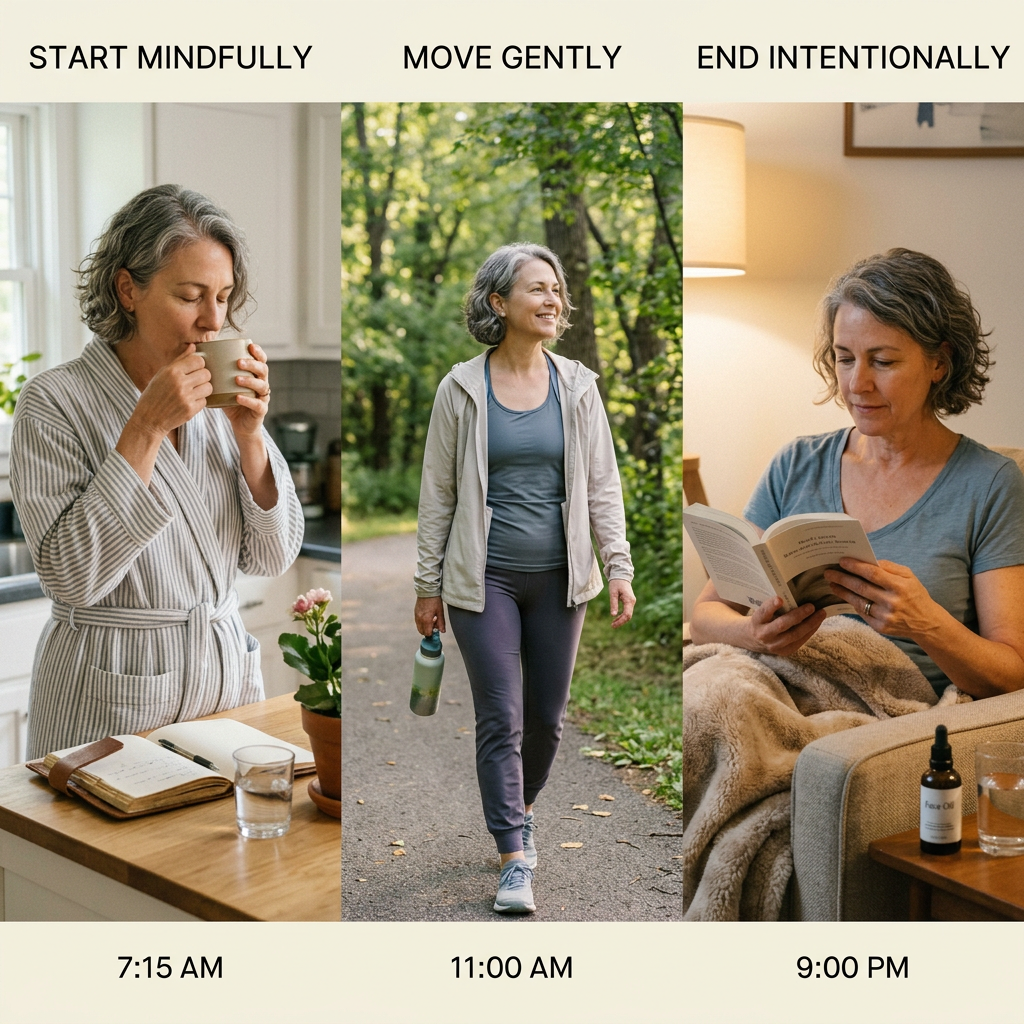
    A Realistic Daily Self-Care Routine After 50

    Morning (10–20 minutes): Get up at a reasonably consistent time, drink water if thirsty, take prescribed medications as directed, eat a breakfast with some protein if you’re hungry, and get outdoors or move in a way you can safely manage. You don’t need to complete every item before 8 a.m.

    During the day: Build in a walk or other movement, a nutritious meal, and one brief social interaction. If you work at a desk or sit a lot, stand and move regularly when possible. Even a short phone call counts as a deliberate connection.

    Evening: Set yourself up for sleep with a calming wind-down, basic skincare if you use it, and a moment to prepare tomorrow’s medications or appointments. If insomnia persists, a clinician can help address underlying causes.

    The Three Expert Perspectives I Think Are Most Useful

    Researcher Dr. Julianne Holt-Lunstad has helped bring the health consequences of social isolation into public discussion. Her work is a reminder that reaching out to people is not a luxury add-on to self-care. See also her published paper on social-connection guidelines.

    Geriatrician Dr. Carla Perissinotto coauthored a New England Journal of Medicine perspective with Holt-Lunstad about social isolation and loneliness as medical issues. That doesn’t mean everyone needs a large circle of friends; it means persistent isolation deserves attention, just as poor sleep or poor nutrition might.

    Exercise researcher Maren Fragala led a published position statement on resistance training for older adults. The practical message: strength and function can benefit from a thoughtfully progressed exercise program, not just walking. If you’re new to exercise or have significant conditions, adapt the plan with professional guidance.

    A Weekly Reset You Can Actually Finish

    Choose one 20-minute slot: check upcoming appointments and prescriptions; plan a few affordable, nutritious meals; schedule two strength sessions if appropriate; and send one message to someone you want to stay connected with. You are planning a manageable week, not auditing your worth as a person.

    If time or money is tight, start smaller still: a brief walk or chair movement, one call, and one meal that provides protein and vegetables. The point is repetition, not perfection.

    When Ordinary Self-Care Isn’t Enough

    Ongoing depressed mood, major fatigue, chest symptoms, persistent pain or significant sleep problems warrant medical attention. No morning routine or supplement should be presented as a substitute for diagnosis and care.

    See our guides to getting enough protein after 50 and building muscle after 60.

    Common Questions

    What is a simple self-care routine for men and women 50+?
    Focus on the basics: regular movement, nutritious food, enough sleep, skincare, time to relax, and staying connected with other people.

    Why is self-care important after 50?
    Self-care can help you stay active, support your overall well-being, and make everyday life more enjoyable.

    What should a daily self-care routine include after 50?
    A practical routine might include movement, hydration, nutritious meals, basic skincare, adequate sleep, and something you genuinely enjoy.

    Can exercise be part of self-care after 50?
    Absolutely. Walking, strength training, stretching, and other activities you enjoy can support physical function and overall wellness.

    How important is sleep for self-care after 50?
    Very important. Consistent, restorative sleep supports energy, mood, concentration, and physical recovery.

    Should men and women 50+ have different self-care routines?
    The basics are similar. Individual needs may differ based on health, fitness, skin type, lifestyle, and personal goals.

    Can skincare be part of self-care after 50?
    Yes. A simple routine of gentle cleansing, moisturizer, and daily sunscreen can be an easy way to care for your skin.

    What can you do for your mental well-being after 50?
    Make time for hobbies, friends, family, outdoor activities, relaxation, and activities that give you a sense of purpose.

    Do you need a lot of time for self-care after 50?
    No. Even small habits—such as a walk, a few minutes of stretching, a good night’s sleep, or time away from screens—can become useful parts of a routine.

    What is the simplest self-care routine after 50?
    Move your body → eat well → hydrate → care for your skin → sleep well → stay connected → make time for something you enjoy.

    Practical takeaway: Self-care after 50 doesn’t have to be expensive, complicated, or time-consuming. The small things you consistently do for yourself can add up.

    A gentle health note: Self-care isn’t a substitute for medical care. Persistent pain, major changes in energy or mood, sleep problems, or other concerning symptoms should be discussed with a healthcare professional.

    This article reflects my personal perspective and general healthy-aging research. I’m not a doctor or healthcare professional, and this isn’t medical advice. Your needs can be different, so talk with a qualified healthcare professional about personal health concerns.


    About Tom Green

    Tom Green writes Well After 50. He’s just a regular, laid-back 64-year-old who keeps things simple. He shares what he learns about skincare, fitness and getting older, and what’s working for him. He’s also the author of A Practical Guide to Getting Older Without Giving Up on Yourself. Tom isn’t a doctor. He reads up on the research and passes along what’s useful, plain and simple.

    I’ve also mapped out some great tools on my new Tech for Independent Living After 50 page.