
Tag: brain health

  • Your Brain May Already Know If You’ll Be a Super Ager

    Your Brain May Already Know If You’ll Be a Super Ager

    What is a super ager, and can a brain scan tell if you’ll be one?

    Short answer: A super ager is someone in their 80s or older whose memory is as sharp as people 20 or 30 years younger. Stanford researchers built a brain-scan score, called the ARC score, that spotted signs of who’s headed that way years ahead. But it’s a research tool only. You can’t get it from your doctor yet.

    What if a few minutes lying still in a brain scanner could tell you, years ahead, whether you’re headed to be a super ager, one of those people who’s still sharp at 85?

    That’s what a Stanford team says they found this month. They call it the ARC score, and it spotted the difference years before anybody’s memory started slipping or any early signs of Alzheimer’s showed up. I’m 64, and that got my attention fast.

    But don’t get excited or scared yet. You can’t get this test, and it’s not as sure as the headlines made it sound. Here’s what they found, what it can’t do yet, and what you and I can do right now.

    What is a super ager?

    You probably know one. The 86-year-old who still does the crossword in pen, remembers every grandkid’s birthday and beats you at cards.

    Scientists call them super agers. Their memory is as good as people 20 or 30 years younger. The name came from Northwestern University, where the bar is 80 and older with the memory of somebody in their 50s or 60s, and only about 1 in 10 people who apply make the cut. For this study Stanford used 75 and up with the memory of a 45-year-old.

    Dr. Emily Rogalski set the definition of super aging back in 2008, and today she runs the Healthy Aging & Alzheimer’s Research Care Center at the University of Chicago. This July her team checked the genes of 142 super agers and found they look about the same as everybody else’s, including the main Alzheimer’s risk gene. So it’s not just luck of the draw. What a lot of them do have is people. Dr. Rogalski told the Simons Foundation, “These are really engaged individuals,” and plenty of them are still working, volunteering or teaching classes way up in their 80s.

    How Stanford built the ARC score

    Most studies compare super agers to regular older folks. The problem is a lot of regular folks who test fine already have hidden changes in the brain. Stanford said that’s like comparing apples to a fruit basket.

    So they went to the two ends. On one side, 180 super agers. On the other, 110 people with Alzheimer’s. The study came out November 4 in Science Advances, led by Dr. Kanhao Zhao and Dr. Yu Zhang at Stanford Medicine. Dr. Zhang told Stanford Medicine they did it “so we know what a good pattern should be.”

    They used a scan where you lie still in an MRI for a few minutes and do nothing. It watches which parts of your brain light up together while your brain is resting. A computer learned the super ager pattern and the Alzheimer’s pattern and boiled them down to one number, the ARC score. Lower looks more like a super ager. Higher looks more like Alzheimer’s.

    What happened to healthy people with the Alzheimer’s-like pattern

    Then they ran the score on 1,315 healthy people between 55 and 70, people with no memory problems at all, from three big research projects.

    The good news first. About 3 out of 4 of them didn’t have the Alzheimer’s-like pattern.

    The ones who did have it passed the same memory tests as everybody else, and that’s what made me sit up. Their brain plaque levels were about the same too. Nobody could’ve told them apart. But over the next several years their memory slipped faster, plaque built up faster, and more of them ended up diagnosed with memory problems or Alzheimer’s. The scan picked it up before their memory tests did.

    Dr. Zhao said it did as well as or better than the usual Alzheimer’s markers, and earlier. And it worked best used along with those tests, not instead of them.

    Can you get an ARC score? Not yet

    You can’t get this test. Not from your doctor, not from a clinic, not online. There’s no price, no waiting list and no FDA clearance. It’s a research tool, period.

    And it’s not as sure as the headlines made it sound. Even Stanford’s own news story said it was roughly 85 percent accurate. That 85 is a best-case score from the group they built it on. Telling super agers from Alzheimer’s patients, it was right about 80 percent of the time in that group, and when they checked it on a separate group of 64 super agers and 79 people with Alzheimer’s it was right 71 percent of the time. That’s good science. It’s not good enough to tell you or me what’s coming. Stanford said it themselves: the score is a snapshot, not destiny.

    Most people were only followed five or six years; the longest was 12. All of them came from US research groups, so it still has to be tried on more kinds of people. And it shows the pattern goes along with decline. It doesn’t prove the pattern causes it.

    So if somebody online tries to sell you a super ager brain scan, don’t buy it. A regular brain MRI can cost anywhere from a few hundred dollars to several thousand, and it isn’t this test. The test is the scan plus Stanford’s model, and nobody’s selling that.

    What you can do now while science catches up

    Nobody knows yet if you can change your ARC score. Stanford is planning a study to see if brain training moves it. But we don’t have to sit around and wait.

    In 2024 the Lancet Commission on dementia said about 45 percent of dementia is tied to 14 things that can be changed. Most of them are everyday stuff: hearing loss, high blood pressure, high cholesterol, smoking, diabetes, not moving enough, loneliness and eyes that never got checked.

    Dr. Eric Topol, a cardiologist at Scripps Research, wrote the bestselling book Super Agers. (As an Amazon Associate I earn from qualifying purchases.) Healio’s review said his best advice comes down to the basics: eat Mediterranean style, sleep well, do some strength training and get outside.

    Here’s what I’m doing.

    I’m getting my hearing checked, since it’s one of the biggest ones on that list. If cost is stopping you, I wrote about how AirPods can work as hearing aids. I’m asking my doctor about my blood pressure and cholesterol. I’m walking, lifting a little and eating more like the MIND diet.

    And the big one, the thing a lot of super agers share: I’m staying around people. Call your brother. Go to the church supper. Say yes to coffee. Learn something you’ve never done, pickleball, guitar, whatever it is. I reckon it’s the easiest thing on the list and maybe the one that matters most.

    What has to happen before your doctor can use it

    Stanford hasn’t announced a start date for its brain training study. Things like magnetic brain stimulation have helped with depression, but nobody’s tested whether they can move a brain toward the super ager pattern. And before your doctor ever uses this, it has to be tested on bigger and more diverse groups of people over time, and shown to help. So if you hear it’s coming to clinics soon, that’s hype.

    I’ll keep an eye on this one and tell you when something changes. If you like this kind of news, I also wrote about the AI clock that guesses your biological age from your medical chart.

    Now I want to hear from you. Do y’all know somebody in their 80s who’s still sharp as a tack? What do you think their secret is? Tell me in the comments. I read every one.

    — Tom

    Sources: Zhao K, Xie H, Fonzo GA, et al. “A functional connectome identifies vulnerability to cognitive decline and Alzheimer’s disease progression.” Science Advances 2026;12(45):eaed9351 (doi 10.1126/sciadv.aed9351). Stanford Medicine news, November 4, 2026. Livingston G, et al. Lancet 2024;404:572-628. This article is educational, not medical advice. If you’re worried about your memory talk to your own doctor or a memory clinic.

    About Tom Green

    Tom Green writes Well After 50. He was born in Pell City, Alabama, in 1962, and he’s a country boy and a true Southerner through and through. He’s just a regular, laid-back 64-year-old who keeps things simple. He shares what he learns about skincare, fitness and getting older, and what’s working for him. He’s also the author of A Practical Guide to Getting Older Without Giving Up on Yourself. Tom isn’t a doctor. He reads up on the research and passes along what’s useful, plain and simple.

    I’ve also mapped out some great tools on my new Tech for Independent Living After 50 page.
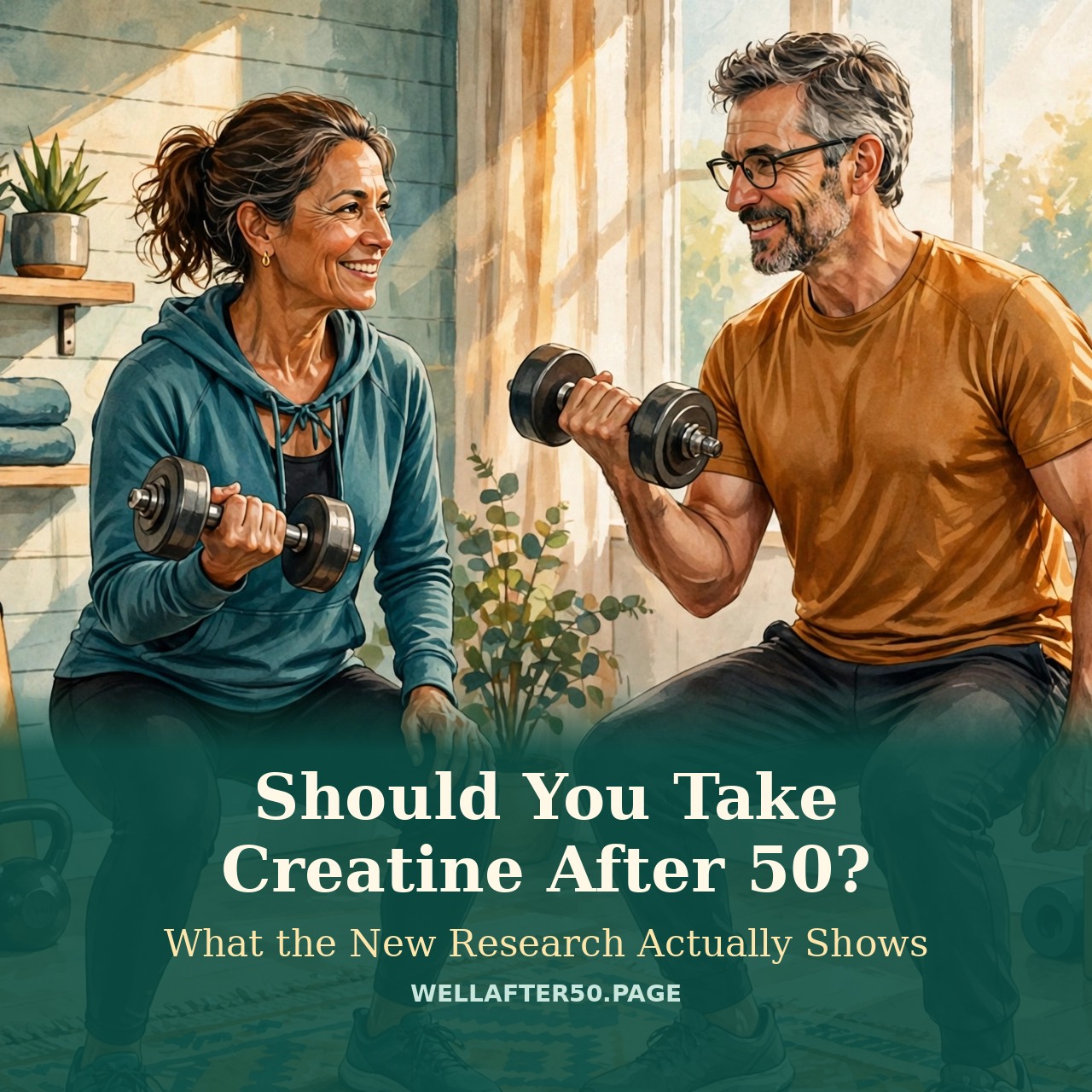
  • Should You Take Creatine After 50? What the New Research Actually Shows

    Should You Take Creatine After 50? What the New Research Actually Shows

    Should you take creatine after 50?

    Short answer: Creatine looks like a cheap, safe helper for keeping your strength after 50, for men and women both. In a review of 22 trials, older folks who took it and lifted weights two or three times a week gained more muscle and strength than those who just lifted. Most take 3 to 5 grams a day.

    Rather listen? Hit play.

    Seems like everybody over 50 is talking about creatine lately. Not just the young fellas at the gym, either. It’s all over the podcasts, the news and the comments I see from men and women our age. Then this fall a new study came out of Texas A&M, and the headlines said creatine works even if you don’t exercise. Well, that got my attention, so I sat down and dug into it to see what’s real and what’s just hype.

    Here’s the short of it before we go any further. Creatine looks like a cheap, safe little helper for keeping your strength after 50, for men and women both. But it’s a helper. It works best when you’re doing the lifting, and it won’t do the lifting for you.

    So What Is Creatine, Anyway?

    Creatine isn’t some lab-made steroid like a lot of us thought back in the day. Your own body makes some of it, and you get more from red meat and fish. Your muscles use it for quick bursts of energy, the kind you need to stand up out of a low chair, climb the stairs or lift a bag of dog food into the truck.

    The trouble is we lose muscle every year after 50 if we don’t fight for it. I wrote about that in After 50, You’re Losing Muscle Every Year. Creatine is one of the few supplements that has a good pile of research showing it can help with that fight.

    The New Texas A&M Study Everybody’s Sharing

    The study was run by Dr. Richard Kreider’s lab at Texas A&M. He’s been studying creatine for more than 30 years. They had 64 healthy adults between 45 and 65 take either 10 grams of creatine a day or a fake powder for 12 weeks. Some of them picked an exercise and diet program, and some didn’t exercise at all.

    According to Texas A&M, the folks who took creatine without exercising still gained about 2.4 pounds of lean tissue and got stronger on the leg press and bench press. The ones who exercised and took creatine did even better, gaining close to 3 pounds of lean tissue and losing more body fat than the ones on the fake powder. You can read the full study here if you like the details.

    Now here’s the part the headlines skipped. Creatine pulls water into your muscles, and the scan they used counts that water as lean tissue. So some of that 2.4 pounds is likely water, not brand-new muscle. Each of the no-exercise groups only had 13 people in it, and people chose their own groups. That’s a small study, so I’d call it good news worth keeping an eye on, not the last word.

    What the Bigger Picture Says

    One study is one study. What matters more is when you stack a bunch of them together. Phil Chilibeck, a kinesiology professor at the University of Saskatchewan, helped pull together a review of 22 trials with more than 700 men and women in their late 50s to 70s. People who took creatine and lifted weights two or three times a week gained more muscle and strength than people who did the same lifting without it.

    Teddy Amenabar dug into this for a piece that ran in the Daily Herald, and Chilibeck put it about as plain as you can. If you’re going to spend money on one supplement, he said, “I think it’s the one to choose.” That same article mentions a two-year study of 200 older women in Brazil, where creatine without weight training didn’t do a thing for their muscle. So the lesson keeps coming back around. The lifting is the main event.

    Dr. Darren Candow at the University of Regina in Canada is about as well known as it gets for creatine research in older folks. He’s said it’s not a miracle but it can give you some real benefits, and he and his team have written about how it may help with muscle loss, weaker bones and frailty as we age, especially when it’s paired with exercise.

    Ladies, This Part’s for You

    If you think creatine is just for big muscle guys, Dr. Stacy Sims would like a word with you. She’s an exercise scientist who has spent her whole career on how women’s bodies work differently, and she says she doesn’t recommend many supplements to everybody. In her words, “Creatine is one of them.”

    Her reasoning makes good sense. Women naturally carry a lot less creatine in their muscles than men do and tend to eat less of the foods that have it. When estrogen drops after menopause, holding on to muscle gets harder. In an interview with Maria Shriver’s Sunday Paper, she suggested starting small, around 1.5 grams, and working your way up to 5 grams over a couple of weeks.

    What About My Kidneys?

    That was the first thing I wondered, and I reckon it’s the first thing you wondered too. A group of top creatine researchers took on the biggest myths in a 2021 review. They found creatine is well tolerated in healthy adults at the usual 3 to 5 grams a day. The kidney scare traces way back to a single case from 1998, a man who already had kidney disease.

    One thing to know though. Creatine can bump up a number on your bloodwork called creatinine, and doctors use that number to check your kidneys. So tell your doctor you take it before you get blood drawn so nobody gets worried over nothing. And if you already have kidney trouble, diabetes, or take medicines that are hard on the kidneys, talk to your doctor before you start.

    Will It Help My Memory?

    Maybe someday, but don’t buy it for that yet. Your brain uses creatine too, and there are some small, interesting studies out there. But it hasn’t been proven to protect your memory or prevent dementia. If a label is promising you that, keep your money in your pocket.

    If You Want to Try It, Keep It Simple

    • Buy plain creatine monohydrate. It’s the kind used in nearly all the research, and it’s one of the cheapest supplements on the shelf. The fancy versions cost more and haven’t been shown to work any better. If you want an easy place to start, Nutricost Micronized Creatine Monohydrate Powder is plain monohydrate that’s just ground extra fine, so it stirs right into your coffee without clumping. (That’s an affiliate link, so I may earn a small commission at no extra cost to you.)
    • Look for a third-party seal like NSF Certified for Sport or Informed Sport, so you know what’s in the tub is what’s on the label.
    • Take 3 to 5 grams a day, every day, with a meal. Stir it into your coffee, oatmeal or a smoothie. If you’re making your mornings work harder for you, my protein coffee is a good place to add it.
    • Skip the “loading” phase. Dr. Candow has said you don’t need those big starting doses, and they’re more likely to upset your stomach.
    • Expect the scale to go up a pound or two the first couple of weeks. That’s water in your muscles, not fat.
    • Give it 8 to 12 weeks before you judge it, and keep lifting the whole time.

    Brad Schoenfeld, an exercise scientist at Lehman College, pointed out in that same Daily Herald article that some people just don’t respond much to creatine. If you eat a lot of meat and fish, your tank may already be pretty full. People who eat little or no meat tend to see the most benefit. So don’t feel bad if it doesn’t change much for you.

    My Take From the Porch

    Here’s how I see it. Creatine isn’t magic, it’s just a good tool for folks our age who want to stay strong enough to keep doing what we love. Working in the garden, picking up the grandkids if you’ve got them, carrying our own groceries for a lot more years. If you’re already doing some kind of strength work two or three times a week, it might be worth a try. If you aren’t yet, start there first. My guide on building muscle after 60 without getting hurt is a good easy place to begin, and don’t forget your protein too.

    There’s an old saying that you can’t plow a field by turning it over in your mind. Creatine’s kind of the same way. You do the work and it helps you get a little more out of it.

    Common Questions

    Is creatine safe to take after 50?

    For most healthy folks, yes. Researchers who reviewed the evidence in 2021 found it well tolerated at 3 to 5 grams a day. It can raise creatinine on your bloodwork, so tell your doctor you take it. If you have kidney trouble or diabetes, check with your doctor before you start.

    Does creatine work if you don’t exercise?

    A little, maybe. In the 2026 Texas A&M study, people 45 to 65 who took creatine without exercising gained some lean tissue and strength, but part of that gain was likely water. The groups were small too. You’ll get a whole lot more out of it if you lift weights two or three times a week.

    How much creatine should I take after 60?

    Most of the research uses 3 to 5 grams of plain creatine monohydrate a day, taken with a meal. You don’t need a big loading dose to start. Dr. Stacy Sims suggests women start around 1.5 grams and work up to 5 grams over a couple of weeks.

    Is creatine good for women over 50?

    It may be even more useful for women. Women carry less creatine in their muscles than men, and after menopause it gets harder to hold on to muscle. Dr. Stacy Sims, who has spent her career studying women’s bodies, says creatine is one of the few supplements she recommends across the board.

    Will creatine make me gain weight?

    You might see the scale go up a pound or two in the first couple of weeks. That’s water pulled into your muscles, not fat. If you keep lifting, the gains after that tend to be muscle, and that’s the kind of weight most of us could stand to carry a little more of.

    Have y’all tried creatine? I’d love to hear how it went for you down in the comments.

    This is general information, not medical advice. Talk with your doctor before starting any supplement, especially if you have kidney problems or take prescription medicines.

    About Tom Green

    Tom Green writes Well After 50. He was born in Pell City, Alabama, in 1962, and he’s a country boy and a true Southerner through and through. He’s just a regular, laid-back 64-year-old who keeps things simple. He shares what he learns about skincare, fitness and getting older, and what’s working for him. He’s also the author of A Practical Guide to Getting Older Without Giving Up on Yourself. Tom isn’t a doctor. He reads up on the research and passes along what’s useful, plain and simple. Read more about Tom.

    Research & Sources

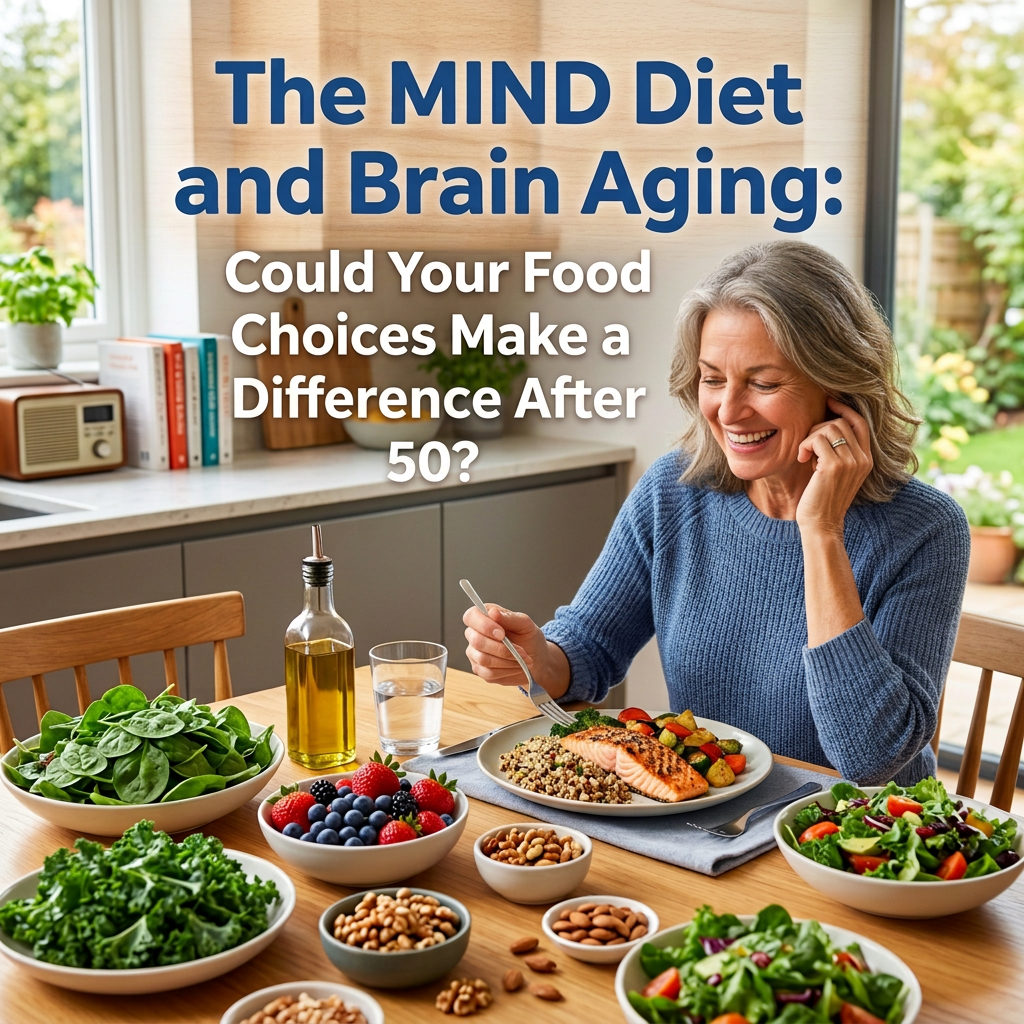
  • The MIND Diet and Brain Aging: Could Your Food Choices Make a Difference After 50?

    The MIND Diet and Brain Aging: Could Your Food Choices Make a Difference After 50?

    Can the MIND diet slow brain aging?

    Short answer: The MIND diet mixes the Mediterranean and DASH diets to help protect the brain. In a 2026 study of 1,647 adults followed for about 12 years, people who stuck closer to it lost brain gray matter more slowly. It doesn’t prove the diet prevents Alzheimer’s, but it’s a good reason to pay attention to what’s on your plate.

    What you eat may matter for your brain as you get older. A 2026 study gives us another reason to pay attention to the food on our plates—but the finding needs a little explanation.

    Researchers studying adults in the long-running Framingham Heart Study found that people who followed the MIND diet more closely experienced slower loss of gray matter over time. The difference associated with a three-point increase in their MIND diet score was estimated to be equivalent to about 2.5 years of age-related brain change over the study period.

    That is an interesting finding. But let’s keep it honest: the study does not prove that this diet makes your brain younger, prevents Alzheimer’s disease, or guarantees that your memory will stay sharp. It does give us a practical reason to look at how we eat—and a few changes that may be worth making after 50.

    What Is the MIND Diet?

    MIND stands for Mediterranean-DASH Intervention for Neurodegenerative Delay. The name is a mouthful, but the basic idea is simple. It combines elements of the Mediterranean and DASH eating patterns, with an emphasis on foods that fit into a generally healthy way of eating.

    You don’t need special powders, expensive supplements, or a refrigerator full of trendy products to understand it. The focus is on everyday foods:

    • Leafy green vegetables: spinach, kale, collards and other greens.
    • Other vegetables: add variety and color to your meals.
    • Berries: blueberries, strawberries and other berries.
    • Whole grains: oatmeal, brown rice and whole-grain bread.
    • Beans and legumes: beans, lentils and chickpeas.
    • Nuts: a small handful can be an easy snack.
    • Fish and poultry: practical sources of protein.
    • Olive oil: a useful replacement for some less healthful fats.

    The eating pattern also encourages limiting foods such as butter, fried foods, pastries, sweets, and large amounts of red meat and cheese. This isn’t about never eating a piece of cake again. It’s about what you do most of the time, not whether every meal is perfect.

    What Did the Researchers Find?

    The 2026 research examined 1,647 adults from the Framingham Heart Study Offspring cohort. Participants were followed for a median of about 12 years, and researchers used brain imaging to examine changes in brain structure over time.

    People with higher MIND diet scores tended to show slower loss of gray matter. Gray matter contains many of the brain’s nerve cell bodies and plays important roles in thinking, memory and other functions.

    The researchers estimated that each three-point increase in the MIND diet score was associated with a difference equivalent to about 2.5 years of age-related gray-matter change over the follow-up period.

    Here’s the important distinction: this was an observational study. Researchers observed people’s eating patterns and brain changes; they did not randomly assign participants to follow the diet and prove that the diet caused the difference. People who eat healthier diets may also differ in other ways, including exercise habits, sleep, income, education and general health. Researchers can account for some factors, but they cannot eliminate every possible explanation.

    So the finding is promising evidence of an association, not a guarantee of results. And a change in brain structure is not the same thing as proving better memory or preventing dementia.

    Berries and poultry stood out in the researchers’ analysis of individual foods. That doesn’t mean blueberries or chicken are miracle foods. The study looked at a broader dietary pattern, and its findings about individual foods should not be treated as proof that any one item independently slows brain aging.

    Still, both can fit easily into everyday meals. You could add berries to oatmeal at breakfast, have them with plain yogurt, or keep frozen berries on hand when fresh ones are expensive. Poultry can be part of a simple lunch or dinner alongside vegetables and a whole grain.

    You don’t have to buy organic berries, expensive specialty foods, or a stack of supplements to get started. Use foods you enjoy and can afford.

    You don’t have to overhaul your kitchen overnight. Start with one or two changes you can keep doing.

    If vegetables aren’t a regular part of lunch or dinner, start there. Frozen vegetables count, too. They’re convenient, often affordable and can save preparation time.

    Fresh berries are great, but frozen ones are useful when prices are high. Add a handful to oatmeal or yogurt, or eat them as a snack.

    Try oatmeal for breakfast, brown rice with dinner, or whole-grain bread for a sandwich. You don’t have to change everything at once.

    Beans and lentils can be inexpensive, filling sources of fiber and plant protein. Add them to soup, chili, salads or a side dish.

    A single meal won’t determine your future brain health. What matters more is the pattern you build over time. If you eat fried food today, that doesn’t mean you’ve failed. Make your next meal a reasonable one and keep going.

    Eating well matters, but it isn’t the only thing worth doing after 50. Regular physical activity, adequate sleep, social connection, and managing conditions such as high blood pressure and diabetes are also important parts of looking after your health.

    If you have concerns about memory or changes in thinking, talk with a qualified health professional rather than assuming food alone will solve the problem. Be wary of products that promise to reverse brain aging or prevent dementia. A promising study is not proof that a supplement, a single food, or a particular diet can deliver those results.

    My Takeaway

    I like research that gives us something practical to work with without pretending there’s a magic answer.

    The MIND diet study doesn’t mean we can turn back the clock on our brains. It does suggest that healthier eating patterns may be associated with more favorable changes in brain structure as we age.

    For me, the sensible approach is straightforward: eat more vegetables, include berries and beans when you can, choose whole grains more often, and pay attention to the overall pattern. Keep moving, get enough sleep, and look after your general health, too.

    If planning all those meals is the hard part, a meal kit can take a lot of the guesswork out of it. Marley Spoon sends the recipe and the ingredients right to your door, so getting more vegetables and good protein on the plate gets a whole lot easier. And if green tea is more your speed than coffee, More Than Matcha makes matcha you can stir up in about a minute. (affiliate links)

    You don’t have to eat perfectly. You just have to keep making reasonable choices.

    Getting older is part of life. Giving up on looking after yourself doesn’t have to be.

    Common Questions About the MIND Diet

    Does the MIND diet prevent Alzheimer’s disease?

    We cannot say that it does. Research has found associations between the MIND eating pattern and certain measures of brain health, but this study does not prove that the diet prevents Alzheimer’s disease or other forms of dementia.

    What does “2.5 years less brain aging” actually mean?

    It refers to an estimated difference in age-related gray-matter loss associated with a higher MIND diet score over the study period. It does not mean participants’ brains were literally rejuvenated by 2.5 years, nor does it guarantee better memory.

    Do I need to follow the MIND diet perfectly?

    No. Focus on the overall pattern of your eating rather than making every meal perfect. Start with changes that are affordable, enjoyable and realistic for you.

    Are blueberries the most important food for brain health?

    The study highlighted berries among the foods associated with favorable brain-imaging findings, but it did not establish blueberries as a miracle food. The overall eating pattern matters, and no single food guarantees protection.

    Is the MIND diet expensive?

    It doesn’t have to be. Frozen vegetables and berries, dried or canned beans, oatmeal, brown rice and other basic foods can help you build meals without relying on costly specialty products. Compare prices and choose what works for your budget.

    Research and Further Reading

    For another perspective on brain health and aging, explore the work of neuroscientist Dr. Lisa Mosconi, whose research and writing focus on the brain and women’s brain health. This is additional reading, not a claim that she reviewed or endorsed this article.

    MIND diet, cerebrovascular health, and cognition among community-dwelling older adults — Puja Agarwal and colleagues, Rush University. Alzheimer’s & Dementia, 2026. Studied 761 older adults without known dementia at the start (713 with complete diet, brain scan, and thinking-test data; average age 81). In plain words: older adults whose eating matched the MIND diet more closely had healthier small blood vessels in the brain — less hardening and narrowing — along with larger brain volume and fewer white spots on brain scans that are linked to dementia risk. They also scored better on thinking tests. The healthier blood vessels and larger brain size partly explained why better eating went along with better thinking. The link held even after accounting for exercise, weight, race, and existing vascular disease. This was an observational study, so it shows a link, not proof that the diet caused the difference. Link: Read the study

    Adherence to the MIND diet and longitudinal brain structural changes over a decade: evidence from the Framingham Heart Study Offspring cohort — Hui Chen and colleagues. Journal of Neurology, Neurosurgery & Psychiatry, 2026; 97(6):505–512. DOI: 10.1136/jnnp-2025-336957. Studied 1,647 middle-aged and older adults (average age about 60) from the Framingham Heart Study Offspring group, followed for about 12 years with repeated brain scans. In plain words: people whose eating matched the MIND diet more closely lost gray matter (brain tissue) more slowly over about 12 years. Each 3-point higher MIND score was linked to about 20% less age-related gray-matter loss — roughly equal to 2.5 years of delayed brain aging. Higher scores were also linked to slower widening of the brain’s fluid-filled spaces, about a 1-year delay. Berries and poultry showed the strongest favorable links, while sweets and fried fast food were tied to faster shrinkage in the memory area. This was an observational study, so it shows a link, not proof that the diet caused the difference. Link: Read the study

    Keep Reading

    About the Author

    Tom Green writes Well After 50. He was born in Pell City, Alabama, in 1962, and he’s a country boy and a true Southerner through and through. He’s just a regular, laid-back 64-year-old who keeps things simple. He shares what he learns about skincare, fitness and getting older, and what’s working for him. He’s also the author of A Practical Guide to Getting Older Without Giving Up on Yourself. Tom isn’t a doctor. He reads up on the research and passes along what’s useful, plain and simple.

    Health Disclaimer

    This article is for general educational purposes and is not a substitute for individual medical advice, diagnosis or treatment. Research findings do not guarantee individual results. Talk with a qualified health professional about dietary changes if you have medical conditions, special nutritional needs, or concerns about memory or thinking.

    I’ve also mapped out some great tools on my new Tech for Independent Living After 50 page.
  • Memory Getting Slippery After 50? Citicoline Explained

    Memory Getting Slippery After 50? Citicoline Explained

    Does citicoline help memory after 50?

    Short answer: Citicoline is a supplement your body turns into compounds the brain uses. In one 12-week study of 100 healthy adults ages 50 to 85 with age-related memory slips, those who took 500 mg a day improved more on memory tests than those on a dummy pill. But the European Food Safety Authority found it hasn’t been proven to improve memory, so don’t expect a miracle.

    Ever walk into a room and forget why you went there? Or know a person’s name perfectly well—until the exact moment you need it? Those little memory lapses can become more noticeable after 50+, and they can make you wonder whether there is anything simple you can do to support your brain. That’s one reason citicoline, also called CDP-choline, has been getting attention. But does citicoline actually help memory? The answer is more interesting than a simple yes or no.

    What Is Citicoline?

    Citicoline is a naturally occurring compound involved in the body’s production of phospholipids and the neurotransmitter acetylcholine. After it is taken, it provides choline and cytidine, which are used in several pathways important to brain-cell membranes and brain chemistry. That sounds impressive, but here’s the important distinction: a supplement having a plausible biological role does not automatically mean it will noticeably improve memory in everyday life.

    So, Can Citicoline Help Memory After 50+?

    There is some human research worth paying attention to. One randomized, double-blind, placebo-controlled trial included 100 healthy adults ages 50 to 85 who had age-associated memory impairment. Participants received either placebo or 500 mg of citicoline daily for 12 weeks. At the end of the study, the citicoline group showed greater improvement on measures of episodic memory and overall composite memory than the placebo group. That’s encouraging—but it was one relatively small 12-week study, not proof that citicoline will improve memory for everyone.

    What Makes Citicoline Interesting?

    Citicoline supplies choline, which the body uses to make acetylcholine. Acetylcholine is a neurotransmitter involved in attention and memory. Citicoline also contributes building blocks used in cell-membrane metabolism. Researchers have therefore been interested in whether supporting these pathways might help the aging brain function more efficiently. In other words, there is a reasonable biological explanation for studying citicoline. But mechanism is not the same thing as proof of a real-world benefit.

    What the Research Does—and Doesn’t—Prove

    This is where I think readers 50+ should be careful. The positive clinical trial is useful because it actually tested people rather than simply looking at laboratory mechanisms. But broader evidence is not strong enough to say that citicoline is a proven treatment for age-related memory loss. A later scientific assessment by the European Food Safety Authority concluded that a cause-and-effect relationship between citicoline and improved, maintained, or reduced loss of memory had not been established. In other words, the evidence remains promising but incomplete.

    How Much Citicoline Was Studied?

    The most directly relevant memory trial in adults 50+ used 500 mg per day for 12 weeks. That does not mean 500 mg is a recommended dose for everyone, and it doesn’t mean that taking more will work better. Studies of citicoline for other medical conditions have used different amounts, but those results shouldn’t automatically be applied to healthy people simply interested in memory. If you’re considering a supplement, check the label carefully and talk with your healthcare professional or pharmacist if you take medications or have a medical condition.

    Is Citicoline a Nootropic?

    You’ll often see citicoline described online as a nootropic—a substance marketed for cognitive support. That’s a useful search term, but don’t let the label make the evidence sound stronger than it is. The important question isn’t whether something is called a nootropic. It’s whether controlled human studies show a meaningful benefit. With citicoline, there are some encouraging findings, but more research is needed.

    What About Side Effects?

    Citicoline has generally been described as well tolerated in clinical research, but “natural” or “well tolerated” doesn’t mean risk-free. Reported unwanted effects in some research have included headache, digestive discomfort and sleep-related complaints. If a supplement seems to make you feel worse, disrupts your sleep or causes a new symptom, that’s a good reason to stop and discuss it with a healthcare professional.

    What I Would Take Away From the Research

    If you’re interested in memory after 50+, citicoline is worth knowing about—but not worth treating like a miracle supplement.
    • There is a human trial in adults 50–85 showing improvement in certain memory measures.
    • The study used 500 mg daily for 12 weeks.
    • The overall evidence is still limited.
    • Citicoline has a plausible role in brain-cell and neurotransmitter metabolism.
    • More research is needed before anyone can say it prevents or reverses normal age-related memory decline.

    Common Questions

    Is it normal to have more memory lapses after 50? Occasional forgetfulness can happen with normal aging, but persistent or worsening memory problems deserve attention. What is citicoline? Citicoline is a compound that provides choline and is involved in processes related to cell membranes and brain function. Can citicoline improve memory? Some research has explored citicoline for memory and cognitive function, but the evidence is not strong enough to say it will improve memory for everyone. Is citicoline the same as CDP-choline? Yes. Citicoline and CDP-choline are two names commonly used for the same compound. Is citicoline safe for people 50+? Citicoline appears to be generally well tolerated in studies, but supplements can interact with individual health conditions or medications. It’s smart to discuss regular supplement use with a healthcare professional. When should memory problems be checked by a doctor? If memory changes are frequent, getting worse, interfere with everyday activities, or concern you or someone close to you, bring them up with a healthcare professional.

    And Don’t Forget the Boring Stuff

    Before spending money on another supplement, remember that the basics still matter. Regular physical activity, adequate sleep, a balanced diet, social connection and staying mentally engaged all have a place in healthy aging. Citicoline may eventually prove to have a useful role for some people. For now, the most honest description is interesting, researched and promising—but not proven. Well After 50 note: This article is for general education, not medical advice. New, sudden or steadily worsening memory problems deserve a conversation with a healthcare professional rather than a supplement experiment.

    Sources

    Citicoline and Memory Function in Healthy Older Adults: Randomized, Double-Blind, Placebo-Controlled Clinical Trial Citicoline Improves Verbal Memory in Aging Citicoline: Pharmacological and Clinical Review, 2022 Update   Practical takeaway: You do not need to overhaul your life to make a useful change. Start with one realistic step, give it time, and build from there. A gentle well-being note: This article is for general information and is not a substitute for professional medical advice. If you have persistent, severe, or worsening symptoms, talk with a qualified healthcare professional.

    Keep Reading

    Written by Tom Green, creator of Well After 50 Tom Green writes Well After 50. He was born in Pell City, Alabama, in 1962, and he’s a country boy and a true Southerner through and through. He’s just a regular, laid-back 64-year-old who keeps things simple. He shares what he learns about skincare, fitness and getting older, and what’s working for him. He’s also the author of A Practical Guide to Getting Older Without Giving Up on Yourself. Tom isn’t a doctor. He reads up on the research and passes along what’s useful, plain and simple.

    I’ve also mapped out some great tools on my new Tech for Independent Living After 50 page.