Category: Health & Nutrition

Practical health and nutrition advice for 50+, covering protein, energy, sleep, healthy habits, and evidence-based ways to support healthy aging.

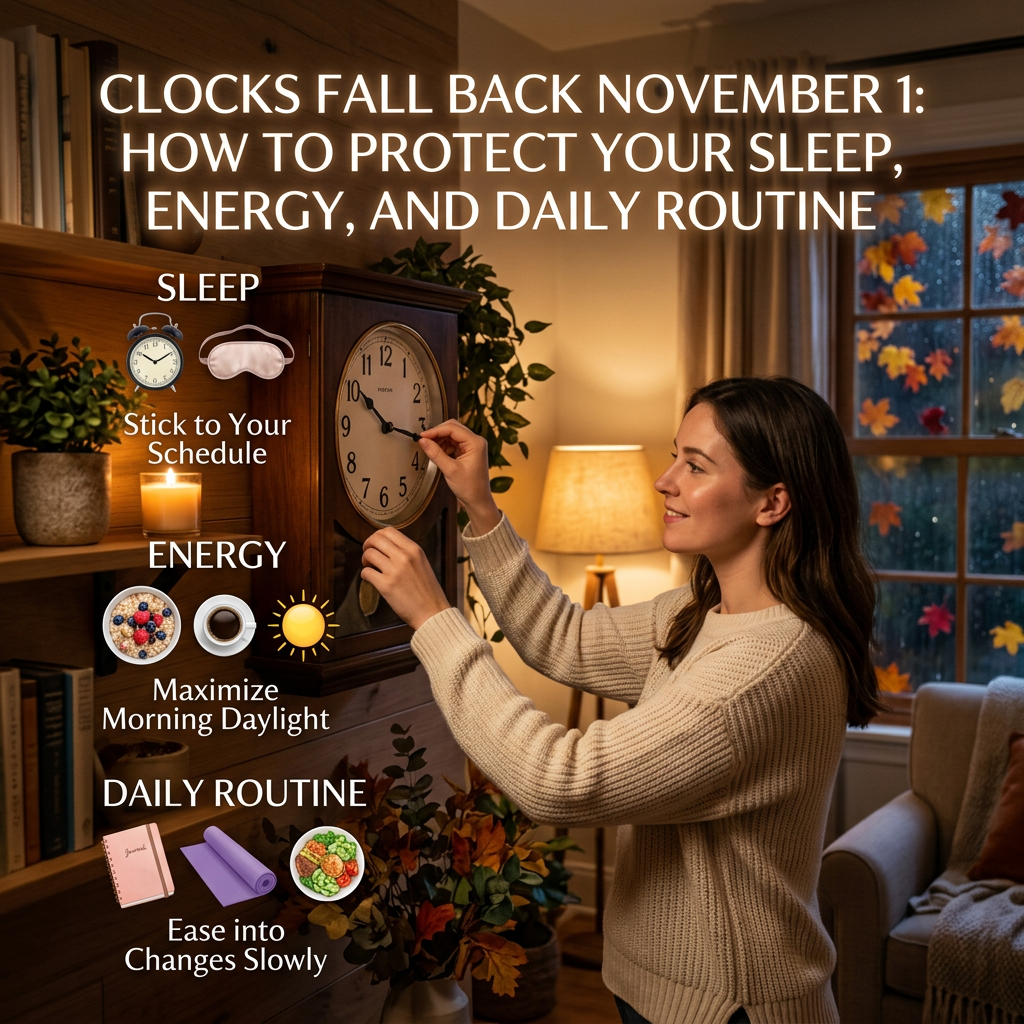
  • Clocks Fall Back November 1: How to Protect Your Sleep, Energy, and Daily Routine

    Clocks Fall Back November 1: How to Protect Your Sleep, Energy, and Daily Routine

    That extra hour of sleep sounds wonderful. But changing the clock can throw more than your bedtime off. Here’s how to make the adjustment a little easier.

    Every fall, we turn our clocks back an hour, and everybody talks about getting an extra hour of sleep.

    Sounds pretty good, doesn’t it?

    But there’s something they don’t always tell you. Just because the clock says one thing doesn’t mean your body agrees.

    You might find yourself waking up at 4:30 in the morning, getting sleepy before supper, or wondering why you’re dragging around when you supposedly gained an hour.

    And then there’s the darkness. One day you’re enjoying daylight in the early evening, and the next it seems like somebody turned the lights off before you’ve even finished your day.

    I’ve always thought the older we get, the more important it becomes to pay attention to these little changes. Not because getting older means we can’t handle them, but because getting good sleep and having enough energy are worth protecting.

    So instead of just telling you to turn your clocks back, I want to share some things that can actually help you feel better during the change.

    First, When Do the Clocks Change?

    This year, daylight saving time ends on Sunday, November 1, 2026, at 2 a.m.

    At that moment, clocks go backward to 1 a.m.

    Most of the United States makes this change, although Hawaii and most of Arizona do not.

    Here’s what that means for your day:

    • You’ll have an extra hour on the clock overnight.
    • Sunrise will happen about an hour earlier by the clock.
    • Sunset will also happen about an hour earlier.
    • Your body may need a few days to adjust, even though you haven’t traveled anywhere.

    And while some people won’t notice much difference, others may experience earlier waking, tiredness, or changes in their usual sleep patterns.

    1. Start Getting Ready Before Sunday

    One of the easiest things you can do is start making small changes a few days before the clocks go back.

    You don’t have to change everything overnight.

    Try moving your bedtime and wake-up time about 15 minutes later each day, beginning Wednesday, October 28.

    DayWhat to do
    Wednesday, October 28Go to bed and wake up 15 minutes later
    Thursday, October 29Move both another 15 minutes later
    Friday, October 30Move another 15 minutes later
    Saturday, October 31Move another 15 minutes later

    For example, if you normally go to bed at 10 p.m., you’d aim for 10:15 on Wednesday, 10:30 on Thursday, 10:45 on Friday, and 11 p.m. on Saturday.

    After the clocks fall back, that 11 p.m. bedtime corresponds to 10 p.m. on the new clock.

    Why does this help?

    Your body follows an internal 24-hour clock that helps regulate when you feel sleepy and awake. Making small adjustments gives that system a chance to adapt without such an abrupt change.

    Sleep specialists recommend gradual schedule changes for people who have trouble adjusting.

    And don’t worry if you can’t follow the plan perfectly. Even a couple of small adjustments may help.

    2. Don’t Let That Extra Hour Throw Off Your Whole Week

    Here’s something that’s easy to do.

    You realize you’re getting an extra hour, so you stay up late Saturday night watching television, looking at your phone, or doing a little more around the house.

    Then Sunday morning comes, you sleep late, and Sunday night you aren’t tired.

    By Monday, you’re wondering why your sleep is all mixed up.

    The best approach is to keep a fairly regular schedule once the clocks change.

    Try getting up around the same time each morning, including weekends.

    If you normally wake at 7 a.m., aim to keep that 7 a.m. wake-up time on the new clock rather than drifting an hour earlier or later every day.

    And if you do sleep poorly one night, don’t feel like you’ve ruined anything. Get back to your usual routine the next day.

    One more thing: Don’t deliberately cut your sleep short just to make yourself tired. Most adults need at least seven hours of sleep, and many do best with seven to nine.

    3. Get Some Daylight — It Does More Than You Think

    This may be one of the simplest things on the whole list, and it doesn’t cost a penny.

    Get outside during the day.

    You don’t have to go for a long walk or start a new exercise program. Sit on the porch, walk to the mailbox, have your morning coffee outdoors, or spend a little time working in the yard.

    Natural light helps tell your brain when it’s daytime. That helps regulate your sleep-wake cycle.

    Morning daylight can be especially useful for establishing a regular wake-up routine, and daylight later in the day may help people who find themselves getting sleepy too early after the fall change.

    If walking is difficult, sitting outside is perfectly fine.

    And if the weather isn’t cooperating, open the curtains and spend time near a bright window. Outdoor light is generally stronger, but getting some daytime brightness is better than spending the whole day in a dim room.

    There’s another benefit, too. Shorter days can affect how energetic and cheerful we feel, so getting outside and staying active can be helpful for our mood.

    4. Those Dark Evenings Can Affect Your Mood

    Nobody talks about this enough.

    For some people, that early darkness is more difficult than the clock change itself.

    You finish a few chores, look outside, and it’s already getting dark. It can make the whole day feel shorter.

    And when it’s dark early, it’s tempting to sit down, turn on the television, and stay there for the rest of the evening.

    There’s nothing wrong with relaxing. But we don’t want those shorter days to take away the things that keep us feeling good.

    Here are a few things worth trying:

    • Schedule your walks, errands, or outdoor activities earlier while there’s still daylight.
    • Keep doing things you enjoy, even if it’s already dark outside.
    • Turn on the lights and enjoy your home instead of treating sunset like bedtime.
    • Stay connected with friends and family rather than spending every evening alone.
    • Keep some gentle physical activity in your day.

    If you notice that every fall brings ongoing sadness, a loss of interest in things you enjoy, or changes in sleep and appetite, mention it to your healthcare provider. Seasonal depression is real, and help is available.

    The important thing is not to let the darker evenings quietly take over your routine.

    5. Watch the Coffee and Afternoon Naps

    I know how tempting another cup of coffee can be when you’re dragging through the afternoon.

    But caffeine can stay in your system for hours, and that late cup may be part of the reason you’re still awake when you want to be sleeping.

    If you’re having trouble falling asleep, try keeping coffee and other caffeinated drinks to the morning or early afternoon.

    The same goes for naps.

    A short nap can be refreshing, but sleeping for an hour or two late in the afternoon can make it harder to fall asleep at night.

    If you need a nap, try keeping it around 20 to 30 minutes and taking it earlier in the day.

    And don’t make the mistake of thinking you have to stay awake at all costs. If you’re genuinely exhausted, rest. The goal is a healthier routine, not making yourself miserable.

    6. Make Your Bedroom Work for You

    You don’t need expensive bedding, sleep gadgets, or a cabinet full of supplements to get started.

    A few simple changes may help.

    Keep your bedroom cool and comfortable. Most people sleep better when the room isn’t overly warm.

    Block unwanted light. Streetlights, hallway lights, and glowing electronics can make a difference, especially if you’re already a light sleeper.

    Turn the television and phone down before bed. Bright screens and stimulating programs can keep your mind active when you’re trying to wind down.

    Give yourself a little quiet time. Read a few pages of a book, listen to peaceful music, or enjoy a warm shower.

    And here’s something people overlook: If you lie awake for a long time and start getting frustrated, get up for a little while and do something relaxing in dim light. Return to bed when you feel sleepy.

    Sometimes trying harder to sleep only makes it more difficult.

    7. Check Your Medications, Alarms, and Appointments

    This is one of those practical details that’s easy to forget.

    Your smartphone will usually change time automatically. Many computers and smartwatches will, too.

    But your microwave, stove, wall clock, car clock, and older alarm clocks may need to be changed manually.

    Take a few minutes Saturday evening to check them.

    And pay particular attention if you take medications at specific times.

    Don’t automatically move your medication schedule by an hour without checking.

    For most routine reminders, you can simply confirm they’re set correctly for the new time. But certain medications require more careful timing.

    If you take insulin, seizure medication, medication for Parkinson’s disease, or anything else that must be taken at precise intervals, ask your pharmacist or healthcare provider how to handle the change.

    Also check medical equipment with programmed schedules, such as some feeding pumps or medication devices.

    A little preparation can prevent a lot of confusion.

    8. Be Especially Careful Driving After Dark

    When the clocks change, your familiar evening drive may suddenly happen after sunset.

    That matters.

    Pedestrians, cyclists, animals, and other hazards are harder to see in low light, especially around intersections, parking lots, and roads without good lighting.

    A few reminders:

    • Clean the inside and outside of your windshield.
    • Make sure your headlights are working properly.
    • Slow down when visibility is poor.
    • Watch carefully for people crossing streets or walking through parking lots.
    • Avoid driving if you’re unusually sleepy.
    • Give yourself a little more time instead of rushing.

    As we get older, glare from oncoming headlights and changes in nighttime vision can become more noticeable. If night driving is getting difficult, bring it up at your next eye exam.

    There’s no shame in planning errands earlier in the day when visibility is better.

    9. What If You Already Have Trouble Sleeping?

    Some people are fortunate enough to sleep through just about anything.

    Others have a difficult time getting a good night’s rest even when the clocks aren’t changing.

    If that’s you, don’t feel like you need to follow every suggestion perfectly.

    Start with three things:

    1. Get up at roughly the same time each day.
    2. Spend some time outdoors during daylight hours.
    3. Give yourself a consistent, relaxing bedtime routine.

    If you regularly wake up exhausted, snore loudly, gasp during sleep, or have ongoing insomnia, don’t automatically blame age or daylight saving time.

    Those can be signs of sleep problems worth discussing with your doctor.

    Good sleep matters at every age, and poor sleep isn’t something we’re simply supposed to accept after 50.

    If you want to understand why sleep matters so much, Matthew Walker’s book Why We Sleep is worth a read. He’s a sleep scientist at UC Berkeley, and he explains in plain language what sleep does for your memory, your mood and your body. It might make you think twice about that late-night TV.

    Your Simple Weekend Clock-Change Checklist

    Before you head to bed Saturday night, here’s a quick list worth checking off:

    • Set your manual clocks back one hour.
    • Check your phone’s time-zone and automatic-time settings.
    • Make sure your alarms are set correctly.
    • Review medication reminders and any time-sensitive dosing instructions.
    • Check your Sunday appointments and activities.
    • Make a plan to get some daylight on Sunday.
    • Keep your bedtime and wake-up routine as steady as possible.
    • Prepare for darker evening driving.

    Nothing complicated. Just a few minutes of preparation.

    A Final Thought: Don’t Let One Hour Steal Your Energy

    Getting older teaches us something important: Sometimes the smallest changes in our daily routine can make a bigger difference than we expect.

    A good night’s sleep, a little sunshine, some movement, and a regular routine may not sound exciting. But they’re part of what helps us feel good enough to enjoy our lives.

    The clocks are going to change whether we like it or not.

    What we can do is make the adjustment easier on ourselves.

    So enjoy that extra hour if you can. Just remember that your body may need a little time to catch up.

    And if the darker evenings bother you, don’t let them convince you the day is over.

    There’s still plenty of life to enjoy after sunset.

    That’s what Well After 50 is all about — finding practical ways to take care of ourselves and keep enjoying the years ahead.

    I’ve also mapped out some great tools on my new Tech for Independent Living After 50 page.
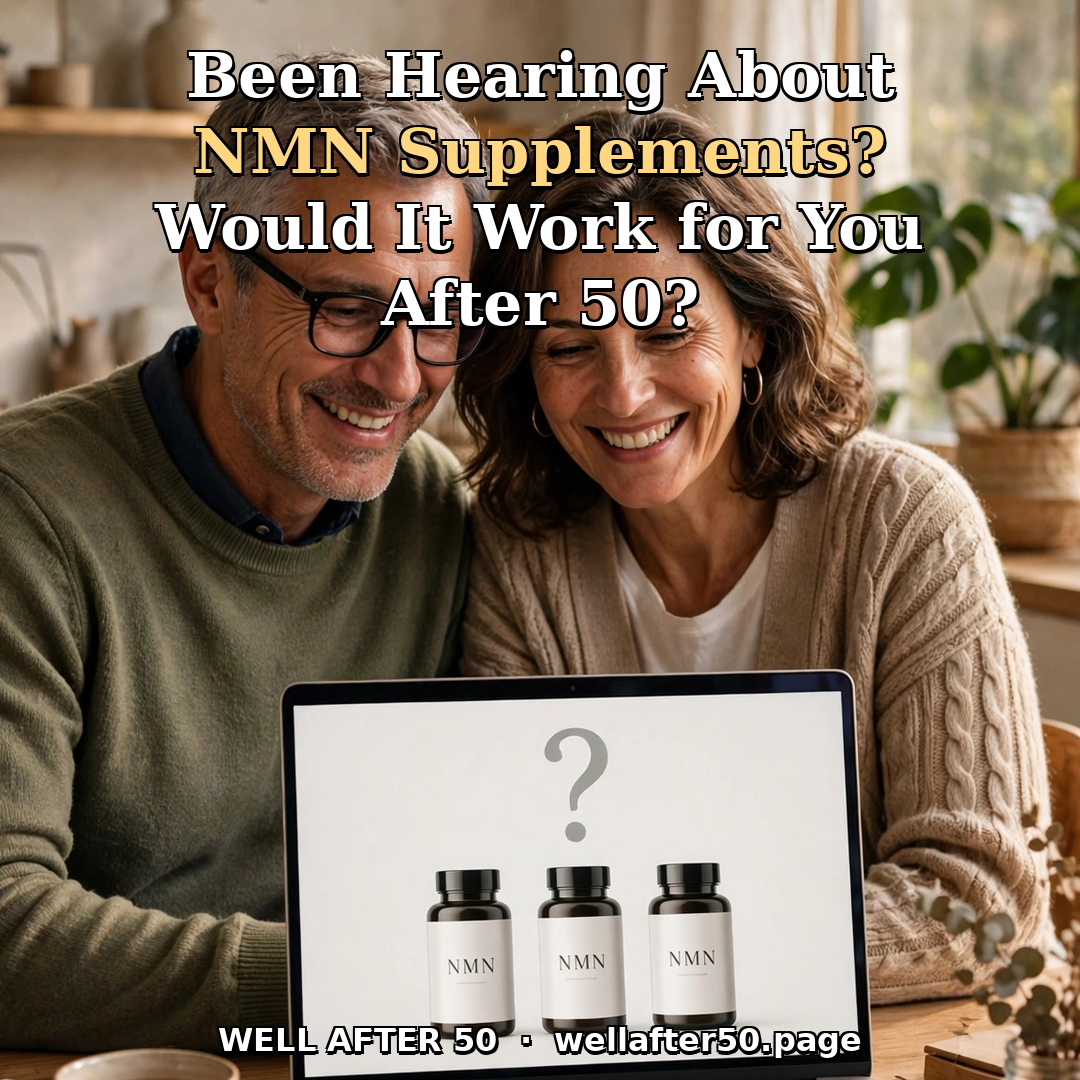
  • Been Hearing About NMN Supplements? Would It Work for You After 50?

    Been Hearing About NMN Supplements? Would It Work for You After 50?

    If you’ve been hearing about NMN lately, you’re not the only one. It’s in podcasts, it’s in ads, and it’s probably coming from a buddy who swears he’s got more pep since he started taking it. Some folks call it an anti-aging pill. Others say it’s just expensive hype.

    A lot of the buzz started with David Sinclair, a genetics professor at Harvard Medical School. His 2019 book Lifespan: Why We Age and Why We Don’t Have To got a lot of people curious, and he’s said he takes NMN himself. Worth knowing, though: he’s also helped start companies that work on NMN and other supplements, so he’s not exactly a neutral voice. (If you buy the book through my link, I may earn a small commission at no extra cost to you.)

    Lifespan: Why We Age and Why We Don't Have To book cover by David A. Sinclair

    I just started taking NMN myself, so I wanted straight answers, not a sales pitch. I dug into what the human studies say, what it costs, and how to keep from overpaying. Here’s what I found, plain and simple.

    The short answer

    • NMN is not a miracle. There is no proof it slows aging in people.
    • It does raise NAD levels in the blood. That part is well shown. Whether that makes you healthier is still being studied.
    • A few small studies found modest benefits, like walking a little farther or a little faster. Most were short and paid for by companies that sell NMN.
    • It looks safe in the short term. Nobody knows yet about taking it for years.
    • You don’t need to overpay. Good third-party tested brands cost about $10 to $25 a month. Fancy versions can run $65 to $120.

    What is NMN, anyway?

    NMN stands for nicotinamide mononucleotide. That is a mouthful, so here is the simple version.

    Your body uses something called NAD to turn food into energy and to repair itself. NAD levels drop as we get older. NMN is a building block your body uses to make NAD. The idea behind the supplement is simple: give your body more of the building block, and maybe you’ll have more NAD, like you did when you were younger.

    It’s a nice idea. The real question is whether it actually makes a difference you can feel.

    What the human studies actually found

    A lot of the excitement around NMN came from mouse studies. Mice are not people, so I focused on studies done in humans. There are only a handful, and they are small.

    Older men walked a bit faster

    In a 12-week study in Japan, men 65 and older took 250 mg of NMN a day or a placebo. The NMN group walked a little faster and had slightly better grip strength in one hand. But they did not gain muscle, and only 20 men were counted in the final results because of a supply mix-up. The company that made the NMN paid for the study. (Study summary)

    Middle-aged adults walked farther

    In a 60-day study of 80 healthy adults ages 40 to 65, people took 300, 600, or 900 mg a day. NAD levels in the blood went up, and the groups taking 600 and 900 mg walked farther in a six-minute walking test. The researchers thought 600 mg was the sweet spot, because 900 mg was not clearly better. This study was also paid for by companies that make NMN.

    Writer Arkadi Mazin at Lifespan.io made a fair point about this one: people weren’t told to change their activity, so some of the walking gains could simply come from people moving around more during the study. He concluded that the results are promising but not proof.

    Women’s muscles handled blood sugar a little better

    In a 10-week study at Washington University, 25 women past menopause with prediabetes took NMN or a placebo. Their muscles responded better to insulin, which helps manage blood sugar. But their blood sugar levels did not change, and their liver did not respond any differently. (NIH summary)

    My take on the research

    These results are interesting, but they’re small. We’re talking about dozens of people for a few weeks or months, not thousands of people for years. Nobody has shown that NMN helps people live longer or prevents disease. When companies that sell NMN pay for the studies, I want to see the results repeated by independent researchers before I get too excited.

    I’m not the only one who feels that way. Longevity doctor Peter Attia, author of the bestseller Outlive, talked about NMN and NR on the Huberman Lab podcast. His view was that there’s no clear evidence yet that raising NAD with supplements helps people live longer or healthier.

    NMN vs. NR: what’s the difference?

    You may also see NR, or nicotinamide riboside, sold as Tru Niagen and other brands. It’s a cousin of NMN. Both are used by the body to make NAD, and both raise NAD levels in the blood.

    Which is better? Honestly, nobody knows yet. You’ll find plenty of websites claiming one beats the other, but most of them are selling one of the two. For an everyday person, the difference probably matters less than whether you need either one at all.

    Is NMN safe?

    In the studies so far, NMN was well tolerated for a few weeks to a few months, including at doses up to 900 mg a day. Side effects were uncommon and mild. That is reassuring, but it does not tell us what happens if you take it for years.

    Talk to your doctor before trying NMN if you:

    • Have had cancer or are being treated for it. Researchers are still studying how raising NAD affects cancer cells.
    • Take several prescription medications.
    • Have diabetes or take blood sugar medicine.
    • Are dealing with kidney or liver problems.

    Is it even legal to sell?

    This part got confusing. In 2022 the FDA said NMN could not be sold as a supplement, and many listings disappeared from big online stores. In fall 2025 the FDA reversed that decision, and NMN is again allowed as a dietary supplement. (National Law Review)

    That does not mean the FDA checks that it works or that what’s in the bottle matches the label. Supplements are not tested the way medicines are.

    What it costs (and how not to overpay)

    NMN prices are all over the place. A 2026 price guide found premium brands running about $65 to $90 a month at 500 mg a day, and $95 to $120 for liposomal or under-the-tongue versions. You don’t have to pay that. Good, third-party tested capsules from mainstream brands cost a fraction of it.

    Here’s the catch with going too cheap, though: in 2022, testing of 21 popular NMN brands on Amazon reported by ConsumerLab found that 14 of them had less than 1% of the NMN on the label. A bottle with no NMN in it is no bargain at any price. That’s why I stick to known brands that say they’re third-party tested.

    3 budget-friendly, third-party tested NMN brands

    All three of these cost about $20 to $25 a bottle and are labeled third-party tested. Prices are approximate as of October 2026 and change often, so compare before you buy.

    1. Force Factor NMN (the one I started with)

    This is what I started with. I pick it up at Walmart for about $24 for 60 capsules, 250 mg each. Force Factor says its products are third-party tested, and it’s easy to find in stores, so you don’t have to gamble on an unknown online seller.

    2. BulkSupplements NMN capsules

    About $20 for 60 capsules of 500 mg, which works out to roughly $10 a month at one capsule a day. The company says it uses an accredited outside lab, and when Forbes Health writer Heidi Borst had it lab-tested, it came back clean for heavy metals and germs.

    3. Nutricost NMN

    About $22 for 60 capsules of 250 mg. At one capsule a day, that’s roughly $11 a month, and 250 mg is the same dose used in the Japan study. It’s labeled third-party tested and also passed the Forbes Health lab tests for heavy metals and germs.

    Simple ways to save money on NMN

    • Compare price per 250 mg, not price per bottle. A bottle that looks cheap can need two or three capsules a day.
    • Start low. Studies used 250 to 900 mg a day. Starting at 250 mg costs less, and you can talk to your doctor about going higher.
    • Skip the fancy versions. Liposomal, under-the-tongue and gummy NMN cost more, and there isn’t good proof they work better.
    • Avoid “blends.” “NAD booster blend” or “proprietary formula” can hide how little NMN you’re really getting.
    • Buy from known brands and stores. Skip no-name powders and sellers you can’t look up.

    Should you take NMN with resveratrol or TMG?

    Spend about five minutes reading up on NMN and somebody’s going to tell you to take it with resveratrol and TMG. So here’s what those two are, and what we really know.

    Resveratrol comes from red grape skins. Most of the talk about pairing it with NMN goes back to David Sinclair. He’s said he takes the two together. His thinking is NMN fills up your NAD, and resveratrol helps your body put it to work. Sounds good. But so far it’s mostly been tried on lab animals, not people. And not everybody’s sold on it. NAD researcher Charles Brenner has been one of the biggest doubters of the resveratrol research.

    TMG (trimethylglycine, also called betaine) is in beets, spinach and whole grains. When your body breaks down NMN, it uses up some of what TMG puts back. So folks take it to keep things even. Makes sense to me, but nobody’s tested it yet. One heads-up: too much TMG can bump your LDL cholesterol up a little.

    What I’m doing: I’m starting on Toniiq Elixr. It’s got NMN, resveratrol and TMG all in one. It runs about $35 a month on iHerb, which costs more than the cheaper brands up above. I didn’t pick it because it’s proven better. I just liked having all three in one bottle. I’ll let you know how it goes.

    If you’re shopping for a combo, look at how much NMN you’re getting. Some of them look like a good deal and only give you a little bit. One popular combo only has 150 mg of NMN per serving. Elixr has 500 mg.

    How to read an NMN label without getting fooled

    • How much NMN is in one serving. Not “per bottle,” and check whether a serving is one capsule or two.
    • Proof of testing. The best brands post a certificate of analysis, often called a COA, from an independent lab. If a brand only says “third-party tested,” you can email them and ask for the report.
    • Fancy words that don’t mean much. “Pharmaceutical grade,” “ultra-pure,” and “advanced formula” sound impressive, but they aren’t official standards.
    • Who made it and where. A real company name, a real address, and a way to contact them. If you can’t find those, keep shopping.

    Red flags in NMN ads

    • “Reverses aging” or “turns back the clock.” No human study has shown that. Anyone promising it is selling, not informing.
    • “Clinically proven” with no link to the study. If they had a great study, they’d show it to you.
    • A famous doctor or TV personality in the ad. Fake celebrity endorsements are common with supplements. Check the person’s own website before you believe it.
    • “Free trial, just pay shipping.” These often sign you up for monthly charges that are hard to cancel.
    • Countdown timers and “only 3 left.” A real product doesn’t need to rush you.

    A simple 90-day test if you decide to try it

    If you and your doctor decide NMN is worth a try, don’t just take it and hope. Make it a little experiment so you actually know if it’s doing anything for you.

    • Before you start, write down a few things. How’s your energy on a scale of 1 to 10? How long can you walk before you get tired? How are you sleeping? How do your joints feel in the morning?
    • Change only one thing. If you start NMN, a new workout, and a new diet all in the same week, you’ll never know which one helped.
    • Check in every month. Write the same notes again on the same day each month.
    • Be honest at the end. After about three months, compare your notes. If nothing really changed, you can stop and spend that money somewhere else, with no regrets.

    This protects you from the biggest supplement trap of all: spending money every month on something just because you’re afraid to stop.

    What to say to your doctor

    Some people feel a little silly bringing up supplements with their doctor. Don’t. Doctors would much rather know what you’re taking. You can keep it simple:

    “I’ve been hearing about NMN and I’m thinking about trying it. Is there any reason it wouldn’t be safe for me with my health history and the medicines I take?”

    Bring the bottle or a photo of the label so they can see exactly what’s in it. And if your doctor hasn’t heard much about NMN, that’s okay. It’s new, and the research is still thin.

    What probably helps more (and costs less)

    Before you spend money on NMN, make sure the basics are covered. These have much stronger evidence for energy and healthy aging after 50:

    Here’s something the ads don’t tell you: your body already makes NAD on its own, every day, from the food you eat. Vitamin B3, also called niacin, is one of its main building blocks, and you get it from everyday foods like chicken, turkey, tuna, salmon, peanuts, mushrooms, and whole grains. Research also suggests regular exercise helps your muscles keep their NAD levels up.

    One caution: don’t start taking high-dose niacin pills on your own to boost NAD. Large doses can cause flushing and, over time, liver problems. Food sources are the safe way to go.

    Common Questions

    Does NMN really slow aging?
    There’s no proof in people that NMN slows aging or helps you live longer. Small studies found modest benefits, like walking a little farther or faster.

    How long does NMN take to work?
    In studies, people took it for about 2 to 3 months. If you notice nothing after that, it may not be worth the money for you.

    How much NMN do people take?
    Studies used 250 to 900 mg a day. One study found 600 mg worked about as well as 900 mg. Ask your doctor what makes sense for you.

    What’s a good budget NMN?
    Force Factor, BulkSupplements and Nutricost are all labeled third-party tested and cost about $20 to $25 a bottle. Compare the price per 250 mg before you buy.

    Is NMN better than NR?
    Both raise NAD levels. There is no clear proof that one is better than the other for everyday people.

    Is NMN safe for people over 50?
    Short-term studies found it well tolerated, including in men over 65. Long-term safety isn’t known. Check with your doctor first, especially if you’ve had cancer or take medications.

    The bottom line

    NMN isn’t a scam, but it isn’t a fountain of youth either. It does raise NAD in your blood, and a few small studies found some modest gains. That’s about all we know so far.

    If you’re curious and your doctor’s fine with it, trying a tested, budget brand for a few months won’t break the bank. But if you’re deciding where to put your money and energy after 50, I reckon strength training, walking, protein and good sleep come first. Those have the best proof of anything.

    Your turn: Have you tried NMN, or are you thinking about it? Tell me in the comments. I’d like to hear how it’s going for y’all.

    I’m not a doctor or medical professional. This article is general information, not medical advice. Talk with your doctor before starting any supplement, especially if you have health conditions or take medications. Prices are approximate and change often.

    About the Author

    Tom Green writes Well After 50. He’s just a regular, laid-back 64-year-old who keeps things simple. He shares what he learns about skincare, fitness and getting older, and what’s working for him. He’s also the author of A Practical Guide to Getting Older Without Giving Up on Yourself.

    Tom isn’t a doctor. He reads up on the research and passes along what’s useful, plain and simple.

    I’ve also mapped out some great tools on my new Tech for Independent Living After 50 page.

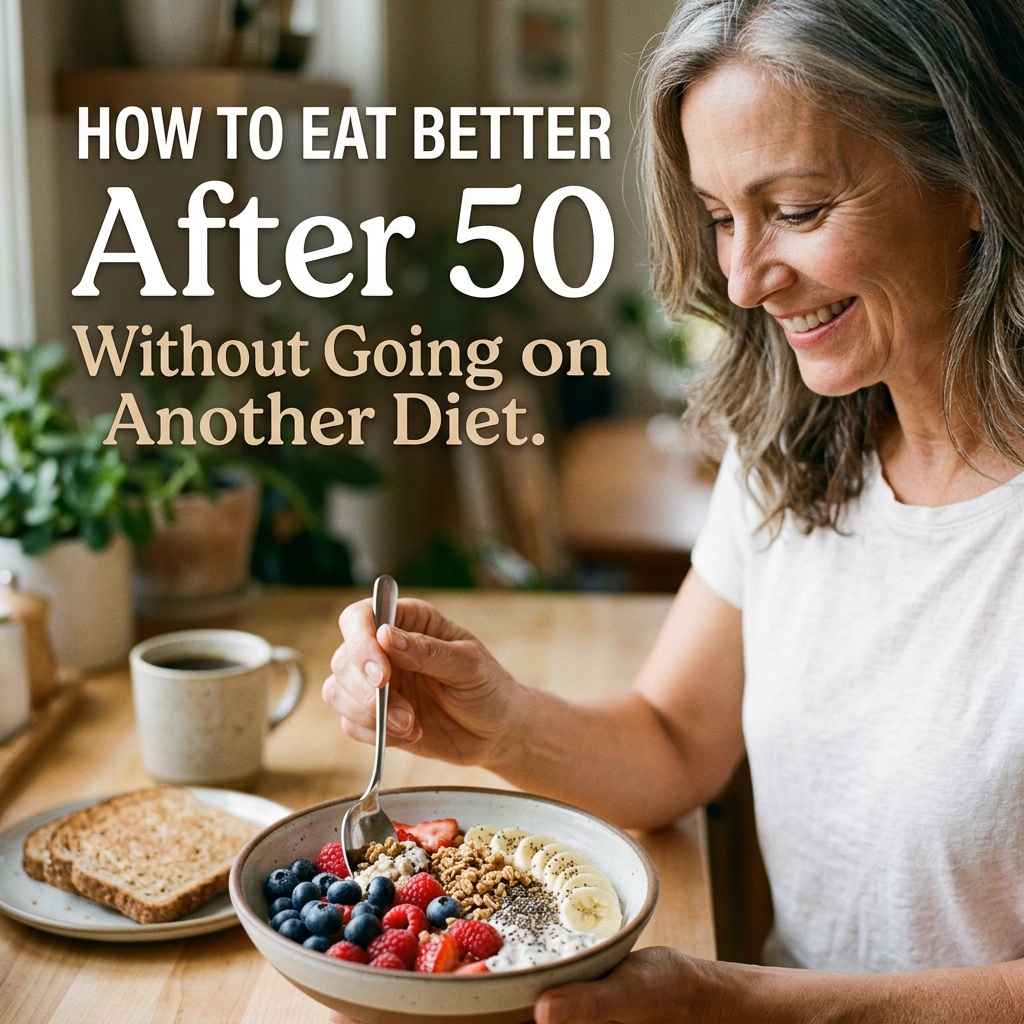
  • How to Eat Better After 50 Without Going on Another Diet

    How to Eat Better After 50 Without Going on Another Diet

    Every few months, it seems somebody comes along with another diet that promises to fix everything. Cut out bread. Stop eating after six. Buy a powder. Count every bite. After 50, I think most of us have earned the right to ask a better question: How can I eat a little better without making food another source of stress?

    You don’t need a perfect refrigerator, expensive groceries, or the willpower to turn down every piece of birthday cake. You need a few meals you enjoy, a sensible shopping list, and habits that still work when you’re tired or your week goes sideways.

    Start with what you can add, not everything you must give up

    Instead of declaring certain foods forbidden, take a look at an ordinary day of eating. Is breakfast mostly coffee and toast? Could you add an egg or Greek yogurt? Is lunch a sandwich? Could you add fruit or a handful of baby carrots? A small improvement that lasts is more useful than a dramatic change you abandon by Thursday.

    Stanford nutrition researcher Christopher Gardner, interviewed by Elle Hunt in The Guardian, makes a similar argument: eat well most of the time instead of treating nutrition as an all-or-nothing contest. That’s not permission to ignore nutrition; it’s a way to make a generally healthy pattern sustainable.

    Use a simple plate as your guide

    When you’re not sure what to cook, the Harvard Healthy Eating Plate is a useful starting point: aim for about half a plate of vegetables and fruit, one-quarter whole grains, and one-quarter healthy protein, with sensible amounts of healthy fats and water as a usual drink. These are flexible proportions, not rules you must measure at every meal.

    Here’s what that can look like in a real kitchen: baked chicken or beans, a serving of brown rice, and a generous helping of frozen broccoli with olive oil and seasoning. Don’t like broccoli? Use green beans, cabbage, carrots, or the vegetables you’ll actually eat.

    Try this tonight: Before changing anything else on your dinner plate, add one vegetable or fruit that wasn’t there yesterday.

    After 50, don’t forget the protein

    Protein matters for maintaining muscle and supporting recovery, especially if you exercise. You don’t have to live on shakes or eat a steak at every meal. Fish, eggs, yogurt, cottage cheese, chicken, lentils, tofu, and beans can all contribute. How much you need depends on your size, activity, health, and goals; people with kidney disease or dietary restrictions should ask their care team about a suitable target.

    For a practical start, include a protein-containing food at breakfast, lunch, and dinner. That could be yogurt in the morning, tuna or hummus at lunch, and chicken, fish, or beans at supper. See my guide to protein after 50 if you’d like more detail.

    Fiber is one of the easiest upgrades

    Fiber helps keep digestion regular, and fiber-rich foods can support heart health and make meals more satisfying. Oats, beans, lentils, vegetables, berries, pears, and whole grains are everyday options. There’s no need to make every meal a giant salad.

    Three low-effort changes: choose oatmeal a few mornings a week; stir canned beans into soup, chili, or a rice bowl; and swap white bread for whole-grain bread when you enjoy the taste. Increase fiber gradually and drink enough fluids, particularly if you’ve been eating very little fiber.

    Make breakfast work for you

    Some mornings you’re hungry; other mornings you aren’t. Rather than forcing yourself into a complicated breakfast, keep two reliable options on hand:

    • Sweet: Plain or lower-sugar Greek yogurt with oats, berries, and a sprinkle of nuts or seeds.
    • Savory: Eggs with spinach or tomatoes and whole-grain toast.

    Registered dietitian Keri Gans, speaking with Prevention, describes Mediterranean-style eating as a balanced approach rather than a rigid diet. Her examples show how protein, whole grains, produce, and healthy fats can fit into an ordinary breakfast.

    Build a lunch you can repeat without getting bored

    One of the biggest obstacles to eating better isn’t knowing what to eat. It’s being hungry at noon and having absolutely nothing ready.

    Business Insider writer Rachel Hosie shares a simple, make-ahead grain bowl built from whole grains, beans, protein, and vegetables. Registered dietitian Nichola Ludlam-Raine comments in that article on why this combination is balanced and adaptable.

    You can make your own version with whatever is affordable: leftover rice, canned chickpeas, chopped cucumber or frozen vegetables, chicken or tofu, and a little dressing. Keep cooked leftovers refrigerated promptly, and follow safe storage guidance. Or skip the bowl entirely and make a tuna sandwich with fruit on the side. The point is to have a plan, not a complicated recipe.

    Eat better on a regular grocery budget

    Healthy eating doesn’t require boutique groceries. A few basics stretch a long way:

    • Frozen vegetables and fruit: Usually convenient, often less waste, and useful when fresh produce spoils before you can eat it.
    • Canned beans and fish: Shelf-stable meal starters. Compare labels for sodium when appropriate.
    • Oats, rice, and potatoes: Flexible, filling staples; combine them with protein and produce.
    • Eggs, yogurt, peanut butter, tofu, or chicken: Choose the proteins that fit your budget and dietary needs.
    • Cabbage, carrots, apples, and seasonal produce: Often practical options that keep relatively well.

    Five-minute shopping trick: Before leaving home, choose two proteins, three produce items, and one whole-grain staple. Then think of three meals you can make from them. This cuts down on buying ingredients that don’t fit together.

    A realistic one-day menu

    • Breakfast: Greek yogurt, oatmeal, and berries.
    • Lunch: Tuna or chickpea sandwich on whole-grain bread, plus carrots or fruit.
    • Snack, if hungry: An apple with peanut butter or cottage cheese.
    • Dinner: Baked fish, chicken, or tofu; roasted vegetables; and rice or a potato.
    • Dessert: Something you enjoy if you want it. One dessert doesn’t cancel out the rest of your day.

    Adjust portions and foods to your appetite, medical needs, activity, and preferences. This is an example, not a calorie-controlled diet or a medical meal plan.

    What I’d stop worrying about

    I’d stop chasing every food trend, buying “detox” products, and treating one meal as proof that I’ve failed. I’d also stop assuming packaged foods are automatically bad. Canned beans, frozen vegetables, and plain yogurt can make good eating easier. Nutrition is about the pattern over time—not a purity test.

    That doesn’t mean every choice has the same nutritional value. The American Heart Association’s overview of Mediterranean-style eating emphasizes vegetables, fruit, legumes, whole grains, healthy fats, and protein choices that support heart health. These basics are much more useful than a dramatic three-day reset.

    Try this for the next seven days

    1. Pick one breakfast you can repeat.
    2. Add a vegetable or fruit to lunch or dinner.
    3. Include a protein food at each main meal.
    4. Plan two simple dinners before shopping.
    5. Keep one easy backup meal in the house for a tiring day.
    6. Drink water regularly, unless your clinician has advised a fluid restriction.
    7. At week’s end, ask what felt easier—not what you did perfectly.

    Keep the habits that helped and change the ones that didn’t. That’s how eating better becomes part of life instead of another project you have to start over every Monday.

    Common questions about eating better after 50

    Do I need to go on a diet to eat healthier after 50?

    No. Many people can improve the nutritional quality of their usual meals by adding more vegetables, fruit, fiber-rich foods, and appropriate protein rather than following a restrictive diet.

    Are carbohydrates bad after 50?

    No. Carbohydrate quality and portion size matter more than avoiding all carbs. Oats, beans, fruit, and whole grains can be part of a healthy eating pattern.

    What if I cook for one?

    Buy smaller amounts when possible, use frozen produce, and plan meals around ingredients you can reuse. A can of beans might become soup one day and a rice bowl the next.

    What if I’m not hungry?

    Try smaller, nutrient-dense meals and snacks rather than forcing a large plate. Persistent appetite loss, unexpected weight change, or difficulty eating deserves a discussion with a healthcare professional.

    My bottom line

    After 50, the best way to eat better may be the one you can keep doing. Make breakfast a little stronger. Keep a few good groceries on hand. Add more plants. Eat enough protein. Enjoy your food. And don’t turn eating into another reason to be hard on yourself.

    Your turn: What’s one affordable, easy meal you keep coming back to? Share it in the comments—someone else might need that idea.

    Keep Reading

    About Tom Green

    Tom Green writes Well After 50. He’s just a regular, laid-back 64-year-old who keeps things simple. He shares what he learns about skincare, fitness and getting older, and what’s working for him. He’s also the author of A Practical Guide to Getting Older Without Giving Up on Yourself. Tom isn’t a doctor. He reads up on the research and passes along what’s useful, plain and simple.

    I’ve also mapped out some great tools on my new Tech for Independent Living After 50 page.
  • Medicare Open Enrollment 2026: Your Drug Plan Premium Could Jump 50% If You Don’t Check Before Dec. 7

    Medicare Open Enrollment 2026: Your Drug Plan Premium Could Jump 50% If You Don’t Check Before Dec. 7

    Medicare Open Enrollment runs from October 15 through December 7, 2026. If you have Medicare, this is your opportunity to review your health and prescription coverage for 2027. Changes you make during this period generally take effect January 1, 2027. Start with the official Medicare Open Enrollment information.

    It can be tempting to keep the plan you already have, especially if it worked well this year. But premiums, prescription costs, covered medications, doctors, and plan benefits can change from one year to the next. Taking a little time to review your coverage could help you avoid an unwelcome surprise.

    Why Medicare Open Enrollment Matters This Year

    Your current plan may not offer exactly the same coverage in 2027. Read the Annual Notice of Change from your insurer carefully. It explains changes to your plan’s costs, benefits, and coverage rules.

    This is particularly important if you take prescription medications regularly or rely on specific doctors, specialists, or pharmacies. You do not have to switch plans just because enrollment arrives—but you should know what you are agreeing to for the coming year.

    1. The Part D Deductible Is Changing

    For 2027, the maximum standard Medicare Part D deductible is scheduled to rise from $615 in 2026 to $700 in 2027. Some plans may have a lower deductible or no deductible, so not everyone will pay the maximum.

    2. The Out-of-Pocket Drug Spending Threshold Is Rising

    The annual out-of-pocket threshold for covered Part D drugs is scheduled to increase from $2,100 in 2026 to $2,400 in 2027. Your actual costs depend on your coverage and circumstances. These figures are a reason to check your plan—not a prediction that everyone will spend these amounts.

    When comparing plans, look beyond the monthly premium. Consider the deductible, the price of each prescription you take, and the total you could pay over the whole year.

    3. Are Prescription Drug Plan Premiums Going Up?

    Federal projections put the average monthly premium for standalone Part D prescription drug plans at about $36 in 2027, compared with $35.09 in 2026. That is an average—not a promise about what your own plan will cost. Individual plans can cost more or less, so check your plan’s actual 2027 notice rather than assuming your premium will rise by a particular amount.

    Don’t Just Let Your Drug Plan Roll Over

    Here’s the catch with that $36 average. Juliette Cubanski and her team at KFF looked closer and found that if folks with standalone drug plans just stay put, their average premium could jump from about $34 to $51 a month in 2027. That’s a 50% raise. There also aren’t any $0-premium standalone drug plans next year. One of the big national plans, AARP Medicare Rx Preferred, is expected to average about $204 a month, up from $126. The good news is that most of that increase can be avoided by shopping around. That’s what this window is for.

    4. What About GLP-1 Weight-Loss Medicines?

    Medicare’s temporary GLP-1 Bridge program is separate from ordinary Part D coverage. Eligible beneficiaries may be able to access certain medicines through the program for a $50 monthly copayment during its announced period, which runs through December 31, 2027. Eligibility and covered medicines are limited, and the program’s copayment does not count toward the standard Part D deductible or out-of-pocket threshold. Do not assume every weight-loss medicine is covered for every person; check current official Medicare information for the rules that apply to you.

    5. Two Trustworthy Places to Get Help

    Medicare.gov: Visit Medicare.gov’s health and drug plan section to compare plans and review prescription coverage. Check whether your medicines, doctors, and preferred pharmacy fit the plan you are considering.

    SHIP—State Health Insurance Assistance Programs: Visit SHIPhelp.org to find free, unbiased Medicare counseling in your state. SHIP counselors can help you understand your choices and compare coverage without trying to sell you a particular plan. If you would rather speak with Medicare directly, call 1-800-MEDICARE (1-800-633-4227).

    6. Be Careful With Unexpected Medicare Calls

    Enrollment season can bring advertisements and calls from people offering insurance help. Some contacts may be legitimate, but be cautious if an unexpected caller pressures you to act immediately, asks for personal information, or claims you will lose benefits unless you respond right away.

    Do not share your Medicare number or financial information with an unverified caller. If you want to check an offer, contact Medicare using its official number or speak with a SHIP counselor. You can take your time and ask questions before making a decision.

    Your Medicare Open Enrollment Checklist

    • Read your Annual Notice of Change.
    • Make a list of your current prescriptions and check their 2027 costs.
    • Confirm that your doctors and preferred pharmacy are in the plan’s network.
    • Compare premiums, deductibles, prescription costs, and benefits for the full year.
    • Use Medicare.gov or contact SHIP if you need help.
    • Make any changes by December 7, 2026.

    You do not have to change plans if you have checked the details and your current coverage still meets your needs. The important thing is to make that decision with current information rather than simply assuming everything stayed the same.

    Check Your Plan’s Hearing Benefit

    Original Medicare doesn’t pay for hearing aids, but a lot of Medicare Advantage plans offer an allowance. Look at the exact dollar amount and which hearing provider you have to use. If your hearing’s slipping, I wrote about whether AirPods Pro can work as hearing aids for a lot less money.

    Common Questions About Medicare Open Enrollment

    When is Medicare Open Enrollment in 2026?

    It runs from October 15 through December 7, 2026. Changes generally take effect January 1, 2027.

    Do I have to change my Medicare plan?

    No. Review your upcoming costs, benefits, doctors, and medications, then decide whether your current plan still fits your needs.

    Where can I get free help comparing plans?

    Visit SHIPhelp.org to find free, unbiased counseling in your state, or compare options at Medicare.gov.

    What if I miss the December 7 deadline?

    Your options depend on your circumstances and whether you qualify for another enrollment period. Visit Medicare.gov or call 1-800-MEDICARE to understand your options.

    Disclaimer: This article provides general educational information, not individualized Medicare, insurance, or financial advice. Check official Medicare resources and your plan documents before making coverage decisions.

    About the AuthorTom Green writes Well After 50. He’s just a regular, laid-back 64-year-old who keeps things simple. He shares what he learns about skincare, fitness and getting older, and what’s working for him. He’s also the author of A Practical Guide to Getting Older Without Giving Up on Yourself. Tom isn’t a doctor. He reads up on the research and passes along what’s useful, plain and simple.

    I’ve also mapped out some great tools on my new Tech for Independent Living After 50 page.

    Advertisement
    MedCline advertisement
  • What Causes White Hair at an Early Age? 7 Things You Should Know

    What Causes White Hair at an Early Age? 7 Things You Should Know

    You look in the mirror one morning and notice another white hair. Then another. And maybe you start wondering: Why is my hair turning white already? For some people, gray or white hair starts showing up surprisingly early. For others, their natural hair color lasts well into middle age before the silver begins to appear. So what’s really going on? The short answer is that your hair is losing the pigment that gives it its color. But why that happens—and how early it happens—is more complicated. Genetics plays a major role, but research has also found connections with smoking, nutritional deficiencies, certain health conditions and possibly significant stress. And here’s something many people don’t realize: gray hair isn’t necessarily a sign that something is wrong with you.

    The short answer

    Early white hair is mostly genetic. If your parents went gray early, you probably will too. Smoking, low vitamin B12, thyroid problems and possibly serious stress can also play a part. In most cases, it can’t be reversed, and it isn’t a sign that anything is wrong with you.

    Researchers generally call graying “premature” when it starts before about age 20 in white people, 25 in Asian people and 30 in Black people.

    First, What’s Actually Happening to Your Hair?

    Your hair gets its natural color from a pigment called melanin. Specialized cells in the hair follicle produce that pigment. As those pigment-producing cells become less active or are lost, new hair grows in with less pigment. Eventually, it can appear gray, silver or white. The American Academy of Dermatology says hair commonly begins turning gray during the 30s and 40s, although the timing varies considerably from person to person. That’s why two people the same age can have completely different-looking hair. One might still have mostly dark hair while another might be almost completely silver. Neither is necessarily healthier than the other.

    1. Your Genes May Be the Biggest Reason

    If your parents or grandparents went gray early, there’s a good chance you may have inherited that tendency. Research has found a strong association between premature graying and a family history of early graying. So if you started noticing white hairs at 25 or 30 and your father did the same thing, genetics may provide a much better explanation than anything you did wrong. In other words, you may simply have inherited your hair’s timetable.

    2. Stress May Play a Bigger Role Than We Once Thought

    For generations, people have said that stress can turn someone’s hair gray. It sounded like an old wives’ tale. But scientists have found evidence that there may actually be something behind it. Research published in Nature found that acute stress can affect melanocyte stem cells—the cells involved in maintaining pigment in hair follicles. The study found that stress-related activation of the sympathetic nervous system could contribute to depletion of these cells and lead to hair graying in mice. That doesn’t mean one bad day is going to turn your hair white overnight. And much of the detailed mechanistic evidence comes from animal research. Still, it gives scientists a plausible biological explanation for why significant stress may contribute to premature graying. So the next time someone says, “Stress made me go gray,” there’s more science behind that statement than there used to be.

    3. Smoking May Speed Up the Process

    Here’s one that’s more concerning for your overall health anyway. Several studies have found an association between smoking and premature hair graying. Researchers believe oxidative stress and other effects of tobacco exposure may damage hair follicles and the cells involved in pigmentation. If you’re looking for another reason to quit smoking, protecting your hair color isn’t the most important one—but it certainly doesn’t hurt.

    4. Your Diet Can Matter—But Don’t Blame Every Gray Hair on a Vitamin Deficiency

    This is where things can get confusing. Some studies have found associations between premature graying and nutritional deficiencies, including vitamin B12 and folate and certain minerals. That doesn’t mean taking a handful of supplements will bring your natural hair color back. If genetics is responsible for your gray hair, taking extra vitamins isn’t likely to magically restore the pigment. But if premature graying occurs alongside an actual nutritional deficiency, correcting that deficiency may be important for your overall health and, in some cases, hair pigmentation. That’s why it’s better to find out whether a deficiency actually exists rather than randomly taking supplements marketed for gray hair.

    5. Certain Health Conditions Can Be Associated With Early Graying

    Premature graying has also been associated in research with certain medical conditions, including thyroid disorders and some autoimmune conditions. This doesn’t mean gray hair automatically indicates a thyroid problem or another disease. Most people with gray hair don’t have some hidden medical condition causing it. But if your hair begins changing unusually quickly, particularly if you also have other unexplained symptoms, it’s reasonable to mention it to your doctor. A dermatologist or primary-care clinician can decide whether there’s a reason to investigate further.

    6. Gray Hair and White Hair Are Not Exactly the Same Thing

    Here’s a fun little hair fact. Hair doesn’t necessarily contain a special “gray” pigment. Instead, individual hairs can contain different amounts of melanin. Hair with less pigment can appear gray or silver, while hair with essentially no pigment can appear white. That’s why someone’s head can gradually shift from dark brown or black to a mixture of brown, gray, silver and white rather than changing colors all at once.

    7. Can You Actually Reverse White or Gray Hair?

    This is probably the question most people want answered. Usually, no. The American Academy of Dermatology says there currently aren’t effective medical treatments that reliably restore color to normal age- or genetics-related gray hair. There are occasional reports of hair repigmenting when an underlying health problem is treated or when certain stress-related factors change, but researchers are still trying to understand when and why this happens. So be skeptical of products promising to “reverse gray hair naturally” or restore your original color with a supplement. If someone tells you a bottle of pills can reliably turn gray hair back to its original color, the science isn’t there yet.

    What Can You Do If You’re Starting to Go Gray?

    You can’t control your genes, but you can take care of the things that are within your control. A healthy lifestyle, balanced diet, adequate sleep, not smoking and managing stress are all sensible habits for your overall health—and may help support healthy hair as you age. Gentle hair care and protecting your hair and scalp from excessive sun exposure are also reasonable steps. But perhaps the biggest lesson is this: You don’t necessarily need to fight the gray. For many people, silver or white hair becomes part of their appearance—and there’s nothing unhealthy about that.

    How to Take Care of Silver and White Hair After 50

    If you’ve decided to stop fighting the gray, good for you. Silver hair can look fantastic, but it does behave a little differently, so it helps to treat it a little differently.
    • Expect a new texture. Gray hairs often feel coarser, drier or more wiry than the hair you had before. A good conditioner, used every time you wash, makes a big difference.
    • Fight the yellow. Sun, hard water, smoke and some styling products can give white hair a yellow tint. A purple or blue shampoo used once a week helps keep silver looking bright. Don’t overdo it, or it can leave a lavender tint.
    • Go easy on heat. Hot tools can yellow and dry out light hair. Use a lower setting and a heat-protection spray.
    • Protect it from the sun. A hat outdoors protects your hair and your scalp, which is easy to forget about as hair thins.
    • Get a good cut. A fresh, modern cut is what makes silver hair look intentional and stylish instead of “I just stopped dyeing it.”
    • Growing out color? A shorter cut, or blending highlights or lowlights with a stylist, can make the in-between months much easier.

    When Should You Talk to a Doctor?

    If you’re young and suddenly developing extensive gray or white hair, or if the change occurs along with other unexplained symptoms, bring it up with your doctor or dermatologist. They may consider whether nutritional deficiencies, thyroid problems, medications or another underlying condition could be contributing. You don’t need to panic over a few gray hairs. But if something seems unusual or happens very quickly, it’s worth asking about rather than assuming it’s simply aging.

    The Bottom Line

    Early white or gray hair isn’t caused by one single thing. Genetics is a major piece of the puzzle, while smoking, nutritional deficiencies, certain health conditions and possibly significant stress can also be involved. And if you’re 50+, there’s another way to look at those silver strands. They aren’t necessarily something that needs fixing. Sometimes they’re simply evidence that you’ve been around long enough to collect a little wisdom—and your hair decided to show it. If you’re considering embracing rather than covering gray or white hair, Katie Goes Platinum shares first-hand guidance on growing out natural gray hair and caring for it. It’s one person’s experience, but it can help readers explore the option before deciding what feels right for them.

    Common Questions

    Does stress really cause gray hair?

    Research suggests that significant stress can affect the cells involved in hair pigmentation, although much of the strongest mechanistic evidence comes from animal studies.

    Can vitamin B12 deficiency cause premature graying?

    Vitamin B12 deficiency has been associated with premature graying in research. If you suspect a deficiency, it’s better to discuss testing with a healthcare professional rather than taking large doses of supplements on your own.

    Can gray hair turn back to its original color?

    Occasional repigmentation has been reported, particularly when an underlying factor is addressed, but there is currently no reliable treatment that reverses ordinary age- or genetically related graying.

    Does plucking a gray hair cause more gray hairs?

    No. Plucking one gray hair doesn’t make neighboring hairs turn gray. However, repeatedly plucking hairs can damage the follicle and contribute to thinning, so cutting the hair or leaving it alone is a better choice.

    Is white hair a sign that you’re unhealthy?

    Not usually. Graying is a normal biological process. However, unusually early or rapid graying can sometimes be associated with nutritional deficiencies or certain medical conditions, so unusual changes are worth mentioning to a healthcare professional.

    How do I keep white hair from turning yellow?

    Use a purple or blue shampoo about once a week, protect your hair from sun and heat, and rinse out chlorine after swimming. Hard water and smoke can also add a yellow tint.

    Can you prevent gray hair?

    There is no guaranteed way to prevent genetically programmed graying. However, avoiding smoking, eating a balanced diet, managing stress, getting adequate sleep and maintaining a healthy lifestyle are sensible ways to support overall hair health.

    Keep Reading

    About Tom Green

    Tom Green writes Well After 50. He’s just a regular, laid-back 64-year-old who keeps things simple. He shares what he learns about skincare, fitness and getting older, and what’s working for him. He’s also the author of A Practical Guide to Getting Older Without Giving Up on Yourself. Tom isn’t a doctor. He reads up on the research and passes along what’s useful, plain and simple.

    Sources

    Medical note: This article is for general informational purposes and isn’t a substitute for medical advice. If you have sudden or unusually early hair changes, significant hair loss, or other unexplained symptoms, talk with your doctor or a qualified dermatologist.

    I’ve also mapped out some great tools on my new Tech for Independent Living After 50 page.

  • What Natural Remedies Work for Menopause After 50?

    What Natural Remedies Work for Menopause After 50?

    Menopause advice is everywhere, but “natural” doesn’t automatically mean effective or safe. If you’re looking for natural ways to manage menopause symptoms after 50, it helps to focus on approaches that are practical, low-risk, and supported by at least some research.

    1. Keep Your Body Moving

    Regular physical activity can support overall health during menopause. Walking, strength training, cycling, swimming, dancing, and activities such as yoga can all be useful ways to stay active.

    Exercise is not a magic cure for hot flashes, but staying active can support your physical and emotional well-being during this stage of life.

    2. Try Cooling Strategies for Hot Flashes

    If hot flashes are bothering you, simple cooling strategies may make them easier to manage.

    • Wear lightweight layers you can remove easily.
    • Keep your bedroom cool.
    • Use a fan if it helps.
    • Keep cool water nearby.
    • Pay attention to personal triggers.
    • Choose breathable bedding and clothing.
    • 3. Don’t Ignore Sleep
    • Sleep can become more difficult during menopause, especially when night sweats or hot flashes interrupt the night.

    A regular bedtime, a cool bedroom, daytime activity, and relaxation practices may help create better conditions for sleep.

    4. Consider Yoga, Tai Chi or Meditation

    Mind-body practices such as yoga, tai chi, and meditation may be useful for relaxation, stress management, and overall well-being. They may not eliminate menopause symptoms, but they can be practical additions to a healthy routine.

    5. Get Some Soy From Food

    Foods such as tofu, edamame, tempeh, miso, and soy milk contain soy isoflavones. Some research suggests they may modestly reduce the frequency or severity of hot flashes, although the evidence is inconsistent.

    6. What About Menopause Supplements?

    This is where I would be especially careful. Supplements such as black cohosh, red clover, dong quai, and evening primrose are often promoted for menopause symptoms, but the evidence is less impressive than the marketing can make it sound..

    7. What About Flaxseed and Red Clover?

    Flaxseed and red clover are also sometimes promoted for menopause symptoms. Research has been mixed and inconsistent, so I would not count on either one as a guaranteed solution.

    A Note About Your Health

    This article is for general educational purposes and is not medical advice. New, severe, or unusual symptoms should be discussed with a qualified healthcare professional. Talk with your doctor or pharmacist before taking menopause supplements, especially if you take medications or have medical conditions or a history of hormone-sensitive cancer. Natural does not automatically mean safe.

    The Bottom Line After 50

    There is no single natural remedy that works for everyone. Regular exercise, good sleep habits, staying cool, eating a nutritious diet, and managing stress are practical places to start.

    Soy foods may help some women with hot flashes, and mind-body practices may be useful for relaxation and overall well-being. The important thing is to look at the research rather than relying on marketing claims.

    Sources & Further Reading

    NCCIH: Menopausal Symptoms and Complementary Health Approaches

    NCCIH: Black Cohosh

    NCCIH: Soy

    Systematic review and meta-analysis of ERr 731

    For a personal, midlife-focused perspective on creating a more grounded approach to wellbeing, Forward After the Pause writes about life after menopause, everyday wellness, and moving into a new chapter. Natural approaches can be part of self-care, but it’s still worth checking safety and evidence before trying supplements or herbs.

    Common Questions About Natural Remedies for Menopause After 50

    What natural remedies may help menopause symptoms?

    Exercise, cooling strategies, healthy sleep habits, stress management, mind-body practices, and soy foods are practical options to consider.

    Are natural menopause remedies always safe?

    No. Natural products can have side effects or interact with medications. Natural does not automatically mean safe.

    Can soy help with hot flashes?

    Some research suggests soy may modestly reduce hot flashes, but results have been inconsistent.

    What about black cohosh for menopause?

    Black cohosh is widely promoted, but the evidence for menopause symptoms is mixed.

    Can exercise help during menopause?

    Exercise supports overall health and well-being during menopause, although it is not a guaranteed treatment for hot flashes.

    Are yoga and meditation useful for menopause?

    They may help with relaxation, stress management, and overall well-being.

    Should I talk with my doctor before taking a menopause supplement?

    Yes, especially if you take medications, have medical conditions, or have a history of hormone-sensitive cancer.

    What is the most practical place to start?

    Start with the basics: regular activity, good sleep habits, staying cool, nutritious food, and stress management.

    Keep Reading

    Menopause After 50: Natural Ways to Manage Symptoms

    7 Things to Know About Collagen Supplements and Menopause

    Hormone Changes After 50: What’s Normal, What Can Change, and When to Ask Questions

    About Tom Green

    Tom Green writes Well After 50. He’s just a regular, laid-back 64-year-old who keeps things simple. He shares what he learns about skincare, fitness and getting older, and what’s working for him. He’s also the author of A Practical Guide to Getting Older Without Giving Up on Yourself. Tom isn’t a doctor. He reads up on the research and passes along what’s useful, plain and simple.

    I’ve also mapped out some great tools on my new Tech for Independent Living After 50 page.

  • Getting Older and Watching Your Hormones Change

    Getting Older and Watching Your Hormones Change

    Hormones are one of those subjects that can make getting older sound much more mysterious than it really is. One article says everything is caused by a hormone being “low.” Another promises that a supplement, cream or treatment will restore the person you were at 30. Real life is more complicated—and that is actually useful to understand. Hormone levels change with age, but so do sleep, activity, body composition, nutrition, stress, medications and many other parts of health. A change in how you feel does not automatically tell you which hormone is responsible.

    What Can Change as We Get Older?

    People may notice changes in energy, sleep, body composition, muscle and recovery, sexual function, temperature regulation or mood. Some of these changes can involve hormones. Others have nothing to do with hormones. For women, menopause brings major changes in ovarian hormone production. For men, testosterone levels generally decline gradually rather than switching off at a particular age. Either way, the individual picture matters.

    Symptoms Don’t Come With a Hormone Label Attached

    This is where online checklists can get misleading. Feeling tired can have many causes. So can gaining weight, sleeping poorly, losing strength, having less interest in sex or feeling different emotionally. A symptom may deserve attention without proving what caused it. That is why I think it is better to tell a healthcare professional what changed, when it changed and what else was happening at the time than to walk in convinced that one particular hormone is the answer.

    Testing Can Help, But Context Matters

    When hormone testing is appropriate, a lab result is only one piece of the picture. Timing, the specific test, medications, symptoms and the person’s overall health can affect how results are interpreted. A single number pulled out of context can create more confusion than clarity. Your clinician can decide whether testing makes sense and what the results mean for you.

    Don’t Let the Internet Sell You a Hormone Shortcut

    There is a huge market built around the idea of reversing aging. Some products use words such as “balance,” “reset,” “boost” or “restore” without giving you a clear explanation of what problem they are actually treating. That doesn’t mean every hormone treatment is inappropriate. Some treatments have legitimate medical uses. It means the reason for using one should be clear, and the risks and benefits should be discussed with a qualified professional.

    The Basics Still Matter

    Before turning every change into a hormone problem, I would pay attention to the basics:
    • Sleep: Give it enough time and take persistent problems seriously.
    • Strength training: Resistance exercise can help maintain muscle and physical function.
    • Regular movement: Walking and other activity count.
    • Nutrition: Eat enough protein and a varied diet rather than chasing miracle foods.
    • Stress: Find realistic ways to reduce the load when you can.
    • Routine care: Keep appropriate checkups and discuss persistent changes.

    There Is No Single “Normal” Way to Get Older

    Two people the same age can feel completely different. Their medical histories, medications, sleep, activity, genetics, diet and life circumstances can all be different. That is why I don’t think aging should be treated like a scorecard. Notice what has changed, take reasonable care of yourself and get help when something doesn’t seem right.

    What I Think Is Worth Paying Attention To

    I’m much more interested in whether I can stay active, keep building or maintaining strength, sleep reasonably well, enjoy my life and deal with health changes intelligently than I am in trying to make every number look like it did decades ago. Aging is not a failure of your body. It is a process. The goal is to understand what is changing without letting every change scare you into buying something. For a midlife-focused perspective on changing routines and wellbeing after menopause, Forward After the Pause writes about life after menopause, everyday wellness, and moving into a new chapter. For symptoms that concern you, a qualified clinician is still the right person to help interpret what your own hormone changes may mean.

    Common Questions

    What happens to your hormones as you get older? Hormone levels and patterns can change with age. The changes differ between men and women and can affect things such as sleep, energy, muscle, mood, and sexual health. Do hormones change after 50? Yes. Hormonal changes are a normal part of aging, although the timing and degree vary from person to person. Why do hormones change as you age? Hormone production and regulation naturally change over time as part of the aging process. Can changing hormones affect your energy after 50? They can. Changes in hormones may be one factor affecting energy, but sleep, nutrition, physical activity, medications, stress, and health conditions can also play important roles. Can hormone changes affect muscle after 50? Yes. Age-related hormonal changes can contribute to changes in muscle mass and strength, which is one reason regular resistance exercise and adequate nutrition become important. Can hormone changes affect sleep after 50? They can. Hormonal changes may contribute to sleep changes, although many other factors can also affect sleep as you get older. Do men and women experience hormonal changes differently? Yes. The specific hormones involved, timing, and symptoms can differ significantly between men and women. Does feeling tired always mean your hormones are changing? No. Fatigue has many possible causes. Persistent or unusual tiredness shouldn’t automatically be blamed on aging or hormones. Can lifestyle habits help you manage changes that come with aging? Regular exercise, nutritious food, adequate sleep, stress management, and maintaining healthy habits can support overall health as hormone patterns change. When should you talk with a doctor about hormone changes? If you have persistent or concerning symptoms such as major changes in energy, mood, sleep, sexual function, or other unexplained changes, discuss them with a healthcare professional. Practical takeaway: Hormone changes are part of getting older, but they aren’t the whole story. Focus on the things you can control—exercise, nutrition, sleep, stress, and regular healthcare. This article is general information and reflects my personal perspective. Hormone-related symptoms and treatments are individual medical questions; talk with a qualified healthcare professional about your situation. Written by Tom Green, creator of Well After 50 Tom Green writes Well After 50. He’s just a regular, laid-back 64-year-old who keeps things simple. He shares what he learns about skincare, fitness and getting older, and what’s working for him. He’s also the author of A Practical Guide to Getting Older Without Giving Up on Yourself. Tom isn’t a doctor. He reads up on the research and passes along what’s useful, plain and simple.

    Keep Reading

    I’ve also mapped out some great tools on my new Tech for Independent Living After 50 page.

  • Memory Getting Slippery After 50? Citicoline Explained

    Memory Getting Slippery After 50? Citicoline Explained

    Ever walk into a room and forget why you went there? Or know a person’s name perfectly well—until the exact moment you need it? Those little memory lapses can become more noticeable after 50+, and they can make you wonder whether there is anything simple you can do to support your brain. That’s one reason citicoline, also called CDP-choline, has been getting attention. But does citicoline actually help memory? The answer is more interesting than a simple yes or no.

    What Is Citicoline?

    Citicoline is a naturally occurring compound involved in the body’s production of phospholipids and the neurotransmitter acetylcholine. After it is taken, it provides choline and cytidine, which are used in several pathways important to brain-cell membranes and brain chemistry. That sounds impressive, but here’s the important distinction: a supplement having a plausible biological role does not automatically mean it will noticeably improve memory in everyday life.

    So, Can Citicoline Help Memory After 50+?

    There is some human research worth paying attention to. One randomized, double-blind, placebo-controlled trial included 100 healthy adults ages 50 to 85 who had age-associated memory impairment. Participants received either placebo or 500 mg of citicoline daily for 12 weeks. At the end of the study, the citicoline group showed greater improvement on measures of episodic memory and overall composite memory than the placebo group. That’s encouraging—but it was one relatively small 12-week study, not proof that citicoline will improve memory for everyone.

    What Makes Citicoline Interesting?

    Citicoline supplies choline, which the body uses to make acetylcholine. Acetylcholine is a neurotransmitter involved in attention and memory. Citicoline also contributes building blocks used in cell-membrane metabolism. Researchers have therefore been interested in whether supporting these pathways might help the aging brain function more efficiently. In other words, there is a reasonable biological explanation for studying citicoline. But mechanism is not the same thing as proof of a real-world benefit.

    What the Research Does—and Doesn’t—Prove

    This is where I think readers 50+ should be careful. The positive clinical trial is useful because it actually tested people rather than simply looking at laboratory mechanisms. But broader evidence is not strong enough to say that citicoline is a proven treatment for age-related memory loss. A later scientific assessment by the European Food Safety Authority concluded that a cause-and-effect relationship between citicoline and improved, maintained, or reduced loss of memory had not been established. In other words, the evidence remains promising but incomplete.

    How Much Citicoline Was Studied?

    The most directly relevant memory trial in adults 50+ used 500 mg per day for 12 weeks. That does not mean 500 mg is a recommended dose for everyone, and it doesn’t mean that taking more will work better. Studies of citicoline for other medical conditions have used different amounts, but those results shouldn’t automatically be applied to healthy people simply interested in memory. If you’re considering a supplement, check the label carefully and talk with your healthcare professional or pharmacist if you take medications or have a medical condition.

    Is Citicoline a Nootropic?

    You’ll often see citicoline described online as a nootropic—a substance marketed for cognitive support. That’s a useful search term, but don’t let the label make the evidence sound stronger than it is. The important question isn’t whether something is called a nootropic. It’s whether controlled human studies show a meaningful benefit. With citicoline, there are some encouraging findings, but more research is needed.

    What About Side Effects?

    Citicoline has generally been described as well tolerated in clinical research, but “natural” or “well tolerated” doesn’t mean risk-free. Reported unwanted effects in some research have included headache, digestive discomfort and sleep-related complaints. If a supplement seems to make you feel worse, disrupts your sleep or causes a new symptom, that’s a good reason to stop and discuss it with a healthcare professional.

    What I Would Take Away From the Research

    If you’re interested in memory after 50+, citicoline is worth knowing about—but not worth treating like a miracle supplement.
    • There is a human trial in adults 50–85 showing improvement in certain memory measures.
    • The study used 500 mg daily for 12 weeks.
    • The overall evidence is still limited.
    • Citicoline has a plausible role in brain-cell and neurotransmitter metabolism.
    • More research is needed before anyone can say it prevents or reverses normal age-related memory decline.

    Common Questions

    Is it normal to have more memory lapses after 50? Occasional forgetfulness can happen with normal aging, but persistent or worsening memory problems deserve attention. What is citicoline? Citicoline is a compound that provides choline and is involved in processes related to cell membranes and brain function. Can citicoline improve memory? Some research has explored citicoline for memory and cognitive function, but the evidence is not strong enough to say it will improve memory for everyone. Is citicoline the same as CDP-choline? Yes. Citicoline and CDP-choline are two names commonly used for the same compound. Is citicoline safe for people 50+? Citicoline appears to be generally well tolerated in studies, but supplements can interact with individual health conditions or medications. It’s smart to discuss regular supplement use with a healthcare professional. When should memory problems be checked by a doctor? If memory changes are frequent, getting worse, interfere with everyday activities, or concern you or someone close to you, bring them up with a healthcare professional.

    And Don’t Forget the Boring Stuff

    Before spending money on another supplement, remember that the basics still matter. Regular physical activity, adequate sleep, a balanced diet, social connection and staying mentally engaged all have a place in healthy aging. Citicoline may eventually prove to have a useful role for some people. For now, the most honest description is interesting, researched and promising—but not proven. Well After 50 note: This article is for general education, not medical advice. New, sudden or steadily worsening memory problems deserve a conversation with a healthcare professional rather than a supplement experiment.

    Sources

    Citicoline and Memory Function in Healthy Older Adults: Randomized, Double-Blind, Placebo-Controlled Clinical Trial Citicoline Improves Verbal Memory in Aging Citicoline: Pharmacological and Clinical Review, 2022 Update   Practical takeaway: You do not need to overhaul your life to make a useful change. Start with one realistic step, give it time, and build from there. A gentle well-being note: This article is for general information and is not a substitute for professional medical advice. If you have persistent, severe, or worsening symptoms, talk with a qualified healthcare professional.

    Keep Reading

    Written by Tom Green, creator of Well After 50 Tom Green writes Well After 50. He’s just a regular, laid-back 64-year-old who keeps things simple. He shares what he learns about skincare, fitness and getting older, and what’s working for him. He’s also the author of A Practical Guide to Getting Older Without Giving Up on Yourself. Tom isn’t a doctor. He reads up on the research and passes along what’s useful, plain and simple.

    I’ve also mapped out some great tools on my new Tech for Independent Living After 50 page.

  • Men vs. Women After 55: 9 Surprising Ways Aging Is Different

    Men vs. Women After 55: 9 Surprising Ways Aging Is Different

    Getting older doesn’t look exactly the same for men and women. After 55, some changes are shaped by hormones and biology, while others have much more to do with lifestyle, activity, sleep, nutrition, and plain old genetics.

    That doesn’t mean men and women age on completely different tracks. Far from it. But there are some differences worth understanding—especially if you’re trying to stay strong, energetic, healthy, and comfortable in your own skin.

    1. Hormones Change in Different Ways

    For women, the years around menopause bring a major change in estrogen and other reproductive hormones. Men don’t go through an equivalent event, but testosterone generally declines gradually with age.

    The result can be different experiences with sleep, body composition, sexual health, energy, and other everyday changes. But neither sex follows one perfectly predictable pattern.

    2. Muscle Matters for Both

    Muscle loss becomes an increasingly important issue as we get older. Men generally start with more muscle mass, while women typically have less to begin with, but both can lose strength and muscle with inactivity and age.

    This is one area where the advice is refreshingly simple: keep using your muscles. Resistance training, walking, adequate protein, and regular movement can all be part of an active aging routine.

    3. Bone Changes Can Be Different

    Bone density tends to decline with age in both sexes. Women can experience a faster period of bone loss around and after menopause, while men also experience gradual bone loss later in life.

    Weight-bearing activity, resistance exercise, adequate nutrition, and talking with a healthcare professional about individual risk can all matter.

    4. Where Body Fat Goes Can Change

    After 55, both men and women may notice that the same foods and routines don’t seem to affect the body quite the way they used to. Muscle tends to decrease with age unless we actively work to maintain it, and body fat distribution can change.

    For many men, abdominal fat becomes more noticeable. Women may also notice more abdominal fat after menopause as body composition changes.

    5. Skin Has Its Own Aging Story

    Both men and women eventually deal with drier skin, changes in elasticity, wrinkles, and slower skin renewal. Women may notice a more pronounced change around menopause because estrogen levels affect several aspects of skin structure and moisture.

    Men aren’t off the hook. Sun exposure, smoking, genetics, shaving habits, and everyday skincare can all influence how skin looks and feels.

    6. Heart Health Becomes Increasingly Important

    Age is an important risk factor for cardiovascular disease for both men and women. The timing and pattern of risk can differ, particularly before and after menopause, but neither group gets a free pass.

    Blood pressure, cholesterol, smoking, physical activity, diet, diabetes, family history, and other factors matter far more than simply counting birthdays.

    7. Sleep Can Become a Different Kind of Problem

    Sleep often changes with age for everyone. Women may deal with sleep disruption associated with menopause, while men may experience changes related to urinary symptoms, sleep disorders, or other age-related conditions.

    Either way, waking up tired every morning isn’t something you simply have to accept as the price of getting older.

    8. Sexual Health Changes—But Differently

    Sexual health can change with age for both men and women. Men may experience changes in erections or sexual desire, while women may experience vaginal dryness or other changes associated with menopause.

    These changes are common, but they aren’t automatically something you have to ignore or simply live with. A healthcare professional can help distinguish normal aging from a treatable problem.

    9. Lifestyle May Matter More Than the Sex Difference

    Here’s the part I think is easy to overlook: by the time we’re in our late 50s, 60s, and beyond, the differences between two individual people can be much larger than the average difference between men and women.

    A 60-year-old who strength trains, walks regularly, eats reasonably well, sleeps enough, doesn’t smoke, and stays socially engaged may have a very different experience of aging from another 60-year-old who has been sedentary for years.

    The Bottom Line After 55

    Men and women don’t experience every part of aging in exactly the same way. Hormones, menopause, muscle, bones, body fat, skin, sexual health, and cardiovascular risk can follow different patterns.

    But there’s an even bigger lesson: aging isn’t a competition between the sexes, and 55 isn’t a deadline. There is plenty we can do to support strength, mobility, healthy habits, and quality of life as the years go by.

    And honestly, after 55, that’s probably more useful than worrying about whether we’re aging exactly the way someone else is.

    Common Questions

    Do men and women really age differently after 55?
    Yes. Biological changes, hormones, body composition, and patterns of certain health conditions can differ between men and women, although individual experiences vary widely.

    What are some of the biggest differences in aging after 55?
    Hormonal changes, muscle and bone changes, cardiovascular risk, sexual health, and changes in body composition can follow different patterns in men and women.

    Do women lose muscle faster after menopause?
    Hormonal changes associated with menopause can contribute to changes in muscle and body composition. Regular resistance exercise and adequate nutrition can help support muscle as you age.

    Do men experience major hormone changes after 55?
    Men can experience gradual changes in testosterone and other hormones with aging, but the timing and degree vary considerably from person to person.

    Are men or women more likely to develop certain health problems after 55?
    The risks for many conditions differ by sex, but age, genetics, lifestyle, family history, and other individual factors also matter.

    Does aging affect men and women differently emotionally?
    There is no single emotional experience of aging for either sex. Retirement, relationships, health changes, caregiving, and other life circumstances can affect anyone differently.

    What can both men and women do to age well after 55?
    Regular physical activity, strength training, nutritious food, adequate sleep, social connection, preventive healthcare, and avoiding tobacco can all support healthy aging.

    Well After 50 is about practical ways to look, feel, and live better as we get older—without pretending we’re 25 again.

    About Tom Green

    Tom Green writes Well After 50. He’s just a regular, laid-back 64-year-old who keeps things simple. He shares what he learns about skincare, fitness and getting older, and what’s working for him. He’s also the author of A Practical Guide to Getting Older Without Giving Up on Yourself. Tom isn’t a doctor. He reads up on the research and passes along what’s useful, plain and simple.

    I’ve also mapped out some great tools on my new Tech for Independent Living After 50 page.

  • Best Diet for Women Over 50: What to Eat for Energy, Muscle and Healthy Aging

    Best Diet for Women Over 50: What to Eat for Energy, Muscle and Healthy Aging

    Turning 50 doesn’t mean you need a complicated diet. In fact, the best way to eat after 50 may be much simpler: build meals around foods that help you maintain muscle, support your bones, get enough fiber and keep your energy steady.

    And no—you don’t have to give up everything you enjoy. Healthy eating after 50 is about what you eat most of the time, not being perfect.

    The short answer

    There’s no magic “women over 50 diet.” The best plan is a simple, steady pattern: protein at every meal, plenty of plants and fiber, enough calcium and vitamin D for your bones, healthy fats, and water. A Mediterranean-style way of eating checks almost every box.

    What changes about eating after 50?

    As we get older, getting enough nutrients can become more important. The National Institute on Aging recommends a varied eating pattern that includes vegetables, fruits, grains, protein foods, dairy or fortified alternatives and healthy fats. Good nutrition can support healthy aging, muscle, bones and independence.

    Why women’s needs change after 50

    For most women, menopause is the big shift. As estrogen drops, bone loss speeds up and it becomes easier to lose muscle and gain weight around the middle, even if you’re eating the same way you always have. That’s why protein, calcium, vitamin D and strength training matter more now than they did at 35.

    Key nutrients for women over 50 at a glance

    NutrientWhy it matters after 50Good food sources
    ProteinHelps hold on to muscleFish, chicken, eggs, Greek yogurt, beans, tofu
    CalciumBone strength. Women 51+ need about 1,200 mg a day.Milk, yogurt, cheese, fortified drinks, calcium-set tofu, canned salmon or sardines with bones
    Vitamin DHelps your body use calcium. About 600 IU a day, rising to 800 IU after 70.Fatty fish, fortified milk and cereals, eggs
    FiberDigestion, cholesterol and steady blood sugarBeans, oats, berries, vegetables, whole grains
    Vitamin B12Absorption often drops with ageFish, meat, eggs, dairy, fortified cereals

    Calcium and vitamin D amounts are from the National Academies. More isn’t better, so talk with your doctor before taking supplements, especially if you take medications.

    1. Put protein on your plate

    Protein helps your body build and repair tissues. Getting protein regularly throughout the day is also one practical way to support muscle as you age.

    Easy choices include:

    • Salmon, tuna, trout and other seafood
    • Chicken or turkey
    • Eggs
    • Greek yogurt and cottage cheese
    • Beans, lentils and chickpeas
    • Tofu and other soy foods
    • Nuts and seeds

    You don’t have to eat meat to get protein. Beans, lentils, soy foods, dairy, eggs, nuts and seeds can all contribute. The easiest habit: get some protein at breakfast, not just dinner. For how much you need, see how much protein you need after 50.

    2. Make vegetables and fruit regulars—not decorations

    Colorful produce provides fiber, vitamins, minerals and other nutrients. Instead of worrying about one “superfood,” aim for variety.

    Try berries, apples, oranges, spinach, broccoli, peppers, tomatoes, carrots, sweet potatoes, Brussels sprouts or whatever you actually enjoy eating.

    3. Get serious about fiber

    Fiber is found in plant foods such as vegetables, fruit, beans, nuts, seeds and whole grains. It can help keep digestion moving and may help with cholesterol and blood sugar.

    If your diet is low in fiber now, increase it gradually and drink enough fluids. A sudden jump in high-fiber foods can leave you feeling more bloated rather than better.

    4. Don’t overlook calcium and vitamin D

    Bone health deserves attention as we age. Calcium-rich foods include milk, yogurt, cheese, calcium-fortified beverages, tofu made with calcium, and some fish such as canned sardines or salmon with bones.

    Vitamin D is found naturally in a smaller number of foods and is added to some fortified foods. Whether you need a supplement depends on your diet, health and individual circumstances, so it’s worth asking your healthcare professional if you’re concerned about your intake.

    5. Include healthy fats

    Healthy eating doesn’t mean avoiding all fat. Foods such as olive oil, avocados, nuts, seeds and fish can fit into a balanced eating pattern.

    Instead of obsessing over one ingredient, look at the whole meal. A piece of salmon with vegetables and a whole grain is a very different meal from a highly processed food that happens to advertise one “healthy” ingredient on the package.

    6. Remember vitamin B12

    Vitamin B12 is another nutrient worth knowing about as you get older. It occurs naturally in animal foods and is also added to some fortified foods. Some people have trouble absorbing enough B12 from food, so if you have concerns, ask your healthcare professional whether testing or a supplement makes sense for you.

    7. Drink enough fluids

    Water is easy to overlook, especially when you’re busy. Drinking fluids throughout the day helps you stay hydrated and supports normal digestion. Water is a simple everyday choice, and replacing sugary drinks with water can also cut down on added sugar.

    8. Foods to eat less often—not foods you can never have

    You don’t need a forbidden-food list. A healthier approach is to eat highly processed foods, sugary drinks and foods high in sodium or saturated fat less often, while making nutrient-rich foods the foundation of your meals.

    And yes, you can still have dessert. One cookie isn’t going to undo a week of good choices.

    Pair your plate with strength training

    Food alone can’t protect your muscles and bones after 50. Your body needs a reason to use that protein. Two short strength sessions a week make a big difference. If you’re not sure where to start, try these 7 everyday strength habits.

    A simple 3-day eating plan after 50

    Day 1

    • Breakfast: Greek yogurt, berries and a handful of nuts
    • Lunch: Salmon or chicken salad with plenty of vegetables
    • Snack: Apple with peanut butter
    • Dinner: Chicken stir-fry with broccoli and brown rice

    Day 2

    • Breakfast: Oatmeal topped with blueberries, walnuts and yogurt
    • Lunch: Lentil soup with a side salad
    • Snack: Cottage cheese and fruit
    • Dinner: Baked fish, roasted vegetables and a sweet potato

    Day 3

    • Breakfast: Vegetable omelet with whole-grain toast
    • Lunch: Turkey or tofu wrap with spinach and hummus
    • Snack: Nuts and fruit
    • Dinner: Bean, chicken or tofu bowl with vegetables, avocado and a whole grain

    The easiest way to build a better meal

    When you don’t know what to make, start with four questions:

    • Where is my protein?
    • Where are my vegetables or fruit?
    • Where is my fiber-rich carbohydrate?
    • What healthy fat could round this out?

    That simple checklist can turn an ordinary meal into a more balanced one without counting every calorie or following a rigid diet.

    Healthy eating after 50 is not about eating perfectly

    The goal isn’t to find a magic “women over 50 diet.” It’s to create an eating pattern you can actually live with.

    Eat a variety of foods. Get enough protein. Choose plenty of plants. Pay attention to calcium, vitamin D and B12. Drink water. Keep highly processed foods from taking over your plate. And leave room for the foods that make life enjoyable.

    Your turn

    What is one food you started eating more of after 50 that made you feel better—or simply made healthy eating easier? Tell us in the comments. Your idea might help someone else.

    Helpful source: The National Institute on Aging’s guidance on healthy eating as you age provides additional information about food groups, protein, fiber, hydration and meal planning.

    This is general nutrition information, not medical advice. If you have diabetes, kidney disease, osteoporosis or another condition, ask your doctor or a registered dietitian what’s right for you.

    Common Questions About Diet After 50

    What should women eat after 50 for healthy aging?

    A balanced eating pattern with adequate protein, vegetables, fruits, whole grains and other nutrient-dense foods can support energy and overall health.

    Do women need more protein after 50?

    Protein needs depend on body size, activity, health and goals, but adequate protein becomes particularly useful for maintaining muscle as we age.

    What is the best diet for a 50-year-old woman to lose weight?

    The one you can stick with. Diets built around protein, vegetables, fiber and fewer processed foods, like the Mediterranean diet, tend to keep you full while you eat a little less. Adding strength training helps protect muscle while you lose fat.

    How much calcium does a woman over 50 need?

    About 1,200 mg a day for women 51 and older, ideally mostly from food. Too much from supplements isn’t better, so check with your doctor.

    Is the Mediterranean diet good for women over 50?

    It’s one of the most widely recommended eating patterns: lots of vegetables, fruit, beans, whole grains, olive oil and fish, with less red meat and processed food. It fits nearly everything in this article.

    Keep Reading

    About Tom Green

    Tom Green writes Well After 50. He’s just a regular, laid-back 64-year-old who keeps things simple. He shares what he learns about skincare, fitness and getting older, and what’s working for him. He’s also the author of A Practical Guide to Getting Older Without Giving Up on Yourself. Tom isn’t a doctor. He reads up on the research and passes along what’s useful, plain and simple.

    I’ve also mapped out some great tools on my new Tech for Independent Living After 50 page.