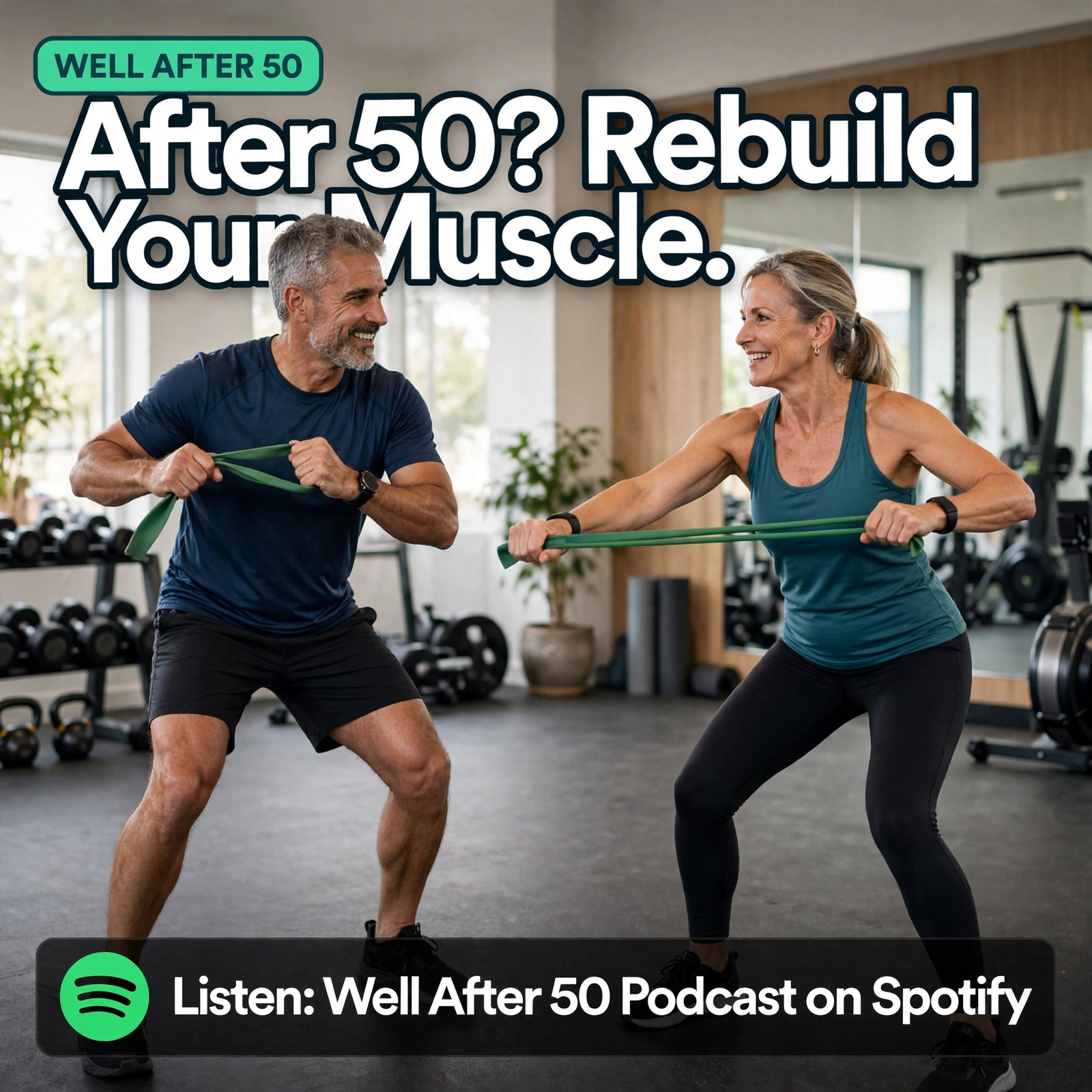
Getting up out of a chair shouldn’t feel like a workout. Carrying groceries shouldn’t leave you struggling. And climbing stairs shouldn’t make you wonder when everyday life got so much harder.
If you’re over 50 and noticing changes like these, it’s worth paying attention. One possible reason is sarcopenia, the medical term for age-related loss of muscle strength and muscle mass. The encouraging news: people can improve strength at many ages, and practical habits can help protect mobility and independence.
You don’t need to become a bodybuilder, spend a fortune on supplements, or live at the gym. A sensible strength routine, nutritious food, regular movement, and recovery are a useful place to start.
Why Muscle Loss After 50 Deserves Your Attention
Muscles change as we age. Muscle mass and strength can decline, although the pace varies from person to person. The concern isn’t simply how your arms and legs look in the mirror; it’s whether weakness begins to affect everyday life.
Your muscles help you stand, walk, climb stairs, carry shopping bags, maintain balance, and respond to physical challenges. Significant declines in strength and function can make falls and independent living greater concerns.
Muscle isn’t just about appearance. It’s part of what helps you remain capable, active, and independent. Aging doesn’t automatically mean becoming weak. Resistance training is an important way to improve strength and support physical function.
For a medical overview, read the National Institutes of Health article Slowing Sarcopenia.
The Science Says You Can Get Stronger — Even in Your 80s
Older adults can respond to resistance training with improvements in strength, muscle mass, and physical function. Results vary, and exercise won’t reverse every cause of weakness, but age alone isn’t a reason to give up.
Protein matters because your body uses it to maintain and repair muscle tissue. Getting enough protein alongside appropriate exercise can support muscle health. Be cautious of claims that one powder, pill, or supplement will solve muscle loss on its own.
For additional background, see the International Clinical Practice Guidelines for Sarcopenia.
Real People Are Showing That It’s Not Too Late to Get Stronger
1. A woman who started lifting at 65
Women’s Health featured Shelly Stettner, who began barbell training just before her 65th birthday. By age 73, she had become a competitive powerlifter and could squat 250 pounds. Her achievement is exceptional, and nobody needs to lift that much to benefit from strength training. The useful lesson is that she didn’t assume age meant she had to stop getting stronger.
Read her story in Women’s Health.
2. A fitness coach adapting his training after 50
Men’s Health interviewed fitness coach Bryan Krahn about adapting training as the body ages. A good routine isn’t necessarily one that leaves you exhausted or encourages you to push through pain. Training should account for your experience, recovery, physical limitations, and goals.
Read the Men’s Health interview.
3. A personal account of getting stronger after 50
The blog Muscle Log offers a personal perspective on pursuing strength after 50. Not everybody wants to compete in powerlifting. Success might mean carrying groceries more comfortably, feeling steadier on your feet, or finding that an everyday task has become easier.
These stories don’t prove that everyone can reverse every form of muscle loss. They do show why it’s worth considering safe, realistic ways to keep building strength.
Your Six-Step Action Plan to Fight Muscle Loss
1. Start strength training two or more days a week
You don’t need a gym membership to begin. Choose movements that challenge your muscles safely and can be adapted to your current ability.
- Sit-to-stands: Stand up from a sturdy chair and sit down slowly. Use your hands for assistance if needed.
- Wall push-ups: Place your hands against a wall and bend and straighten your elbows under control.
- Resistance-band rows: Pull a securely anchored band toward your body.
- Supported calf raises: Hold a sturdy support and slowly raise and lower your heels.
- Light dumbbell exercises: Choose suitable movements for your major muscle groups.
One or two sets of around 8–12 controlled repetitions may be a reasonable starting point for many people, depending on the exercise and their abilities. Increase resistance or repetitions gradually as exercises become easier. You don’t need to push to exhaustion. If you have balance problems, medical conditions, or are new to exercise, ask a healthcare professional about a safe starting plan.
2. Eat protein throughout the day
Protein provides building blocks your body uses to maintain and repair muscle. You can get it from everyday foods rather than relying on expensive powders.
- Breakfast: Eggs, Greek yogurt, or cottage cheese.
- Lunch: Chicken, tuna, beans, or lentils.
- Dinner: Fish, turkey, tofu, lean meat, or beans.
- Snacks: Yogurt, a hard-boiled egg, or nuts alongside other nutritious foods.
Try to include a protein-rich food at each meal. The right amount depends on body size, activity, overall diet, and health. If you have kidney disease or have been advised to limit protein, ask your healthcare professional what is appropriate. More isn’t automatically better.
3. Keep moving every day
Walking, gardening, dancing, cycling, and other activities you enjoy support general health and mobility. Walking alone usually doesn’t provide the same muscle-building stimulus as resistance training, so include both when appropriate.
For adults 65 and older, CDC guidance recommends at least 150 minutes of moderate-intensity aerobic activity weekly, muscle-strengthening activity on at least two days, and activities that improve balance. Adapt activity to your abilities and health conditions. Read the CDC guide to physical activity for older adults.
4. Pay attention to balance
Strength and balance work together to help you move safely. Practise near a sturdy support and don’t attempt challenging movements if you’re unsteady or at risk of falling. Gentle tai chi or supervised balance training may be options. If your balance has recently worsened or you’ve fallen, speak with a healthcare professional.
5. Don’t ignore nutrition or vitamin D
Vitamin D plays a role in bone and muscle function. Low levels can be associated with weakness, but taking extra vitamin D isn’t a guaranteed treatment for sarcopenia. Ask your healthcare professional whether testing or supplementation makes sense for your situation, and be cautious with supplements that may interact with medication.
6. Make sleep and recovery part of your plan
Your body needs time to recover from exercise. Many adults do well aiming for around seven to nine hours of sleep, though individual needs vary. Allow recovery between challenging workouts and don’t keep increasing exercise if you’re persistently exhausted or in pain. Consistency over months matters more than one perfect week.
Five Questions to Help You Check In With Yourself
These questions aren’t a diagnostic test, but they may help you notice changes worth discussing with a healthcare professional.
- Has getting out of a chair become noticeably harder?
- Can you carry your usual groceries comfortably?
- Have walking or climbing stairs become more difficult?
- Are you eating enough nutritious food, including protein?
- Have you stopped doing strength-building activities? If so, could you safely begin a manageable routine?
A chair-stand assessment can help trained professionals evaluate lower-body strength and physical function, but a simple home test cannot diagnose sarcopenia. If you have mobility or balance problems, don’t attempt a challenging test without suitable support.
What If You’ve Already Lost a Lot of Muscle?
Don’t panic, but don’t ignore significant changes. If you’ve become noticeably weaker, lost weight without trying, started falling, or found everyday activities increasingly difficult, make an appointment with your healthcare professional.
Muscle loss can be related to inactivity or nutrition, but weakness can also result from medication effects, illness, nerve problems, and other medical conditions. A clinician can assess your strength and physical function and decide whether further evaluation is needed.
The Bottom Line: Your Independence Is Worth Protecting
Muscle loss after 50 isn’t something to be ashamed of, and it isn’t a reason to give up on yourself. You may not be able to prevent every change that comes with aging, but you can take meaningful steps to support strength and physical function.
Train your muscles. Eat nutritious food. Stay active. Work on balance. Get enough recovery. Pay attention to changes that may need medical attention. You don’t have to spend a fortune or transform yourself overnight. Start with one manageable step and build from there.
Getting older is inevitable. Giving up on your strength doesn’t have to be.
What about you?
Have you noticed changes in your strength since turning 50? Have you found an exercise or everyday habit that helped you feel stronger? Share your experience in the comments. Your story might help someone else take that first step.
Medical disclaimer
This article is for educational purposes and isn’t a substitute for individual medical advice, diagnosis, or treatment. If you have unexplained muscle loss, persistent weakness, repeated falls, or difficulty with everyday activities, speak with a healthcare professional before starting a new exercise programme.
#ad — AFFILIATE DISCLOSURE: This article contains affiliate links. If you buy through these links, Well After 50 may earn a commission at no extra cost to you. We only share products and resources we believe may be useful to readers.
Written by Tom Green, creator of Well After 50
Tom is the creator of Well After 50, focused on practical skincare, wellness, fitness, and healthy-aging ideas after 50.
Well After 50
My hand-picked favorites for living well after 50 — skincare, fitness, books, and everyday essentials. Practical picks, no fluff. https://mave.ly/t-green
Sources and further reading
- National Institutes of Health — Slowing Sarcopenia
- CDC — Physical Activity for Older Adults
- International Clinical Practice Guidelines for Sarcopenia
- Women’s Health — Strength Training After 65
- Men’s Health — Fitness After 50
- Muscle Log — Strength Training After 50
Well After 50 — Look better. Feel stronger. Age well.
What do you think? Have a tip, question, or personal experience to share? We’d love to hear from you. After 50, there’s always something new to discover—and your thoughts might help someone else, too!