
Tag: healthy aging

  • Erectile Dysfunction After 50: What Men Should Know

    Erectile Dysfunction After 50: What Men Should Know

    What should men know about erectile dysfunction after 50?

    Short answer: Erectile dysfunction gets more common after 50, and the cause is different from man to man. It’s often tied to blood flow, and it’s linked with diabetes, high blood pressure and heart and blood vessel disease. Medications, stress and nerves can play a part too. Don’t automatically blame testosterone, skip the “male enhancement” products, and talk to your doctor.

    Let’s talk about something a lot of men over 50 would rather avoid talking about: erectile dysfunction. You may know it by the older term “impotence.” Whatever you call it, trouble getting or keeping an erection can be frustrating, embarrassing, and sometimes confusing.

    The important thing to know is that erectile dysfunction (ED) is not simply something men have to accept because they are getting older. It becomes more common with age, but the reasons behind it can be very different from one man to another. Sometimes the problem is related to blood flow. Sometimes it involves medications, hormones, nerves, stress, diabetes, heart and blood-vessel problems, or prostate issues. That is why it is worth paying attention to rather than quietly writing it off as “just age.”

    What Erectile Dysfunction Actually Means

    ED does not necessarily mean a man can never get an erection. It can mean you can get one sometimes but not when you want to, that it does not stay firm long enough for sex, or that erections have become consistently difficult.

    Occasional problems happen to plenty of men. Being tired, stressed, distracted, or having too much alcohol can affect sexual performance on a particular night. The bigger question is whether the problem is becoming a pattern.

    Why It Can Show Up After 50

    An erection depends on several systems working together: blood vessels have to deliver enough blood, nerves have to send the right signals, hormones and sexual desire have to play their part, and the brain has to be involved too. A problem in any one of those areas can affect erections.

    According to the National Institute of Diabetes and Digestive and Kidney Diseases, conditions associated with ED include diabetes, high blood pressure, heart and blood-vessel disease, obesity, kidney disease, nerve problems, low testosterone and some prostate or penile conditions. Some prescription and over-the-counter medicines can contribute as well. NIDDK — Symptoms & Causes of Erectile Dysfunction

    Sometimes Your Medications Deserve a Look

    This is one of the things men may overlook. A medication you take for another condition may affect sexual function. NIDDK lists several categories of medicines that can contribute to ED, including some blood-pressure medicines, antidepressants, antihistamines, sedatives and certain pain medicines.

    That does not mean you should stop taking a prescription on your own. If you notice a change after starting a medication, tell your healthcare professional. Sometimes a dose or medication can be reviewed, but that decision needs to be made safely.

    Don’t Automatically Blame Testosterone

    Low testosterone can be associated with sexual problems, especially when it also comes with reduced sexual desire. But testosterone and erections are not the same thing. A man can have a normal testosterone level and still have ED because of circulation, medications, nerve problems, stress or another cause.

    That is one reason I would not jump straight to a testosterone product because of an erection problem. Finding out what is actually going on is more useful than guessing.

    The Blood-Flow Connection Is Important

    An erection depends on good blood flow. That makes cardiovascular health especially relevant. Problems involving blood vessels, high blood pressure, diabetes and atherosclerosis can all be associated with ED.

    This is one reason persistent ED is worth mentioning to a doctor even if the sexual problem is the only symptom you have noticed. It may be a clue that something else deserves attention.

    What About Stress and Performance Anxiety?

    The physical side of ED is only part of the story. Stress, anxiety, depression, relationship problems and worrying about whether you will be able to perform can make erections more difficult. And once a man has one disappointing experience, worrying about it happening again can create a frustrating cycle.

    That does not mean the problem is “all in your head.” Physical and emotional factors can exist at the same time. Treating both sides can be much more helpful than trying to decide which one is responsible.

    What a Doctor May Actually Check

    A good evaluation is more than simply asking, “Do you have ED?” A healthcare professional may ask about your medical history, medications, sexual function, erections, ejaculation, sexual desire and emotional health. A physical examination and blood tests or other tests may be appropriate depending on your situation.

    The goal is not to embarrass you. The goal is to figure out whether there is a treatable reason behind the change. NIDDK notes that evaluation can include medical and sexual history, a physical exam, laboratory testing and, when appropriate, additional testing. NIDDK — Diagnosis of Erectile Dysfunction

    What Can Actually Help?

    There is no single treatment that works for every man. Treatment depends on the cause, your health, the medicines you take and what you and your healthcare professional decide makes sense.

    Depending on the situation, treatment can include addressing an underlying health problem, reviewing medications, counseling when stress or anxiety is involved, prescription ED medicines, vacuum erection devices, injectable medicines and other medical options. NIDDK also notes that lifestyle changes such as becoming more physically active, stopping smoking, limiting alcohol, maintaining a healthy weight and following a healthy eating pattern may help improve ED or reduce the risk of developing it. NIDDK — Treatment for Erectile Dysfunction

    Be Careful With “Male Enhancement” Products

    This is where I would be especially cautious. The internet is full of pills, gummies, supplements and “natural” products promising stronger erections almost overnight. A product being advertised as natural does not automatically make it safe or effective.

    NIDDK specifically advises talking with a healthcare professional before using dietary supplements or alternative treatments for ED, and warns against ordering ED medicines online before talking with a healthcare professional because medicines and supplements can interact. NIDDK — Treatment for Erectile Dysfunction

    Food and Exercise Are Part of the Bigger Picture

    This does not mean there is a magic “ED diet.” It means the same habits that support blood-vessel and metabolic health can matter for sexual health too. NIDDK reports that healthy eating patterns can lower the risk of ED or improve symptoms, with research supporting foods such as vegetables, fruits, legumes, whole grains, nuts, seeds and fish. NIDDK — Eating, Diet, & Nutrition for Erectile Dysfunction

    Regular physical activity matters for the same reason. It supports circulation, cardiovascular health and overall fitness. It is not an instant cure, but it is part of the foundation.

    When I Would Stop Ignoring It

    If erection problems keep happening, are getting worse, or are bothering you or your relationship, I would bring them up with a healthcare professional instead of simply hoping they disappear.

    I would also mention other changes that happen around the same time, such as changes in sexual desire, urinary symptoms, pain, a noticeable change after starting a medication, or other new health symptoms. Those details can help a clinician look for the bigger picture.

    The Part Men Don’t Always Say Out Loud

    There is a lot of unnecessary embarrassment around ED. A man can be healthy, active and confident in every other part of his life and still have this problem. It does not make him less of a man, and it does not mean his sex life is automatically over.

    The useful question is not, “Why can’t I do what I did when I was 30?” A better question is, “What changed, and is there something I can do about it?”

    Common Questions

    Is erectile dysfunction common after 50?
    Erectile difficulties can become more common with age, but they aren’t simply an unavoidable part of getting older. Ongoing problems are worth discussing with a healthcare professional.

    What causes erectile dysfunction after 50?
    ED can have many possible causes, including cardiovascular disease, high blood pressure, diabetes, obesity, certain medications, hormonal changes, smoking, alcohol use, stress, and anxiety.

    Can erectile dysfunction be a sign of heart or blood vessel problems?
    It can be. The blood vessels involved in erections are sensitive to circulation problems, so persistent ED can sometimes occur before other symptoms of cardiovascular disease become obvious. That’s one reason it’s worth discussing with your doctor rather than assuming it’s just aging.

    Can exercise help with erectile dysfunction after 50?
    Regular physical activity can support cardiovascular health and circulation, which may help sexual function. Walking, aerobic exercise, and strength training can all be useful parts of an active lifestyle.

    Can lifestyle changes improve erectile function?
    For some men, improving physical activity, maintaining a healthy weight, eating a balanced diet, avoiding tobacco, limiting excessive alcohol, and getting adequate sleep may help address factors associated with ED.

    Are ED medications safe for everyone?
    No. ED medications can interact dangerously with nitrate medications used for chest pain and may not be appropriate for men with certain heart or blood-pressure conditions. Talk with a healthcare professional before using them, including products sold online or marketed as “natural” treatments.

    When should a man 50+ talk to a doctor about erectile dysfunction?
    If erection problems are persistent, recurring, or a noticeable change from your usual sexual function, make an appointment with your healthcare professional. They may want to check blood pressure, blood sugar, cholesterol, medications, and other possible causes.

    Can erectile dysfunction be an emergency?
    ED itself usually isn’t an emergency, but seek urgent medical attention for chest pain, severe shortness of breath, fainting, or other serious symptoms occurring during sexual activity. An erection lasting more than four hours also requires emergency medical care.

    Does erectile dysfunction mean you are no longer sexually healthy?
    No. ED is a common medical issue with many possible causes and treatments. It doesn’t define a man’s sexuality or ability to have an intimate relationship.

    A gentle health note: Erectile dysfunction isn’t something you simply have to accept as part of getting older. Persistent ED can sometimes be an early clue to cardiovascular disease, diabetes, or other treatable health problems. Talk with your doctor before starting ED medication or supplements, particularly if you take heart or blood-pressure medications. This article is for general information and isn’t a substitute for personalized medical advice.

    Bottom Line

    Erectile dysfunction becomes more common as men age, but aging itself is not a diagnosis. ED can have physical, medication-related and emotional causes, and many men have treatment options.

    If this is happening to you, don’t let embarrassment make the decision for you. A straightforward conversation with a healthcare professional can be the first step toward figuring out what changed and what options are available.

    I’m not a doctor or medical professional. I’m sharing practical information and what I’ve learned from researching these topics. Erectile dysfunction can have different causes, so talk with a qualified healthcare professional about symptoms, medications and treatment options that are right for you.

    Sources & Further Reading

    Keep Reading

    About Tom Green

    Tom Green writes Well After 50. He was born in Pell City, Alabama, in 1962, and he’s a country boy and a true Southerner through and through. He’s just a regular, laid-back 64-year-old who keeps things simple. He shares what he learns about skincare, fitness and getting older, and what’s working for him. He’s also the author of A Practical Guide to Getting Older Without Giving Up on Yourself. Tom isn’t a doctor. He reads up on the research and passes along what’s useful, plain and simple.

    I’ve also mapped out some great tools on my new Tech for Independent Living After 50 page.

  • Want Better-Looking Legs After 50? Start With These 5 Habits

    Want Better-Looking Legs After 50? Start With These 5 Habits

    How do you get better-looking legs after 50?

    Short answer: Better-looking legs after 50 start with the muscle underneath, not a firming cream. Train your legs twice a week with moves like chair stands and step-ups, move around between long sits, moisturize after showering while your skin’s still damp, wear SPF 30+ on bare legs outdoors, and eat enough protein to support the work.

    If your legs don’t look quite like they used to, you’re not imagining things. But I wouldn’t start by buying a firming cream. I’d look at the muscle underneath, how much I move, and how I’m treating the skin.

    Legs change as we get older, and the changes aren’t only cosmetic. Muscle can decrease, skin can become drier, activity levels can change and years of sun exposure can show up as texture or discoloration.

    The encouraging part is that several of the basics are still very much within your control.

    Build the Muscle Underneath

    Resistance training is one of the most useful things you can do for the appearance and function of your legs. You don’t need enormous weights. You need movements you can perform safely, consistently and progressively.

    • Thighs: A suitable squat, leg press or similar movement.
    • Hamstrings: A safe leg curl or another movement appropriate for you.
    • Calves: Direct calf work can complement walking and other lower-body training.
    • Glutes: Include an appropriate hip or glute movement.

    Don’t Forget the Skin

    If your legs are dry or rough, a simple moisturizer can make a surprisingly visible difference. For exposed legs, sun protection matters too. You don’t need aggressive scrubbing to make mature skin look better.

    Movement Does More Than Improve Appearance

    Walking, climbing stairs and regular lower-body training keep your legs involved in daily life. Looking better is nice, but strong legs give you something more valuable: the ability to keep doing things for yourself.

    Give Your Routine Time

    Muscle doesn’t appear overnight, and skin quality doesn’t transform after three applications of moisturizer. Give a sensible routine weeks and months before deciding whether it is helping.

    Pay Attention to Sudden Changes

    A sudden one-sided change in swelling, color, warmth or pain is not a skincare problem. New or significant symptoms deserve medical advice.

    My Realistic Goal

    I don’t expect my legs to look like they did decades ago. I want them to look cared for and, more importantly, to be strong enough to carry me where I want to go.

    That is a goal I can actually live with.

    A Practical Two-Day Leg Routine

    You don’t need seven exercises a day. Start with two nonconsecutive sessions each week, choosing a level that feels challenging but controlled. If you’re new to training, practice with light resistance and build up gradually.

    • Leg press or supported sit-to-stand: 2 sets of 8–12 controlled repetitions.
    • Seated leg curl: 2 sets of 8–12, without jerking.
    • Calf raise with support: 2 sets of 10–15.
    • Step-up to a low stable step, or an appropriate alternative: 1–2 sets of 6–10 per leg if your balance allows.

    Rest between sets and stop if you develop sharp pain, chest discomfort or dizziness. Adapt the plan to your health, joint problems and experience. If you’re already training, adjust the volume upward only if you’re recovering well.

    What Results Can You Actually Expect?

    Stronger legs can help shape the thighs and calves over time, but building muscle takes consistency. Walking is excellent for cardiovascular health and everyday activity; it doesn’t replace a progressive strength routine when the goal is added muscle. Creams can make dry skin look less flaky, but they won’t create new quadriceps.

    The CDC’s exercise guidance for older adults recommends a combination of aerobic movement, muscle strengthening and balance work. The National Institute on Aging’s exercise guide offers low-impact examples and safety precautions. For your skin, the American Academy of Dermatology’s moisturizing guide explains why creams and ointments can be more useful than light gels for pronounced dryness.

    Five Habits That Give You the Most for Your Effort

    • Train your legs twice weekly and record the weight or repetitions so you know when you’re progressing.
    • Walk or move between sitting periods rather than expecting one gym session to carry the whole week.
    • Moisturize after showering while the skin is a little damp. Don’t scrub crepey-looking skin aggressively.
    • Protect exposed legs with SPF 30+ sunscreen when outdoors; sun damage can worsen discoloration and rough texture.
    • Eat enough nutritious food and protein to support training instead of relying on extreme dieting.

    Related: Building Muscle After 60 and Crepey Skin on Arms and Legs. One-sided swelling, warmth or sudden leg pain needs timely medical assessment; sudden breathlessness or chest pain is an emergency.

    What Research Says About Stronger Legs

    Maren Fragala, Mikel Izquierdo, Mark Peterson and their colleagues coauthored one major resistance-training position statement for older adults. It supports progressive, individualized strength training to improve strength and daily function. It does not claim that exercise erases cellulite, wrinkles or every age-related leg change.

    Common Questions

    How can I keep my legs looking better after 50?
    Focus on the basics: keep your leg muscles active, moisturize your skin, protect your legs from the sun, and stay active throughout the day.

    Can strength training make your legs look better after 50?
    Yes. Exercises such as squats, step-ups, lunges, and calf raises can help maintain muscle and create a stronger, more defined appearance.

    Can walking help your legs look better after 50?
    Yes. Regular walking keeps your legs moving, supports circulation, and helps maintain muscle and overall fitness.

    How can I make dry, crepey leg skin look better after 50?
    Use a gentle cleanser, moisturize regularly, and apply moisturizer soon after bathing while your skin is still slightly damp.

    Does exfoliating help the appearance of legs after 50?
    Gentle exfoliation may help remove some surface buildup and make skin feel smoother, but over-exfoliating can make mature skin dry and irritated.

    Can sunscreen improve the appearance of your legs after 50?
    Sunscreen won’t reverse existing aging, but protecting exposed leg skin can help prevent additional sun-related wrinkles and discoloration.

    Can exercise help with the appearance of cellulite after 50?
    Building muscle and maintaining a healthy body composition may make cellulite less noticeable, although cellulite is normal and can remain even in very fit people.

    What leg exercises are most useful after 50?
    A simple routine can include squats or sit-to-stands, step-ups, calf raises, and supported lunges, adjusted to your fitness level.

    How often should you work your legs after 50?
    Aim for regular strength training rather than trying to train your legs every day. Give your muscles time to recover between challenging workouts.

    What is the simplest leg-care routine after 50?
    Walk regularly, strength-train your legs, moisturize after bathing, protect exposed skin from the sun, and keep moving throughout the day.

    A gentle health note: If you notice sudden leg swelling, significant pain, unusual skin color changes, or a major difference between your legs, don’t assume it’s simply part of aging. Talk with a healthcare professional.

    General information only; exercise and skincare choices should be adapted to your own circumstances.


    About Tom Green

    Tom Green writes Well After 50. He was born in Pell City, Alabama, in 1962, and he’s a country boy and a true Southerner through and through. He’s just a regular, laid-back 64-year-old who keeps things simple. He shares what he learns about skincare, fitness and getting older, and what’s working for him. He’s also the author of A Practical Guide to Getting Older Without Giving Up on Yourself. Tom isn’t a doctor. He reads up on the research and passes along what’s useful, plain and simple.

    I’ve also mapped out some great tools on my new Tech for Independent Living After 50 page.
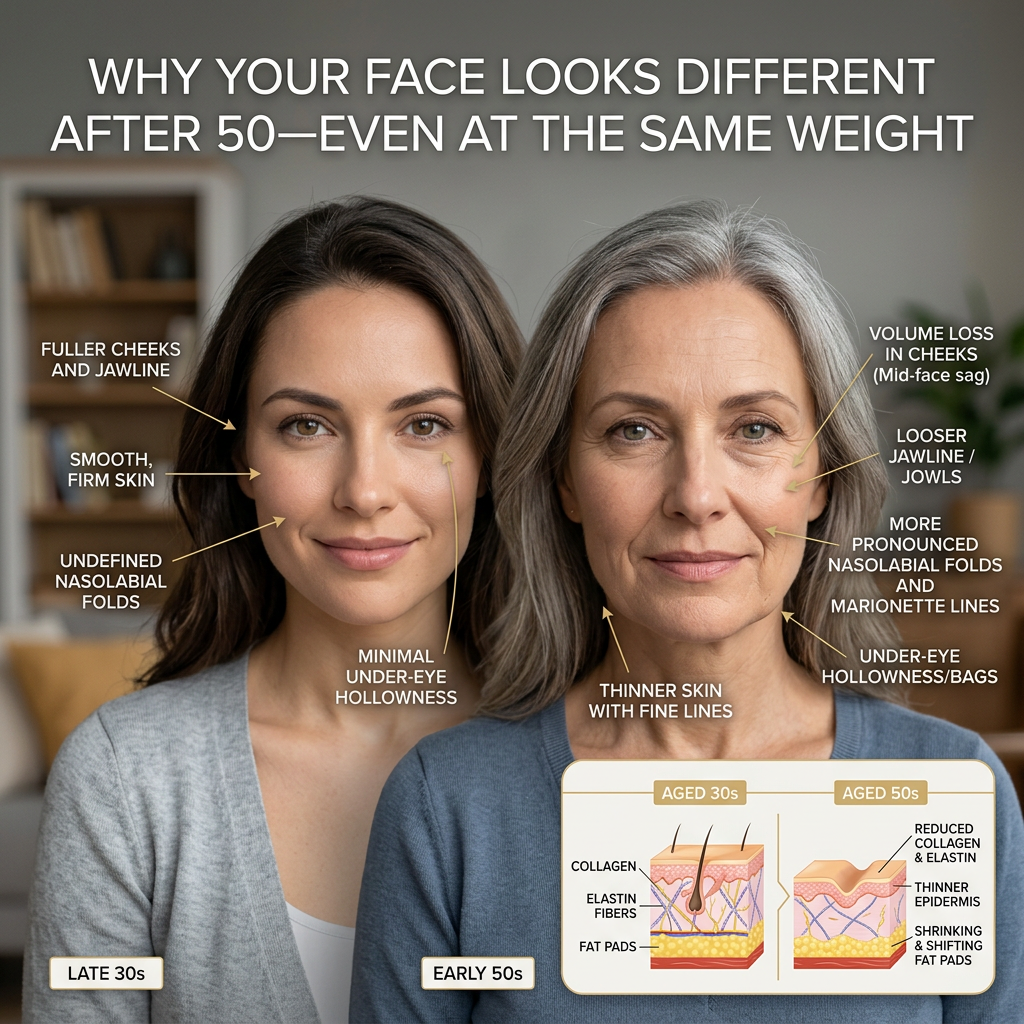
  • Why Your Face Looks Different After 50—Even at the Same Weight

    Why Your Face Looks Different After 50—Even at the Same Weight

    Why does your face look different after 50 even at the same weight?

    Short answer: Your face can look different after 50 even at the same weight because more is changing than your skin. Facial fat shifts and loses volume, and the support underneath, from ligaments to bone, changes too. Creams can help dryness and fine lines, but they can’t replace that deeper volume.

    Ever catch your reflection and wonder why your cheeks or jawline look different even though the scale has hardly moved? I have. The explanation is more interesting than a new wrinkle—and it isn’t always something a cream can fix.

    Have you ever looked in the mirror and thought, “I haven’t gained or lost much weight, so why does my face look different?” I think this is one of the most confusing parts of getting older.

    We tend to blame the scale, but the scale doesn’t tell the whole story. After 50, the face can change because several things are happening at once: skin changes, shifts in facial fat, changes in body composition, sun exposure, hydration, sleep and simply the passage of time.

    Weight Is Only One Piece of the Picture

    When your face changes, it is tempting to assume you need to lose weight, gain weight or buy a new anti-aging product. Sometimes the change has very little to do with the number on the scale.

    • Skin gradually changes in firmness and elasticity.
    • Facial fat can change position and volume over time.
    • Sun exposure can contribute to visible texture and pigmentation changes.
    • Sleep and hydration can affect how tired or drawn the face looks from day to day.
    • Changes in overall muscle and body composition can alter appearance even when weight barely moves.

    Why Your Face Can Look Different From One Day to the Next

    Not every change in the mirror is permanent. Poor sleep, allergies, alcohol, salty meals and normal fluid changes can affect puffiness and definition. That’s one reason I wouldn’t judge my appearance from one bad morning.

    What You Can Actually Work On

    • Protect your skin: Consistent sun protection is one of the most useful long-term habits for exposed skin.
    • Keep skincare simple: Gentle cleansing, appropriate moisture and carefully chosen active ingredients can support healthier-looking skin.
    • Maintain muscle: Resistance training supports strength, function and body composition.
    • Eat enough nutritious food: Constant crash dieting can make some people look drawn while also making muscle maintenance harder.
    • Sleep and recover: A rough stretch of sleep can show up surprisingly quickly.

    Don’t Let Anti-Aging Become a Full-Time Job

    There is nothing wrong with wanting to look your best. I just don’t think every hollow area, line or change in facial shape needs to become a problem that must be fixed.

    My goal is simpler: I want my face to look healthy, cared for and like me. That means taking care of my skin and health without spending every morning searching for something new to fight normal aging.

    It’s Not Just Your Skin: What Changes Underneath

    Your face has layers: skin, fat pads, ligaments, muscles and bone. Over time, those layers can change at different rates. A plumper cheek may become flatter, or the same skin may have less support underneath it. A cream can improve dryness and fine lines, but it cannot rebuild lost facial bone or replace deeper volume.

    Dermatologist Dr. Neil Sadick and coauthors describe how separate superficial and deep facial fat compartments contribute to aging changes in the cheeks, chin and jowls. Surgeons David Kahn and Robert Shaw discuss changes to both soft tissue and the facial skeleton. A review of facial anatomy similarly identifies bone, fat, muscle and skin as interacting factors. None suggests that everybody’s face changes in exactly the same way.

    Three Changes You Might Notice—and What They Mean

    • Cheeks look flatter: ordinary shifts in facial volume and skin support may contribute. More moisturizer won’t replace deeper tissue.
    • Jawline looks softer: skin elasticity and changes in deeper tissues can both play a part; surface products have limits.
    • Fine lines look sharper in the morning: dryness or temporary puffiness can exaggerate appearance; consistent moisturizer may help the surface look smoother.

    Where I’d Spend Money—and Where I Wouldn’t

    I’d start with a gentle cleanser, a moisturizer that suits my skin, and broad-spectrum SPF 30+ when outdoors. The American Academy of Dermatology’s guidance for skin in your 40s and 50s puts sun protection and moisturizing before a cabinet full of miracle products. A carefully chosen retinoid may help certain visible effects of sun damage, but don’t expect topical skincare to change facial bone structure.

    If you’re considering fillers or procedures, ask a qualified board-certified specialist about realistic outcomes, risks, alternatives and cost. There is no obligation to do anything. A natural-looking face that still looks like you is a perfectly good goal.

    A Useful Two-Week Mirror Check

    Instead of studying your reflection every morning, compare photos in the same lighting, time of day and camera angle a couple of weeks apart. Note changes in sleep, salt intake, weight and skincare. It’s an imperfect comparison, but better than letting one unflattering bathroom mirror decide how you feel.

    Keep reading: Skincare After 50: What to Buy and What to Skip. Sudden new facial weakness, drooping or difficulty speaking is an emergency—not normal aging.

    What Named Researchers Actually Found

    Plastic surgeon Dr. Rod Rohrich coauthored a review explaining how superficial and deep facial fat compartments contribute to changes in facial contour. That helps explain why a face can change shape without a dramatic change on the scale.

    Surgeon Dr. Joel Pessa coauthored anatomical research showing that facial fat is organized into distinct compartments, rather than one uniform layer. Those structures matter when understanding aging cheeks and jowls.

    Surgeon Dr. Robert Shaw and colleagues examined age-related changes in the facial skeleton. Their work provides another reason not to promise that a moisturizer alone can reverse every change you notice in the mirror.

    Common Questions

    Why does your face look different after 50?
    Changes in collagen, elastin, facial fat, bone structure, skin thickness, and hydration can gradually change how your face looks.

    Why does your face lose some firmness after 50?
    Collagen and elastin decline with age, which can contribute to looser skin and softer facial contours.

    Why do cheeks look different after 50?
    Changes in facial fat and skin support can make the cheeks look less full or change the way your facial contours appear.

    Why does your jawline change after 50?
    Changes in skin elasticity, facial fat, and underlying tissues can make the jawline appear softer or less defined.

    Can dry skin make your face look older after 50?
    Yes. Dryness can make fine lines and rough texture more noticeable and leave skin looking dull.

    Can skincare improve how your face looks after 50?
    Yes. A consistent routine can improve hydration, texture, and the appearance of some signs of aging.

    Does sunscreen still matter after 50?
    Absolutely. Daily broad-spectrum sunscreen helps protect against UV damage that contributes to wrinkles and uneven skin tone.

    Can exercise affect how your face looks after 50?
    Regular exercise supports overall health, muscle tone, circulation, and body composition, all of which can contribute to a healthier appearance.

    What is a simple skincare routine after 50?
    Morning: Gently cleanse or rinse, moisturize, and apply broad-spectrum sunscreen.
    Evening: Cleanse, use a targeted treatment if appropriate, and moisturize your face and neck.

    Do you need lots of anti-aging products after 50?
    No. A few products you use consistently can be more practical than a complicated routine with too many active ingredients.

    Can you really change how your face looks after 50?
    You can’t stop normal aging, but skincare, sleep, nutrition, exercise, sun protection, and other healthy habits can help you look and feel your best.

    A gentle health note: Facial changes are usually gradual. Sudden or unusual changes—especially swelling, weakness, numbness, or significant asymmetry—should be discussed with a healthcare professional.

    My Take After 50

    If your weight hasn’t changed but your face has, don’t automatically assume you’ve done something wrong. Look at the bigger picture—skin care, sun exposure, sleep, nutrition, activity, muscle and normal aging.

    If a facial change is sudden, dramatic or accompanied by other symptoms, that’s different from ordinary aging and is worth discussing with a healthcare professional.

    I’m sharing personal observations and general healthy-aging information, not medical advice. Everyone ages differently, and persistent or concerning changes should be evaluated by a qualified professional.


    About Tom Green

    Tom Green writes Well After 50. He was born in Pell City, Alabama, in 1962, and he’s a country boy and a true Southerner through and through. He’s just a regular, laid-back 64-year-old who keeps things simple. He shares what he learns about skincare, fitness and getting older, and what’s working for him. He’s also the author of A Practical Guide to Getting Older Without Giving Up on Yourself. Tom isn’t a doctor. He reads up on the research and passes along what’s useful, plain and simple.

    I’ve also mapped out some great tools on my new Tech for Independent Living After 50 page.
  • Skincare Routine Order After 50: What Goes First?

    Skincare Routine Order After 50: What Goes First?

    What order should you put skincare on after 50?

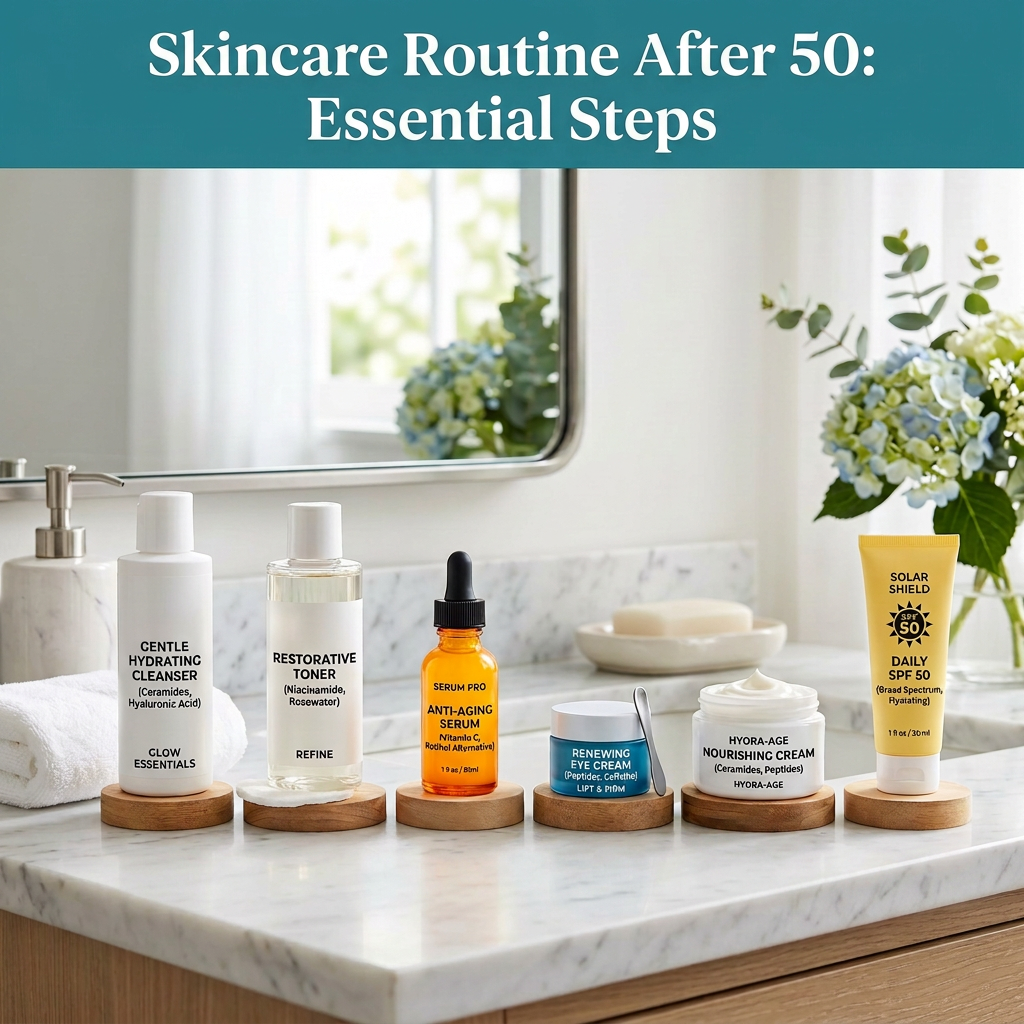
    Short answer: Go from thinnest to thickest. In the morning: cleanser, vitamin C or a serum, eye cream, moisturizer, then sunscreen last. At night: take off makeup and sunscreen, cleanse, then retinol or a treatment, eye cream and moisturizer. A good routine can be just three things: cleanser, moisturizer and sunscreen.

    Skincare after 50 can get confusing fast. Cleanser, serum, vitamin C, retinol, moisturizer, eye cream, sunscreen. Suddenly the bathroom counter looks like a chemistry lab.

    The good news is you don’t need a complicated routine. You just need to know what goes first, what belongs in the morning or at night, and what you can skip. Here’s the simple version, with a chart you can screenshot.

    The quick answer

    Thinnest to thickest. Treat before you moisturize. Sunscreen last in the morning.

    Morning: cleanse → vitamin C or serum → eye cream → moisturizer → sunscreen

    Night: remove makeup/sunscreen → cleanse → retinol or treatment → eye cream → moisturizer → face oil (optional)

    Skincare order after 50: the chart

    StepMorningNight
    1. CleanseGentle cleanser or just a rinseRemove makeup and sunscreen, then cleanse
    2. Toner (optional)Hydrating toner, if you like oneHydrating toner, if you like one
    3. Treatment / serumVitamin C, niacinamide or a hydrating serumRetinol, or a peptide or hydrating serum
    4. Eye cream (optional)Light layerLight layer
    5. MoisturizerLighter lotion or creamRicher cream
    6. Face oil (optional)Usually skipA few drops, last
    7. SunscreenBroad-spectrum SPF 30+, always lastNot needed

    Everything marked optional really is optional. A good routine after 50 can be just three products: cleanser, moisturizer and sunscreen. Add a treatment only when you have a specific goal.

    Where does each product go?

    Serum or moisturizer first?

    Serum first, moisturizer second. Serums are thinner and made to go on clean skin. Moisturizer goes on top to seal everything in. If you use more than one serum, more isn’t automatically better. Check the directions and be careful stacking strong treatments.

    Where does vitamin C go?

    Usually in the morning, right after cleansing: cleanse → vitamin C → moisturizer → sunscreen. If vitamin C irritates your skin, you don’t have to force it. Your face doesn’t get extra credit for tolerating six active ingredients.

    Where does retinol go?

    At night: cleanse → retinol → moisturizer. Retinol can cause dryness or irritation at first, so start two or three nights a week and build up. If your skin gets irritated, scale back rather than adding another product to fix it. If a dermatologist prescribed yours, follow their plan.

    Where does eye cream go?

    After serum and before moisturizer. Pat a small amount around the eye area with your ring finger. Plenty of people skip eye cream and just use a gentle moisturizer around the eyes, and that’s fine too.

    Where does face oil go?

    Last at night, over your moisturizer, to lock in moisture. In the morning, oil usually goes before sunscreen, or gets skipped so sunscreen goes on smoothly.

    Where does sunscreen go?

    Always the last skincare step in the morning, before makeup. Use broad-spectrum SPF 30 or higher, and bring it down onto your neck and the backs of your hands. If you skip everything else, don’t skip this.

    Do you need an exfoliant after 50?

    Maybe, but not automatically. Exfoliants can help rough or dull skin, but overdoing acids or scrubs leaves mature skin dry and irritated. If your face already feels tight or sensitive, simplify before adding one. If you do use one, use it at night, a couple of times a week, and not on the same nights as retinol.

    Do you have to wait between products?

    Usually not. You don’t need to stand at the mirror with a timer. Just let each layer settle for a moment so products don’t pill or slide around, and follow any specific directions on a prescription. Using too many actives at once causes far more problems than the exact number of seconds between layers.

    The layering mistake I would avoid

    Don’t start everything at once. Imagine buying a new cleanser, vitamin C, retinol, exfoliating acid and moisturizer on Monday, then waking up Friday with irritated skin. Which product caused it? Good luck figuring that out.

    Add one new product at a time and give it a couple of weeks before adding the next. That’s the easiest way to learn what your skin likes.

    What if your skin gets dry, red or irritated?

    That’s your cue to simplify, not to buy another product. Stop any recently added actives and go back to gentle cleanser, moisturizer and sunscreen until your skin calms down. Talk with your prescriber before changing a prescription. Persistent burning, swelling, rash or cracking deserves a visit to a dermatologist.

    My 4-question test before buying another bottle

    1. What problem am I trying to solve?
    2. Do I already have something that does this job?
    3. Is my current routine comfortable?
    4. Will I actually use this every day?

    If you can’t answer those, the new bottle can stay on the store shelf for now.

    Need help choosing each step? See my guides to picking a cleanser, picking a serum, picking a moisturizer, and whether Korean peptide serums are worth it.

    Three experts on skincare order

    Dermatologist Dr. Sean McGregor describes a simple morning order of cleanse, optional serum, moisturizer and sunscreen, and notes that using too many products increases the chance of side effects.

    Cosmetic chemist Dr. Michelle Wong explains why cleansing can stress the skin barrier. If your routine starts with a harsh wash, six expensive serums afterward won’t make it gentler.

    Dermatologist Dr. Rebecca Kazin recommends matching moisturizer texture to your skin’s needs and stresses daily sun protection.

    Common Questions

    What order should you apply skincare products after 50?
    Thinnest to thickest: cleanse, serum or treatment, eye cream, moisturizer, then sunscreen in the morning.

    Should serum or moisturizer go first?
    Serum first, then moisturizer.

    Does vitamin C go before or after moisturizer?
    Before. Apply vitamin C to clean skin, then moisturizer, then sunscreen.

    Do you put retinol on before or after moisturizer?
    Usually before. If your skin is sensitive, some people apply moisturizer first to buffer it. Follow the product’s directions.

    Where does sunscreen go in your routine?
    Last in the morning, after moisturizer and before makeup.

    Should you use skincare on your neck after 50?
    Yes. Bring your moisturizer and sunscreen down onto your neck and chest. More on that in how to keep your neck looking better after 50.

    What if products pill when you layer them?
    Use smaller amounts, let each layer settle, and cut back on the number of products.

    The bottom line

    Skincare after 50 doesn’t have to be a race to collect products. The goal is a routine that makes sense, feels comfortable and is easy enough to stick with. Start with the basics, add one treatment at a time, and pay attention to how your skin responds.

    Your turn: How many steps are in your routine right now? Tell me in the comments, and whether you think you could cut one.

    Skincare needs vary from person to person. This article is general skincare information and personal experience, not medical advice.

    Tom Green writes Well After 50. He was born in Pell City, Alabama, in 1962, and he’s a country boy and a true Southerner through and through. He’s just a regular, laid-back 64-year-old who keeps things simple. He shares what he learns about skincare, fitness and getting older, and what’s working for him. He’s also the author of A Practical Guide to Getting Older Without Giving Up on Yourself. Tom isn’t a doctor. He reads up on the research and passes along what’s useful, plain and simple.

    I’ve also mapped out some great tools on my new Tech for Independent Living After 50 page.
  • Best Serum After 50: Which Ingredients Are Worth It?

    Best Serum After 50: Which Ingredients Are Worth It?

    What’s the best serum after 50?

    Short answer: The best serum is the one that fixes a specific problem you actually have. Hyaluronic acid helps with dryness, vitamin C and niacinamide help with uneven tone, and retinoids have the strongest track record for fine lines but can irritate. Start with one serum, not a collection, and you may not need one at all.

    The best serum after 50 is the one that addresses a specific skin concern without making your routine harder or more irritating. Hydrating, brightening and retinoid products serve different purposes—and you may not need any serum at all.

    A serum can be useful, but choosing one because the bottle looks expensive or the ingredient list sounds impressive is an easy way to spend money without knowing what you are buying. After 50, I look for a clear purpose first.

    Start with the problem you actually want to address

    Before buying anything, I ask what I want the product to do. Different ingredients and formulas are aimed at different concerns.

    • Dryness or tightness: Look for hydrating and barrier-supporting ingredients.
    • Uneven tone: Look for ingredients intended to improve the appearance of pigmentation, while staying serious about sun protection.
    • Texture and fine lines: Certain proven actives may help, but tolerance matters.
    • General maintenance: You may not need a serum at all if your basic routine is already working.

    Ingredients I pay attention to

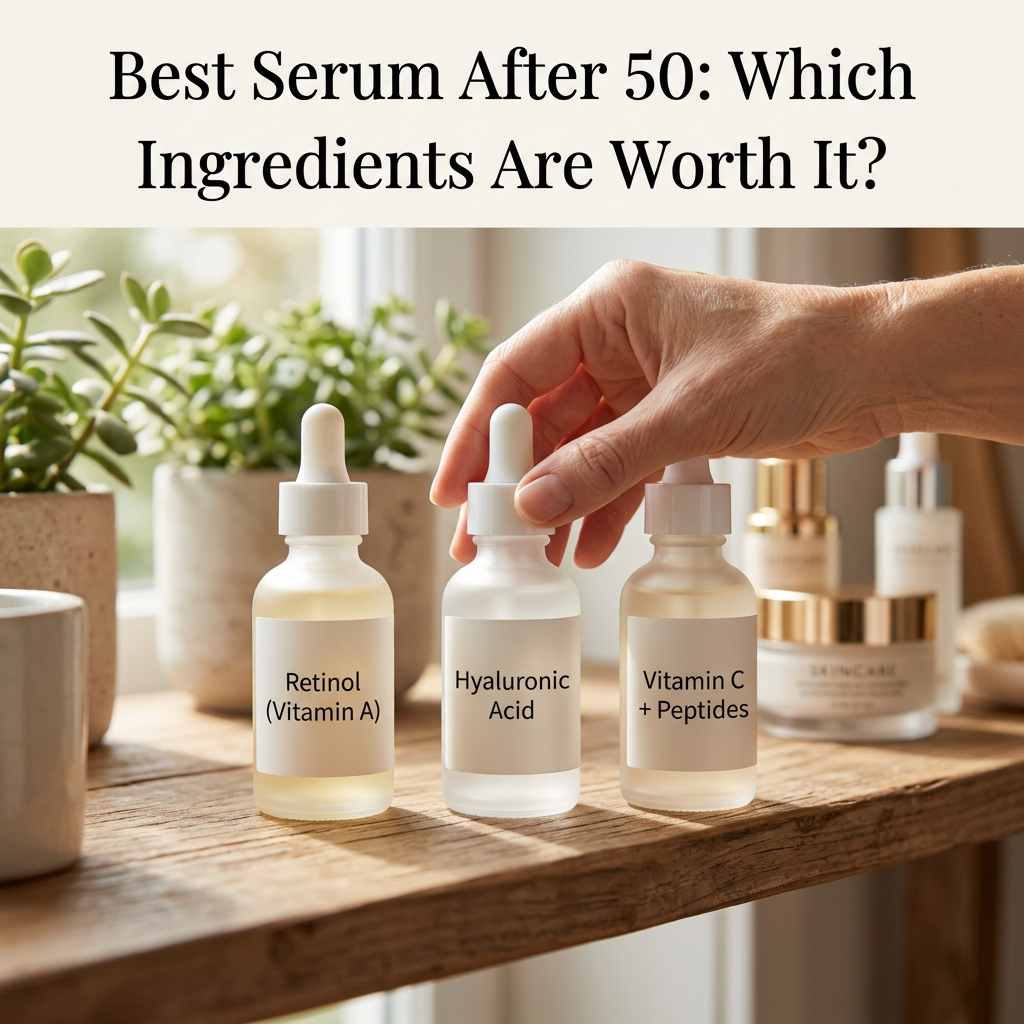
    Hyaluronic acid and other humectants can help the skin hold water. Niacinamide is commonly used for several skin concerns and may be useful in a well-tolerated formula. Vitamin C products are popular for antioxidant support and uneven tone. Retinoids have a stronger history for addressing signs of photoaging, but they can also be irritating and need to be introduced thoughtfully.

    The ingredient is only part of the story. The finished formula, concentration, packaging, your other products and how your skin reacts all matter.

    Don’t build a routine from competing actives

    This is where I think people get into trouble. One serum contains an acid, another contains a retinoid, another contains vitamin C, and suddenly the skin is being asked to tolerate everything at once.

    A serum should fit into your routine, not take over your routine.

    My shopping test

    Before I buy, I ask four questions: What am I trying to change? Why did I choose this ingredient? Can I use the product consistently? And am I already using something that does essentially the same job?

    If I cannot answer those questions, I keep shopping—or I save my money.

    Give it time

    Skincare is rarely a one-week project. A product may improve how hydrated your skin feels quickly, while changes in texture or tone can take much longer. Constantly switching products makes it difficult to know what is helping.

    Three Experts Help Sort Useful Serums From Hype

    Dermatologist Dr. Sean McGregor explains that adding too many toners and serums increases the chance of dryness and other side effects. His practical advice is to start with one serum rather than layering a whole collection.

    Cosmetic chemist Dr. Michelle Wong looks at ingredient concentration and formulation when evaluating The Ordinary’s products. Her analysis is useful when a high-percentage label looks persuasive but tells only part of the story.

    Dermatologist Dr. Tina Alster emphasizes gradual introduction of retinoids. That is a different—and usually more sensible—approach than treating a high-strength serum as the automatic next step.

    Match the Serum to the Problem

    Skin feels dehydrated: a hyaluronic acid or glycerin formula can help draw water into the outer skin layers, but moisturizer may already be sufficient. Uneven tone: a well-formulated vitamin C product or another suitable targeted treatment may help, always alongside sun protection. Oiliness or uneven appearance: niacinamide might be useful. Fine lines and sun damage: certain retinoids have stronger evidence, though they require more caution.

    Peptides: an optional category with formula-specific and less consistent evidence, not a substitute for treatments with stronger research. You don’t need one of everything.

    My Four-Question Serum Test

    Before buying, ask: What problem am I targeting? What evidence supports this finished formula? Does it duplicate a product I already have? Can I tolerate and afford regular use? Introduce only one new active at a time. Track comfort and visible changes over several weeks rather than switching every few days.

    Retinoids should be avoided in pregnancy; consult a clinician if you have a skin condition or troublesome irritation. A painful or changing skin lesion needs evaluation, not a beauty serum.

    Related: The Ordinary Skincare After 50 and Skincare Layering After 50.

    Common Questions

    How do I pick the right serum after 50?
    Start with your main skin concern—hydration, fine lines, uneven tone, or texture—then choose a serum with ingredients that address that specific concern.

    What should you actually look for in a serum after 50?
    Look at the ingredients, not just the marketing. Choose a formula that has a clear purpose and fits your skin type and concerns.

    Which serum ingredients are worth looking for after 50?
    Hyaluronic acid can help with hydration, vitamin C can support brighter-looking skin, niacinamide can support the skin barrier, and retinoids can target several signs of aging.

    Do you really need a serum after 50?
    No. A serum is an optional step. A gentle cleanser, moisturizer, and daily sunscreen are the foundation of a simple routine.

    Should you choose a serum for hydration or anti-aging after 50?
    Choose based on what your skin actually needs. If dryness is your biggest issue, prioritize hydration. If fine lines or uneven texture are the concern, a targeted active may make more sense.

    Is a more expensive serum better after 50?
    Not necessarily. Price alone doesn’t tell you whether a serum is a good match for your skin.

    How many serums should you use after 50?
    Usually, you don’t need several. Starting with one targeted serum makes it easier to see how your skin responds.

    How should you add a new serum to your routine after 50?
    Introduce one new product at a time, start slowly, and follow with moisturizer. Use sunscreen during the day.

    What is the biggest mistake when choosing a serum after 50?
    Buying based on impressive claims instead of choosing an ingredient that addresses your actual skin concern.

    What is the simplest serum strategy after 50?
    Identify your main concern → choose one useful ingredient → start slowly → moisturize → use sunscreen every morning.

    A gentle health note: Active skincare ingredients can irritate mature or sensitive skin. Introduce new products gradually and stop using them if you develop significant or persistent irritation.

    My bottom line

    The “best” serum is not necessarily the newest or most expensive one. It is the one that addresses a real concern, fits with the rest of your routine and is comfortable enough that you will actually keep using it.

    General skincare information and personal experience, not medical advice.

    About Tom Green

    Tom Green writes Well After 50. He was born in Pell City, Alabama, in 1962, and he’s a country boy and a true Southerner through and through. He’s just a regular, laid-back 64-year-old who keeps things simple. He shares what he learns about skincare, fitness and getting older, and what’s working for him. He’s also the author of A Practical Guide to Getting Older Without Giving Up on Yourself. Tom isn’t a doctor. He reads up on the research and passes along what’s useful, plain and simple.


    I’ve also mapped out some great tools on my new Tech for Independent Living After 50 page.

  • Best Moisturizer After 50: How to Choose for Your Skin

    Best Moisturizer After 50: How to Choose for Your Skin

    What’s the best moisturizer after 50?

    Short answer: The best moisturizer is the one that suits your skin type and that you’ll use every day, not the priciest jar. Dry skin usually does better with a richer cream with ceramides, glycerin or hyaluronic acid. Oily skin does better with a lighter lotion or gel. Put it on while your skin is still damp.

    Choosing the best moisturizer after 50 is less about an expensive brand and more about texture, ingredients and how your skin feels. Here’s how to decide whether a gel, lotion, cream or ointment is worth your money.

    A moisturizer does not have to be fancy to be useful. Its basic job is to help your skin stay comfortable and reduce moisture loss. After 50, that simple job becomes even more important when dryness and sensitivity start becoming more noticeable.

    Start with how your skin actually feels

    I would not choose a moisturizer just because it says “anti-aging” or “mature skin” on the jar. I want to know whether it solves a problem.

    • Does it reduce dryness or tightness?
    • Does my skin feel comfortable after using it?
    • Can I wear it under sunscreen?
    • Will I actually use it every day?

    Texture matters

    Dry skin may prefer a richer cream or balm. Oilier skin may prefer a lighter lotion or gel. Combination skin may need different approaches in different areas.

    Age does not automatically mean you need the heaviest moisturizer available. Your skin type and climate matter more than the number on your birthday.

    Ingredients worth knowing

    Humectants such as glycerin and hyaluronic acid can help attract and hold water. Ceramides and other barrier-supporting ingredients are common in products designed for dry or compromised skin. Occlusive ingredients can help reduce moisture loss by forming a protective layer.

    You do not need to memorize an entire ingredient dictionary. Pick a formula that addresses your needs and that your skin tolerates.

    Don’t mistake tingling for effectiveness

    A moisturizer that burns is not necessarily working better. Persistent stinging, redness or irritation is a reason to stop and reassess rather than push through it.

    Morning versus night

    In the morning, I want a moisturizer that works comfortably with sunscreen. At night, I may prefer something richer if my skin feels dry. If you use an active such as a retinoid, moisturizer can also make the routine more comfortable for some people.

    Price isn’t the whole story

    There are expensive moisturizers I would happily use and inexpensive ones I would happily use. The price tag does not guarantee that a formula will suit your face.

    My favorite moisturizer is the one that makes my skin feel better without making the routine complicated.

    Three Dermatologists on Picking the Right Texture

    Dr. Rebecca Kazin explains that moisturizers are not one-size-fits-all. In the American Academy of Dermatology’s guide, she recommends cream-based options for many people after 50, while emphasizing that combination skin may need different amounts in different areas.

    Dr. Jason A. Clark recommends considering a richer cream or ointment when skin is genuinely dry and applying it while the skin is still damp. That is a practical habit you can try without buying a pricey new serum.

    Dr. Samer Jaber warns that painful, cracked, bleeding or persistently itchy skin may require medical assessment rather than another round of over-the-counter experiments.

    A Shopping Guide: Gel, Lotion, Cream or Ointment?

    Gel: lightweight, often comfortable for oily skin. Lotion: easy to spread, reasonable for mild dryness. Cream: richer and often helpful when skin is dry or tight. Ointment: especially useful for very dry patches, though some people dislike the greasy feel. You can use different textures in different seasons.

    Scan labels for glycerin, ceramides, dimethicone, petrolatum or hyaluronic acid. These ingredients do different jobs: humectants attract water; emollients soften skin; occlusives help reduce moisture loss. A complete moisturizer may combine several. ‘Unscented’ does not always mean fragrance-free.

    A Two-Week Test Before Spending More

    Apply your chosen moisturizer consistently after washing while the skin is slightly damp, and note whether tightness, itching and flaking ease. Use sunscreen separately during the day as needed; a face cream without adequate SPF is not sun protection. If discomfort increases or your skin cracks or bleeds, seek advice rather than buying a stronger exfoliant.

    Related: The Ordinary Skincare After 50 and How to Pick a Cleanser After 50.

    Common Questions

    What should you look for in a moisturizer after 50?
    Look for a moisturizer that matches your skin type and helps keep your skin comfortable, hydrated, and supported.

    How do you choose a moisturizer based on your skin type after 50?

    • Dry skin: Look for a richer cream with ingredients such as ceramides, glycerin, or hyaluronic acid.

    • Normal skin: A lightweight lotion or cream may be enough.

    • Oily skin: Choose a lighter, non-greasy lotion or gel moisturizer.

    • Combination skin: Use a balanced moisturizer, adding more to drier areas if needed.

    • Sensitive skin: Look for a simple, fragrance-free moisturizer with gentle ingredients.

    Do you need a thick moisturizer after 50?
    Not necessarily. The right texture depends on your skin type and how dry your skin feels.

    What ingredients are worth looking for in a moisturizer after 50?
    Ceramides, glycerin, hyaluronic acid, and other barrier-supporting ingredients can be useful for mature skin.

    Can moisturizer make your skin look younger after 50?
    Moisturizer won’t erase wrinkles, but well-hydrated skin can look smoother, softer, and more comfortable.

    Should you use moisturizer every day after 50?
    For most people, daily moisturizing is a simple way to support the skin barrier and prevent excessive dryness.

    Should you moisturize your neck after 50?
    Yes. If your neck tolerates the product, applying moisturizer there can help keep the skin comfortable and hydrated.

    Do you need an expensive moisturizer after 50?
    No. Price alone doesn’t determine whether a moisturizer will work well for your skin.

    When should you apply moisturizer after 50?
    Apply it after cleansing or other treatments. In the morning, finish with broad-spectrum sunscreen.

    What is the simplest way to choose a moisturizer after 50?
    Identify your skin type → choose the right texture → look for useful hydrating ingredients → use it consistently → add sunscreen in the morning.

    Practical takeaway: The best moisturizer after 50 isn’t necessarily the most expensive or the one with the longest ingredient list. It’s the one that keeps your skin comfortable, hydrated, and free from unnecessary irritation.

    A gentle health note: If a moisturizer causes persistent burning, swelling, rash, or significant irritation, stop using it and consider talking with a dermatologist.

    My bottom line

    After 50, I am more interested in comfortable, well-supported skin than chasing a miracle. A moisturizer cannot stop aging, but the right one can make dry, uncomfortable skin look and feel noticeably better.

    General skincare information and personal experience, not medical advice.

    About Tom Green

    Tom Green writes Well After 50. He was born in Pell City, Alabama, in 1962, and he’s a country boy and a true Southerner through and through. He’s just a regular, laid-back 64-year-old who keeps things simple. He shares what he learns about skincare, fitness and getting older, and what’s working for him. He’s also the author of A Practical Guide to Getting Older Without Giving Up on Yourself. Tom isn’t a doctor. He reads up on the research and passes along what’s useful, plain and simple.


    I’ve also mapped out some great tools on my new Tech for Independent Living After 50 page.

  • Why Am I So Tired After 50? 7 Habits and Medical Causes

    Why Am I So Tired After 50? 7 Habits and Medical Causes

    Why are you so tired after 50?

    Short answer: Being tired after 50 is common, but it isn’t something you just have to accept. The usual culprits are irregular sleep, too little movement, uneven eating, late caffeine and stress. If you’re still worn out after fixing those for a couple of weeks, see your doctor. Anemia, thyroid problems, sleep apnea, medications and low mood are common causes that are easy to check.

    If you are tired after 50, the answer isn’t necessarily age. Sleep quality, medication side effects, anemia, thyroid conditions, mood and daily habits can all matter. Here’s a practical way to sort out which changes you can make—and which symptoms deserve a medical check.

    Being tired after 50 is easy to blame on age. Sometimes getting older does change sleep, recovery and energy. But “I’m just getting old” can also become an excuse for ignoring habits—or symptoms—that deserve attention.

    If your energy has changed, I think it is worth looking at the ordinary things first. They are not glamorous, but they are often the things we can actually change.

    1. Inconsistent sleep

    Going to bed and waking up at wildly different times can make it harder to feel rested. One bad night is not a disaster, but a pattern of poor sleep can affect how you feel and function.

    2. Sitting most of the day

    It sounds strange, but being inactive can leave you feeling sluggish. You do not have to turn every day into a workout. Short walks, standing breaks and regular movement can help break up long periods of sitting.

    3. Skipping meals and then overeating

    Long gaps without food can leave some people feeling drained and then reaching for whatever is easiest later. A more consistent pattern of nutritious meals may make energy easier to manage.

    4. Not eating enough protein or overall nutrition

    Protein matters for maintaining muscle, but energy also requires enough total food and a balanced diet. If you are trying to lose weight by eating very little, feeling exhausted may be a sign that the approach needs reconsideration.

    5. Caffeine too late

    Caffeine can be useful, but using it late to compensate for poor sleep can create a cycle: tired during the day, caffeine later, worse sleep, tired again tomorrow.

    6. Training harder than you can recover from

    Exercise is valuable, but more is not automatically better. If every workout leaves you exhausted for days, the program may be asking for more recovery than you can provide.

    7. Carrying stress without real downtime

    Your body does not know that you planned to relax “someday.” Constant stress and constant stimulation can make it difficult to feel recovered even when you technically have free time.

    5 Energy Fixes You Can Try Today

    • Get outside in the morning. Ten minutes of daylight helps wake up your body clock.
    • Drink a glass of water first. Mild dehydration can feel a lot like fatigue.
    • Put protein in your breakfast. Eggs, Greek yogurt or cottage cheese keep energy steadier than a pastry.
    • Take a 10-minute walk after lunch. It beats the afternoon slump better than another coffee.
    • Set a coffee cutoff around 2 p.m. Better sleep tonight means more energy tomorrow.

    Sleep timing matters more than most people realize. I dug into the research in could your sleep schedule affect how long you live after 50.

    Don’t automatically call fatigue aging

    Persistent, unexplained, severe or worsening fatigue can have medical causes. If tiredness interferes with normal life or comes with other concerning symptoms, talk with your healthcare professional rather than trying to solve it with supplements.

    Three Experts Who Explain Why Fatigue Is Not Just Aging

    Family physician Dr. Jared Ankerman explains that ongoing fatigue can differ from an ordinary sleepy afternoon and may point toward anemia, thyroid problems, mood disorders or other underlying conditions. If rest isn’t making a difference, don’t assume another energy supplement will fix it.

    Sleep specialist Dr. Alicia Roth points out that you can spend plenty of hours in bed but still wake up worn out when conditions such as sleep apnea or restless legs interrupt sleep. That’s an important distinction when a regular bedtime alone isn’t helping.

    Endocrinologist Dr. Marwan Hamaty cautions against a fashionable but unsupported diagnosis offered as the explanation for every case of fatigue. Real causes vary, and a careful medical history and targeted evaluation matter more than buying an unproven remedy.

    A Seven-Day Energy Check Without Buying Anything

    For one week, note roughly when you sleep and wake, whether you snore or wake gasping, what medications you take, when you use caffeine, what meals you skip, and whether fatigue gets worse after activity. Rate your energy morning, afternoon and evening. Bring the pattern—not just the word ‘tired’—to your healthcare appointment.

    Keep changes simple: aim for a fairly regular sleep schedule, daylight or safe movement during the day, adequate meals and fluids, and a caffeine cutoff that protects your sleep. Don’t push through an illness or unexplained exercise intolerance just to hit a step goal.

    See a Doctor Soon If Your Tiredness Comes With…

    • Shortness of breath, chest pain or a racing heart
    • Unexplained weight loss or loss of appetite
    • Loud snoring, gasping at night or falling asleep during the day
    • Feeling cold all the time, hair thinning or dry skin (possible thyroid)
    • Pale skin, feeling dizzy or out of breath easily (possible anemia)
    • Low mood, losing interest in things you enjoy, or feeling hopeless
    • Fatigue that lasts more than a few weeks or keeps getting worse

    If chest pain or trouble breathing comes on suddenly, call 911.

    What Your Clinician May Want to Rule Out

    The National Institute on Aging’s fatigue guide lists anemia, sleep apnea, thyroid disease, diabetes, medication effects, chronic illness and mood conditions among potential contributors. Depending on symptoms and history, a clinician may review medicines, arrange blood tests or evaluate sleep. Don’t start iron or thyroid supplements without evidence of a need.

    Get prompt medical attention if fatigue comes with chest pain, difficulty breathing, fainting, new confusion or other severe symptoms. Persistent unexplained fatigue lasting weeks warrants an appointment even when it isn’t an emergency.

    Related: Why You Keep Waking Up at 3 AM After 50 and How Much Protein Do You Need After 50?.

    Common Questions

    Why am I still tired after 50?
    Everyday habits such as poor sleep, too little movement, dehydration, an unbalanced diet, and too much stress can contribute to feeling tired.

    What everyday habits can drain your energy after 50?
    Poor sleep habits, sitting too much, skipping nutritious meals, not drinking enough water, excessive alcohol, too much screen time, and chronic stress can all play a role.

    Can lack of sleep make you tired after 50?
    Yes. Poor-quality or insufficient sleep can leave you feeling tired even after spending enough time in bed.

    Can sitting too much make you feel tired after 50?
    It can. Long periods of inactivity may leave you feeling sluggish, while regular movement can help you stay more energized.

    Can what you eat affect your energy after 50?
    Yes. Meals built around protein, fiber-rich foods, fruits and vegetables, and other nutritious foods can provide more consistent energy than a diet dominated by highly processed foods.

    Can dehydration make you tired after 50?
    Yes. Not getting enough fluids can contribute to fatigue and feeling sluggish.

    Can stress drain your energy after 50?
    Yes. Ongoing stress can interfere with sleep, concentration, mood, and your overall sense of energy.

    What is the simplest way to improve energy after 50?
    Start with the basics: sleep well → drink enough water → move regularly → eat nutritious meals → manage stress → limit habits that interfere with sleep.

    When should tiredness after 50 be checked by a doctor?
    If fatigue is persistent, worsening, unusually severe, or comes with symptoms such as unexplained weight changes, shortness of breath, chest pain, weakness, or major changes in sleep or mood, talk with a healthcare professional.

    Practical takeaway: Before assuming you’re simply getting older, look at your everyday habits. A few small changes to sleep, movement, food, hydration, and stress may make a meaningful difference.

    My approach

    I think of energy as something I manage rather than something I am entitled to have unlimited amounts of. Sleep, food, movement, recovery and stress management all count.

    The goal is not to feel 25 again. It is to have enough energy for the life you actually want to live.

    General information and personal experience, not medical advice.

    About Tom Green

    Tom Green writes Well After 50. He was born in Pell City, Alabama, in 1962, and he’s a country boy and a true Southerner through and through. He’s just a regular, laid-back 64-year-old who keeps things simple. He shares what he learns about skincare, fitness and getting older, and what’s working for him. He’s also the author of A Practical Guide to Getting Older Without Giving Up on Yourself. Tom isn’t a doctor. He reads up on the research and passes along what’s useful, plain and simple.

    I’ve also mapped out some great tools on my new Tech for Independent Living After 50 page.

  • Skincare Mistakes After 50: 7 Habits That Can Make Skin Look Older

    Skincare Mistakes After 50: 7 Habits That Can Make Skin Look Older

    What skincare mistakes make your skin look older?

    Short answer: The most common skincare mistakes after 50 are using too many strong products at once, exfoliating too often, skipping moisturizer, going without daily sunscreen, and switching products so often you never learn what’s working. If your skin is dry, red or stinging, your routine may need less, not more.

    Sometimes the skincare routine meant to make you look better is the thing leaving your skin looking worse. If your face is dry, red, shiny in the wrong way or constantly peeling, adding another “anti-aging” product may not be the answer.

    After 50, I think one of the smartest skincare moves is learning when to stop adding things.

    Five mistakes I would look for first

    1. Using too many strong actives at once. Several effective ingredients can become an irritating combination when layered without a plan.
    2. Exfoliating too often. Smooth skin does not require aggressive scrubbing every day.
    3. Skipping moisturizer. If your skin is dry, removing moisture support can make texture look worse.
    4. Ignoring daily sun protection. A great nighttime routine cannot undo every day of unprotected UV exposure.
    5. Changing products constantly. If you replace everything every week, you never learn what is actually helping.

    Look at your skin before your shopping list

    Ask whether your skin feels comfortable. Is it tight after cleansing? Is it peeling? Are you getting redness or burning? Those clues may tell you more than a marketing label.

    Try a reset when your skin is unhappy

    If your skin is irritated, simplify. Gentle cleansing, moisturizer and daytime sun protection can give you a basic foundation while you figure out what went wrong. Then add targeted products back one at a time.

    Don’t confuse irritation with results

    Burning, persistent redness and severe peeling are not trophies proving that a product is powerful. More irritation can make the skin look rougher and can make it harder to maintain a routine.

    Give products a fair chance

    Some changes in hydration or texture may be noticeable fairly quickly, while other cosmetic improvements take longer. Constant switching makes it difficult to judge a product fairly.

    What I want from skincare after 50

    I want skin that looks healthy and cared for, not a bathroom full of products that I am afraid to stop using. A good routine should fit real life.

    Two More Mistakes Worth Adding to the List

    6. Treating every new dark spot as harmless aging. Sun spots are common, but a new, changing, bleeding or nonhealing lesion should be checked by a clinician. A brightening serum is not a diagnosis.

    7. Using products because the label says ‘mature skin.’ Shop for whether your skin is dry, oily, acne-prone or sensitive. A product marketed to older women isn’t automatically more appropriate for an older man—or for you.

    A Three-Stage Reset When Your Face Is Irritated

    First, stop introducing nonprescription active products. If you recently added several serums, scrubs or acids, simplify to a gentle cleanser, moisturizer and suitable sunscreen. Don’t stop a prescribed treatment without discussing significant side effects with the prescribing clinician.

    Next, watch for improvement. If the discomfort settles, consider whether you need an active at all. A small patch test and one new product at a time can help reveal what your skin tolerates.

    Finally, rebuild cautiously. Introduce a specific product for a specific problem, following the label and avoiding combinations that repeatedly sting. If redness, swelling, burning or rash persists, see a dermatologist.

    Three Dermatologists Explain Why ‘More’ Isn’t Better

    Dr. Anne Chapas explains that people with significant dryness, allergies or inflamed skin may not be good candidates for some retinoids. This matters when you feel tempted to solve irritation by buying something stronger.

    Dr. Tina Alster recommends starting a retinoid at a less-intense level and building tolerance gradually. A daily high-strength routine isn’t a badge of commitment.

    Dr. Sonia Badreshia-Bansal warns that irritation can cause dark marks on skin of color. It’s an especially good reason to prevent avoidable over-treatment instead of assuming peeling means progress.

    The American Academy of Dermatology’s guide to maximizing skincare results recommends introducing one anti-aging product at a time and testing a new product before full-face use.

    What Changes Can You Expect—and When?

    Moisturizer may make dry skin look smoother fairly quickly, but treatments for pigmentation and fine lines can require weeks or months. More product or more frequent application doesn’t guarantee faster results. If a product’s irritation is worse than the cosmetic concern you’re trying to improve, reconsider the routine.

    Related: The Ordinary skincare after 50 and choosing a moisturizer after 50.

    Common Questions

    Can your skincare routine make your skin look older after 50?
    Yes. Over-cleansing, using too many strong products, skipping moisturizer, or neglecting sunscreen can leave mature skin looking dry, irritated, or more lined.

    What skincare habits can make skin look older after 50?
    Using harsh cleansers, over-exfoliating, layering too many active ingredients, and failing to protect your skin from the sun can work against your routine.

    Can washing your face too much make your skin look older after 50?
    It can contribute to dryness and irritation, especially if you’re using a harsh cleanser or washing more often than your skin needs.

    Can too much exfoliation damage mature skin?
    Yes. Over-exfoliating can cause dryness, redness, irritation, and a weakened skin barrier.

    Can using too many skincare products make your skin look worse after 50?
    Yes. More products aren’t automatically better. Too many active ingredients can increase the chance of irritation.

    Should you moisturize after 50 even if you have oily skin?
    Usually, yes. Choose a lightweight moisturizer suited to your skin type rather than skipping moisturizer altogether.

    Can skipping sunscreen make your skin look older after 50?
    Yes. Regular UV exposure is a major contributor to visible skin aging, including wrinkles, uneven pigmentation, and loss of firmness.

    What is a simple skincare routine after 50?
    Morning: gentle cleanse or rinse → targeted serum if desired → moisturizer → broad-spectrum sunscreen.
    Evening: gentle cleanse → one targeted treatment if appropriate → moisturizer.

    How do you know when your skincare routine is too much?
    Persistent dryness, burning, redness, peeling, or increased sensitivity can be signs that you need to simplify your routine.

    What is the biggest skincare mistake after 50?
    Trying to do too much. A consistent, gentle routine that protects and moisturizes your skin can be more useful than constantly adding new products.

    Practical takeaway: After 50, your skincare routine should leave your skin feeling comfortable—not tight, burning, excessively dry, or irritated. If your routine is doing the opposite, simplify it.

    A gentle health note: Persistent redness, swelling, burning, rash, or other significant skin changes should be discussed with a dermatologist rather than assumed to be normal aging.

    General skincare information and personal experience, not medical advice.


    About Tom Green

    Tom Green writes Well After 50. He was born in Pell City, Alabama, in 1962, and he’s a country boy and a true Southerner through and through. He’s just a regular, laid-back 64-year-old who keeps things simple. He shares what he learns about skincare, fitness and getting older, and what’s working for him. He’s also the author of A Practical Guide to Getting Older Without Giving Up on Yourself. Tom isn’t a doctor. He reads up on the research and passes along what’s useful, plain and simple.

    I’ve also mapped out some great tools on my new Tech for Independent Living After 50 page.

  • Crepey Skin on Arms and Legs After 50: What Really Helps?

    Crepey Skin on Arms and Legs After 50: What Really Helps?

    What helps crepey skin on your arms and legs?

    Short answer: Crepey skin on your arms and legs comes from thinner, drier skin with less support. What helps most is a good moisturizer, not an expensive one, plus sunscreen on your arms and legs, and possibly a retinoid used gently. Keep the muscles underneath strong, and remember that smoother skin isn’t the same as tighter skin.

    Have you ever looked down at your arms or legs and wondered when your skin started changing?

    Maybe it’s the fine wrinkles around your knees. Maybe the backs of your arms look thinner than they used to. Sometimes those little changes catch us by surprise.

    There’s nothing wrong with wanting to feel good about how we look as we get older. And there’s certainly no reason to spend a fortune on promises that don’t deliver.

    Woman sitting outdoors examining the skin on her arm, with the article title about crepey skin after 50

    Can crepey skin on your arms and legs improve? Yes. Moisturizers can make dry, finely wrinkled skin look smoother; sun protection can prevent more damage; and some treatments can improve skin texture. But creams cannot lift a substantial amount of loose skin. Knowing the difference can save us money and disappointment.

    What’s happening to our skin?

    Our skin doesn’t suddenly get older on our fiftieth birthday. Over time, it can become thinner, hold moisture less effectively, and lose some of the collagen and elastic support that once gave it more bounce. Years of sun exposure also leave their mark.

    That papery, finely wrinkled appearance is often called crepey skin. Dryness can make it stand out even more. And while we can’t undo every change, we can take better care of the skin we’re in.

    Six things that can actually help

    1. Start with a good moisturizer, not an expensive promise

    I wonder how often we look for a remarkable new ingredient when a simple body cream is exactly where we ought to begin.

    Moisturizers help the outer layers of skin hold water. When dry skin becomes better hydrated, tiny lines can look less obvious and the surface may feel softer. Apply your moisturizer after bathing, while your skin is still slightly damp, and remember your upper arms, knees and lower legs.

    Ingredients such as glycerin, ceramides and hyaluronic acid can be useful. For rough, dry body skin, a urea-containing cream may also help. You don’t need all of them or the most expensive jar on the shelf.

    If you’re watching your budget, I’ve written a separate guide to simple, inexpensive crepey-skin habits. It focuses on affordable care rather than miracle claims.

    Skincare writer Michelle Wong of Lab Muffin Beauty Science has a wonderfully practical guide to choosing moisturizers by understanding the ingredients. I like that approach: find something that suits your skin instead of buying whatever has the biggest promise on the jar.

    2. Remember that our arms and legs need sunscreen, too

    Most of us have heard plenty about protecting our faces. But think of all those years our arms and legs have spent in the sunshine—gardening, walking, working, or simply enjoying a nice day.

    Ultraviolet exposure damages skin-supporting fibers and contributes to visible aging. The American Academy of Dermatology recommends broad-spectrum SPF 30 or higher on exposed skin, along with shade and protective clothing.

    It won’t erase yesterday’s sun damage. But protecting our skin today is still worth doing.

    I was interested to read Laura Galbato’s personal account on Sixty and Me. She describes suddenly noticing crepey skin during a yoga pose and thinking back to her sun-filled younger years. It’s the kind of honest experience that reminds us how many people notice these changes, even when they take good care of themselves.

    3. Consider retinoids—but give them the respect they deserve

    Retinol, retinoids, tretinoin: there are so many names that it’s easy to wonder whether we need a degree in chemistry to buy a skincare product.

    Here’s the useful part. Retinoids have evidence behind them for improving certain signs of sun-damaged skin, particularly fine lines and texture. Prescription tretinoin has been studied extensively. But much of that evidence concerns facial skin, not lifting loose upper arms or thighs.

    They can also cause irritation. And if our skin is already dry or sensitive, that’s important.

    Three dermatologists quoted by the American Academy of Dermatology offer particularly useful guidance. Dr. Tina Alster advises starting with a less-intense retinoid and introducing it gradually. Dr. Anne Chapas cautions that inflamed or unusually dry skin may not tolerate these products well. Dr. Sonia Badreshia-Bansal explains that irritation can leave dark marks on darker skin tones.

    Their advice concerns retinoid use generally; none of it is a promise that these products will tighten crepey arms and legs. If you’re considering prescription treatment, a dermatologist can help you decide what’s appropriate.

    Beauty blogger Giorgia Guazzarotti of Beautiful With Brains takes a similarly questioning approach in her review of a retinol night cream: she looks beyond the marketing to ingredients, limitations and who might actually benefit. Her review concerns a facial product, not a proven treatment for crepey arms or legs, but I appreciate the habit of asking what a product can realistically do.

    4. Don’t confuse smoother skin with tighter skin

    It’s understandable to be tempted by a cream that says lift, firm or restore across the label.

    Some of those creams really are good moisturizers. Some contain useful ingredients. But smoother, better-hydrated skin isn’t the same as skin that’s been physically lifted.

    The American Academy of Dermatology’s guidance on firming sagging skin explains why creams offer, at best, modest results when the problem is true skin laxity.

    I’d rather spend money on something that does one useful job well than on something promising to do the impossible.

    5. Don’t forget the muscles underneath

    We talk a lot about what to put on our arms and legs. But what’s underneath matters, too.

    Strength training can help maintain or build muscle, supporting the shape of our arms and legs as well as everyday independence. It won’t remove loose skin. But feeling stronger, climbing stairs more comfortably, and carrying our groceries with confidence are benefits worth having.

    If that’s something you’re working on, you might enjoy my practical guide to rebuilding muscle after 50.

    6. Sometimes our skin needs less, not more

    It’s easy to try one scrub, then another cream, then an exfoliating acid because the last product didn’t work quickly enough.

    But mature skin can be less forgiving when we overdo it. Hot showers, harsh rubbing and too many strong treatments may increase dryness and irritation.

    If the skin is rough, an ingredient such as lactic acid may help its surface texture, but it can irritate sensitive skin. Introduce new products one at a time. There’s no prize for using the longest skincare routine.

    What helps crepey skin on the arms?

    The backs of the upper arms can show a combination of sun damage, fine wrinkles and changes in underlying muscle. Start with regular moisturizer and sun protection. Gentle, appropriate resistance exercise may also help the arms look and feel stronger.

    If the main concern is significant loose skin hanging beneath the arms, creams probably won’t give the lift you’re hoping for. That’s a question worth discussing honestly with a dermatologist.

    How do you get rid of crepey skin on your legs?

    Crepey skin around the knees, thighs and lower legs can be particularly noticeable when we sit or bend. Begin by asking what seems to be causing the look: dry, finely wrinkled skin, or a larger amount of loose skin?

    Dryness may respond to a good body moisturizer; some people find urea or carefully chosen exfoliating lotions helpful for rough texture. Protect exposed legs from sun damage. Leg-strengthening exercise can support the muscles underneath, though it doesn’t tighten the skin itself.

    For marked laxity, talk with a qualified dermatologist before spending money on increasingly expensive creams.

    How long before you notice a difference?

    What you tryWhat to expect
    MoisturizerDryness and surface appearance may improve within days; continuing care matters.
    SunscreenHelps prevent additional damage rather than giving an immediate cosmetic lift.
    RetinoidsWhen appropriate and tolerated, improvement in photoaging can take weeks or months.
    Strength trainingStrength and function can improve over time; loose skin is not directly removed.
    In-office proceduresResults and recovery vary greatly with the procedure and the person.

    The AAD recommends allowing many anti-aging products at least six weeks, and sometimes up to three months, before judging their results.

    Do you need an expensive treatment?

    Not necessarily. If dry texture is the issue, inexpensive skincare may make a worthwhile difference. Prescription products vary in cost according to coverage and pharmacy. Cosmetic procedures are usually much more expensive, and their prices depend on the area, clinic and treatment plan.

    A dermatologist may discuss options such as certain lasers, ultrasound or radiofrequency treatments for skin laxity. But there are trade-offs: results can be modest, procedures can have risks and downtime, and no treatment fits everybody.

    Before booking anything, ask what improvement is realistic for your skin, whether you need more than one session, what recovery looks like, and what the total cost will be. Don’t settle for a vague promise.

    A simple four-week routine to try

    Week one: Keep showers gentle, apply moisturizer to slightly damp skin, and protect exposed arms and legs from the sun.

    Week two: Stay with the basics. Notice whether your skin feels more comfortable or looks less dry. That’s progress, even if the skin hasn’t tightened.

    Week three: If dryness is under control but you’re still concerned about texture, consider whether a targeted ingredient is appropriate. Don’t introduce several acids or retinoids together.

    Week four: Look back at what helped. If you’re comparing photographs, use similar lighting and distance. A dramatic before-and-after picture doesn’t always mean the skin itself has changed dramatically.

    Four weeks won’t tell you everything about longer-term treatments, but it’s a reasonable start without buying a shelf full of new products.

    When should you see a dermatologist?

    Gradual texture changes are common, but don’t assume every skin change is simply age. Seek professional assessment for sudden changes, unexplained bruising, persistent inflammation, suspicious spots, or skin that isn’t healing normally. It’s also sensible to get advice before prescription treatments or procedures.

    A few questions worth asking

    Can crepey skin go away completely?

    Some of its appearance may improve, particularly if dryness is making it look worse. Significant excess skin is much harder to change without professional treatment.

    Is retinol worth trying?

    It may help some signs of photoaging, but results on crepey body skin are less certain than the research on facial skin. Retinoids can irritate; ask a dermatologist if they’re right for you.

    Does drinking more water tighten skin?

    Staying hydrated supports health, but drinking extra water isn’t a proven way to lift established loose skin.

    What’s the best first step if I’m overwhelmed?

    Start with a gentle moisturizer and sun protection. Give them a fair chance before adding something stronger.

    There’s more to getting older than what we see in the mirror

    I don’t think taking care of ourselves means trying to become 25 again. We can appreciate who we’ve become and still enjoy looking after our skin, building our strength and feeling good about ourselves.

    Perhaps a moisturizer makes your arms more comfortable. Maybe you decide to speak with a dermatologist. Or perhaps you realize you don’t need another miracle cream at all.

    We’re getting older. We’re still learning. And we’re still worth taking care of.

    Your turn

    Have you found a simple cream, habit or treatment that actually made a difference to the skin on your arms or legs? Or have you bought something that didn’t live up to the promise? I’d love to hear what you learned in the comments. Your experience might help somebody else.

    Until next time, take good care of yourself.
    Tom Green — Well After 50

    Sources and helpful reading

    About the author

    Tom Green writes Well After 50. He was born in Pell City, Alabama, in 1962, and he’s a country boy and a true Southerner through and through. He’s just a regular, laid-back 64-year-old who keeps things simple. He shares what he learns about skincare, fitness and getting older, and what’s working for him. He’s also the author of A Practical Guide to Getting Older Without Giving Up on Yourself. Tom isn’t a doctor. He reads up on the research and passes along what’s useful, plain and simple.

    I’m not a doctor. I’m a man in my 60s sharing research and practical information. This article isn’t personal medical advice; speak with a qualified healthcare professional about your own skin or treatments.

    Keep reading

    I’ve also mapped out some great tools on my new Tech for Independent Living After 50 page.

  • How Much Protein Do You Need After 50? A Practical Guide

    How Much Protein Do You Need After 50? A Practical Guide

    How much protein do you need after 50?

    Short answer: Many experts suggest about 1.0 to 1.2 grams of protein per kilogram of body weight a day for healthy adults over 65, higher than the standard 0.8. At 150 pounds, that works out to roughly 68 to 82 grams a day, and at 180 pounds, about 82 to 98 grams. Spread it across your meals and start with real food.

    How Much Protein Do You Need After 50?

    How much protein do you need after 50 to help maintain muscle and strength? Your body weight, activity and health matter. Below are research-based ranges, everyday meal ideas and reasons protein works best alongside resistance training.

    Protein gets called a “secret” for a reason: people often underestimate how much their food choices matter when they are trying to maintain muscle as they get older. But protein is not magic, and more is not automatically better.

    For me, protein makes the most sense when it is part of the bigger picture: resistance training, enough total food, good sleep and a diet that provides more than one nutrient.

    Why protein matters after 50

    Your body uses protein to build and repair tissues. As we get older, maintaining muscle becomes increasingly important for strength and everyday function. Resistance training and adequate protein work together much better than either one by itself.

    Build meals around real food

    • Eggs, milk, cottage cheese and yogurt if you tolerate dairy.
    • Chicken, turkey, fish and lean meats.
    • Beans, lentils and other legumes.
    • Tofu, tempeh and other soy foods.
    • Protein-rich snacks when meals are spread far apart.

    Spread protein across the day

    Instead of eating almost all your protein at dinner, it can be practical to include a meaningful source at several meals. That makes it easier to reach an appropriate daily intake without turning one meal into a giant plate of food.

    Don’t forget the rest of the plate

    Protein does not replace vegetables, fruit, whole grains, healthy fats or enough total calories. If you are trying to gain muscle while chronically under-eating, simply adding a protein shake may not solve the bigger problem.

    Food first, supplements when useful

    A protein powder can be convenient. It is not mandatory. I look at supplements as a practical tool when normal meals do not make it easy to meet my needs.

    How much is enough?

    There is no single protein number that is right for every person. Body size, activity, goals and medical conditions matter. Someone with kidney disease or another condition requiring dietary restrictions should discuss appropriate intake with their clinician.

    So How Many Grams Should an Older Adult Aim For?

    The basic U.S. adult recommended dietary allowance is 0.8 grams per kilogram of body weight per day, but some expert groups propose higher amounts for healthy older adults. In a PROT-AGE expert position paper, researchers suggested roughly 1.0–1.2 g/kg/day for many adults over 65, with individualized guidance when active or recovering from illness. This is not a universal prescription, particularly for people with certain kidney conditions.

    Here’s a practical example: at 150 pounds (about 68 kg), a range of 1.0–1.2 g/kg works out to roughly 68–82 grams of protein per day. At 180 pounds (about 82 kg), it’s roughly 82–98 grams. Body composition, health status, goals, and professional advice can change the target.

    What Protein Researchers Actually Recommend

    Dr. Jürgen Bauer and Rebecca Diekmann reviewed protein needs in older people and discussed intake around 1.0–1.2 grams per kilogram of body weight daily for many healthy older adults. That is a research recommendation, not an individual prescription.

    Dr. Stuart Phillips and Dr. Gianni Biolo were coauthors, along with Bauer and others, of the same PROT-AGE position paper. That team considered how protein needs can change with age, activity and illness. I’m mentioning their shared paper as one source, not pretending these are three independent studies.

    Stephanie Harris, Jessica DePalma and Hope Barkoukis published a separate 2025 review discussing practical barriers to adequate protein intake, including appetite and access to food, and strategies for spreading protein through the day. The review synthesizes existing studies rather than reporting a new clinical trial.

    Calculate Your Daily Protein: A Quick Cheat Sheet

    Want a starting number you can use when planning meals? Divide your weight in pounds by 2.2 to get kilograms, then multiply by a suitable daily target in grams per kilogram. For example, a 160-pound person weighs about 73 kg; at 1.2 g/kg, that is about 87 grams of protein per day. The 1.0–1.2 g/kg range discussed in the PROT-AGE report is guidance for many healthy older adults, not a universal prescription.

    • 120 pounds: roughly 55–65 grams a day at 1.0–1.2 g/kg.
    • 140 pounds: roughly 64–76 grams a day.
    • 160 pounds: roughly 73–87 grams a day.
    • 180 pounds: roughly 82–98 grams a day.
    • 200 pounds: roughly 91–109 grams a day.

    These are rounded examples. Your activity, goals and health can change the appropriate amount. If your goal is around 90 grams, one practical distribution is 25 grams at breakfast, 25 at lunch, 30 at dinner and 10 from a snack. You don’t have to eat a mountain of food at dinner just to meet the day’s total.

    An Ordinary Day That Spreads Protein Across Meals

    Breakfast: Greek yogurt with berries, or eggs with a high-protein side. Lunch: tuna, chicken, tofu or beans in a substantial meal. Dinner: fish, poultry, soy or another protein source alongside vegetables and grains. If you’re short at the end of the day, a shake can be convenient, but it’s not automatically superior to food.

    A 2025 research review on protein and aging discusses servings around 25–30 grams at meals as a practical strategy for supporting muscle protein synthesis in many older adults. That’s a helpful meal-planning idea, not a mandatory limit or a guarantee of muscle growth.

    If You Have a Poor Appetite, Start Here

    Instead of demanding an enormous dinner, add one reliable protein-containing item to breakfast, replace a low-protein snack with yogurt or cottage cheese, or include tofu, beans or fish in a familiar dish. Keep enough total calories on the plate; protein alone won’t fix chronic under-eating.

    Protein Without Resistance Exercise Isn’t the Whole Answer

    Your muscles respond to challenges. If it’s safe for you, regular resistance exercise—even simple, progressive movements—gives the body a reason to maintain strength. Tailor exercise to injuries and medical limitations. See our guides to building muscle after 60 and losing muscle after 50.

    Common Questions

    Why is protein so important after 50?
    Protein helps support muscle maintenance, strength, recovery, and many other functions as you age.

    How much protein do you need after 50?
    There isn’t one number that fits everyone. Needs depend on factors such as body size, activity level, goals, and health.

    Can eating enough protein help protect muscle after 50?
    Yes. Adequate protein combined with regular resistance exercise can help support muscle maintenance and growth.

    Can protein help you maintain your energy after 50?
    Protein provides calories and supports muscle, but feeling energetic also depends on sleep, overall nutrition, physical activity, hydration, and health.

    Should you spread protein throughout the day after 50?
    Including a meaningful source of protein at each meal can be a practical way to consistently meet your daily needs.

    What are good protein foods after 50?
    Options include eggs, fish, poultry, lean meats, Greek yogurt, cottage cheese, beans, lentils, tofu, and other protein-rich foods.

    Do you need protein powder after 50?
    No. Protein powder is optional. It can be convenient when getting enough protein from regular foods is difficult.

    Can you build muscle after 50 with protein alone?
    No. Protein supports muscle, but resistance training is also important for giving your muscles a reason to become stronger.

    Is too much protein better after 50?
    More isn’t automatically better. Your overall protein intake should fit your individual needs, diet, activity level, and health.

    What is the simplest protein strategy after 50?
    Include a good protein source at each meal → strength train regularly → eat a balanced diet → stay consistent.

    Practical takeaway: Don’t think of protein as a magic food. Think of it as one important part of protecting your muscle as you get older—especially when combined with strength training.

    My bottom line

    Protein is important, but it works best as part of a complete plan. Lift, eat enough nutritious food, include protein regularly and give your body time to recover.

    General nutrition information, not individualized medical advice.

    About Tom Green

    Tom Green writes Well After 50. He was born in Pell City, Alabama, in 1962, and he’s a country boy and a true Southerner through and through. He’s just a regular, laid-back 64-year-old who keeps things simple. He shares what he learns about skincare, fitness and getting older, and what’s working for him. He’s also the author of A Practical Guide to Getting Older Without Giving Up on Yourself. Tom isn’t a doctor. He reads up on the research and passes along what’s useful, plain and simple.

    I’ve also mapped out some great tools on my new Tech for Independent Living After 50 page.