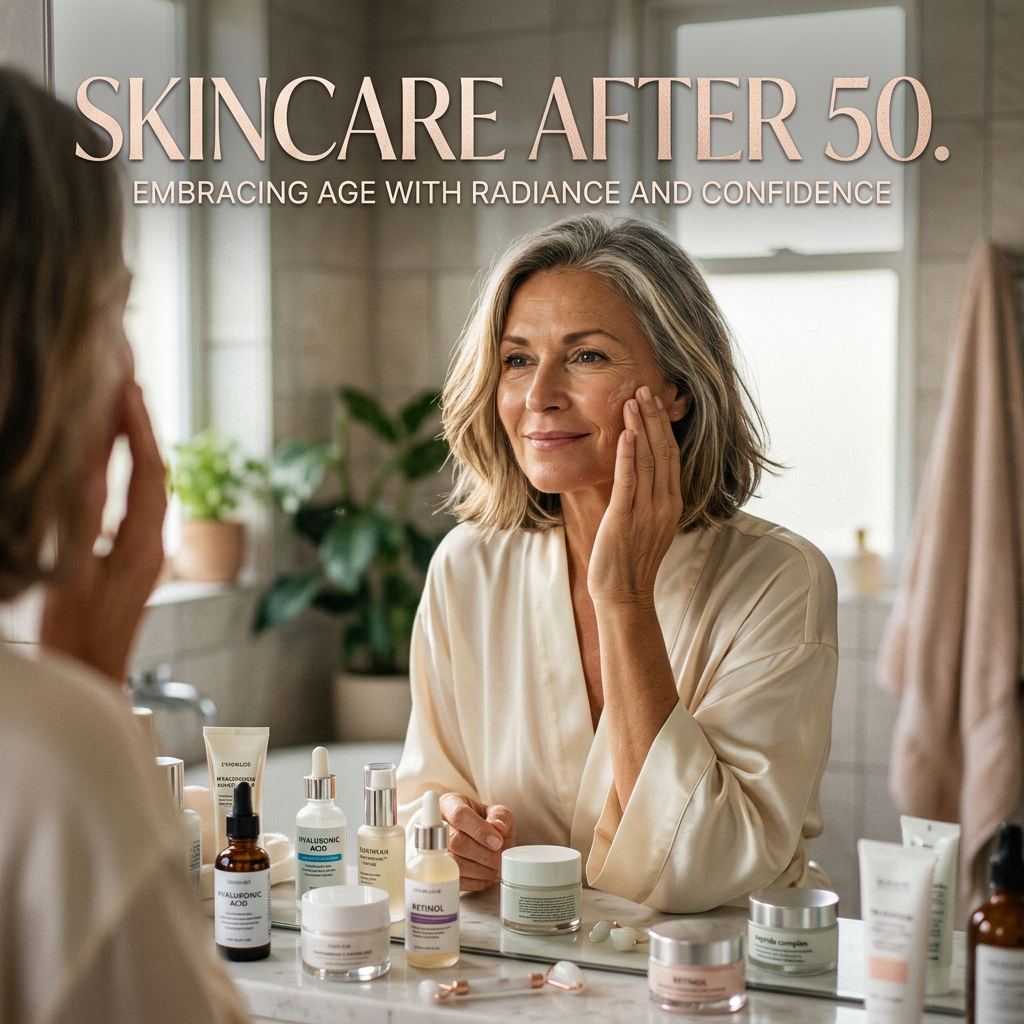
Skincare After 50: Build a Routine Around Your Skin
Skincare after 50 doesn’t need to be expensive or complicated. Whether you’re dealing with dryness, fine lines or irritation, this guide shows which basics deserve your money, which extras are optional and when to ask a dermatologist.
Walk down the skincare aisle and you can come away feeling that getting older requires a whole new bathroom cabinet. There is a cream for lines, another for dark spots, a serum for firmness, and a special product for the skin around your eyes. Before long, the bill is bigger than the routine—and it still may not be clear what is helping. My view at Well After 50 is straightforward: skincare should make your skin more comfortable and help protect it, not leave you chasing every promise on a label. After 50, your skin may be drier or more easily irritated than it used to be. That is a reason to pay attention, not a reason to buy everything marketed as “anti-aging.”Start by paying attention to your own skin
There is no single routine that every person over 50 needs. Some people are dealing with dryness; others have oily skin, acne, sensitivity, uneven tone, or a mix of concerns. Age matters, but it does not tell the whole story. Weather, sun exposure, medications, health conditions, and the products you already use can all affect how your skin behaves. For a week, notice what your skin is telling you. Does it feel tight after washing? Does a product sting? Are you getting flaky patches, or is a new spot changing? Those clues are more useful than an advertisement showing a perfect face. The National Institute on Aging’s skin-care guidance explains that skin can become thinner and drier with age and that new or changing skin problems deserve attention. If a concern is persistent or unusual, do not assume it is just aging.Spend on the basics before chasing extras
Choose a cleanser that leaves your face comfortable
Your face should not feel stripped, raw, or painfully tight after you wash it. Use lukewarm water, your fingertips, and a gentle cleanser that suits your skin. You do not need to scrub hard to get clean, and a rough brush is not a requirement for healthy skin. If cleansing leaves you uncomfortable, try changing one thing at a time: the product, the water temperature, or how often you wash. My guide to choosing a facial cleanser after 50 offers more help with that decision.Use moisturizer for a practical reason
A moisturizer can help reduce dryness and make skin feel softer. You do not have to buy the most expensive jar or choose one because the packaging looks scientific. Look for a formula that fits your skin and budget, and that you will actually use. If fragrance tends to bother you, a fragrance-free product may be a sensible place to start. Texture can matter: a lotion may feel lighter, while a cream or ointment can be more helpful when skin is very dry. The American Academy of Dermatology has a useful guide to choosing a moisturizer. You can also read our plain-language guide to picking a moisturizer after 50.Make sun protection a habit, not an occasional extra
If you are choosing where to put your skincare money, sun protection deserves serious consideration. Use a broad-spectrum, water-resistant sunscreen with SPF 30 or higher when you will be outdoors, follow its label directions, and reapply as directed—especially after swimming or sweating. A hat, protective clothing, and shade add another layer of protection. The American Academy of Dermatology’s advice for skin in your 40s and 50s puts sun protection among the core habits that help protect skin. Sunscreen will not erase the years behind you, but protecting your skin now is still worthwhile.Before buying another serum, ask three questions
- What exactly am I trying to improve? “Better skin” is too vague. Are you trying to relieve dryness, improve the look of uneven tone, or address rough texture? A clear goal makes it easier to judge whether a product is relevant.
- Is there a reasonable basis for the claim? Be cautious with promises of dramatic results in a few days, claims that one product fixes everything, or before-and-after pictures that do not tell you how they were produced. Cosmetics can improve how skin looks or feels, but a cream cannot deliver every result its marketing suggests.
- Can I use it without irritation, and can I afford to keep using it? A product is not a bargain if it sits unused or leaves your skin angry. Price alone does not prove that a formula will work better.
Be careful with strong ingredients
Ingredients such as retinol and other retinoids may help some people with fine lines, acne, or uneven texture, but they can also cause dryness and irritation. They are not essential for everyone, and stronger does not automatically mean better. If you decide to try one, follow the product directions, introduce it cautiously, and ask a dermatologist if you have a skin condition or are unsure whether it is suitable for you. The AAD explains the differences and cautions in its guide to retinoids and retinol. Avoid starting several new active products at once; if your skin reacts, you will not know which product caused the problem. Exfoliating acids and scrubs deserve the same common sense. If your skin is already dry, sore, or irritated, more exfoliation may make things worse. Our guides on ingredients to reconsider on mature skin and serums you should not layer together can help you think through those choices.A simple way to reset your routine
If your bathroom shelf has become crowded, you do not need to replace everything this weekend. Try this measured approach instead:- Keep: products you tolerate and use consistently, especially a gentle cleanser, moisturizer if you need one, and sunscreen for outdoor exposure.
- Pause: products that repeatedly sting, burn, cause a rash, or leave your skin more uncomfortable. If a treatment was prescribed, contact the prescriber before changing how you use it.
- Change one thing at a time: give yourself a fair chance to notice how your skin responds rather than introducing three new products together.
- Track the basics: note the product, how often you use it, and whether your skin feels better or worse. A simple note on your phone is enough.
- Skip the pressure: toner, eye cream, face oil, masks, and extra serums are optional. Add one only when you have a clear reason for wanting it.
Know when a product is not the answer
Persistent redness, itching, swelling, or burning deserves attention rather than another product layered on top. Stop using a new non-prescription product that causes a reaction. Seek medical advice if symptoms persist or are severe. Also have a dermatologist assess a spot or growth that is new, changing, bleeding, or not healing; do not automatically label it an age spot. Skin-care products can help with comfort and appearance, but they are not a substitute for medical assessment when something seems wrong. If you are unsure what you are seeing, getting it checked is a better investment than guessing.Three Specialists Whose Advice Can Save You Money
Dermatologist Dr. Tina Alster says people interested in retinoids should generally begin with less-intense formulas and introduce them gradually. You don’t need a high-strength prescription-style routine to start taking skincare seriously.
Dermatologist Dr. Anne Chapas points out that red, inflamed or highly sensitive skin may call for a different approach. Trying a strong active when your face already stings can be money wasted.
Cosmetic chemist Dr. Michelle Wong writes about evaluating beauty products through chemistry and evidence. Her approach is a helpful antidote to paying extra for a trendy ingredient without understanding what the finished product does.
My Budget Priority List
Buy first: gentle cleanser, a moisturizer that feels good on your skin, and sun protection you will use. Consider next: one treatment for a specific issue—such as a tolerated retinoid for texture or a targeted product for uneven tone. Skip unless you have a clear reason: a separate eye cream, face mist, elaborate toner, several peeling products and duplicate serums.
The American Academy of Dermatology’s shopping advice explicitly prioritizes sunscreen and moisturizer and warns that impressive marketing is not proof of dramatic results.
A Seven-Day Routine Audit
For a week, write down what you apply, the cost and whether your skin is calmer, drier or more irritated afterward. If you’re adding several products, change only one at a time. If your skin is persistently irritated, pause new nonprescription actives and seek advice for ongoing symptoms. This gives you a better basis for spending than comparing before-and-after photos under different lighting.
Know Which Changes Don’t Belong in a Skincare Shopping Cart
Deep lines, significant sagging and volume loss will not disappear with a moisturizer. A new or changing mole, a sore that doesn’t heal, or persistent bleeding deserves professional assessment—not an exfoliating serum. Honest expectations can protect both your skin and your budget.
For more specific help, read our moisturizer-buying guide and our practical The Ordinary routine.
Common questions about skincare after 50
What is the first thing I should improve in my routine? Start with comfort and protection. Use a cleanser that does not leave your skin stripped, moisturize if you are dry, and use sunscreen when you are outdoors. Build from there only if you have a specific concern. Do I need a separate eye cream? Not necessarily. Eye cream is optional. Some people like the texture or find it comfortable around their eyes, but you do not have to buy a separate product just because it is marketed for that area. Are expensive products better? Not automatically. Choose something suited to your skin, with realistic claims, at a price you can manage. The most useful routine is one you can maintain. Should everyone over 50 use retinol? No. Some people may benefit, while others find it irritating or have reasons to avoid it. Consider your skin’s condition and ask a dermatologist if you are uncertain. When should I ask a dermatologist for help? Get advice for a persistent reaction, a skin problem that is not improving, or a new or changing spot. Do not try to treat a suspicious growth with an ordinary skincare product.My takeaway
Getting older does not mean you have to turn skincare into a complicated project. Pay attention to what your skin needs, protect it from the sun, keep it comfortable, and be skeptical of expensive promises. You are allowed to leave products on the shelf. The goal is not to look like you did at 25. It is to care for the skin you have now, without wasting money or making it miserable in the process.Further reading
Allison Palmer’s Miami Herald article, “How to Build a Skincare Routine That Actually Works After 50”, was published in February 2026. This Well After 50 guide takes a separate practical approach, focusing on how to evaluate products, avoid unnecessary spending, and recognize when a skin concern needs professional attention. One optional product some readers may want to consider: CeraVe Eye Repair Cream. An eye cream is not a necessity and no product suits everyone; check the ingredients and consider your own sensitivities before buying. Health note: This article provides general skincare information, not personal medical advice. A dermatologist can help with persistent symptoms, changing spots, or questions about treatments for your skin.About Thomas Green
Tom Green writes Well After 50. He’s just a regular, laid-back 64-year-old who keeps things simple. He shares what he learns about skincare, fitness and getting older, and what’s working for him. He’s also the author of A Practical Guide to Getting Older Without Giving Up on Yourself. Tom isn’t a doctor. He reads up on the research and passes along what’s useful, plain and simple.I’ve also mapped out some great tools on my new Tech for Independent Living After 50 page.