
You can spend good money on your skin and clothes, then notice that how you carry yourself changes the whole picture. Posture isn’t about pretending to be twenty-five. It’s about moving comfortably and standing with confidence—without forcing your shoulders back all day.
Sometimes the thing that makes someone look older isn’t another wrinkle. It is the way they stand, walk and hold their head.
A rounded upper back, forward head and dropped shoulders can make a person look tired. But posture isn’t simply a command to “stand up straight.” It is influenced by strength, mobility, habits and the environment around you.
Good Posture Isn’t Holding Yourself Rigid
You shouldn’t have to spend all day squeezing your shoulder blades together or pulling your chin back. Comfortable posture means having enough strength and mobility to move between positions without constantly collapsing into one.
Build the Support System
- Upper back: Safe rowing and pulling movements can strengthen the muscles around the shoulder blades.
- Legs and hips: Lower-body strength supports everyday standing, walking and climbing.
- Walking: Regular walking gives you practice carrying your body through space.
- Core control: Everyday trunk strength helps you transfer force and move with confidence.
Your Environment May Be Part of the Problem
If your computer is too low, your phone is always in your lap or your chair keeps you folded forward, your body is responding to that setup.
- Raise screens when practical.
- Bring your phone closer to eye level.
- Change positions regularly.
- Take short movement breaks instead of waiting until you hurt.
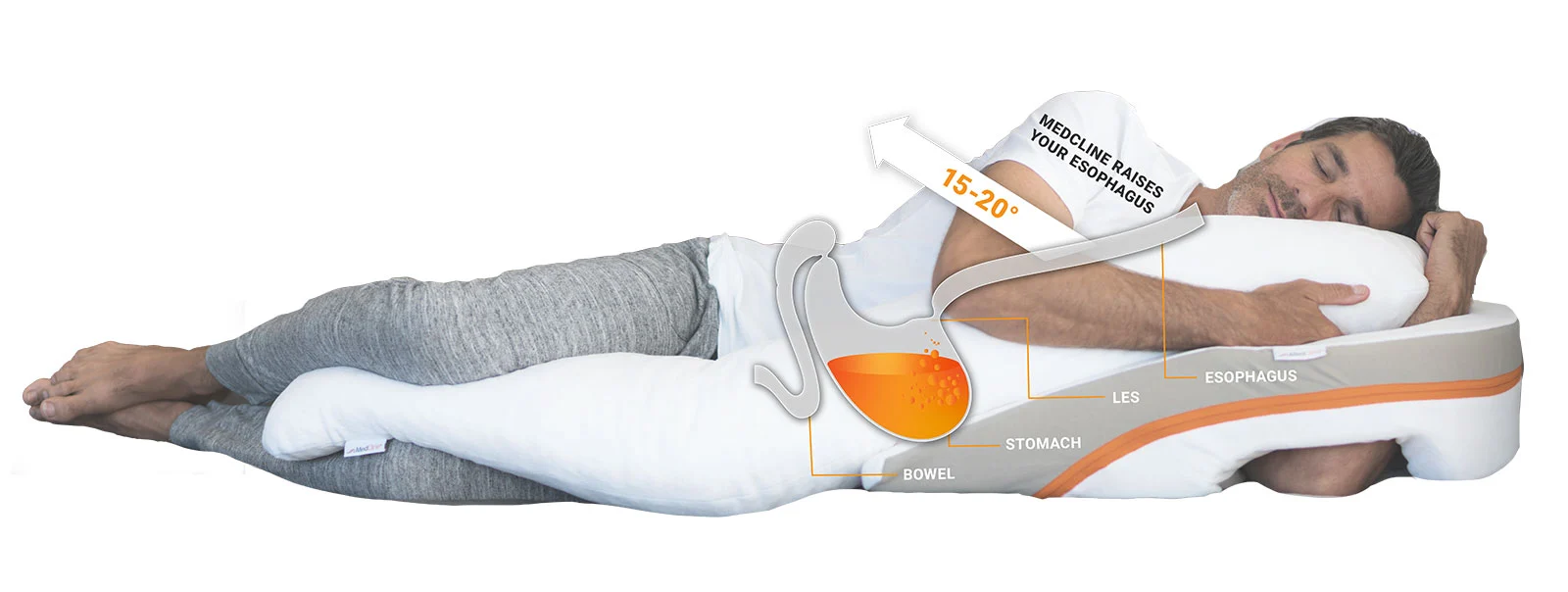
Your bed is part of that setup too. If you sleep on your side and wake up with a sore shoulder or a stiff neck, MedCline makes a pillow system for side sleepers that’s designed to keep you better supported through the night. (affiliate link)
A Simple Reset
Stand comfortably. Let your shoulders relax. Take a few breaths. Gently move your neck within a comfortable range, then walk for a minute or two. The goal is not to create a perfect pose. It is to remind your body that it can move.
Don’t Chase Perfect Posture
There is no single position that every person should hold all day. Being able to change positions and move comfortably is more useful than trying to look perfectly straight every second.
If your posture changes suddenly or you develop pain, weakness, numbness or balance problems, get medical guidance rather than trying to exercise through it.
Why ‘Stand Up Straight’ Doesn’t Solve Everything
There isn’t one magic posture to hold for eight hours. A rounded upper back can reflect screen habits, stiffness or weak muscles, but pronounced curvature may also relate to changes in the spine. The goal is comfortable strength and the ability to change position—not an exhausting military stance.
My Five-Minute Posture Routine
- Stand up from your chair and walk for 60 seconds.
- Gently draw your shoulder blades back for 5 comfortable repetitions; don’t force a painful range.
- Try a supported row with a light band or gym machine for 8–10 controlled repetitions, if it suits your shoulders.
- Practice a supported sit-to-stand for 5 repetitions to train your hips and legs.
- Take a relaxed walk for the remaining time, allowing your arms to swing naturally.
If you have neck, back or shoulder injuries, skip movements that trigger pain and ask a clinician for an appropriate alternative. Never yank your neck or force a posture correction.
What the Evidence Supports—and What It Doesn’t
The National Institute on Aging’s movement guidance encourages strength, balance and mobility activities as part of healthy aging. The CDC’s older-adult activity recommendations support regular strength training and balance practice. NIA’s health-benefits guide explains how regular activity helps preserve independence. These sources support being active; they do not claim that a particular posture exercise makes you biologically younger.
When to Look Beyond Posture Exercises
A newly rounded back, measurable height loss, or persistent back pain may warrant assessment for osteoporosis or vertebral fracture, particularly in people with known risk factors. Sudden weakness, numbness, significant loss of balance or severe pain also deserves medical evaluation.
My simple rule is to adjust the environment and move more often: bring screens nearer eye level, keep frequently used items in reach, and change position throughout the day. Stronger, more comfortable movement tends to show in the way you carry yourself.
Related: Building Muscle After 60.
What the Posture Trial Really Showed
Physical therapist Wendy Katzman and coauthors Deborah Kado and Nancy Lane reported one randomized trial of a professionally supervised spine-strengthening and posture program for older adults with hyperkyphosis. Participants attended structured sessions over six months. The results offer some support for targeted exercise; they do not show that an unsupervised five-minute routine will reverse a rounded spine or make everyone look younger.
Common Questions
Can better posture make you look younger after 50?
Yes. Standing and sitting taller can make you look more confident, energetic, and physically engaged.
Why does posture change as you get older?
After 50, muscle loss, stiffness, reduced mobility, and daily habits can gradually affect how you stand and move.
Can slouching make you look older after 50?
It can. A rounded back, forward head, and hunched shoulders can make you appear less energetic and older than you may actually be.
What is good posture for adults 50+?
Think tall rather than rigid: shoulders relaxed, chest comfortably open, head balanced over your shoulders, and feet supporting you evenly.
Can strength training improve posture after 50?
Yes. Strengthening your back, core, hips, and other supporting muscles can help you maintain better posture and movement.
Can stretching help improve posture after 50?
Gentle stretching and mobility work can help if stiffness is making it harder to maintain a comfortable upright position.
How can you improve your posture during the day after 50?
Take regular movement breaks, change positions, avoid staying hunched over screens, and practice standing and walking tall.
Can better posture change how your clothes look after 50?
It can. Standing taller can change your overall silhouette and how clothing sits on your shoulders, chest, and waist.
Does better posture really make you look younger after 50?
Posture won’t stop aging, but it can change how you carry yourself and may make you look more confident, active, and energetic.
A gentle health note: If poor posture is accompanied by significant pain, weakness, numbness, balance problems, or a noticeable change in your ability to stand or walk, talk with a healthcare professional rather than assuming it’s simply aging.
General information only; exercise should be adapted to your own health and abilities.
About Tom Green
Tom Green writes Well After 50. He’s just a regular, laid-back 64-year-old who keeps things simple. He shares what he learns about skincare, fitness and getting older, and what’s working for him. He’s also the author of A Practical Guide to Getting Older Without Giving Up on Yourself. Tom isn’t a doctor. He reads up on the research and passes along what’s useful, plain and simple.
I’ve also mapped out some great tools on my new Tech for Independent Living After 50 page.
What do you think? Have a tip, question, or personal experience to share? We’d love to hear from you. After 50, there’s always something new to discover—and your thoughts might help someone else, too!