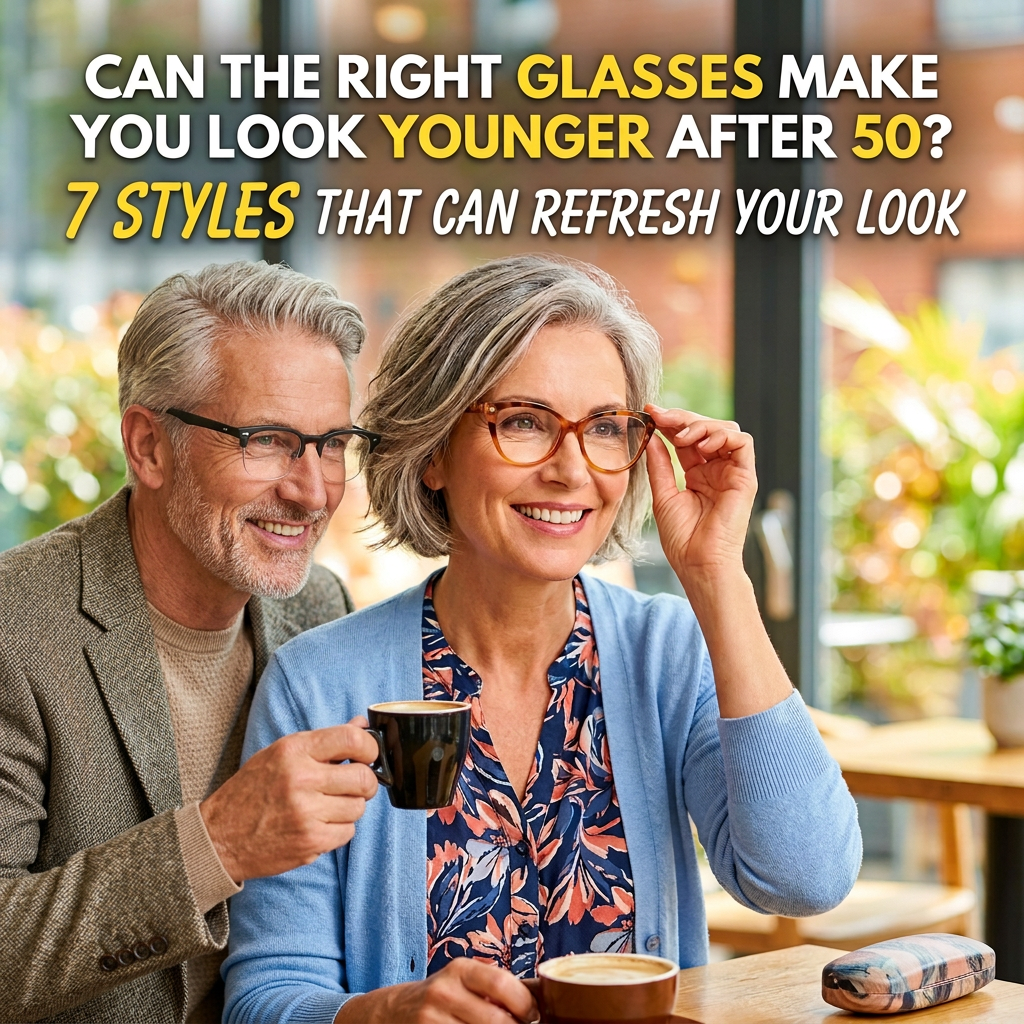
Can a pair of glasses actually make you look younger after 50? Not in the magical “take 10 years off” way some ads suggest. But the right frames can change how your face is perceived, and they can make your overall look feel fresher, more current and more intentional.
That matters because glasses sit right in the middle of your face. Shape, color, thickness, size and even the position of the frame relative to your eyebrows can change the impression you make.
Can glasses really make you look younger?
There is some evidence that eyewear changes perceived age, although the effect is usually modest rather than dramatic. A 2020 study published in i-Perception found that eyewear can influence judgments of age and appearance, but it is only one part of the picture.
Forget the promise of looking “10 years younger.” A better goal after 50 is to find frames that make you look awake, current, confident and comfortable in your own skin.
1. Try an upswept or softly cat-eye shape
A frame that rises slightly toward the outer corners can give the face a subtle lifted appearance. It can also draw attention toward the eyes and eyebrows.
You don’t need an exaggerated cat-eye. A gentle upward sweep is often easier to wear every day and looks modern without looking like you’re chasing a trend.
2. Don’t automatically avoid stronger frames
Black or dark frames can be surprisingly flattering after 50. They create definition around the eyes and can make a simple outfit look more polished.
The trick is proportion. If the frame is extremely thick, oversized or heavy for your face, it can overwhelm your features.
3. Clear and translucent frames can look fresh
Clear, champagne, soft gray and translucent frames can give you definition without adding a heavy dark line across your face.
4. Thin frames can soften the look
Minimal frames can work beautifully if you prefer an understated appearance. Metal, thin acetate and lightweight designs can add structure while keeping the face visually open.
5. Consider color instead of always choosing black
Brown, tortoiseshell, burgundy, deep blue, olive and warm neutral shades can complement hair, skin and eye color while making the glasses feel intentional.
6. Frame size matters more than most people realize
Oversized glasses can look stylish, but there is a point where they begin to hide the eyes and dominate the face. Frames that are too small can have the opposite problem.
Ideally, the frame should sit comfortably without sliding, the eyes should sit reasonably well within the lenses, and the bridge should feel secure without pressure.
7. Pay attention to your eyebrows and eyes
Your glasses and eyebrows work together. A frame that sits too low can cover the eyebrows and make the upper face look heavier. A frame that sits at the right height can help the eyes look more open.
What glasses should you avoid if you want a fresher look?
There are no universal “bad” frames. But be cautious with frames that:
- are badly oversized for your face
- sit too low on the nose
- pinch your temples or slide constantly
- hide your eyes or eyebrows
- look dated simply because you’ve worn the same style for decades
- have a color that makes your complexion look tired or washed out
Try this simple photo test before buying
Take a clear photo facing the camera in natural light. Try three or four very different frames and take another photo in the same lighting.
Don’t ask, “Which one makes me look younger?” Ask: Which one makes my eyes stand out? Which one makes my face look balanced? Which one looks current without looking like a costume? Which one makes me look like myself on a really good day?
What about “anti-aging” glasses and blue-light claims?
Be skeptical of glasses marketed as if the lenses themselves will reverse visible aging. Blue-light glasses may be useful for some people who find them comfortable, but they are not proven anti-aging treatment for the skin or face.
If you’re buying prescription glasses, prioritize the prescription, fit, lens quality and your actual visual needs. Style comes next—but it absolutely matters.
The bottom line
The right glasses won’t turn back the clock. They can, however, change the way your face is framed—and that can make a real difference in how fresh, polished and confident you look.
After 50, I think that’s a much better goal than trying to look younger at any cost.
Common Questions
What glasses make you look younger after 50?
There is no single best frame for everyone. Upswept shapes, well-proportioned dark frames, translucent frames and modern thin frames can all work. The key is fit, proportion and how the frame works with your face.
Do bigger glasses make you look younger?
Not necessarily. Oversized frames can look fashionable, but if they overwhelm your features or hide your eyes, they may have the opposite effect.
Are cat-eye glasses good for mature faces?
A softly upswept cat-eye can be flattering because it draws attention toward the outer corners of the eyes. A subtle version is usually easier to wear than an extreme shape.
Do clear glasses look good after 50?
Yes. Clear and translucent frames can create definition without looking heavy, and they can give an outfit a clean, contemporary feel.
Can glasses really make you look younger?
They can influence how people perceive your appearance, but the effect is usually modest. Good fit, flattering color and a current shape are more realistic goals than expecting a frame to erase years.
A Note From Tom Green
I’m a big believer in making small changes that help you feel better about how you look without pretending you’re someone else. Glasses are a perfect example. You don’t need to look younger—you just want a pair that makes you look like the best version of yourself right now.
Keep Reading
If you’re interested in looking and feeling your best after 50, take a look at 50+ Looksmaxxing: Simple Ways to Look Better at Any Age.
Disclaimer: This article is for general informational purposes and is not medical or vision-care advice. For changes in vision, eye symptoms or questions about prescription lenses, consult an eye-care professional.
What do you think? Have a tip, question, or personal experience to share? We’d love to hear from you. After 50, there’s always something new to discover—and your thoughts might help someone else, too!