Tag: aging gracefully

  • When You Don’t Recognize Yourself Anymore: How to Make Peace With Aging After 50

    When You Don’t Recognize Yourself Anymore: How to Make Peace With Aging After 50

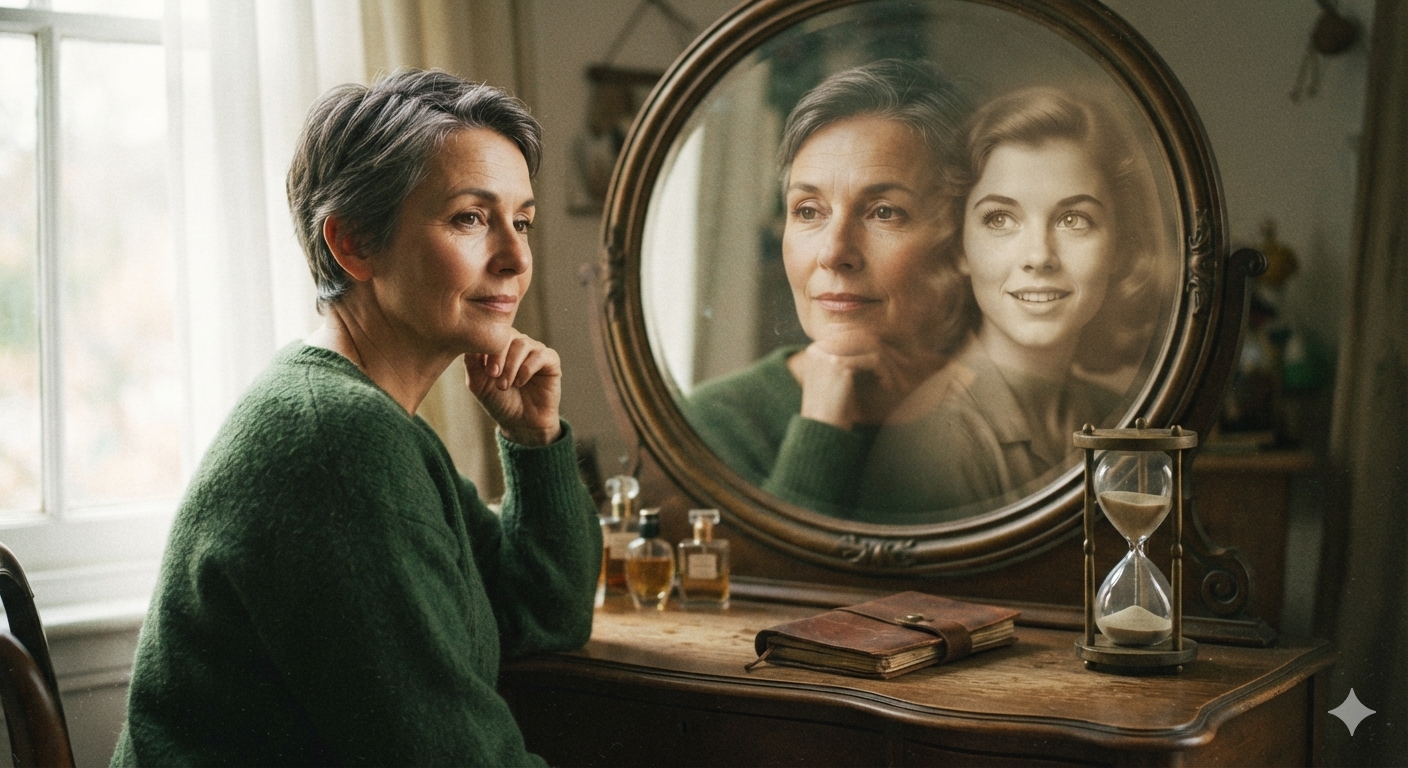
    There can be a strange moment in the aging process when you look in the mirror and realize something has changed.

    Maybe it is the lines around your eyes.

    Maybe your face looks thinner or softer than it used to. Your neck has changed. Your hair is different. Your body doesn’t look quite the way it did ten, twenty or thirty years ago.

    And sometimes the hardest part isn’t the wrinkle itself.

    It’s realizing that the person looking back at you doesn’t look like the person you still feel like inside.

    If you’ve ever had that experience, you’re not being vain.

    You’re being human.

    Aging changes our appearance, but it can also change the way we think about ourselves.

    And learning to live with that may be one of the less-discussed challenges of getting older.

    You can know you’re aging and still be surprised by it

    Most of us understand intellectually that we’re going to get older.

    We know our hair may turn gray. Skin loses some of its elasticity. Muscle mass becomes harder to maintain. Facial features change. Our bodies don’t necessarily respond to exercise, food or lack of sleep the way they once did.

    But knowing something is coming doesn’t necessarily prepare you emotionally for seeing it.

    That’s especially true when the change happens gradually.

    You don’t wake up one morning twenty years older.

    Instead, you notice little things.

    • A photograph.
    • A reflection in a store window.
    • A video someone took when you weren’t expecting it.
    • A shirt that fits differently.
    • A face in the mirror that suddenly looks older than you feel.

    And you may find yourself thinking:

    When did that happen?

    The mirror can become more powerful than it deserves to be

    Our appearance isn’t just about appearance.

    It can become tied to identity.

    For decades, you may have received messages—directly and indirectly—that looking young meant looking attractive, energetic, successful or desirable.

    Advertising certainly hasn’t helped.

    The beauty industry has built an enormous market around the idea that every visible sign of aging is something that should be corrected.

    And social media can make the comparison even harder.

    Research published in 2025 found associations between appearance-focused social media use, self-objectification and body-image concerns. The researchers also identified self-compassion as a potentially protective factor.

    There’s nothing wrong with wanting to look good

    This is important.

    Accepting aging does not mean you have to stop caring about your appearance.

    • You can still enjoy skincare.
    • You can color your hair if you want to.
    • You can exercise because you like the way a stronger body looks.
    • You can dress well.
    • You can take care of your teeth, skin and hair.
    • You can use products that make you feel better about yourself.

    And if you choose a cosmetic treatment after understanding its risks and benefits, that is your decision.

    The problem begins when taking care of yourself turns into being at war with yourself.

    There’s a big difference between:

    “I want to look my best.”

    and

    “I can’t stand the person I’m becoming.”

    The first can be healthy.

    The second can become exhausting.

    Maybe the goal isn’t to look younger

    This may be one of the most useful changes in thinking after 50.

    Instead of asking:

    “How can I look younger?”

    try asking:

    “How can I look healthy, cared for, confident and like myself?”

    Those aren’t the same goal.

    You may never get your 35-year-old face back.

    None of us does.

    But you can become the 50-, 60-, 70- or 80-year-old version of yourself who looks like she takes care of herself, stands tall, smiles easily and still has somewhere she wants to go.

    That’s a different kind of beauty.

    And arguably a more interesting one.

    Your body isn’t only something other people look at

    This is where aging can offer an unexpected opportunity.

    For much of our younger lives, we’re taught to think about our bodies from the outside.

    • How do I look?
    • Am I thin enough?
    • Do I look attractive?
    • Do other people notice me?
    • Do I look younger than my age?

    But eventually, many people begin to appreciate something different.

    What can my body still do for me?

    • Can I walk around the neighborhood?
    • Carry groceries?
    • Get up from the floor?
    • Travel?
    • Play with grandchildren?
    • Lift weights?
    • Garden?
    • Dance?
    • Climb stairs without stopping?
    • Go somewhere new?

    Those things may not show up in a selfie.

    But they can become far more important than a selfie.

    There is actually research behind this shift

    A 2026 study involving adults ages 60 to 80 found that greater body appreciation was associated with greater life satisfaction, and self-acceptance helped explain that relationship.

    That doesn’t mean you have to suddenly love every part of your body.

    That’s not realistic.

    You can dislike a particular wrinkle.

    You can wish your waist were smaller.

    You can miss your old hair.

    You can wish your skin were firmer.

    Acceptance doesn’t require pretending everything is perfect.

    It means learning not to let the things you dislike become the entire story about yourself.

    What if you stopped inspecting yourself so closely?

    Here’s an experiment worth trying.

    For a week, stop looking for flaws.

    • Don’t stand in front of the bathroom mirror examining your neck.
    • Don’t repeatedly pull the skin under your eyes.
    • Don’t take five photographs looking for the “bad side.”
    • Don’t zoom in on every line in a picture.

    Take care of yourself normally.

    Then step back.

    Look at the whole person.

    • How do you carry yourself?
    • Do you look healthy?
    • Do your eyes look alive?
    • Are you smiling?
    • Does your clothing fit?
    • Does your hair make you feel good?
    • Do you look like someone who is participating in life?

    Sometimes we become so focused on individual imperfections that we completely miss the person.

    And yes, there will be days when you don’t feel good about yourself

    That’s normal too.

    You don’t have to turn aging into a positive-thinking exercise every morning.

    Some days you may look in the mirror and think:

    “I really don’t like what I see today.”

    That’s okay.

    You don’t have to argue with yourself.

    You can simply say:

    “This is how I look today. I’m still going to have a good day.”

    That’s a powerful distinction.

    Your appearance doesn’t have to improve before you’re allowed to enjoy your life.

    Be careful about who gets inside your head

    Pay attention to the people and accounts you follow.

    If every photograph makes you feel older, heavier, less attractive or less successful, ask yourself why you’re continuing to look at it.

    You don’t have to hate social media.

    You don’t even have to stop following beauty accounts.

    But you can choose more carefully.

    Follow people who make you feel inspired rather than inadequate.

    Follow women who are active, funny, stylish, interesting and honest about getting older.

    Follow people who remind you that life doesn’t end when your face changes.

    Your feed becomes part of your environment.

    Choose an environment that helps you.

    Don’t confuse acceptance with giving up

    This may be the biggest misconception of all.

    Accepting your age doesn’t mean giving up.

    It can actually make it easier to take good care of yourself.

    You can say:

    “My skin is changing, so I’m going to take good care of it.”

    Not:

    “My skin is changing, so I need to fight it every day.”

    You can say:

    “I’m losing some muscle as I get older, so I’m going to strength train.”

    Not:

    “My body isn’t what it used to be, so what’s the point?”

    You can say:

    “I don’t look 40 anymore, but I still want to look my best.”

    Not:

    “If I can’t look 40, I don’t want to look at all.”

    That difference matters.

    Maybe growing older requires a new definition of beautiful

    When we’re young, beauty can be largely about symmetry, smooth skin, hair, body shape and looking desirable.

    Later, something else begins to show.

    • Character.
    • Confidence.
    • Humor.
    • Kindness.
    • Strength.
    • Curiosity.
    • How you treat people.
    • How you carry yourself.
    • Whether you still get excited about something.
    • Whether you have something to look forward to.
    • Whether you’ve learned how to survive difficult things without becoming bitter.

    None of those things erase wrinkles.

    They make wrinkles less important.

    You don’t have to love every change

    Maybe that’s the most honest place to end.

    You don’t have to celebrate every gray hair.

    You don’t have to love every wrinkle.

    You don’t have to pretend you never miss your younger face.

    You don’t have to stop wanting to look attractive.

    And you don’t have to apologize for caring about yourself.

    But you also don’t have to spend the rest of your life trying to defeat a process that every human being eventually faces.

    Take care of your appearance. Take care of your body. Take care of your health. But don’t forget to take care of the person underneath all of it.

    Because there is still a person in that mirror who has somewhere to go, people to love, things to learn and experiences that haven’t happened yet.

    And perhaps that’s the part of aging we don’t talk about enough.

    You may look different than you once did.

    But you’re not finished becoming who you’re going to be.

    A Final Thought

    The goal after 50 doesn’t have to be looking like the person you were twenty years ago.

    Maybe the goal is to look in the mirror and eventually say:

    “Yes. This is me now. And I still like where I’m going.”

    That may be a much better definition of aging well.

    Common Questions

    Is it normal to struggle with changes in appearance after 50?

    Yes. Changes in appearance can affect how people think and feel about themselves, and research suggests that body dissatisfaction and concerns about aging appearance don’t simply disappear with age.

    Does accepting aging mean I shouldn’t care about how I look?

    No. Acceptance and self-care can exist together. You can enjoy skincare, exercise, clothing, hair care and other ways of looking after yourself without making youthfulness the only measure of your worth.

    Can social media make aging and body image harder?

    It can. Research has linked appearance-focused social media use with self-objectification and body-image concerns. Choosing what you consume online—and practicing more self-compassion—may help.

    What is a healthier goal than trying to look younger?

    Try aiming to look healthy, cared for, confident and like yourself. You can still improve things you want to improve without making your entire identity about reversing age.

    Can accepting my changing appearance actually make me feel better?

    Research in older adults has found an association between body appreciation, self-acceptance and greater life satisfaction.

    A Note From Tom Green

    At Well After 50, I don’t think getting older means giving up on yourself. I think it means figuring out what is worth improving, what is worth accepting and what is worth letting go.

    You can still care about how you look.

    You can still work on your health.

    You can still get stronger.

    You can still take pride in yourself.

    But you don’t have to spend your life apologizing for getting older.

    Tom Green

    Well After 50

    Medical & Wellness Note

    This article discusses general experiences and research related to aging, appearance and body image. It is not medical or mental-health advice. If concerns about your appearance are causing significant distress or interfering with your daily life, consider talking with a qualified healthcare or mental-health professional.

    Shadow Work Journal and Workbook – 7 in 1 Beginner’s Guide Based on Carl Jung: Therapist Approved Blueprint for Facing and Owning Your Shadow

    by Olivia K. Renner (Author) Format: Paperback

    #BestSeller https://amzn.to/4AOrXAo

    Sources & Further Reading

    Keep Reading

    Affiliate Disclosure: Some links in this article may be affiliate links. If you purchase through one of these links, Well After 50 may earn a commission at no additional cost to you.

    About the Author

    Tom Green is the creator of Well After 50, a site dedicated to practical ideas about skincare, wellness, fitness, nutrition and enjoying life after 50. Tom believes getting older doesn’t mean giving up on the things that make life interesting. It means finding new ways to keep learning, moving and enjoying the ride.
  • Dolly Parton at 80: What Her Approach to Aging Can Teach Us After 50

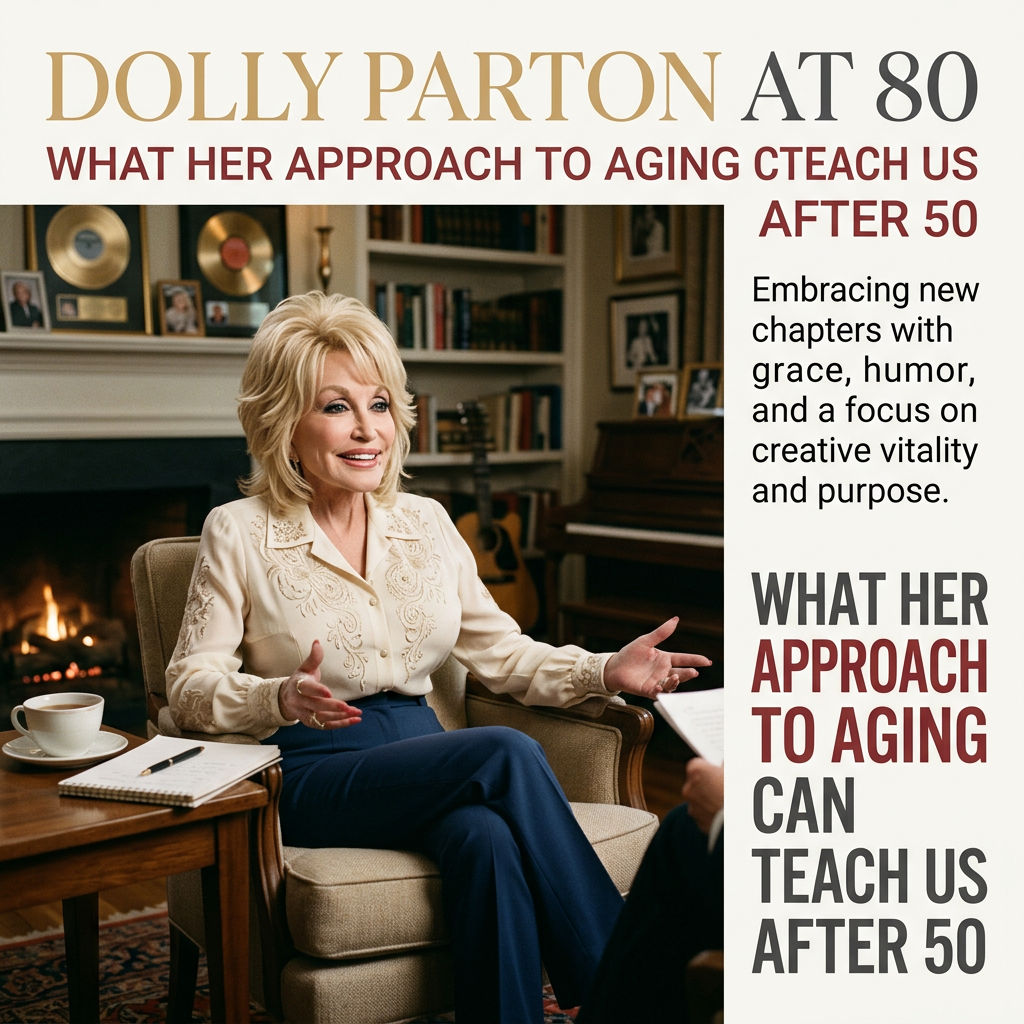
    Dolly Parton at 80: What Her Approach to Aging Can Teach Us After 50

    Dolly Parton was never interested in fading quietly into the background.

    For decades, she built a career around music, movies, business, philanthropy, humor and one very recognizable personal style. Even as she entered her 70s and 80s, she continued creating, working and reinventing herself.

    Dolly died on August 25, 2026, at age 80, leaving behind a remarkable example of what it can mean to keep living fully as the years pass.

    So what can those of us who are 50+ learn from Dolly Parton’s approach to getting older?

    Quite a bit.

    1. She Never Tried to Become Someone Else

    One of the most interesting things about Dolly is that she has always looked like Dolly.

    Big hair. Big personality. Sparkles. Makeup. Colorful clothes. Humor.

    She didn’t spend her life trying to fit into somebody else’s idea of what a woman should look like at a particular age.

    In a 2021 interview with Allure, Dolly explained that she dresses for herself and does what makes her happy. She encouraged people to be comfortable being themselves.

    That’s a pretty good lesson after 50.

    You don’t have to dress younger. You don’t have to dress older. You don’t have to stop wearing makeup. You don’t have to start wearing makeup.

    You get to decide what makes you feel good.

    2. She Kept Herself Moving

    Dolly wasn’t known for spending hours in a traditional gym.

    Her approach was much more playful. She has described putting on music, singing, stretching and doing simple movements as her way of staying active.

    The important lesson isn’t that Dolly had some magical exercise routine.

    It’s that movement doesn’t have to be miserable to count.

    For someone 50+, that can be an important reminder.

    Walking, stretching, dancing, gardening, swimming, light strength training or simply moving more throughout the day can all be ways of keeping your body active.

    Find something you will actually keep doing.

    3. She Continued to Have Things to Look Forward To

    One of Dolly’s greatest strengths was her ability to keep creating.

    She didn’t decide that reaching 50, 60 or 70 meant her most interesting years were behind her.

    Her career continued to expand into new music, business ventures, Dollywood, books, philanthropy and other projects.

    Her official career timeline shows just how much she continued accomplishing during her later decades.

    That matters because getting older doesn’t have to mean shrinking your world.

    There can still be something to learn. Something to build. Somewhere to go. Someone to help. Or simply something you’ve always wanted to try.

    4. She Took Her Appearance Seriously—But Didn’t Apologize for It

    Dolly has always been unusually open about beauty, makeup, wigs and cosmetic procedures.

    She didn’t pretend that her appearance happened completely by accident.

    And that’s actually refreshing.

    There is nothing wrong with wanting to look your best after 50. Taking care of your skin, getting enough sleep, eating reasonably well, exercising and keeping up with your appearance can all be part of taking care of yourself.

    But Dolly also understood something important:

    Looking good isn’t the same thing as trying to look 25.

    Her style became part of who she was. That’s a much healthier goal than constantly fighting the mirror.

    5. She Understood That Confidence Matters

    Perhaps Dolly’s greatest beauty secret wasn’t a cream, supplement or procedure.

    It was confidence.

    She knew who she was, knew what she liked, and wasn’t particularly interested in apologizing for it.

    That kind of confidence can become even more valuable after 50.

    By this point in life, you’ve probably learned that trying to make everyone happy is exhausting.

    You don’t have to.

    You can become more comfortable saying: “This is who I am.”

    6. She Didn’t Let Age Define Her

    Dolly’s life is a good reminder that a birthday is a number—not a deadline.

    You can start something new at 50. You can change careers at 60. You can make new friends at 70. You can learn something you’ve never learned before. And you can still have fun.

    Aging happens whether we cooperate with it or not.

    The question is what we’re going to do with the years we have.

    The Dolly Parton Lesson After 50

    Dolly Parton’s approach wasn’t about discovering one secret that keeps you looking young forever.

    It was something much more practical.

    • Take care of yourself.
    • Keep moving.
    • Stay curious.
    • Take pride in your appearance if that makes you happy.
    • Laugh.
    • Work.
    • Create.
    • Help other people.
    • And don’t lose the person you were simply because you’ve gotten older.

    Dolly’s long career was a reminder that getting older doesn’t mean becoming less interesting. She kept working, creating and helping others almost to the end of her life.

    Because maybe the goal after 50 isn’t to look younger.

    Maybe it’s to become more comfortable being exactly who you are.

    Common Questions

    How old was Dolly Parton when she died?

    Dolly Parton died on August 25, 2026, at the age of 80.

    Did Dolly Parton exercise?

    She described a playful approach to movement that included stretching, simple exercises, singing and moving to music rather than following a rigid traditional workout.

    Did Dolly Parton have a skincare routine?

    Dolly openly discussed beauty, makeup and cosmetic procedures, but there isn’t one proven “Dolly Parton skincare secret” responsible for her appearance.

    What can people 50+ learn from Dolly Parton?

    Perhaps the biggest lesson is to keep living according to your own personality and interests. Staying active, continuing to create, caring about your appearance and maintaining a sense of humor can all contribute to enjoying life as you age.

    Is it too late to reinvent yourself after 50?

    Absolutely not. Dolly’s later decades demonstrate that life can continue to evolve long after 50. New interests, friendships, projects and goals can make later life exciting.

    Dolly Parton Set of 2 Jeweled Mosaic Figural Blue and Pink Flower Coffee Tea Mugs Earthenware Hand Wash Only Drinkware Gif...

    Dolly Parton Set of 2 Jeweled Mosaic Figural Blue and Pink Flower Coffee Tea Mugs Earthenware Hand Wash Only Drinkware Gift Set, 15 Ounce https://amzn.to/4y63bcH

    Affiliate Disclosure: Some links in this article may be affiliate links. If you purchase through one of these links, Well After 50 may earn a commission at no additional cost to you.

    About the Author

    Tom Green is the creator of Well After 50, a site dedicated to practical ideas about skincare, wellness, fitness, nutrition and enjoying life after 50. Tom believes getting older doesn’t mean giving up on the things that make life interesting. It means finding new ways to keep learning, moving and enjoying the ride.
    Sources

    • Dolly Parton’s official website and biography
    • Allure interview with Dolly Parton, 2021
    • Allure interview with Dolly Parton, 2024

    Featured image: A licensed or authorized photograph of Dolly Parton should be used rather than copying a celebrity photograph from another website.

  • The Beauty of a Simpler Life After 50: Choosing Peace Over Pleasing

    The Beauty of a Simpler Life After 50: Choosing Peace Over Pleasing

    One of the things I appreciate more about getting older is realizing that peace is not something you have to earn by making everybody else happy.

    For years, it can be easy to say yes because you don’t want to disappoint somebody, keep quiet because you don’t want an argument, or keep doing things simply because you’ve always done them. Then one day you realize how much of your time has been spent managing everybody else’s expectations.

    Life after 50 can be a chance to get more intentional. Not selfish. Not isolated. Just more honest about what deserves your time and what doesn’t.

    Learning the Difference Between Peace and Avoidance

    Choosing peace doesn’t mean avoiding every difficult conversation or walking away from everyone who disagrees with you. Sometimes peace comes from having the conversation you’ve been putting off and setting a boundary that makes the relationship healthier.

    The goal isn’t a life with no conflict. That’s not realistic. The goal is knowing which conflicts are worth your energy and which ones aren’t.

    Things That Can Make Life More Complicated Than It Needs to Be

    • Saying yes when you really mean no.
    • Keeping commitments that no longer fit your life.
    • Buying things because advertising or social media makes you feel behind.
    • Comparing your everyday life with someone else’s carefully selected highlights.
    • Filling every quiet moment with noise.
    • Trying to maintain relationships that are consistently one-sided.

    None of these has to disappear overnight. Sometimes simply noticing the pattern is the first step toward changing it.

    Stop Treating Quiet Like a Problem

    There is something different about quiet when you get older. You may discover that you don’t need constant entertainment, constant messages or a packed calendar to feel that your day mattered.

    A quiet morning. A walk. Coffee with someone you enjoy. Reading. Working in the yard. Listening to music. Spending time with a pet. These things can look ordinary from the outside while feeling pretty valuable from the inside.

    Spend Money on What Actually Adds Value

    Getting older can also change how you think about stuff. The newest product isn’t automatically better, and buying something simply because everyone online seems to have it rarely creates lasting satisfaction.

    I’m not against buying nice things. I just think there is a difference between enjoying something and constantly chasing the next thing.

    Sometimes simplifying your life means having fewer things to maintain, fewer bills to worry about and fewer purchases that need to justify themselves.

    Protect the Relationships That Feel Real

    Simplifying doesn’t mean becoming a hermit. In fact, good relationships can become even more important after 50.

    Look for relationships where you can be yourself, laugh, disagree without fear and still feel respected. Make time for the people who make life feel more human.

    And if a relationship needs a boundary, a boundary isn’t necessarily rejection. Sometimes it is what allows a relationship to continue without resentment.

    You Don’t Have to Explain Every Choice

    One of the freedoms of getting older is realizing that not every decision needs a committee.

    You don’t have to convince everyone why you changed your routine, stopped going somewhere, started exercising, picked up a hobby or decided to spend more time at home. If a choice is healthy and appropriate for your life, it doesn’t need universal approval.

    What I Want More of Now

    For me, the idea of a simpler life comes down to a short list: more time for people I care about, more time doing things I genuinely enjoy, better care of my body, less unnecessary drama and fewer decisions made simply because I feel pressured.

    That doesn’t mean life becomes boring. It means the things that remain have more room to matter.

    Peace Is Not Giving Up

    There is a big difference between giving up on life and giving up on things that drain you without adding anything worthwhile.

    After 50, your time is still yours. You can use it to build something, learn something, get stronger, travel, work, volunteer, fall in love, spend time with family, enjoy your pets or simply have a Tuesday afternoon that doesn’t need to become a story.

    Maybe one of the best parts of getting older is finally understanding that an ordinary peaceful day can be a very good day.

    Common Questions

    Why can life feel simpler and more peaceful after 50?
    After 50, many people become clearer about what matters to them and more willing to spend their time and energy on those priorities.

    What does choosing peace over pleasing others mean after 50?
    It means recognizing that you don’t have to keep everyone happy at the expense of your own time, energy, values, or well-being.

    How do you stop worrying so much about pleasing everyone after 50?
    Start by noticing when you’re saying yes out of guilt or pressure rather than because you genuinely want to.

    How can you simplify your life after 50?
    Reduce unnecessary commitments, protect your free time, clear out things you no longer need, and focus more on people and activities that add meaning to your life.

    Is it selfish to say no after 50?
    No. Saying no to something that doesn’t fit your priorities can be a healthy way to protect your time and energy.

    How do you set boundaries without feeling guilty?
    Keep your explanation simple. You don’t have to provide a long justification every time you say no.

    What can you stop doing after 50 to make life more peaceful?
    You can stop automatically saying yes, constantly explaining yourself, comparing your life with others, and taking responsibility for everyone’s happiness.

    How can you spend your time more intentionally after 50?
    Ask yourself whether a commitment, relationship, or activity genuinely matters to you before automatically giving it your time.

    Can simplifying your life improve your well-being after 50?
    A simpler life can create more room for rest, relationships, hobbies, meaningful activities, and things you actually enjoy.

    What is one simple way to choose peace over pleasing after 50?
    Before saying yes, pause and ask: “Do I actually want to do this, or am I afraid of disappointing someone?”

    Practical takeaway: You don’t have to become a different person after 50. You can simply become more selective about where you spend your time, energy, and attention.

    A gentle well-being note: If feelings of stress, sadness, isolation, or anxiety are persistent or interfering with daily life, consider talking with a healthcare or mental-health professional.

    Affiliate Disclosure: Some links in this post may be affiliate links. If you purchase something through one of these links, Well After 50 may earn a small commission at no extra cost to you. This helps support the site and allows us to continue creating helpful content.

    Keep Reading

    Written by Tom Green, creator of Well After 50

    Tom is the creator of Well After 50, focused on practical skincare, wellness, fitness, and healthy-aging ideas after 50.